
World
Israel presses Iran assault as Tehran nears succession decision
Trump told reporters aboard Air Force One that he was not interested in negotiating an end to the conflict that has sent energy prices skyward, hurt business and snarled global travel.

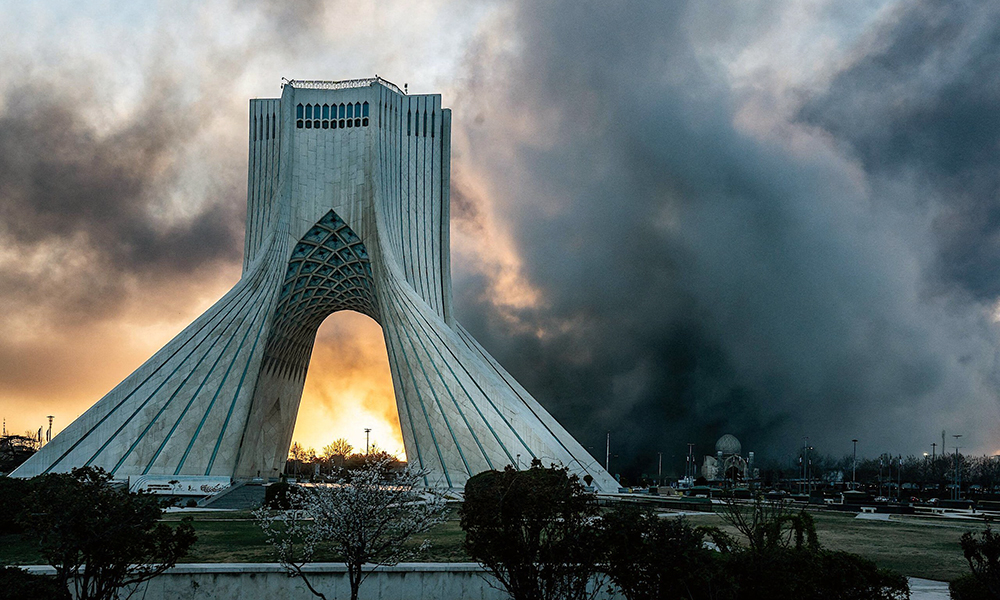
Israeli forces expanded their bombardment of Iran overnight, striking fuel depots near Tehran, while Bahrain said an Iranian attack had damaged one of its desalination plants, signalling a widening assault on vital infrastructure across the region.
As the fighting escalated on day nine of the U.S.-Israeli assault on Iran, Tehran moved closer to naming a new supreme leader after the killing of Ayatollah Ali Khamenei, with every indication suggesting his powerful son could take charge.
Israel’s military threatened to kill any replacement for Khamenei, while U.S. President Donald Trump said the war might only end once Iran’s military and rulers had been wiped out.
The governments of Saudi Arabia, Kuwait, the United Arab Emirates and Bahrain reported Iranian drone attacks in their countries on Saturday and early Sunday, with a huge fire engulfing a government office block in Kuwait.
Kuwait’s interior ministry said two of its officers were killed “while performing duties”.
Bahrain said on Sunday that an Iranian drone attack had caused “material damage” to a desalination plant, though the country’s electricity and water authority said the strike had not disrupted water supplies.
Video from Tehran showed thick, choking black smoke hanging over the city early on Sunday after strikes on oil storage facilities, had lit up the night sky with plumes of orange flame.
An Israeli source said the fuel was used to manufacture and develop weapons and to operate military bases. Iran’s oil distribution company said four of its employees were killed in the blitz, adding that rationing would be introduced temporarily in some areas “to ensure fair and sustainable supplies”.
Shortly after the attack, which appeared to mark a new phase in the war, Israeli Prime Minister Benjamin Netanyahu said his government would press on with the assault and strike Iran’s rulers “without mercy”.
“We have an organised plan with many surprises to destabilise the regime and enable change,” he said in a video statement. “We have many more targets.”
Trump told reporters aboard Air Force One that he was not interested in negotiating an end to the conflict that has sent energy prices skyward, hurt business and snarled global travel.
“At some point, I don’t think there will be anybody left maybe to say, ‘We surrender’,” Trump said.
It was the first time an Arab country has said Iran targeted a desalination facility during the conflict. On Saturday, Iran said a U.S. attack had struck a freshwater desalination plant on its Qeshm Island, disrupting water supplies in 30 villages, calling it “a dangerous move with grave consequences”.
Saudi Arabia has told Tehran that continued Iranian attacks on the kingdom and its energy sector could push Riyadh to respond in kind, people familiar with the matter told Reuters.
In an apparent attempt to cool anger across the Gulf, Iran’s President Masoud Pezeshkian apologised to neighbouring states for its attacks on U.S. bases in those countries on Saturday.
His comments faced backlash from some hardliners in Iran, prompting his office to reiterate Iran’s military would respond firmly to attacks from U.S. facilities.
The clerical body charged with choosing Iran’s next supreme leader could meet as soon as Sunday to name a successor to Ayatollah Ali Khamenei, who was killed in an attack early in the conflict, Iranian media reported.
A majority consensus over the successor has more or less been reached, said Assembly of Experts member Ayatollah Mohammadmehdi Mirbaqeri, according to the Mehr news agency.
Another member of the council, Ayatollah Mohsen Heidari Alekasir, said in a video that a candidate had been selected based on Khamenei’s guidance that Iran’s top leader should be “hated by the enemy”.
Two Iranian sources told Reuters last week that the clear favourite was Khamenei’s son, Mojtaba Khamenei, who amassed power under his father as a senior figure in the security forces and the vast business empire they control. Choosing him would send a signal that hardliners were still firmly in charge.
Trump has justified the biggest U.S. military operation in the Middle East since the 2003 invasion of Iraq by saying Tehran posed an imminent threat to the United States, without providing evidence. He has also said Iran was too close to being able to build a nuclear weapon.
The U.S. and Israel have discussed sending special forces into Iran to secure its stockpile of highly enriched uranium at a later stage of the war, Axios reported, citing four people with knowledge of the discussions.
Asked about the possibility of sending ground troops to secure nuclear sites on Saturday, Trump said it was something they could do “later on.”
The U.S.-Israeli attacks have killed at least 1,332 Iranian civilians and wounded thousands, according to Iran’s U.N. ambassador, Amir Saeid Iravani.
Iranian attacks have killed 10 people in Israel. At least six U.S. service members have been killed, with Iran saying on Sunday it had struck U.S. bases in Kuwait.
Lebanon has also been pulled into the conflict after the Iran-backed militant group Hezbollah fired rockets and drones into Israel last week.
At least four people were killed when Israel hit a hotel building in central Beirut early on Sunday, with Israel saying it had targeted Iranian commanders operating in the Lebanese capital. It was the first such strike in the heart of Beirut, prompting fears Israel would expand its attacks to areas beyond where Hezbollah traditionally operates.


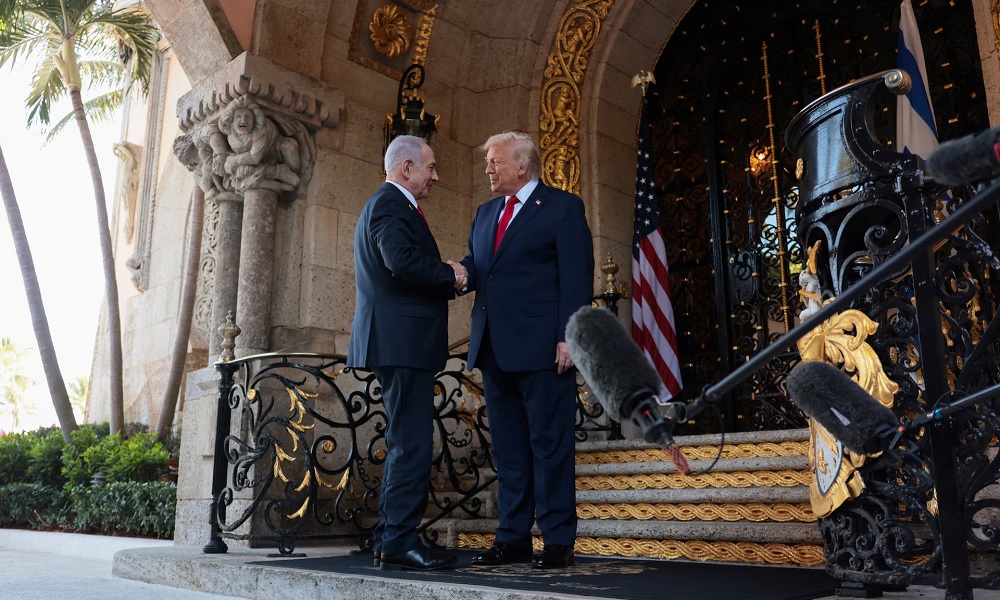
President Donald Trump said on Friday that Israeli Prime Minister Benjamin Netanyahu will visit the U.S. next week.
Trump’s comments came in his speech at the White House Correspondents’ Association Dinner on Friday, while he was falsely casting U.S. Senator Chuck Schumer as Palestinian, Reuters reported.
“I am going to send him (Schumer) a beautiful Palestinian outfit tomorrow, so he can greet Bibi Netanyahu when he comes to town next week,” Trump said.
“He turned Palestinian,” Trump said of Schumer, who is Jewish, while also joking that sharia law was Schumer’s “new founding.”
U.S. Muslim and Jewish advocacy groups have previously criticized Trump for calling Schumer, the top Senate Democrat, a Palestinian, with the rights groups saying Trump uses the term disrepectfully as a slur and as an insult.
Netanyahu’s office said earlier that he will travel to Washington on Monday and will meet with Trump on Tuesday. Netanyahu will also attend deceased U.S. Senator Lindsey Graham’s funeral, his office said.
The Trump-Netanyahu meeting will come as the U.S.-Israeli war on Iran completes five months.
World
Trump vows to punish Iran for Houthi attacks in Red Sea; oil surges over $100
After the Houthis said they had struck the two tankers on Thursday, Trump said he would hold Iran accountable for any further attacks by the fighters.
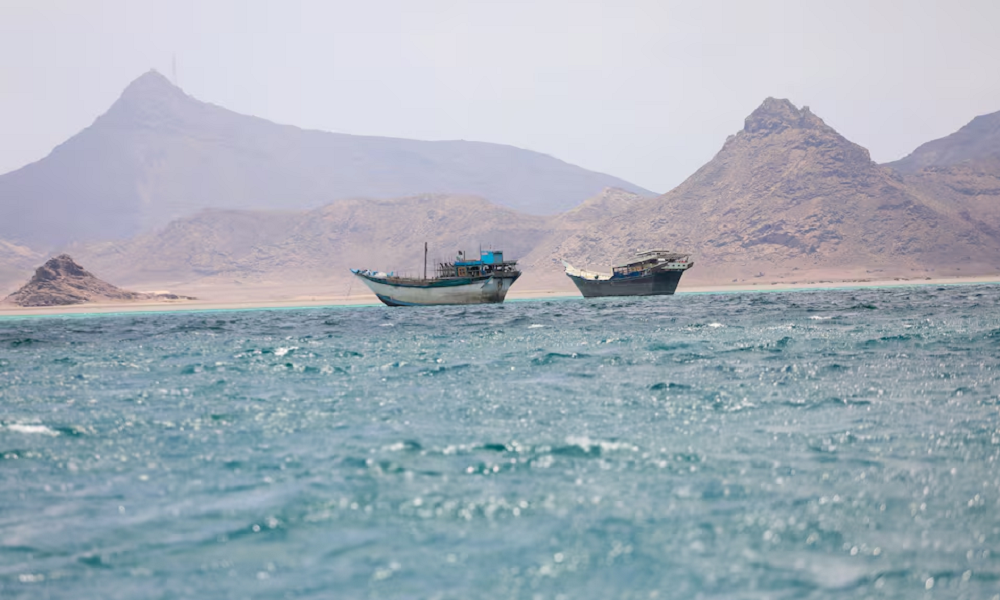
U.S. President Donald Trump promised “major military punishment” for Iran and its Houthi allies on Thursday after the Yemeni fighters struck two Saudi oil tankers in the Red Sea, extending the Middle East war to a second major shipping chokepoint.
Fears that disruption could widen further to block another sea route sent global oil prices surging in one of the steepest rises of the war. Brent crude rose more than 6%, breaking through $100 a barrel for the first time since May, Reuters reported.
Two weeks since the effective collapse of an interim truce meant to end the war, the U.S. military launched air strikes on Iran overnight into Thursday, prompting Iran to fire at neighbouring Arab countries that host U.S. bases. The U.S. military fired another round of missiles at Iran late Thursday and early Friday in the 13th consecutive night of attacks.
Iranian state media said on both nights that missiles struck Qeshm Island on the Strait of Hormuz, the virtually closed waterway that has become the focal point in a war well into its fifth month that has already killed thousands and raised fears of a global economic downturn.
TRUMP: IRAN HASN’T ‘RECEIVED ENOUGH PAIN YET’
After the Houthis said they had struck the two tankers on Thursday, Trump said he would hold Iran accountable for any further attacks by the fighters.
The Houthis, who control northern and western Yemen, said this week they were imposing a naval blockade on Saudi Arabia, which has diverted millions of barrels of oil per day by pipeline to the Red Sea to get around Iran’s blockade of Gulf oil through the Strait of Hormuz.
“If they do this again, the U.S. will hold Iran responsible, in that the Houthis are a Surrogate and/or Proxy of Iran, and major military punishment will be inflicted upon Iran and, of course, the Houthis, themselves,” Trump wrote on social media.
He told news outlet Axios he was considering relaunching major combat operations in Iran and was close to a decision. “They haven’t received enough pain yet,” Axios quoted Trump as saying.
On Thursday evening, Trump said on social media that “any and all damages done” to cargo ships would be paid for with “Iranian Money,” referring to frozen Iranian assets held by the U.S., but he did not say how this would work.
Sources in Iran and Yemen told Reuters that Iran had flown Revolutionary Guard commanders, military advisers and missile- and drone-related equipment into Yemen days before the Houthis announced their blockade. The Houthis dismissed the report.
The Houthis said their forces had carried out missile and drone strikes on Saudi oil tankers, the Encelia and the Layla.
A maritime security source said the Encelia had transmitted a distress call reporting it had been struck by a missile near the Saudi port of Jizan in the Red Sea just north of Yemen late on Wednesday. Saudi state news agency SPA said the strike had caused a fire at the bow.
Reuters could not immediately confirm the attack on the Layla, or other battlefield accounts, but Trump mentioned two attacks on Saudi tankers.
The insurance cost of shipping goods through the southern Red Sea doubled for some companies on Thursday, after the reported attacks, sources said.
Houthi attacks could close the strait known as the Bab el-Mandeb or “Gate of Tears” which controls access from the Red Sea to the Indian Ocean, the second most important route for energy shipments after the Strait of Hormuz at the mouth of the Gulf.
In the days since they announced their blockade in the Red Sea, several tankers have changed course to avoid the Bab el-Mandeb, heading north instead through the Suez Canal, potentially using a much longer and more expensive route to reach Asian customers by sailing around Africa.
IRAN REPORTS STRIKES ON JORDAN, KUWAIT
Iran said it attacked U.S. missile systems, weapons and fuel storage sites in Jordan, as well as U.S. military posts in Kuwait.
Jordan’s army said it engaged four Iranian missiles and six drones in the past day, intercepting all but one missile, which fell in an uninhabited area.
Iran’s Revolutionary Guards said it struck a U.S. electronic warfare unit at Al-Adiri base in Kuwait, causing unspecified casualties, in response to an overnight strike on Iran’s Shalamcheh border crossing with Iraq.
Neither the U.S. nor Kuwait has reported casualties at the base.
Iranian military spokesperson Brigadier General Mohammad Akraminia said Iran would keep retaliating as long as the U.S. continued to attack its infrastructure and coastal areas, Iranian state TV reported.
Since the U.S. and Israel began the war in February, Iran has demonstrated that it can hit U.S. targets in the region, despite Trump having said early on that the U.S. had wiped out Iranian military capabilities.
Four people familiar with U.S. intelligence said Iranian strikes on CIA targets in the Gulf earlier in the war had prompted U.S. intelligence to investigate whether Russia was assisting Iran with targeting information or drone technology.
CONGRESS
High oil prices are stoking inflation globally, and have put Trump’s Republican allies under pressure ahead of congressional elections in November.
The Republican-led U.S. House of Representatives backed legislation on Thursday directing Trump to halt U.S. military action against Iran, the latest rebuke of the Republican president from Congress, which the U.S. Constitution grants the exclusive power to “declare War.”
Lawmakers have passed similar resolutions repeatedly in recent months, but they have not led to cessation of the war. The Senate voted hours later to block a separate, similar measure.
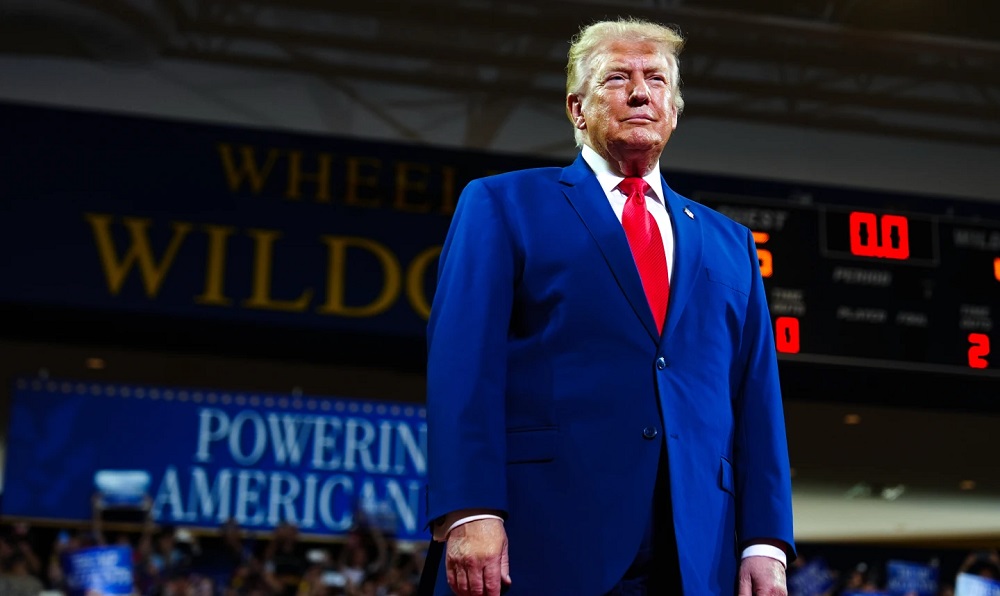
U.S. President Donald Trump said on Thursday that a newly agreed civilian nuclear cooperation deal with Saudi Arabia will only move forward if the kingdom normalizes relations with Israel by joining the Abraham Accords.
In a post on social media, Trump said the agreement does not permit uranium enrichment and stressed that approval of the deal is contingent on Saudi Arabia signing the Abraham Accords, the U.S.-brokered agreements that established diplomatic ties between Israel and several Arab states.
“The agreement will be approved, but is totally subject to Saudi Arabia joining the very respected and successful Abraham Accords,” Trump wrote, adding that the United States supports only civilian nuclear facilities that do not involve uranium enrichment.
Saudi Arabia has repeatedly stated that it will not normalize relations with Israel without a clear pathway toward the establishment of an independent Palestinian state. Israeli Prime Minister Benjamin Netanyahu has rejected Palestinian statehood, arguing it would pose unacceptable security risks to Israel.
The Saudi Embassy in Washington declined to comment on Trump’s remarks.
Netanyahu’s office welcomed the prospect of Saudi Arabia joining the Abraham Accords, describing it as a “historic leap forward for peace in the Middle East,” but did not address the nuclear agreement.
The civilian nuclear agreement, announced on Wednesday, is expected to run for 30 years and involve U.S. companies in developing Saudi Arabia’s nuclear energy sector. According to U.S. officials familiar with the agreement, it could eventually allow for the construction of a uranium
enrichment facility following a joint U.S.-Saudi feasibility study, although Trump has insisted the final arrangement will not include uranium enrichment.
The agreement will be submitted to the U.S. Congress for review.
The Saudi Energy Ministry said the deal would help diversify the kingdom’s energy sources, promote advanced technologies and expand investment opportunities between the two countries.
Secretary of State Marco Rubio defended the agreement during a visit to Manila, saying it would ensure Saudi Arabia partners with American companies rather than competitors such as China, Russia, France or South Korea in developing its civilian nuclear program.
“We’re not the only show in town, but we’re the best show in town,” Rubio told reporters.
The agreement has already drawn scrutiny from members of Congress and nuclear non-proliferation experts, who have raised concerns over reports that it does not include the International Atomic Energy Agency’s Additional Protocol, which provides for expanded inspections and verification measures.
Some lawmakers have also questioned whether Congress should have greater oversight of any nuclear cooperation agreement with Saudi Arabia, reviving debate over legislation first proposed in 2018 that would require congressional approval before such agreements take effect.
The Trump administration has made expanding the Abraham Accords a key foreign policy objective during the president’s second term, viewing Saudi Arabia’s participation as a major step toward broader regional normalization despite ongoing tensions stemming from the conflicts in Gaza and Iran.


Afghanistan, Uzbekistan discuss expanding economic, trade and investment cooperation

Afghan PM, Uzbek Deputy PM hold talks on expanding economic and political cooperation

Badakhshan Governor, Army Chief reaffirm commitment to Afghanistan’s security

Afghanistan, Uzbekistan reaffirm commitment to expanding agricultural cooperation in Bamyan

US pauses strikes on Iran as diplomatic efforts gather pace amid regional tensions

India offers 1,000 online scholarships for Afghan students for 2026-27 academic year

Afghanistan eyes direct Basmati rice imports from India amid tensions with Pakistan

TAPI project sees rapid progress in Afghanistan

Cricket world pays tribute to Afghanistan fast bowler Shapoor Zadran

Turkey spent over $120 million to prepare airport for Qatar-donated U.S. presidential aircraft

Tahawol: New developments ahead in the Middle East discussed

Saar: Rising tensions between Kabul and Islamabad discussed

Tawsia: Factors behind rising fuel prices in Afghanistan discussed

Tahawol: US-Kabul engagement on security issues discussed

Saar: Continued exchange of attacks between US-Iran discussed
-

 Latest News4 days ago
Germany defends Afghan deportation policy after fatal Trier knife attack
-

 Sport4 days ago
FIFA updates world rankings; Spain climbs to No. 1, Afghanistan ranked 171st
-
 Latest News4 days ago
Afghanistan and Uzbekistan advance railway cooperation, discuss Trans-Afghan project
-
 World4 days ago
War in Iran has cost the US $37.5 billion so far, Pentagon says
-
 Business3 days ago
Pakistan’s trade deficit with neighbours surges to nearly $16 billion as exports to Afghanistan plunge
-
 Latest News4 days ago
Amnesty International calls for probe into Pakistan airstrike on Kabul rehabilitation centre
-

 Sport4 days ago
Rahmat Shah Zurmati appointed Afghanistan’s new Test and ODI captain
-
 Latest News5 days ago
ACCI chairman leads trade delegation to Uzbekistan