
Latest News
NASA, Boeing clear two technical hurdles for Starliner’s debut crew flight

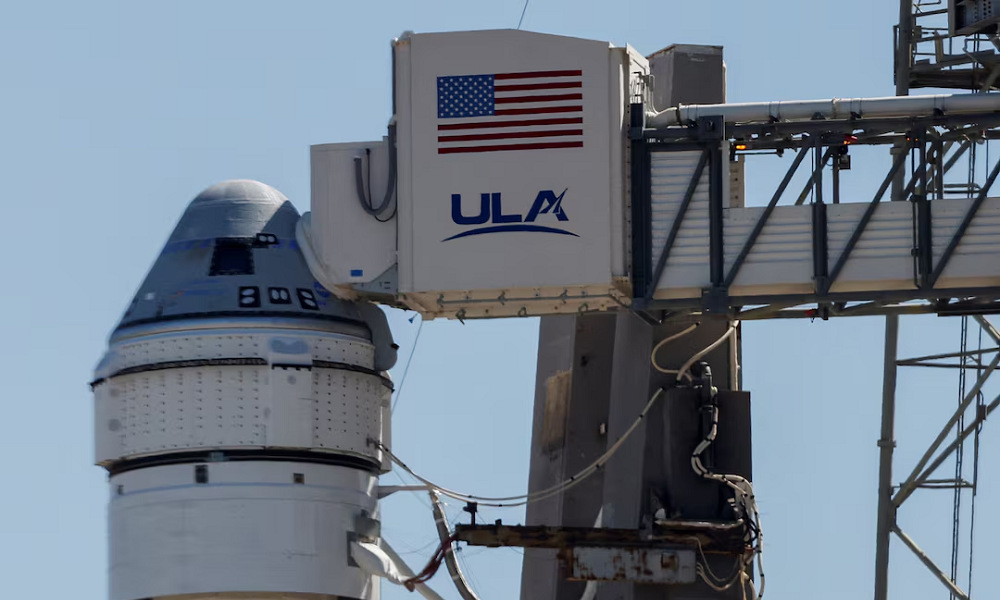
Boeing (BA.N), opens new tab and NASA quelled two technical issues on the company’s Starliner spacecraft, including a “design vulnerability” requiring a temporary workaround, to get the capsule back on track for its first mission carrying two astronauts to space, officials said on Friday.
Starliner’s debut crewed mission, a high-stakes test now planned for June 1, was derailed earlier this month by a small helium leak detected in its propulsion system hours before it was due to lift off from Florida. Over two weeks of extra scrutiny found that the leak poses no major risk to the astronauts, Reuters reported.
“This is really not a safety of flight issue for ourselves, and we believe that we have a well-understood condition that we can manage,” Boeing’s Starliner boss Mark Nappi told reporters during a news conference.
Starliner’s long-delayed first crewed flight, with NASA astronauts Suni Williams and Butch Wilmore on board, is a final test mission before NASA can certify the spacecraft for routine astronaut trips to and from the International Space Station. It would become the second U.S. crew capsule alongside SpaceX’s Crew Dragon, which started flying humans in 2020.
Boeing and NASA’s probe of the helium leak led engineers to uncover an additional issue in Starliner’s propulsion system that NASA’s commercial crew chief Steve Stich called a “design vulnerability.”
Modeling showed that a cascading, but very unlikely, series of issues during a mission could eliminate the capsule’s backup thrusters and render it unable to safely return to Earth. A software fix offered a temporary workaround for the mission, but Boeing and NASA will discuss whether a deeper redesign is needed before future flights, officials said.
“It’s backed by test data, it’s backed by flight data, and the guidance and navigation modeling have reinforced that this technique will work,” Nappi said, adding the astronauts had tested the system after the fix.
That broader issue and ad hoc resolution prompted NASA to call for an additional Flight Readiness Review, an extensive, day-long meeting among agency officials, Boeing engineers and independent analysts to justify Starliner is safe for flight.
Boeing is a longtime NASA contractor that has built modules for the decades-old International Space Station but has never before flown humans into space, a feat that persistent struggles in its Starliner program has made elusive.
Years behind schedule and with $1.5 billion in unplanned development costs, a success with Starliner is badly needed as Boeing reels from unrelenting crises in its aviation business.
Starliner in 2019 failed an attempt to reach the ISS, returning to Earth roughly a week earlier than planned because of dozens of software, technical and management issues that reshaped Boeing’s relationship with NASA.
The spacecraft succeeded in a re-do flight in 2022 to the ISS.











Kazakhstan’s Foreign Minister Mukhtar Tileuberdi has called for pragmatic and coordinated international engagement with Afghanistan, saying the country’s long-term stability is closely linked to the security and sustainable development of Central Asia.
Speaking during the general debate of the 81st session of the United Nations General Assembly in New York on Friday, Tileuberdi said humanitarian assistance to Afghanistan remains essential but alone cannot break the cycle of poverty, displacement and dependency.
He said Kazakhstan supports a “pragmatic, coordinated and step-by-step” approach to international engagement with Afghanistan, with the United Nations playing a central role.
Tileuberdi also said Kazakhstan is working with the UN to operationalize the United Nations Regional Centre for the Sustainable Development Goals for Central Asia and Afghanistan in Almaty.
He said the success of the centre should be measured by the results and assistance it delivers to the region.


Abu Muslim Farah defeat Khurasan Faryab 2-0 in ACL season six

Saar: Concerns over Pakistan’s political crisis discussed

Afghanistan Champions League: Omar Zawak Herat beat Toofan Herat 1-0

Blast in Pakistan’s Dera Ismail Khan kills 11, injures 30

Ariana Afghan Airlines increases Kabul-Delhi cargo flights

Saudi energy group signs major Afghanistan deals covering gas exploration and pipeline plans

Trump floats idea of renaming Atlantic or Pacific Ocean

US hits Egyptian bank branches with Iran sanctions as war marks six months

Nepal flood rescue mission enters critical phase as thousands remain missing

Iranian clubs to face Gulf opponents at neutral venues in Asian Champions League Elite
Saar: Concerns over Pakistan’s political crisis discussed

Exclusive interview with Abdul Latif Mansoor, Minister of MRRD

Tawsia: Overview of Afghanistan’s iron mines

Tahawol: Discussion on fresh Pakistani airstrikes on Afghanistan

Saar: Calls for international support for Afghanistan discussed
-

 World5 days ago
CNN, MS NOW and Politico sue Trump, challenging White House ban
-

 Latest News3 days ago
Ariana Afghan Airlines ranks seventh among 45 Central Asian airlines
-

 Latest News4 days ago
UN reiterates call for respect for international law after Kunar airstrikes
-

 Regional3 days ago
US and Iran hold first talks since June after Trump’s ‘annihilation’ threat
-

 Latest News3 days ago
Silk Road highway in Wakhan corridor now reaches the China border
-

 Latest News4 days ago
Afghan Official: Pakistan’s airstrikes will not go unanswered
-

 Sport4 days ago
Afghan boxing referee heads to China for international festival
-

 Regional5 days ago
G7 foreign ministers call on Iran to stop arming Houthis