
Regional
New temple transforms India’s Ayodhya but Muslims feel neglected

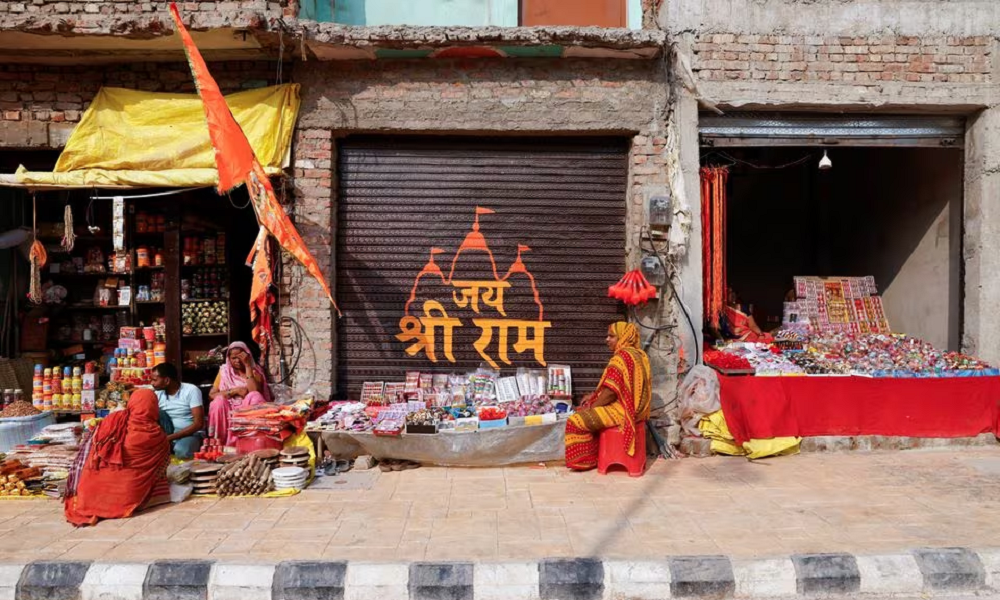
In the northern Indian city of Ayodhya, which was once marred by communal tensions, labourers are finalizing a $6 billion infrastructure facelift ahead of the opening of a grand Hindu temple that is igniting an economic boom – which some of Ayodhya’s poor and its Muslim community say is passing them by, Reuters reported.
City officials expect about 4.5 million tourists a month – more than Ayodhya’s entire population of 3 million – once the first stage of Ram Mandir, as the temple is known, opens on Jan. 22 inside a sprawling complex of carved pink sandstone and white marble.
Ayodhya made international headlines in 1992 when a Hindu mob razed Babri mosque – where the Mandir will stand – saying it had been built on the site of an earlier Hindu temple. The incident sparked nationwide riots that left 2,000 people dead, most of them Muslims.
After decades of legal contests, India’s Supreme Court in 2019 awarded the site to Hindu groups for temple construction.
While the $180 million temple project in Uttar Pradesh state is funded by donations, the state government – controlled by Prime Minister Narendra Modi’s Hindu nationalist Bharatiya Janata Party (BJP) – is pulling out all the stops.
The BJP – which had made construction of the temple a national campaign pledge – is in government spending billions on rebuilding Ayodhya, with a new international airport, parks, roads and bridges in the offing.
Hindu priest Rajendra Das says the temple – which believers say is built on the birthplace of Lord Ram, one of Hinduism’s most sacred deities – has boosted Ayodhya’s hospitality and real estate sectors like never before.
“Everyone will benefit by the temple,” said Das, a 64-year-old dressed in a dhoti sarong. He is spending $120,000 to rebuild his tourist lodge – which is being demolished in the city’s revamp – with bigger rooms that have more amenities.
“Foreign tourists and people from every nook and corner of India will come.”
Reuters interviewed dozens of residents and businesspeople who said the Mandir is bringing a flood of new investment and prosperity to Ayodyha, though some complain of being left behind.
Locals whose property was demolished in redevelopment feel displaced by soaring land prices and scant compensation. And some from the city’s sizeable Muslim community of an estimated 350,000 said they are not reaping the benefits of the boom.
BJP spokesperson Rakesh Tripathi denied that Muslim residents were being left out: “If roads are getting widened then Muslims will also use them. If electricity supply is getting fixed, Muslims will also benefit.”
“This temple is expected to stand as one of the grandest Hindu temples, much like India’s own Vatican City,” said Lodha chief executive Samujjwal Ghosh, adding that businesses were marketing Ayodyha as a premium consumer product.
Each year, millions of Hindus travel to Indian temple cities like Varanasi and Tirupati, which have become tourist hotspots with thriving hospitality sectors.
The revamp, however, has upset many in the city’s Muslim community. In its 2019 order, the Supreme Court also said authorities must allocate the Uttar Pradesh Sunni Central Waqf Board, which advocates for Muslim rights, “suitable” land at a “prominent” place to build a new mosque.
The board was issued land 15 miles from the temple, just next to the city border. That effectively means Muslims are excluded from the development boom downtown, said Azam Qadri, president of Ayodhya district committee of the board.
When Reuters visited the site designated for the mosque, there was no construction or infrastructure development ongoing in the quiet surrounding area. A poster on a wall showcased the proposed design and read: “A Masterpiece In Making”.
“Everyone is focused on the temple. There should have been focus on promoting mosques too,” Qadri said.
Muslims still don’t have wide acceptance in the city and even if the community tried to build hotels, Hindu religious tourists might not visit, he added.



Regional
Turkey, Pakistan, Saudi Arabia defence pact technically same as NATO’s Article 5, Turkish minister says
Fidan also said Turkish President Tayyip Erdogan wanted to see the alliance expand, and that Egypt was a potential candidate to join, among others.
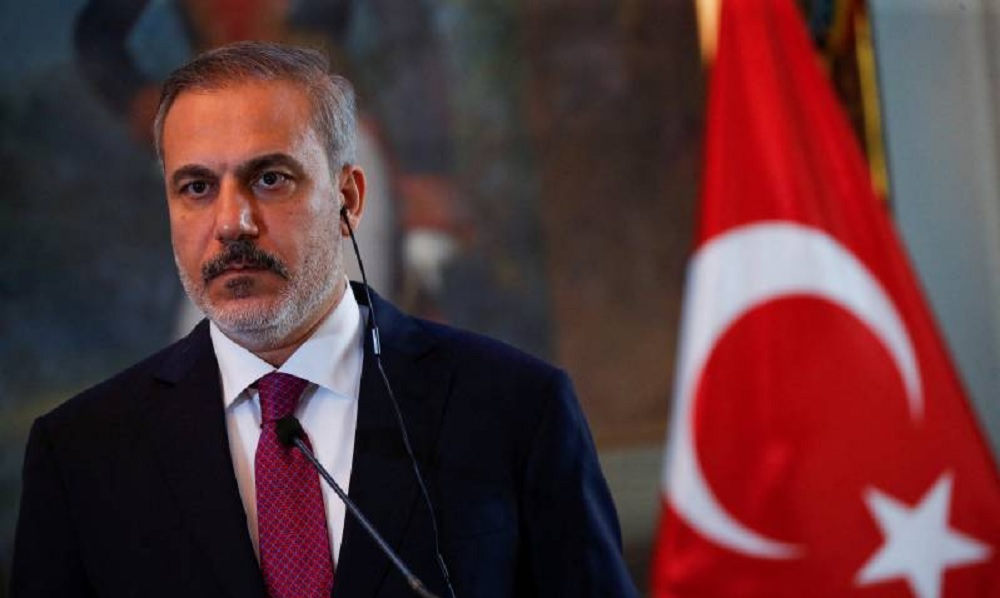
A defence pact signed between Turkey, Pakistan and Saudi Arabia is technically the same as NATO’s Article 5 mutual defence agreement, Turkish Foreign Minister Hakan Fidan said on Saturday, adding the accord was not targeting Iran.
Fidan also said Turkish President Tayyip Erdogan wanted to see the alliance expand, and that Egypt was a potential candidate to join, among others.
The regional powers signed the “Mecca Joint Defence Agreement” on Friday, wedding Sunni Muslim U.S. allies alarmed at a regional conflagration that has brought Iranian missile fire onto Gulf oil exporters.
In a joint statement, they said the accord intended to strengthen collective deterrence against any act of aggression and stipulates that an armed attack against any of the three would be regarded as an attack on all.
Speaking to the state-run Anadolu news agency, Fidan said the new alliance was not directed against Iran or any other country, but rather served as a general pledge to support the three allies’ security.
He added that the allies would decide through consultations what degree, form, and format of support they would ask for in the event of an attack, but that no country would be considered a threat as long as a member state is not attacked.
Turkey, which has NATO’s second-largest army, has said the pact was open to expansion to other regional countries and did not seek to replace any existing alliances.
“NATO is a giant military alliance where there are 32 countries. We have started here as three countries and we have to take very humble but concrete steps,” he said, adding efforts to finalise the pact had been underway for two years and eight months.
He added that a committee of ministers similar to that within NATO would be formed as part of the alliance, as well as a general secretariat based in Saudi Arabia, but that operational details would be set at the first committee meeting.
“Our president’s vision is that we don’t remain limited to three countries, that we grow and bring together all (regional) countries under this roof,” he said, adding Egypt could potentially join the pact once certain technical matters are resolved.
In recent months, Turkey, Saudi Arabia, Pakistan and Egypt formed a group to address regional issues, namely the war on Iran. Turkey has said the group – dubbed the R4 – aims to solidify its partnership through concrete mechanisms.
Fidan also said Turkey should be involved in an international coalition to protect shipping in the Red Sea from Houthi attacks because shipping safety concerned Ankara’s interests.
Regional
Goods transporters to go on strike from Saturday after talks with Pakistan govt fail
However, the minister has assured the transporters that he would discuss their demands, and the next round of talks would be held on Monday morning.
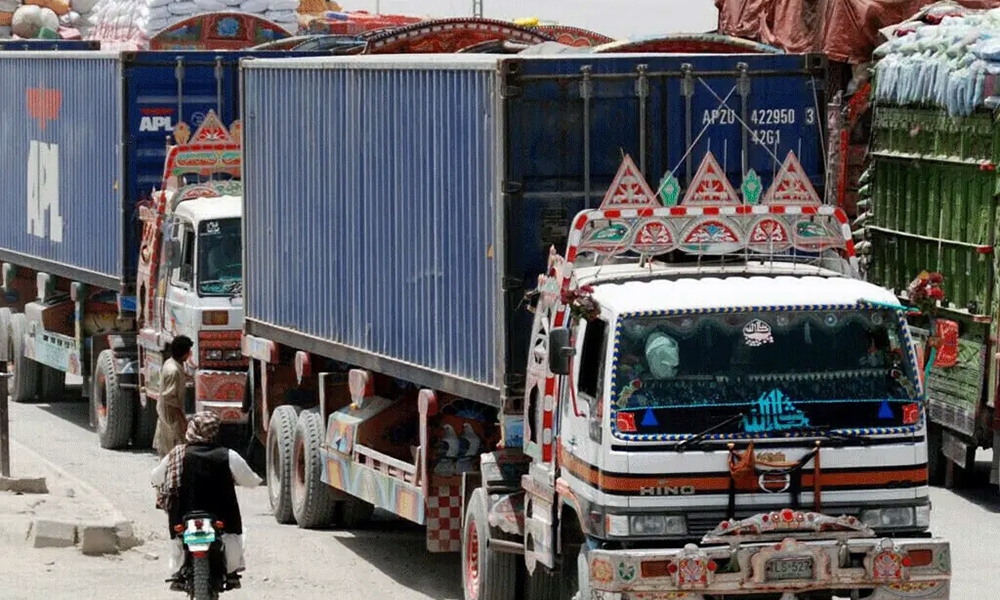
Goods transporters and oil tanker operators began suspending their services on Friday night after negotiations with the Pakistani government failed, ahead of their nationwide wheel-jam strike scheduled for Saturday.
All Pakistan Goods Transport Itehad spokesman and All Pakistan Goods Transport Owners Association President Mohammad Owais Chaudhry Advocate told Dawn that talks with Federal Minister for Communications Aleem Khan and other government officials had failed.
He said the negotiations ended without a breakthrough, prompting transporters, including edible oil tanker operators, petroleum oil tanker operators, truckers, trailer operators and other intercity transporters, to proceed with their previously announced strike.
“We have informed the government side about the problems we are facing and our concerns,” Chaudhry said, adding that the strike would continue until their demands were accepted.
However, the minister has assured the transporters that he would discuss their demands, and the next round of talks would be held on Monday morning.
The unified body of transporters had already announced that it would begin its wheel-jam strike from August 8, and warned that it would not be a token strike but an indefinite one.
“Commercial goods carriers across the country have already been taken off the roads and will remain stationed at designated places during the protest period,” Chaudhry said.
Among the key demands of the transporters is the uniform enforcement of axle-load limits across the country and permission for 10-wheel vehicles to carry up to 35 tonnes.
They have also demanded reductions in diesel prices and toll taxes, besides seeking relief in withholding tax to ease the financial burden on the transport sector.
The transporters have also called for the withdrawal of customs provisions that, according to the association, allow authorities to confiscate vehicles carrying goods found to be in violation of customs laws.
Other demands include the withdrawal of the Punjab Highway Patrol’s powers to issue challans to commercial vehicles, an end to what the association described as unnecessary challans and excessive fines on motorways and highways, and measures to facilitate the issuance of heavy transport vehicle licences to drivers.
Regional
Iran FM calls for regional self-reliance and ‘true brotherhood’
“Iran’s powerful armed forces have shown their readiness, capability and might in the face of the world’s most expensive military,” Araghchi wrote.
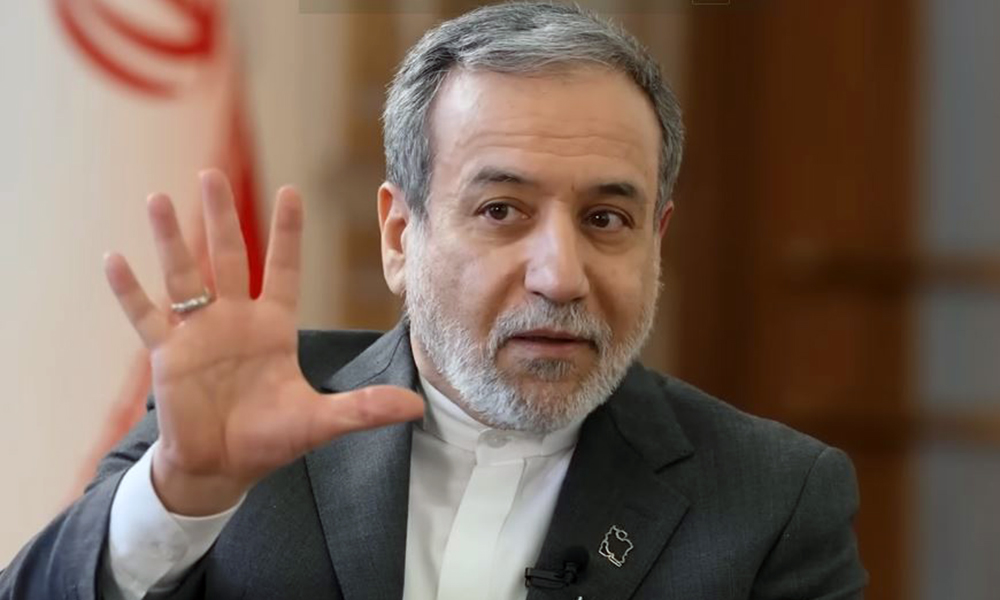
Iranian Foreign Minister Abbas Araghchi has called on neighbouring countries to strengthen regional cooperation and rely more on their own capabilities, saying Iran’s armed forces have demonstrated their ability to confront a powerful military.
Araghchi made the remarks in a post on X, where he praised the readiness and capabilities of Iran’s armed forces.
“Iran’s powerful armed forces have shown their readiness, capability and might in the face of the world’s most expensive military,” Araghchi wrote.
The Iranian foreign minister also called for greater unity among Muslim countries, saying that collective action could help the region confront external challenges.
“When Muslims stand together, we can face every challenge by malicious outsiders head-on,” he said, concluding with a call to “rely only on ourselves and embrace true brotherhood.”
Araghchi’s remarks come amid heightened regional tensions and months of conflict involving Iran, Israel and the United States. Tehran has repeatedly called for stronger regional cooperation while warning against foreign military intervention in the region.


Israel rejects Trump’s 15-point plan for Gaza, PM Netanyahu says

Afghanistan issues more than 650,000 passports in one year

Construction begins on major cement production plant in Herat

Pakistan-backed armed groups in Balochistan using former Afghan government forces: report

Afghanistan secure direct qualification for 2027 Men’s ODI World Cup

Pakistan’s governance system has ‘collapsed’: Mohsin Naqvi

India offers 1,000 online scholarships for Afghan students for 2026-27 academic year

Turkey spent over $120 million to prepare airport for Qatar-donated U.S. presidential aircraft

FIFA’s inaugural YouTube Creator Cup to stream live on Ariana Television and Ariana Sport YouTube channels

FIFA World Cup semi-final line-up confirmed

Tahawol: Escalating disputes over Iran war discussed

Saar: Turkey, Saudi Arabia and Pakistan defense pact reviewed

Tahawol: End of US sanctions waiver for Chabahar Port discussed

Saar: US warns of ISIL-K threat in Afghanistan discussed

Tahawol: Limited choices of small states in global politics discussed
-

 Sport5 days ago
Afghanistan aim to strengthen ODI ranking in Ireland series
-
 Latest News4 days ago
Khalilzad says Pakistan needs ‘reset’ amid economic crisis and rising instability
-

 Latest News4 days ago
First Afghanistan-Ireland ODI abandoned without a ball bowled
-

 Sport4 days ago
Afghanistan aim for winning start against Ireland
-

 Sport3 days ago
Afghanistan holds Russia to 3-3 draw, earns first point at Continental Futsal Championship
-

 Latest News4 days ago
Afghan boxer appears in Greek court over death of Scottish woman
-
 Regional3 days ago
Iran threatens to hit Gulf states if US launches new strikes
-
 Business3 days ago
Uzbekistan’s Fergana region strengthens economic ties with Afghanistan