Connect with us

Regional

Pakistan tells Iran it wants to build trust after tit-for-tat strikes

Published

on

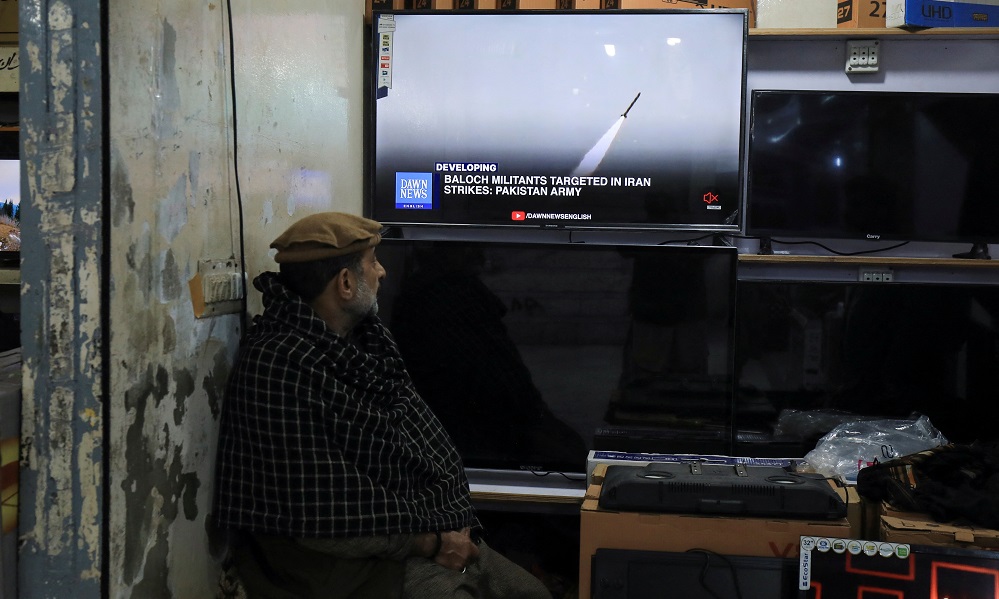
Pakistan expressed its willingness to work with Iran on “all issues” in a call between their foreign ministers on Friday after both countries exchanged drone and missile strikes on militant bases on each other’s territory.

The tit-for-tat strikes by the two countries are the highest-profile cross-border intrusions in recent years and have raised alarm about wider instability in the region since the war between Israel and Hamas erupted on Oct. 7, Reuters reported.

However, while Iran and Pakistan have a history of rocky relations, both sides have already signalled a desire to cool tensions.

A statement from Pakistan’s foreign office said Foreign Minister Jalil Abbas Jilani had spoken to his Iranian counterpart, Hossein Amirabdollahian, on Friday, a day after Pakistan carried out strikes in Iran.

Iran said Thursday’s strikes killed nine people in a border village on its territory, including four children. Pakistan said the Iranian attack on Tuesday killed two children.

“Foreign Minister Jilani expressed Pakistan’s readiness to work with Iran on all issues based on spirit of mutual trust and cooperation,” the statement said. “He underscored the need for closer cooperation on security issues.”

‘MINOR IRRITANTS’

The contact follows a call between Jilani and his Turkish counterpart in which Islamabad said “Pakistan has no interest or desire in escalation”.

Amirabdollahian, in comments quoted by Iran’s state media, said: “Pakistan’s sovereignty and territorial integrity are of great interest to us and bilateral cooperation is essential to neutralise and destroy terrorist camps on Pakistani soil.”

The contacts came as Pakistan’s Caretaker Prime Minister Anwaar ul Haq Kakar convened a meeting of the National Security Committee, with all military services chiefs in attendance. Kakar had cut short a visit to the World Economic Forum in Davos and flew home on Thursday.

The meeting concluded that “the two countries would mutually be able to overcome minor irritants through dialogue and diplomacy and pave the way to further deepen their historic relations”, according to a statement from the Prime Minister’s Office.

However, it also resolved that any attempts to breach the territory of Pakistan “will be responded with full might of the state”.

It urged Iran to use existing communication channels to address security concerns.

Kakar told a cabinet meeting following the security huddle that it was in the “interest of both countries” to return to relations as they stood before Iran’s strikes, another statement said.

Pakistan had recalled its ambassador from Tehran and had not allowed Iran’s ambassador to return to Islamabad.

Pakistani broadcaster Geo TV, citing sources, reported that the cabinet had decided to end a standoff and also endorsed a move to re-establish full diplomatic relations with Iran.

Regional

Trump backs down on strikes on Iran’s power network, says US and Tehran holding talks

Iranian attacks have effectively closed the Strait, which ​carries a ⁠fifth of global oil and liquefied natural gas.

Published

on

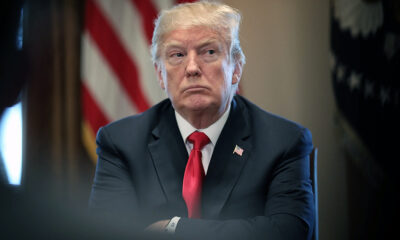
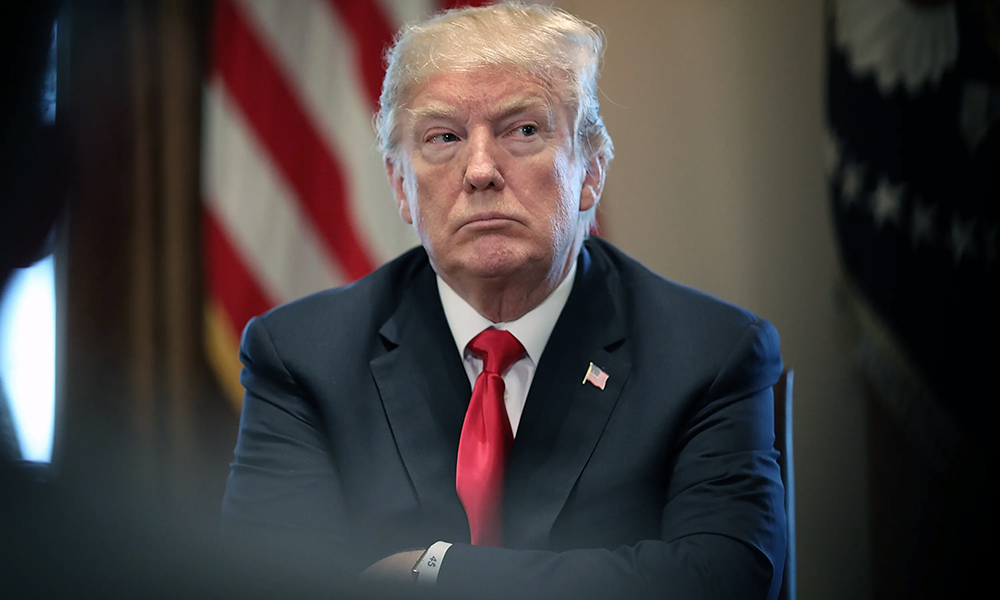
President Donald Trump backed down on targeting Iran’s power network on Monday, saying the U.S. and ​Iran have held constructive talks and that he would ‌postpone any strikes on power plants and energy infrastructure, Reuters reported.

Trump’s statement came after Iran threatened to attack Israel’s power plants and those supplying U.S. bases ​across the Gulf region if the U.S. targets Iran’s ​power network.

The dollar plunged and ​stocks surged following Trump’s post.

The United States and Iran “have had, over ​the last two days, very good and productive conversations regarding a complete and total resolution of our hostilities in the Middle East,” Trump wrote ​in a post on Truth Social.

“I have instructed the Department ​of War to postpone any and all military strikes against Iranian power plants ‌and ⁠energy infrastructure for a five-day period, subject to the success of the ongoing meetings and discussions.”

On Saturday, Trump warned that Iranian power plants would be destroyed if Tehran failed to “fully open” ​the Strait of ​Hormuz to ⁠all shipping within 48 hours. Trump set a deadline of around 7:44 p.m. EDT (2344 GMT) on ​Monday.

Iranian attacks have effectively closed the Strait, which ​carries a ⁠fifth of global oil and liquefied natural gas, read the report.

More than 2,000 people have been killed in the war the U.S. and Israel ⁠launched ​on February 28, which has upended markets, ​driven up fuel costs, fuelled global inflation fears and convulsed the postwar Western ​alliance.

Continue Reading

Regional

Iran says coastal attack will lead to full Gulf closure and mine-laying

Published

on

An attack on Iran’s southern coast and islands will lead to ​Gulf routes being cut with the ‌laying of sea mines, the country’s Defence Council said on Monday according to state media, Reuters reported.

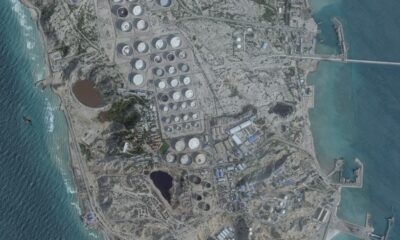
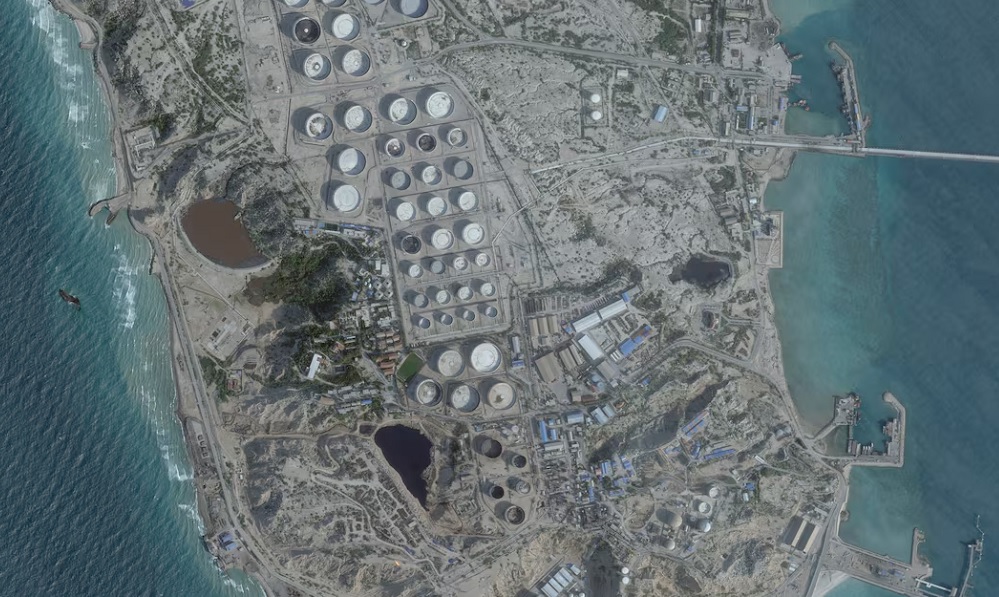
The ​U.S. is considering plans to occupy, opens new tab or ​blockade Iran’s Kharg Island, the country’s main ⁠oil export hub, to pressure Tehran ​to reopen the Strait of Hormuz to ​all shipping, according to Axios.

“Any attempt to attack Iran’s coasts or islands will cause all access routes ​in the Gulf (…) to be mined ​with various types of sea mines, including floating ‌mines ⁠that can be released from the coast,” the statement read.

“In this case, the entire Gulf will practically be in a situation ​similar to ​the ⁠Strait of Hormuz for a long time (…) One should not forget ​the failure of more than ​100 ⁠minesweepers in the 1980s in removing a few sea mines.”

The Defence Council recalled that ⁠non-belligerent ​states can only pass through ​the Strait of Hormuz by coordinating passage with Iran.

Continue Reading

Regional

Iran says Hormuz open to all but ‘enemy-linked’ ships

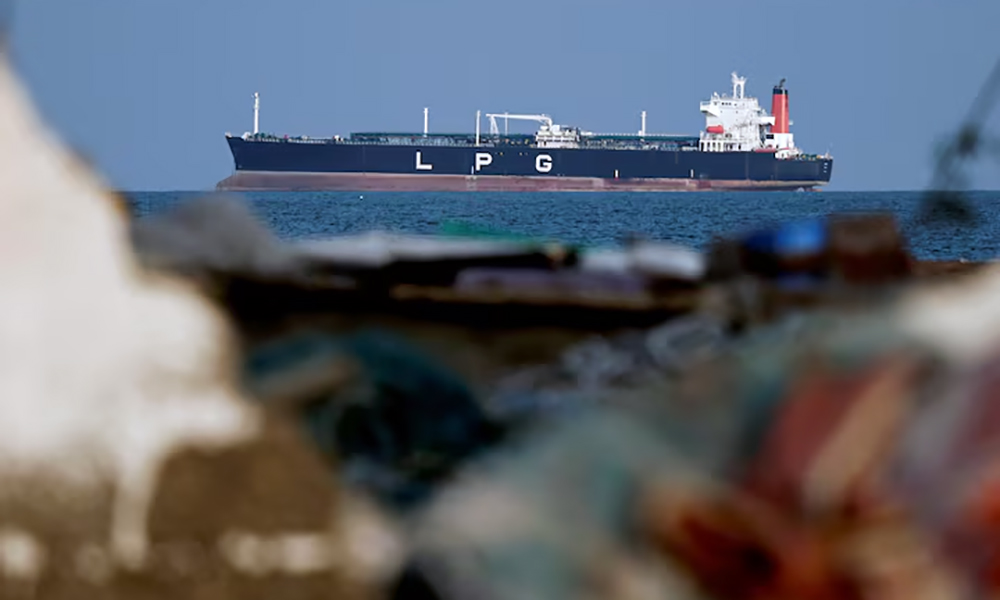
The threat of Iranian attacks during the U.S.-Israeli war on Iran has kept most ships from getting through the narrow strait, the conduit for around a fifth of global oil and liquefied natural gas supplies, threatening a global energy shock.

Published

on

The Strait of Hormuz remains open to all shipping except vessels linked to “Iran’s enemies”, Iranian media reports published on Sunday quoted Iran’s representative to the U.N. maritime agency as saying.

Ali Mousavi’s comments came from an interview published on Friday by Chinese news agency Xinhua, before U.S. President Donald Trump’s threat to target ⁠Iranian power plants if the strait was not “fully open” within 48 hours.

The threat of Iranian attacks during the U.S.-Israeli war on Iran has kept most ships from getting through the narrow strait, the conduit for around a fifth of global oil and liquefied natural gas supplies, threatening a global energy shock.

Mousavi, who is also Iran’s ambassador to the ⁠UK, was also quoted as saying that Tehran would continue to cooperate with the International Maritime Organisation (IMO) to improve maritime safety and protect seafarers in the Gulf, adding that ships ⁠not belonging to “Iran’s enemies” could pass the strait by coordinating security and safety arrangements with Tehran.
“Diplomacy remains Iran’s priority. However, a complete ⁠cessation of aggression as well as mutual trust and confidence are more important,” Mousavi said, adding that Israeli ⁠and U.S. attacks against Iran were at the “root of the current situation in the Strait of Hormuz”.

Continue Reading
Advertisement
Advertisement
Advertisement
Advertisement

Trending

Copyright © 2025 Ariana News. All rights reserved!