
Business
Pashdan dam inaugurated, marking a milestone in Afghanistan’s economic development
Abdul Latif Mansoor, the Minister of Water and Energy, wrote on his X page that this dam was constructed at a cost of $117 million dollars from the country’s national budget.

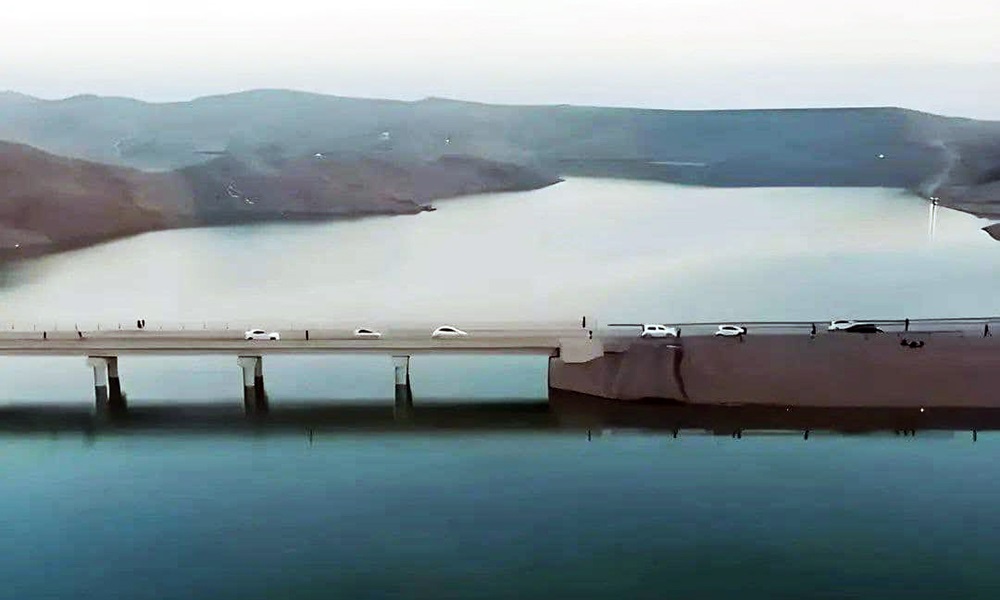
In a significant step toward bolstering Afghanistan’s water management and agricultural infrastructure, Deputy Prime Minister for Economic Affairs, Mullah Abdul Ghani Baradar, on August 14, 2025 – officially inaugurated the Pashdan Dam in Karukh District of Herat Province.
Speaking at the ceremony, Deputy PM Baradar highlighted that the inauguration coincides with the fourth anniversary of the Islamic Emirate of Afghanistan’s return to power—a period he described as marked by substantial achievements in implementing Islamic Sharia and advancing political and economic priorities.
“Last year, I pledged that the Islamic Emirate would complete the remaining works of the Pashdan Dam with full capacity. Today, I am proud to say that promise has been fulfilled,” he stated.
The Deputy PM emphasized the strategic importance of the dam for Herat Province, noting its potential to mitigate drought, support local farmers, and strengthen food security. He underscored that past occupations had left Afghanistan’s economy stagnant and heavily reliant on conditional foreign aid, but the Islamic Emirate is committed to building a self-reliant national economy.
Baradar also stressed that the Islamic Emirate supports both national and regional economic projects, citing the progress of the TAPI gas pipeline project in Herat as an example of fostering regional cooperation and stability. He reiterated the government’s policy of prudent natural resource management, ensuring respect for the rights of neighboring nations while using water resources to reduce poverty, unemployment, and migration.
Calling on investors, both domestic and international, the Deputy PM encouraged capital inflows not only into water and agriculture but also into other key economic sectors.
The Pashdan Dam project, now fully operational, boasts the capacity to store 54 million cubic meters of water, irrigate 13,000 hectares of agricultural land, and produce two megawatts of electricity, creating thousands of job opportunities.
Concluding his remarks, Deputy PM Baradar congratulated the Afghan people and expressed gratitude to government officials, engineers, technical staff, and laborers whose collective efforts made the project’s completion possible.
Abdul Latif Mansoor, the Minister of Water and Energy, wrote on his X page that this dam was constructed at a cost of $117 million dollars from the country’s national budget.



Business
Afghanistan invites Turkish investors to expand joint investments
Participants stressed the importance of increasing private sector cooperation and creating new opportunities to boost trade and investment between Afghanistan and Türkiye.
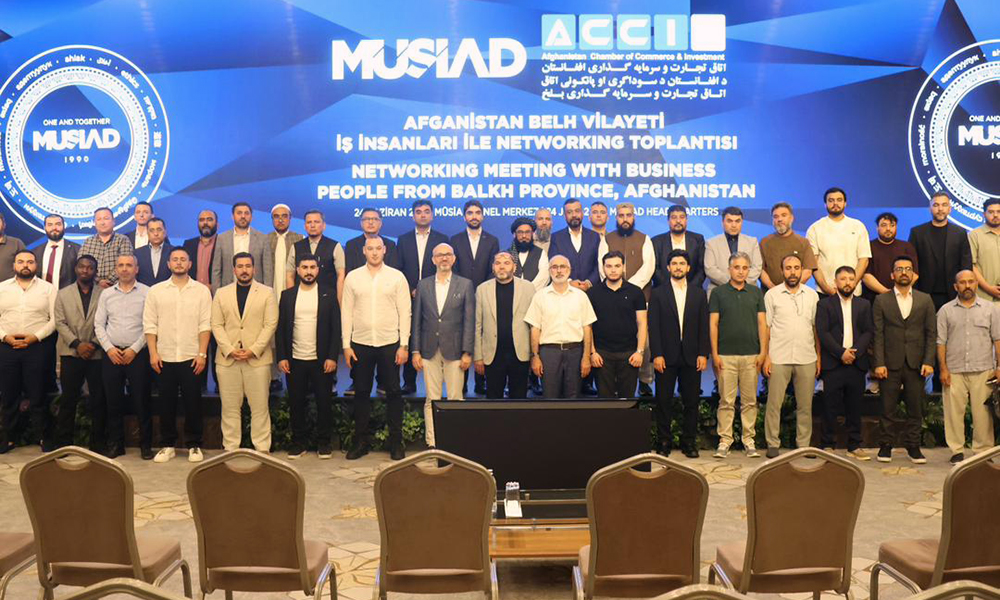
A high-level Afghan business delegation, led by the Chairman of the Balkh Chamber of Commerce and Investment, Mohammad Ibrahim Ghazanfar, participated in the Afghanistan–Türkiye Joint Business Council meeting in Istanbul, calling for expanded joint investment and stronger economic cooperation between the two countries.
According to a statement from the Balkh Chamber of Commerce and Investment, Ghazanfar invited Turkish investors and industrialists to explore investment opportunities across various sectors in Afghanistan, emphasizing the country’s potential for mutually beneficial partnerships.
The meeting brought together business leaders, investors, and private sector representatives from both Afghanistan and Türkiye to discuss ways to strengthen bilateral trade and economic ties.
During the event, several cooperation agreements were signed between Afghan and Turkish economic institutions. The agreements are aimed at expanding commercial relations, promoting joint investment projects, and enhancing economic cooperation between the two countries.
The meeting was chaired by Süleyman Güllü, Chairman of the Türkiye–Afghanistan Joint Business Council, and was attended by Mohammad Akbar Azimi, the Islamic Emirate of Afghanistan’s Consul General in Istanbul, along with a number of businessmen and investors from both countries.
Participants stressed the importance of increasing private sector cooperation and creating new opportunities to boost trade and investment between Afghanistan and Türkiye.
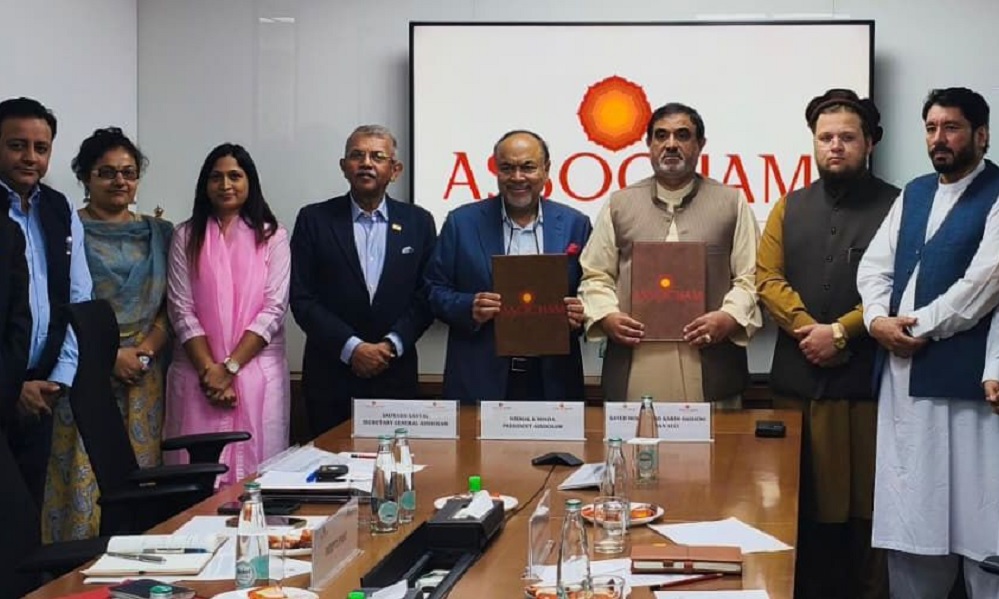
The Afghanistan Chamber of Commerce and Investment (ACCI) and the Associated Chambers of Commerce and Industry of India (ASSOCHAM) have signed a memorandum of understanding (MoU) aimed at strengthening bilateral trade, investment, and business cooperation between India and Afghanistan.
The agreement was signed in New Delhi by Saurabh Sanyal, Secretary General of ASSOCHAM, and Sayed Mohammad Karim Hashemi, Chairman of ACCI, during a meeting between business leaders from the two countries, ASSOCHAM said in a statement.
The Afghan delegation, led by Hashemi, held discussions with Nirmal Kumar Minda, President of ASSOCHAM, and other officials on ways to expand bilateral trade, investment flows, and private-sector cooperation.
According to ASSOCHAM, the MoU seeks to strengthen institutional collaboration, promote business-to-business linkages, and facilitate greater trade and investment opportunities between India and Afghanistan.
The organization said it remains committed to fostering stronger economic ties and creating new avenues of cooperation between the business communities of both countries.
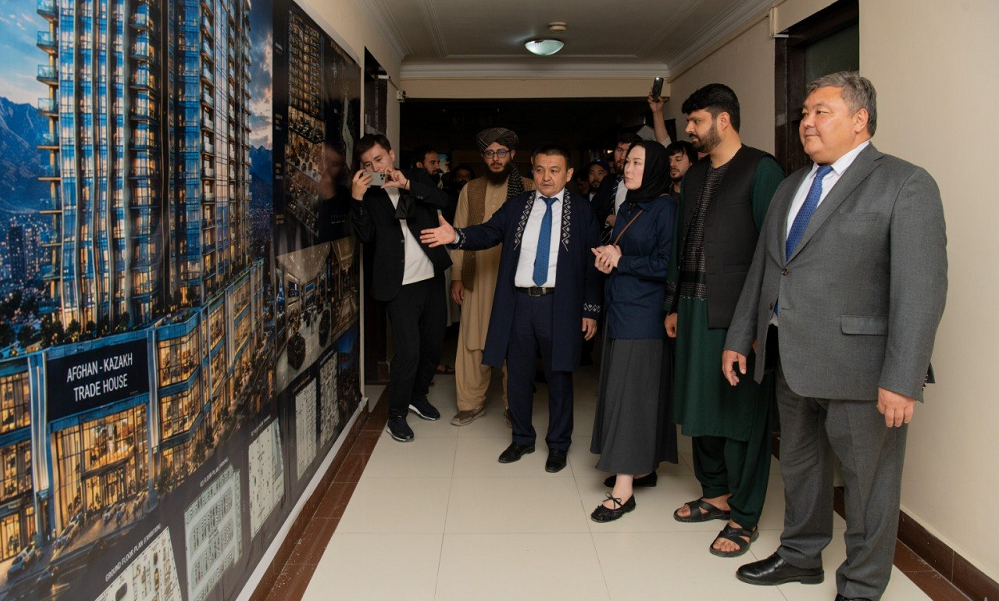
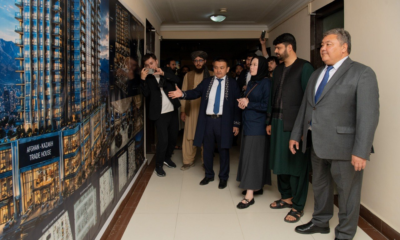
Kazakhstan has signed a major zinc ore supply agreement with an Afghan company as the two countries continue to expand economic cooperation and trade ties.
According to Kazakhstan’s Ministry of Trade and Integration, the contract was signed between Kazakhstan’s ShalkiyaZinc and Afghanistan’s Afghan German Bakhtar Company during the opening of the Kazakhstan Trade House in Kabul.
The signing took place as part of an official business mission led by Kazakhstan’s Deputy Prime Minister and Minister of National Economy, Serik Zhumangarin.
Under the agreement, Afghan German Bakhtar Company will supply approximately 30,000 tons of zinc ore annually on DAP (Delivered at Place) terms. The ore will be used as raw material for the production facilities of Kazakhstan’s Kazzinc. The total value of the contract is estimated at $18.88 million.
The deal marks a significant step in diversifying trade relations between Kazakhstan and Afghanistan, moving beyond traditional agricultural exports into the mining and industrial sectors.
“Afghanistan today is a market of opportunities,” said Kanat Kudaibergen, Chairman of the Board of GWM Capital LTD. He noted that while Kazakhstan’s exports to Afghanistan have historically consisted mainly of flour, grain, sunflower oil, and other agricultural products, demand is increasingly growing for machinery, equipment, and service solutions in agriculture, construction, and mining.
Kudaibergen expressed confidence that the newly established Trade House in Kabul would serve as an important platform for developing new business projects and expanding Kazakhstan’s non-resource exports.
The agreement follows recent discussions between Kazakh officials and Afghanistan’s leadership, including Prime Minister Mohammad Hasan Akhund and Deputy Prime Minister Abdul Ghani Baradar, during which Kazakhstan expressed interest in sourcing zinc ore from Afghanistan.
Preparations for the deal began last year when specialists from Tau-Ken Samruk visited Afghanistan’s Bamyan province to assess the Pami-Kakrak zinc deposit. Samples collected during the visit were later analyzed by Kazzinc, which confirmed the feasibility of processing the ore at Kazakh facilities.
Economic relations between the two countries have been steadily strengthening. Kazakhstan’s Ministry of National Economy reported that bilateral trade reached $541.8 million in 2025. Both governments have set an ambitious target of increasing annual trade turnover to $3 billion in the coming years.


Saar: Concerns over Afghan deportations from Europe discussed

6.1-magnitude earthquake hits Afghanistan, epicenter in Badakhshan

Delawar says Afghanistan has achieved security and unity after 47 years

EU announces major funding to support Afghan small businesses

Afghan women’s situation highlighted at SCO Forum amid ongoing global debate

Norway’s Viking-inspired World Cup team photo goes viral

TAPI project advances in Afghanistan as 84kms of pipeline laid

Afghanistan’s trade with Central Asia records sharp growth

Afghanistan to play in Diamond Jubilee Tournament opener against Maldives

Gaikwad set to replace injured Kohli for Afghanistan ODI Series
Saar: Concerns over Afghan deportations from Europe discussed

Exclusive interview with Polleak Ok Serei, UNODC Representative for Afghanistan

Tahawol: Germany’s defense of engagement with IEA discussed

Saar: Rejection of security threats from Afghan soil discussed

Tahawol: Efforts to eliminate drugs across Afghanistan discussed
-

 International Sports4 days ago
Knockout picture begins to take shape at FIFA World Cup 2026
-
 Latest News5 days ago
Contract signed for reconstruction of 15km section of Salang Highway
-
 Latest News2 days ago
TAPI project sees rapid progress in Afghanistan
-
 Business5 days ago
Kazakhstan signs $18.8 million zinc ore supply agreement with Afghan company
-
 Latest News4 days ago
Afghanistan’s SCO participation blocked over one member’s objection, Kabulov says
-
 Latest News5 days ago
Qatar embassy holds roundtable on Afghanistan’s relations with international community
-

 International Sports5 days ago
Messi breaks World Cup scoring record as Argentina reach knockout stage
-
 Latest News4 days ago
EU allocates 20 million euros to support returnees in Afghanistan