
Latest News
PEACE BRIEFS: Timeline of intra-Afghan negotiations

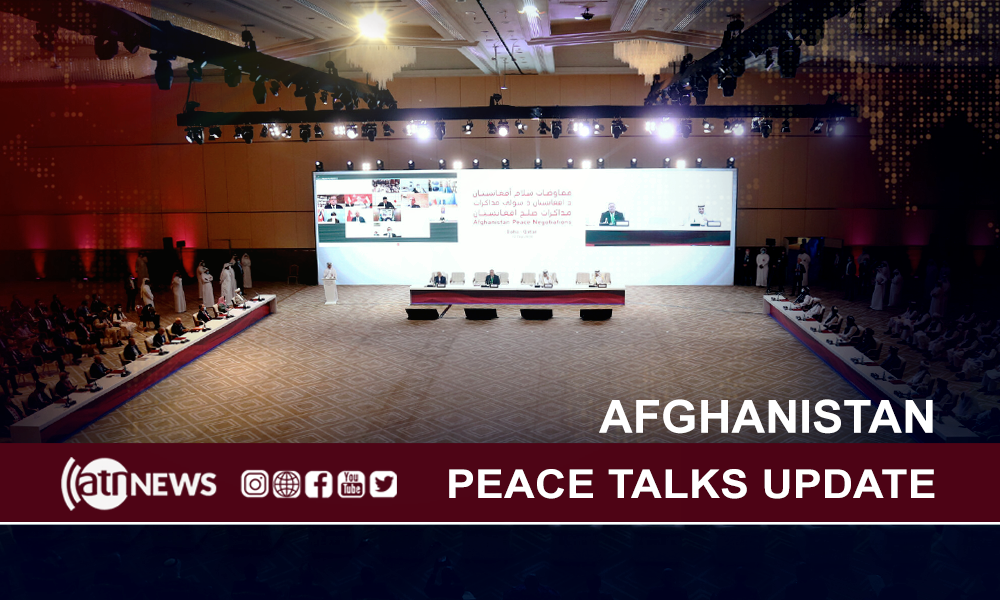
TODAY — Sunday, September 20, 2020 —
23:00 – Nader Nadery, a member of the Afghan peace negotiating team said the contact groups from both sides met on Sunday for discussions and that progress was being made.
11:00 – Former UNAMA chief Tadamichi Yamamoto said this week peace talks, underway in Qatar between Afghanistan and the Taliban, will not be easy especially as there is a wide gap between the two parties when it comes to some key fundamental issues.
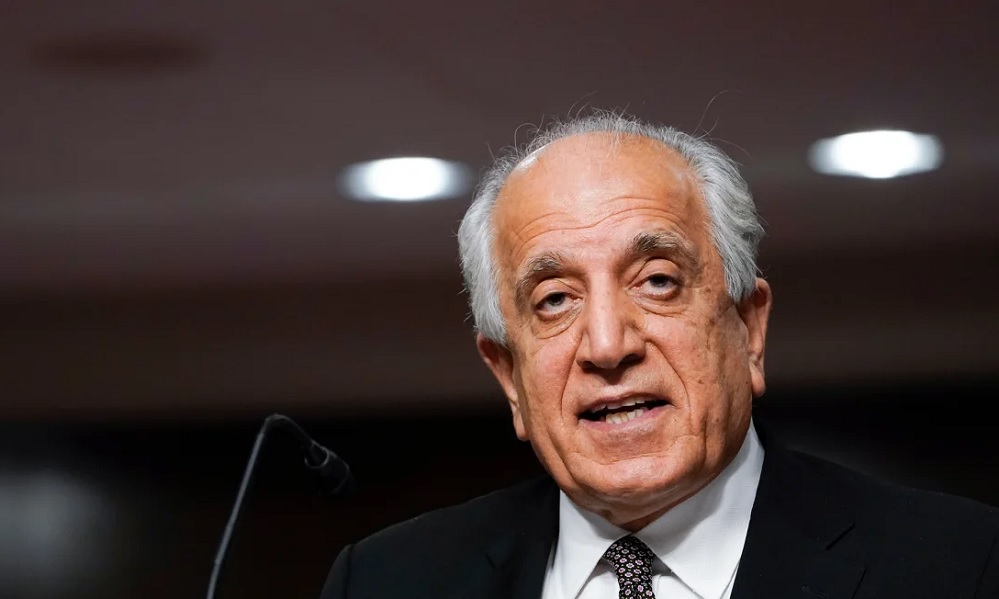
9:00 – Commenting on the UN Security Council’s statement on peace talks, US peace envoy Zalmay Khalilzad said it underscores international commitment to Afghanistan’s sovereignty, independence, territorial integrity and national unity.-
Saturday, September 19, 2020 —
17:00 – US President Donald Trump said Friday night that the Taliban was tough and smart but also “tired of fighting.” Speaking to journalists at a press conference, Trump reiterated his decision on troop withdrawals and said “we’ll be down very shortly over the next couple of weeks to 4,000 — less than 4,000 in Afghanistan.
Friday, September 18, 2020 —
15:00 – UN Security Council (UNSC) has welcomed the start of peace talks between the Afghan government and the Taliban negotiators in Doha, aimed at finding a political settlement for ending the long-term conflict in the country. In a statement released on Friday, the UNSC reaffirmed its strong commitment to the sovereignty, independence, territorial integrity, and national unity of Afghanistan.
Thursday, September 17, 2020 —
23:00 – Both sides need to come to a shared agreement on Afghanistan’s future – one where the will of the people can be exercised freely, said Abdullah Abdullah, the Chairman of the High Council for National Reconciliation.
22:00 – US Special Representative for Afghanistan Reconciliation said in order for the United States, the Afghan government and the Taliban to get to this point some very difficult, even heart-wrenching decisions had to be made. He said in an interview with Al-Jazeera that not only did the United States have to make difficult decisions but so did Afghanistan. This was in reference to concerns raised over whether the US government has given the Taliban “too much weight” in the intra-Afghan negotiation process – especially in light of the release of 5,000 prisoners.
Wednesday, September 16, 2020 —
18:00 – Afghanistan has welcomed the UN Security Council’s decision to extend the United Nations Assistance Mission in Afghanistan (UNAMA) for another year and thanked all member states that voted in favor of this. In a statement issued by the Ministry of Foreign Affairs on Wednesday night, government said UNAMA has played a vital role in garnering international support for peace talks and for the end state to safeguard and enhance the republic, the fundamental rights of all Afghans, especially women and minorities.
Tuesday, September 15, 2020 —
22:00 – In their first formal session on Tuesday evening, the Afghan peace negotiating team leader, Masoom Stanekzai emphasized the importance of the current democratic system in the country, but still keeping it within the framework of an Islamic Republic. In his speech to all negotiating team members, from both the Afghan delegation and the Taliban team, he said the war in Afghanistan has been imposed on the people, who for decades have had to sacrifice their lives.
Monday, September 14, 2020 —
23:00 – The Liaison Committees of the peace talks teams met this afternoon to discuss the modalities and schedule of future meetings. and agreed on the preparations for the general meeting to be held tomorrow, the
Taliban’s political office spokesman also confirmed.
22:30 – Peace team member Nader Nadery said Monday night the contact groups from both sides continued their discussions today on rules and procedures around talks. They are also prepared to present their ideas to the general negotiating meeting tomorrow, he said.
16:20 – US Special Representative for Afghanistan Reconciliation Zalmay Khalilzad arrived in Islamabad on Monday to discuss issues related to the Afghan peace talks with Pakistani officials. Khalilzad, who is leading a three-member delegation of senior US officials, would meet high-ranking political and military officials to discuss the next phase of the Afghan peace process, Pakistani Geo News reported citing to some sources.
9:00 – US Special Envoy for Afghanistan Reconciliation Zalmay Khalilzad expected to leave Doha Monday for Pakistan where he will meet high-ranking political and military officials to discuss Afghan peace process.
8:30 – Chairman of the High Council for National Reconciliation Abdullah Abdullah along with acting Foreign Minister Haneef Atmar and their delegation returned to Kabul on Sunday night after a 2-day trip to Doha for the opening of intra-Afghan negotiations. “I wish the negotiation teams all the best in their endeavor to achieve lasting peace in our country,” he said.
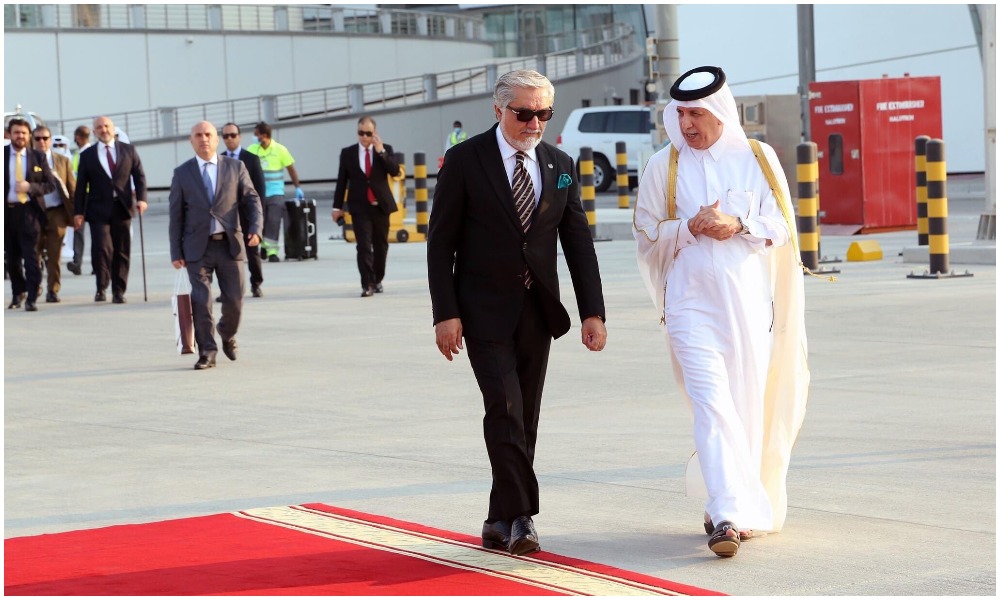
7:00 – Peace negotiating team member Nader Nadery said late last night “the first meeting between the contact groups of the two negotiation teams took place today. In this meeting code of conduct between two sides, schedules of upcoming meetings and relevant issues were discussed and progress was made.”
Sunday, September 13, 2020
20:00 – US Special Representative for Afghanistan Reconciliation Zalmay Khalilzad said Sunday the start of the intra-Afghan talks is a new beginning for the Afghan people and a way to “find a political formula for ending the war that could lead to a comprehensive and permanent ceasefire.” In an interview with Ariana News on the sidelines of the long-waited intra-Afghan talks in Doha, Khalilzad said the Afghan and Taliban delegations need to agree on a reduction in violence.
14:15 – Taliban spokesman Mohammad Naeem Wardak says the contact teams have not yet met but when they do it will “pave the way for a meeting of the negotiating teams”.
13:40 – The eight-member negotiating team that will work directly with the Taliban team are Masoom Stanekzai, Ahmad Nader Naderi, Zarar Ahmad Moqbel, Fawzia Koofi, Maulvi Enayatullah Baligh, and Khalid Noor.
12:15 – Members of the Afghan negotiating team said Sunday that actual negotiations might only start on Tuesday. This comes after a member of the Taliban’s delegation in Qatar told Ariana News that an eight-member technical team from both sides was working on setting the agenda for talks, which they say could start Monday.
9:30 – The head of Afghanistan’s High Council for National Reconciliation Abdullah Abdullah said negotiators would discuss a reduction in violence when they met with Taliban representatives on Sunday. In an interview with Reuters, Abdullah said: “One of the topmost issues on the minds of the people is reduction in violence in a significant way … and also getting to … hopefully a permanent ceasefire,” Abdullah said adding it would be one of the first issues discussed when negotiators met Sunday.
Saturday, September 12, 2020
20:00 – US Special Envoy for Afghanistan Reconciliation Zalmay Khalilzad said no foreigners will be in the conference room while negotiations between the Afghan delegation and the Taliban are underway. He said this is really an Afghan-led process and both sides “don’t want any foreigners in the negotiating room.”
19:10 – Afghan government and Taliban officials meeting in Doha for intra-Afghan negotiations should publicly commit to uphold international human rights, including women’s rights, Human Rights Watch said today. The United States, European Union, and other countries supporting the peace process should use their political and economic leverage to ensure explicit human rights commitments and enforcement mechanisms in any final agreement.
“Afghans who have endured decades of violence and abuses deserve more than vague promises to uphold human rights,” said Patricia Gossman, associate Asia director. “All participants in any future Afghan government should commit to institutions and processes to uphold women’s rights and a free press, end torture in custody, and ensure justice for abuses.”
18:28 – WATCH UN Secretary-General Antonio Guterres’ speech at today’s ceremony to launch intra-Afghan talks. He said: “The start of intra-Afghan peace negotiations is a major opportunity to achieve the long-held aspirations of the people of Afghanistan for peace. It is crucial that all Afghan leaders & members of the international community do everything possible to make peace a reality.”
18:20 – The Secretary-General of the Organization of Islamic Cooperation, Dr. Yusuf bin Ahmed Al-Uthaimin, today “renewed his appeal to negotiators and all leaders and parties in Afghanistan to work together to seize this historic opportunity for an urgent and lasting cessation of fighting and violence and to adhere to constructive dialogue to reach comprehensive reconciliation and lasting peace within the framework of the peace process that Afghanistan has.”
18:10 – US Secretary of Defense Mark Esper said in a statement issued Saturday afternoon that it is crucial for both sides to take advantage of this opportunity to make a truly Afghan-led and Afghan-owned peace process a success. “On this day, we remember the great sacrifices of the men and women of the United States Armed forces (military and civilian), who have sacrificed in some cases with their lives alongside our NATO and Afghan partners to make this day possible.”
17:40 – Reuters reports the first round of talks is expected to be largely administrative, leading to further rounds to broker a comprehensive peace deal to end the fighting. Negotiators will aim to set an agenda and may look for a ceasefire.
17:30 – US Secretary of State Mike Pompeo met with Taliban Political Deputy Mullah Baradar in Doha today. He said the “Taliban must seize this opportunity to forge a political settlement & reach a comprehensive & permanent ceasefire to end 40 years of war. This effort must be Afghan-led.”

16:30 – UK Prime Minister Boris Johnson said on Twitter this afternoon that the people of Afghanistan deserve to live in peace and security. “It is my fervent hope that today’s peace talks lead to a more stable and prosperous future and I urge the parties to negotiate in good faith.”
16:15 – The Taliban announced it has just released 22 Afghan soldiers in a gesture of goodwill on the first day of intra-Afghan negotiations.
16:05 – In a statement just issued by NATO, the organization has called on the Afghan government and the Taliban to fulfill their commitments to the peace process initiated by the US-Taliban agreement and the US-Afghanistan Joint Declaration. “Current violence levels – driven by Taliban attacks against Afghan National Defense and Security Forces – remain unacceptably high and undermine confidence in the peace process. We call on the Taliban to take decisive steps toward ending violence,” NATO stated.
15:40 – Afghan and Taliban negotiating team members chat amicably on the sidelines of the intra-Afghan negotiations that got underway today.
15:10 – High Council for National Reconciliation Chairman Abdullah Abdullah met with Sheikh Mohammed bin Jassim bin Mohammed Al Thani, Deputy Prime Minister and Foreign Minister of Qatar. He than him and his country for organizing and hosting today’s historic event and for supporting peace efforts

15:00 – US Secretary of State Mike Pompeo met with Abdullah Abdullah, chairman of the High Council for National Reconciliation, and acting foreign minister Haneef Atmar, on the sidelines of the peace negotiations in Doha this afternoon. Pompeo assured them of the US’s continued support in efforts to achieve peace and bring an end to war and violence in Afghanistan.
14:50 – Abdullah Abdullah, chairman of the High Council for National Reconciliation for Afghanistan, said on Twitter he had attended the historic opening ceremony on intra-Afghan talks and is “looking forward to successful talks & a peaceful future.”
14:00 – Over 100 formidable leaders from around the world have joined together as signatories to an open letter calling for meaningful participation by Afghan women in the peace process that started in Doha Saturday. They stated that substantive involvement of women in peace talks makes agreements more likely to be attained and upheld.
Among those who signed the letter, issued by Georgetown Institute for Women, Peace and Security, are Madeleine Albright, Former United States Secretary of State; Sheikh Abdullah bin Zayed Al Nahyan, Minister of Foreign Affairs and International Cooperation of the United Arab Emirates; Laura Bush, Former First Lady of the United States; Angelina Jolie, Special Envoy of the United Nations High Commissioner for Refugees; Hillary Rodham Clinton, Former United States Secretary of State; Ban Ki-moon, Former Secretary-General of the United Nations; and John Kerry, Former United States Secretary of State among others.
13:15 – Speaking on the sidelines of the peace talks meeting in Doha, Taliban spokesman Mohammad Naeem Wardak said talks would focus on restoration of the Islamic system in the country and the release of the remaining 7,000 to 8,000 Taliban prisoners.
13:00 – The British Embassy in Kabul issues a statement saying the UK welcomes the start of historic Intra-Afghan negotiations. They say a political solution is the only way to achieve lasting peace and that talks between Afghans on how to end the conflict and build a better future, are the core element of this solution.
12:30 – Live broadcast of talks end. Meeting now behind closed doors.
12:20 – Key global leaders continue to address the opening ceremony including NATO chief Jens Stoltenberg
11:30 – Global leaders address delegates including representatives from Afghanistan’s neighboring countries.
11:20 – US Secretary of State Mike Pompeo urged Afghans to strike a peace deal. “The choice of your future political system is, of course, yours to make,” he said, adding he hoped the solution would protect the rights of all Afghans.
WATCH LIVE as representatives from foreign countries, Afghanistan’s neighbors and other stakeholders address the opening ceremony of the historic peace talks.
11:15 – Pompeo notes the importance of today – a day that Afghans have been able to enter into a dialogue together. “We will not allow al-Qaeda and other groups to use Afghan territory and Afghanistan to be a safe haven for them. You are all responsible for these conversations,” he said.
11:10 – US Secretary of State Michael Pompeo also address the delegates.
11:00 – Taliban’s head of their negotiating team Mullah Abdul Ghani Baradar delivers his opening speech and says the Taliban assures Afghans that they will conduct the negotiations sincerely but notes that Afghanistan should have an Islamic system.
10:45 – Chairman of Afghanistan’s High Council for National Reconciliation Abdullah Abdullah gives his opening speech. He makes it clear that lasting peace will only come when it reflects the will of all Afghans. He emphasized that an end to the war is what all Afghans want.

10:30 – Opening ceremony gets underway. Qatar officials welcome all delegates.








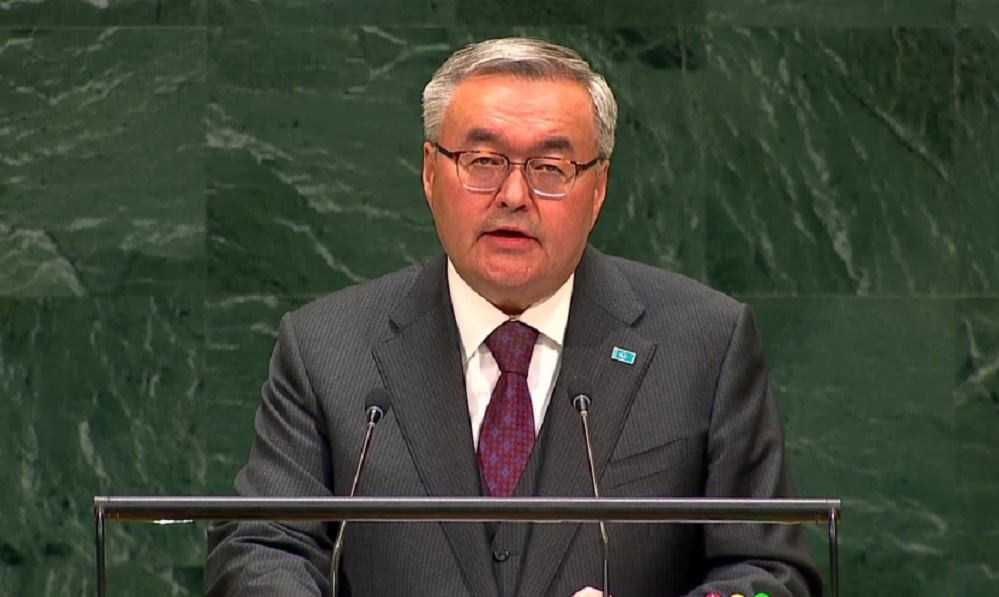
Kazakhstan’s Foreign Minister Mukhtar Tileuberdi has called for pragmatic and coordinated international engagement with Afghanistan, saying the country’s long-term stability is closely linked to the security and sustainable development of Central Asia.
Speaking during the general debate of the 81st session of the United Nations General Assembly in New York on Friday, Tileuberdi said humanitarian assistance to Afghanistan remains essential but alone cannot break the cycle of poverty, displacement and dependency.
He said Kazakhstan supports a “pragmatic, coordinated and step-by-step” approach to international engagement with Afghanistan, with the United Nations playing a central role.
Tileuberdi also said Kazakhstan is working with the UN to operationalize the United Nations Regional Centre for the Sustainable Development Goals for Central Asia and Afghanistan in Almaty.
He said the success of the centre should be measured by the results and assistance it delivers to the region.


Abu Muslim Farah defeat Khurasan Faryab 2-0 in ACL season six

Saar: Concerns over Pakistan’s political crisis discussed

Afghanistan Champions League: Omar Zawak Herat beat Toofan Herat 1-0

Blast in Pakistan’s Dera Ismail Khan kills 11, injures 30

Ariana Afghan Airlines increases Kabul-Delhi cargo flights

Saudi energy group signs major Afghanistan deals covering gas exploration and pipeline plans

Trump floats idea of renaming Atlantic or Pacific Ocean

US hits Egyptian bank branches with Iran sanctions as war marks six months

Nepal flood rescue mission enters critical phase as thousands remain missing

Iranian clubs to face Gulf opponents at neutral venues in Asian Champions League Elite
Saar: Concerns over Pakistan’s political crisis discussed

Exclusive interview with Abdul Latif Mansoor, Minister of MRRD

Tawsia: Overview of Afghanistan’s iron mines

Tahawol: Discussion on fresh Pakistani airstrikes on Afghanistan

Saar: Calls for international support for Afghanistan discussed
-

 World5 days ago
CNN, MS NOW and Politico sue Trump, challenging White House ban
-

 Latest News3 days ago
Ariana Afghan Airlines ranks seventh among 45 Central Asian airlines
-

 Latest News5 days ago
UN reiterates call for respect for international law after Kunar airstrikes
-

 Regional4 days ago
US and Iran hold first talks since June after Trump’s ‘annihilation’ threat
-

 Latest News4 days ago
Silk Road highway in Wakhan corridor now reaches the China border
-

 Regional3 days ago
Iran airlines cancel flights as US sanctions hit
-

 Latest News5 days ago
Afghan Official: Pakistan’s airstrikes will not go unanswered
-
 Regional5 days ago
G7 foreign ministers call on Iran to stop arming Houthis