
Latest News
Record levels of hunger persist in Afghanistan, WFP warns in latest report

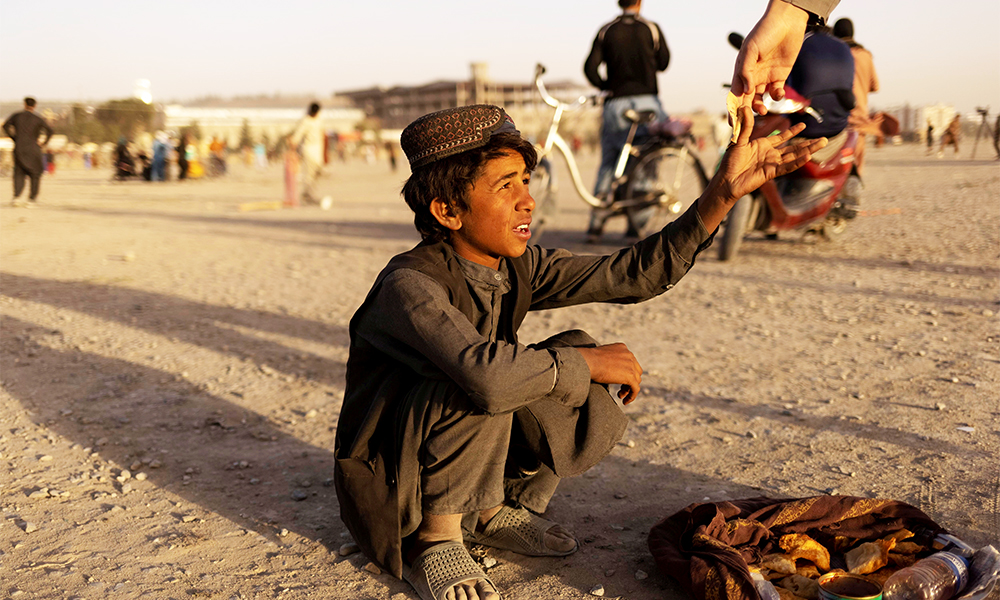
Almost half of Afghanistan’s population – 19.7 million – are facing acute hunger according to the latest Integrated Food Security Phase Classification (IPC) analysis conducted in January and February this year by food security cluster partners of the United Nations.
The report, published on Monday, predicts that the outlook for June to November this year sees a slight improvement in the food security situation, with a reduction in the number of people facing acute food insecurity to 18.9 million people.
This is due in part to the coming wheat harvest from May to August, and this year’s well-coordinated scale-up of humanitarian food assistance – alongside increased agricultural livelihood support.
However, gains will be limited – the report warns.
Lingering drought and the deep economic crisis mean that unprecedented hunger will continue to threaten the lives and livelihoods of millions of people across Afghanistan.
“Of particular concern – and for the first time since the introduction of the IPC in Afghanistan in 2011 – a small pocket of ‘catastrophic’ levels of food insecurity – or IPC Phase 5 – has been detected in the country,” the World Food Program (WFP) reported.
“More than 20,000 people in the north-eastern province of Ghor are facing catastrophic levels of hunger because of a long period of harsh winter and disastrous agricultural conditions.
Unprecedented levels of humanitarian assistance focused on bolstering food security have made a difference. But the food security situation is dire, the report stated.
“Humanitarian assistance remains desperately important, as do the needs to rebuild shattered agricultural livelihoods and re-connect farmers and rural communities to struggling rural and urban markets across the country. Unless these happen, there will be no way out of this crisis,” said Richard Trenchard, FAO Representative in Afghanistan.
“Food assistance and emergency livelihood support are the lifeline for the people of Afghanistan. We mounted the world’s largest humanitarian food operation in a matter of months, reaching more than 16 million people since August 2021,” said Mary-Ellen McGroarty, WFP’s Country Director and Representative in Afghanistan.
“We are working with farmers, millers, and bakeries, training women and creating jobs to support the local economy. Because the people of Afghanistan would much prefer jobs; women want to be able to work; and all girls deserve to go to school. Allowing the economy to function normally is the surest way out of the crisis, otherwise suffering will grow where crops cannot,” she added.
The upcoming harvest will bring some relief to millions of families struggling with income losses and food shortages.
However, for many, the harvest will only offer short-term relief and very little opportunity for recovery.
In addition to this, the war in Ukraine continues to put pressure on Afghanistan’s wheat supply, food commodities, agricultural inputs, and fuel prices. Access to seeds, fertilizer and water for irrigation is limited, labour opportunities are scarce and enormous debts have been incurred to buy food over the last few months.
Both FAO and WFP continue to scale up their programmes across the country. WFP has reached more than 16 million people so far in 2022 with emergency food assistance, and is supporting local markets, working with retailers and local suppliers. WFP continues to invest in people’s livelihoods through skills training and climate adaption projects so that families can cultivate their land and grow their own food.
FAO continues to scale up its assistance to farmers and herders in rural areas and will assist more than nine million people in 2022 through a range of interventions supporting crop, livestock and vegetable production, cash transfers and the rehabilitation of vital irrigation infrastructure and systems.





Hamdullah Fitrat, Deputy Spokesperson for the Islamic Emirate of Afghanistan, has strongly rejected the repeated allegations by Pakistani officials that Afghanistan is involved in insecurity in Pakistan, saying that creating or supporting insecurity in Pakistan is not in Afghanistan’s interests.
In a statement published on his account, Fitrat said that whenever Pakistani officials are unable to ensure security in their own country, they blame Afghanistan for incidents in an attempt to mislead public opinion.
According to Fitrat, Afghanistan neither has the necessary means to create insecurity in other countries nor would it benefit from such actions, as insecurity in Pakistan also harms Afghanistan economically, socially and in humanitarian terms.
The deputy spokesperson added that instead of focusing on their own security responsibilities, Pakistani officials wrongly blame Afghanistan and spend resources on plans aimed at destabilizing the country.
Fitrat described this approach as a way of evading core responsibilities, destabilizing the region and wasting economic resources. He further said that this misguided stance has distracted Pakistan’s security forces from their primary duties.
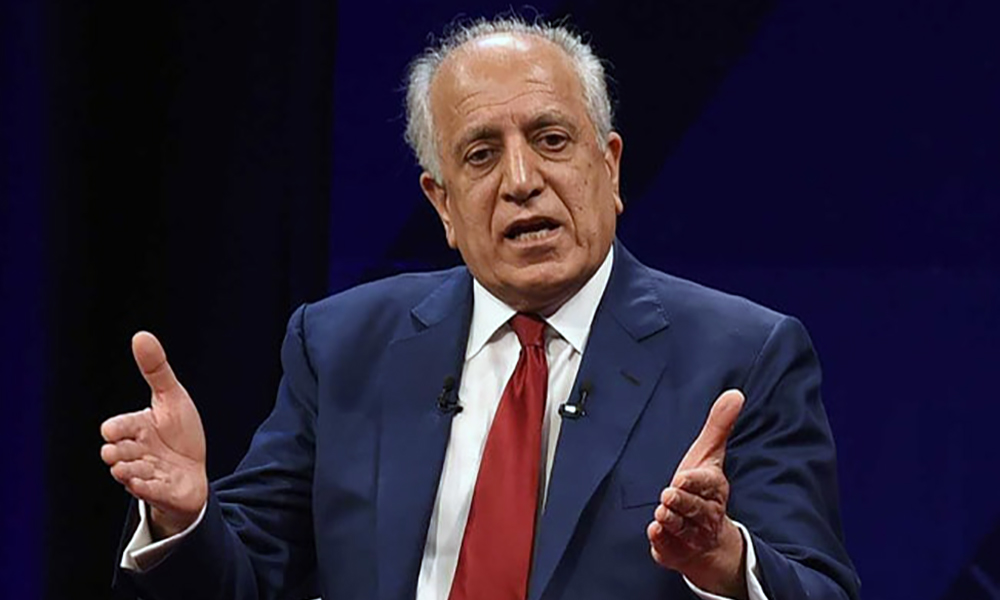
Zalmay Khalilzad, the former U.S. special representative for Afghanistan, has warned that relations between Afghanistan and Pakistan could deteriorate further amid reports of alleged Pakistani recruitment and arming of Afghans.
In a statement, Khalilzad said there had been numerous reports alleging that Pakistan was arming Afghans to fight the Taliban in Afghanistan. He added that new reports suggested the Pakistani military was recruiting Afghans to fight anti-Pakistan insurgents.
He cautioned that, given the current situation, ties between Kabul and Islamabad were likely to worsen significantly.
Khalilzad’s remarks come amid ongoing tensions between the two neighboring countries.
Latest News
UNICEF urges continued efforts for polio-free Afghanistan
According to the World Health Organization, 42 cases of wild poliovirus type 1 have been recorded in Afghanistan this year.
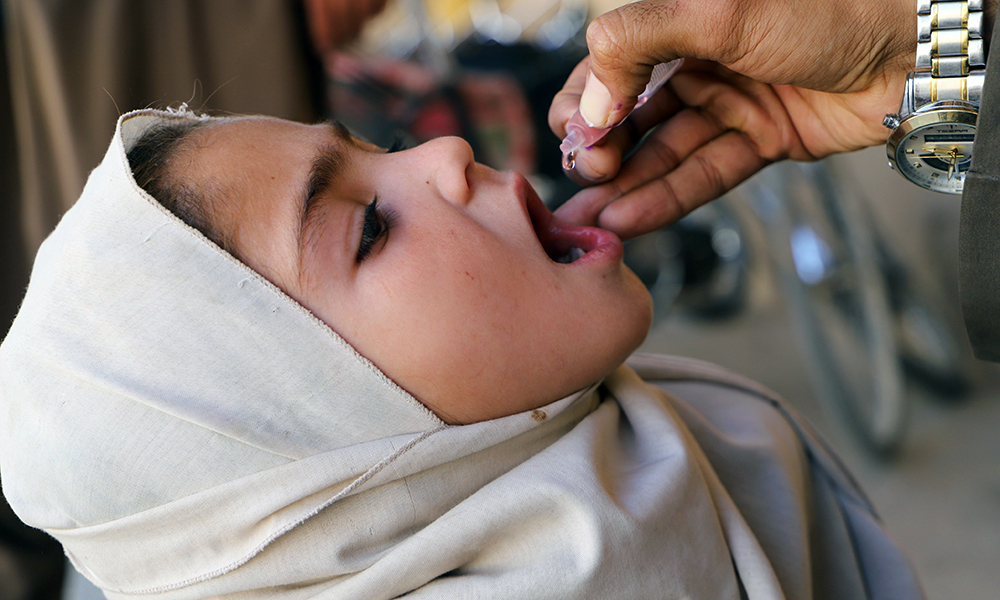
UNICEF Afghanistan has highlighted the importance of continued national efforts to eradicate polio and vaccinate every child, as the country marks World Polio Day on October 24.
In a message posted on X, UNICEF Afghanistan said the day provides an opportunity to highlight national efforts towards a polio-free Afghanistan and honour frontline workers who work tirelessly to end the disease and ensure every child is vaccinated.
Meanwhile, Afghanistan’s Polio-Free initiative warned on Thursday, October 22, that the presence of the poliovirus in any area could threaten the health of children across the country. The initiative urged the public to cooperate with vaccination campaigns and ensure that no child is left without the vaccine.
The warning comes as polio remains a public health concern in Afghanistan, with the United Nations reporting multiple cases of the disease. According to the World Health Organization, 42 cases of wild poliovirus type 1 have been recorded in Afghanistan this year, while six cases have been reported in neighbouring Pakistan.


Tawsia: New opportunities in Afghanistan’s energy, trade and agriculture sectors discussed

IEA rejects Pakistan’s allegations linking Afghanistan to insecurity

Exclusive interview with Ali Bilal, runner-up in Mr. Olympia Men’s Physique category

Khalilzad warns of worsening relations between Afghanistan and Pakistan

IMF forecasts 1.3 percent regional economic contraction in 2026

Cricket Bonanza: Afghanistan set for packed international schedule

Afghanistan says 28 killed, 32 captured in Nuristan operation

Afghanistan on climate front line as Kabul faces groundwater warning

ACB announces Afghanistan squads for Bangladesh, Zimbabwe series

Trump rejects Iranian proposal to open Hormuz and end fighting
Tawsia: New opportunities in Afghanistan’s energy, trade and agriculture sectors discussed
Exclusive interview with Ali Bilal, runner-up in Mr. Olympia Men’s Physique category

Tahawol: Doha meeting and Afghanistan’s political and economic future discussed

Saar: Concerns over expansion of conflict between Iran and US discussed

Governments warn citizens over security risks in France after riots
-

 Sport5 days ago
Afghanistan finish runners-up after 6-0 defeat to Brazil in futsal final
-

 World5 days ago
Violent protests spread across Europe as Albanian PM blames ‘foreign hand’
-
 Business5 days ago
Iran calls for extending Herat railway to Uzbekistan border
-
 Latest News4 days ago
Russian troops arrive in Uzbekistan for joint military exercises
-
 Latest News2 days ago
Afghanistan’s new Wakhan road to China faces major hurdles
-
 Latest News3 days ago
Qatar calls for shift from humanitarian aid to economic recovery in Afghanistan
-
 World3 days ago
Governments warn citizens over security risks in France after riots
-

 Latest News4 days ago
Trump blames migrants for violence in France as US midterms loom