
Business
Renovation of Darul Aman Palace Almost Complete

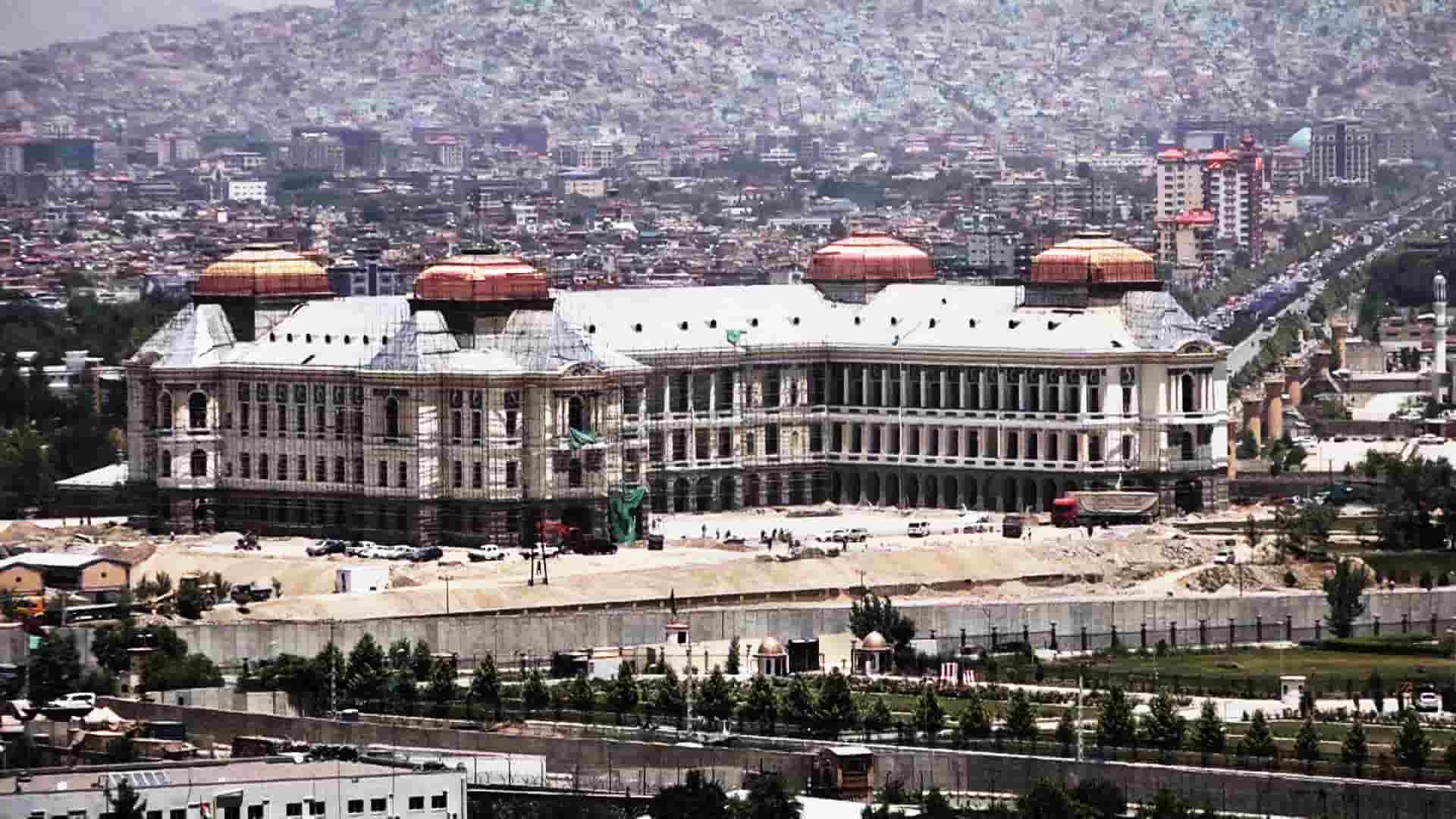
 The reconstruction of Darul Aman Palace has completed 90 percent and will be ready to host the celebration of Afghanistan’s Independence Day in another two months.
Darul Aman Palace was built during the era of King Amanullah Khan who ruled Afghanistan from 1919 to 1929.
Engineers say they have used materials produced in Afghanistan to rebuild this historical palace including marble from Herat province and wood from Kunar province.
Nearly 1,000 Afghans are employed by the project to rebuild the Darulaman and Tajbeg, the two historical palaces which were severely damaged during the civil war in Afghanistan.
“There was no foreigner advisor, engineers or labors in the project rather it was an Afghani movement,” said Abdul Rahman Atash, a government official who is overseeing the reconstruction of the project.
Officials said that the reconstruction of Darul Aman Palace cost nearly $10 million, two percent less than the amount which was predicted by foreign companies.
“The work of the [Darulaman] palace structure is completed hundred percent. I can say our project is completed 90 percent,” said Javid Huma, an Afghan engineer working at the palace.
Tajbeg Palace is a palace built in the 1920s to house the Afghan royal family and is located near the Darul Aman Palace.
Abdul Manan Mukhlis, another Afghan engineer working at the Tajbeg Palace said that the reconstruction of the palace is completed 80 percent and they are trying to complete it before the celebration of Afghanistan’s Independence this year.
President Ashraf Ghani inaugurated the reconstruction project of Darul Aman Palace in 2016 and said it was one of the main demands of Afghans to see the palace renovated.
The Afghan government is planning to use the palace as a museum upon completion.








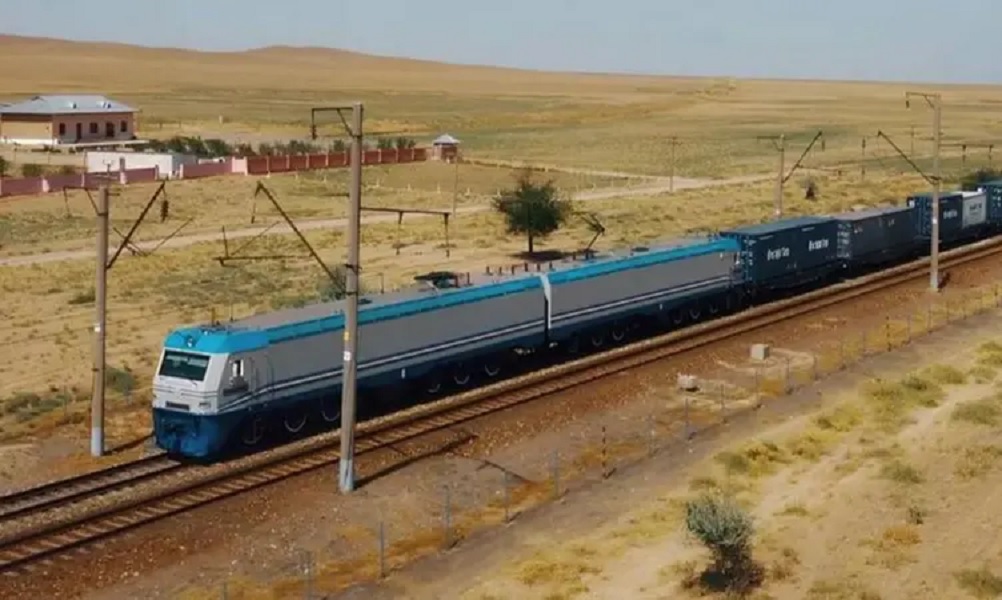
A new multimodal freight corridor linking China and Afghanistan via Turkmenistan has been officially launched, aiming to improve the speed and efficiency of overland cargo transportation across Central Asia.
According to the Turkmenistan Embassy in London, the country has become part of a newly established route designed to accelerate freight deliveries between China and Afghanistan.
The corridor, developed with the involvement of Uzbekistan Railways’ subsidiary Uztemiryulcontainer, covers approximately 7,400 kilometers and is expected to reduce transit time to around 30 days, improving overall logistics efficiency.
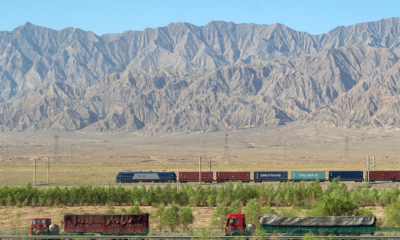
Under the new route, containers are transported by rail from China through the Altynkol station in Kazakhstan, continuing via Uzbekistan to a logistics hub in Bukhara. From there, cargo is transferred to road transport and moved across Turkmenistan before reaching Herat in Afghanistan.
Officials say the new system integrates rail and road networks into a unified logistics chain, making transport more predictable and efficient.
Business
Uzbekistan launches new cargo corridor linking China and Afghanistan
From Uzbekistan, shipments will be transferred onto trucks and transported across Turkmenistan en route to Herat in western Afghanistan.
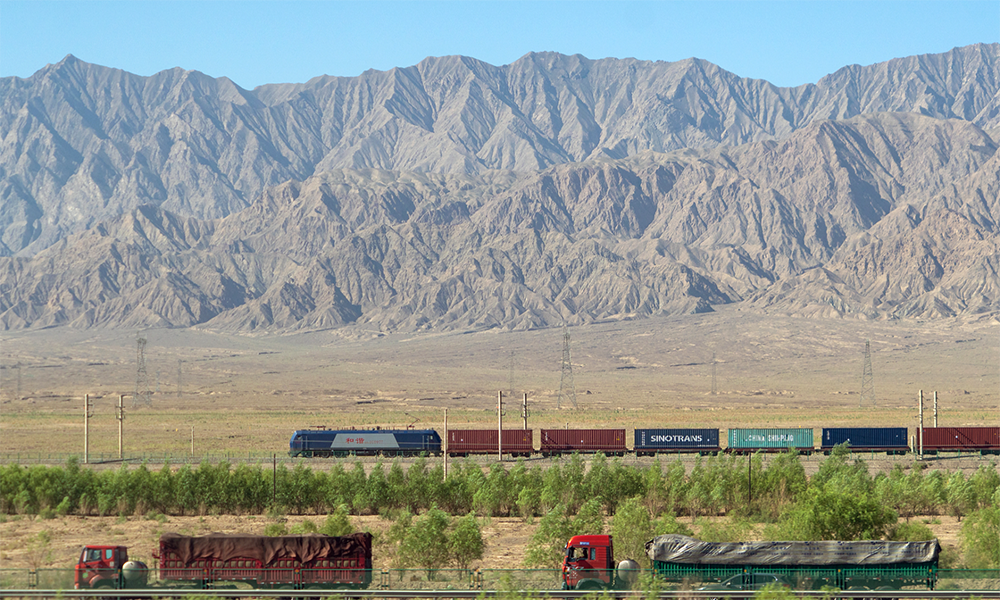
Uzbekistan’s national railway operator has announced the launch of a new multimodal freight route designed to strengthen logistics links between China and Afghanistan via Central Asia.
According to Trend news agency the new corridor will see container used goods transported by rail from China through Kazakhstan’s Altynkol station into Uzbekistan. Cargo will then be handled at the Bukhara logistics centre, operated by Uztemiryulkonteyner, before continuing its journey by road.
From Uzbekistan, shipments will be transferred onto trucks and transported across Turkmenistan en route to Herat in western Afghanistan.
Previously, freight along this trade corridor was largely routed via sea from China to Iran’s Bandar Abbas port, before continuing overland into Afghanistan. The new overland alternative is expected to streamline logistics and improve reliability.
Covering approximately 7,400 kilometres, the route is projected to reduce transit times to around 30 days, offering a more efficient option for regional cargo movement between East Asia and South Asia.
Business
Afghanistan presses Chinese contractor over delays in Mes Aynak copper project
During the meeting, the MCCT president assured that pending operations would be implemented in line with contractual provisions.
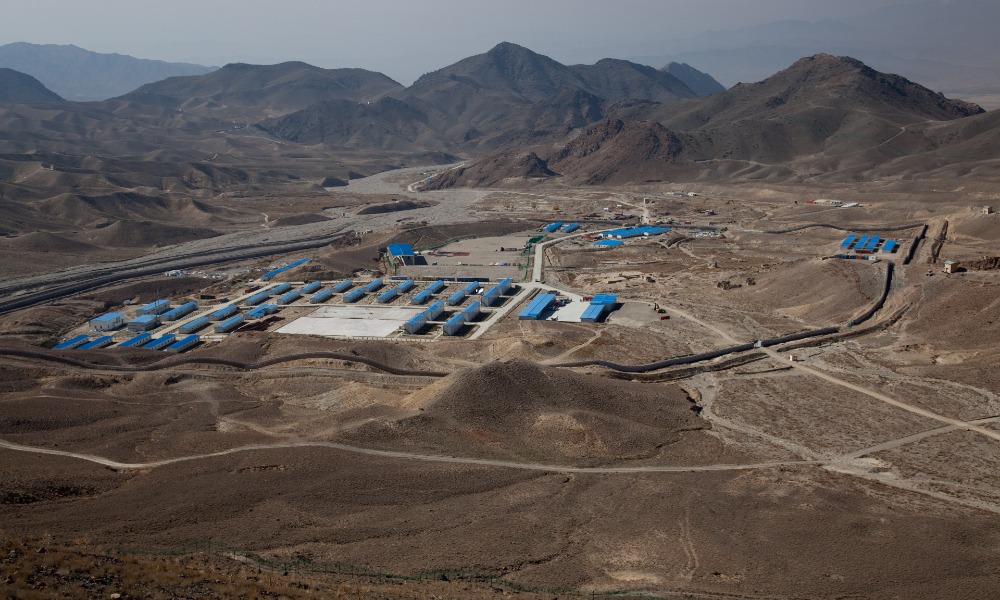
Afghanistan’s Minister of Mines and Petroleum Hedayatullah Badri has raised concerns over delays in the Mes Aynak copper project during a meeting with Chinese officials and company representatives.
The talks brought together the Chinese ambassador, the head of MCCT, and the chairman of MJAM, the contractor responsible for the major mining project. Discussions focused on the lack of progress and the failure to implement key obligations outlined in the mining contract.
Officials reviewed outstanding commitments that had previously been formally communicated to the company, with Afghan authorities stressing that agreed mining activities have yet to be carried out.
During the meeting, the MCCT president assured that pending operations would be implemented in line with contractual provisions.
Badri emphasized that the contractor must fully comply with all terms and conditions of the agreement, as well as follow the ministry’s formal directives. He called for concrete and immediate steps to accelerate the project and ensure full implementation of planned activities.
Mes Aynak copper project
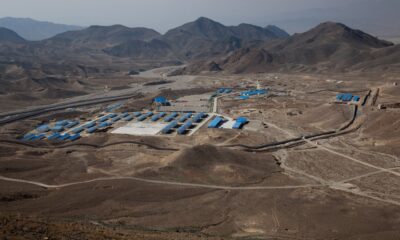
The Mes Aynak copper deposit, located about 40 kilometres southeast of Kabul, is one of the world’s largest untapped copper reserves, with an estimated 11 million tonnes of copper.
The project was awarded to a Chinese consortium led by state-run Metallurgical Corporation of China in 2007 and formally signed in 2008 under a 30-year lease. Valued at roughly $3–4 billion, it was the largest foreign investment in Afghanistan at the time.
The agreement included plans to develop the mine along with major infrastructure such as railways, roads, and power facilities, although several of these commitments were later delayed or renegotiated.
Despite its scale, the project has seen little progress over the past decade. Work slowed significantly around 2013–2014, with ongoing delays attributed to security concerns, lack of infrastructure, and disputes over contractual terms. The presence of a significant archaeological site at Mes Aynak — containing ancient Buddhist remains — has also complicated development, requiring extensive preservation efforts.
Afghan authorities have repeatedly raised concerns over the contractor’s failure to meet key obligations and timelines, while Chinese companies have cited security and logistical challenges as major obstacles.
Since the political changes in Afghanistan in 2021, the project has repeatedly come under focus, with officials pushing to revive stalled mining initiatives as part of broader economic recovery efforts. Chinese firms have signaled continued interest, but meaningful progress has yet to materialize.
The project remains strategically important, with the potential to generate significant revenue, create jobs, and support Afghanistan’s long-term economic development — if longstanding challenges can be resolved.


Tahawol: Discussion on unknown fate of Middle East crisis

Saar: Problems and challenges of Afghan refugees in the world discussed

Afghan cricket delegation travels to China for technical cooperation

Two killed in protests against poppy field destruction in Badakhshan

High-ranking Uzbek delegation arrives in Kabul to boost trade ties

Bayat Power extends gas supply deal with Afghan Gas

Etihad Airways to expand Kabul–Abu Dhabi flights to daily service amid surging demand

Afghanistan’s new cricket head coach Richard Pybus arrives in Kabul

Afghanistan moves toward self-sufficiency in car battery production

Germany to launch online visa system for Afghan study and work applicants in Pakistan
Tahawol: Discussion on unknown fate of Middle East crisis
Saar: Problems and challenges of Afghan refugees in the world discussed

Tawsia: Discussion on Afghanistan’s economic path and position

Tahawol: Pressure on Afghan refugees from Tajikistan to Europe discussed

Saar: Ongoing criticism of Pakistan’s Afghanistan policy discussed
-
 Business1 day ago
New Afghanistan-China transport corridor launched via Turkmenistan
-

 Latest News4 days ago
Pakistan’s Achakzai pushes for Afghanistan dialogue amid economic strain
-
 Business3 days ago
Uzbekistan launches new cargo corridor linking China and Afghanistan
-
 Business3 days ago
Afghanistan presses Chinese contractor over delays in Mes Aynak copper project
-
 Latest News4 days ago
Food prices surge 20% in Afghanistan as Hormuz crisis disrupts supply routes
-

 International Sports4 days ago
Mumbai Indians pull off record chase as IPL action continues
-

 Health4 days ago
Midwives Day: UN urges greater investment to protect mothers and newborns in Afghanistan
-
 Latest News4 days ago
UNICEF report highlights progress and ongoing challenges for Afghan children