
World
Reuters and AP journalists killed in Gaza strike were not ‘a target,’ an Israeli military spokesperson says
Israeli forces struck Nasser hospital in the south of the Gaza Strip on Monday, killing at least 20 people including journalists who worked for Reuters, the Associated Press, Al Jazeera and other outlets.

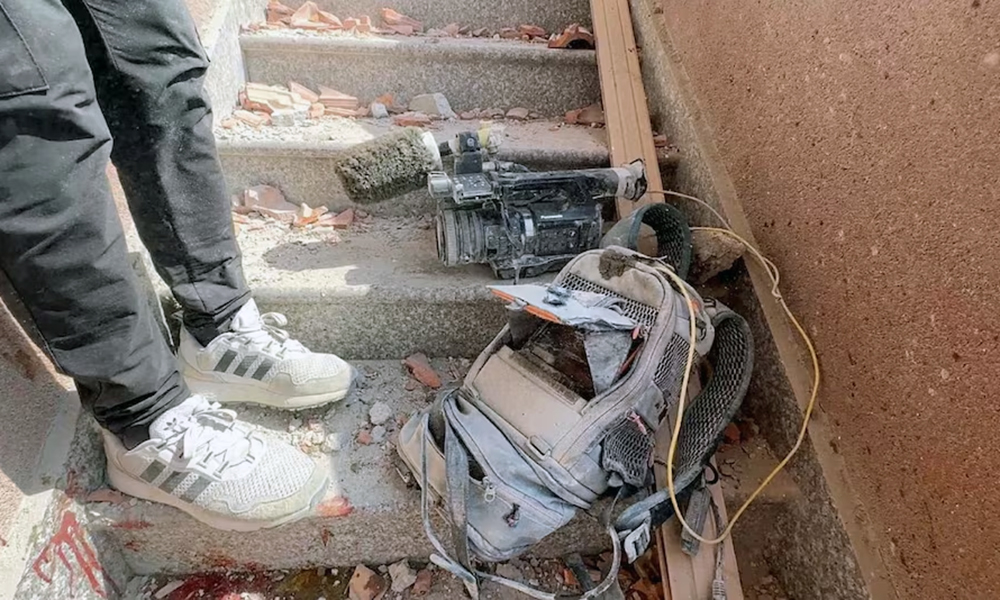
Two journalists for Reuters and the Associated Press who were killed in an Israeli attack on a Gaza hospital were not “a target of the strike,” a military spokesperson told Reuters on Tuesday, adding the army chief had ordered a further inquiry into how the decision to strike the hospital was made, Reuters reported.
Israeli forces struck Nasser hospital in the south of the Gaza Strip on Monday, killing at least 20 people including journalists who worked for Reuters, the Associated Press, Al Jazeera and other outlets.
“We can confirm that the Reuters and AP journalists were not a target of the strike,” military spokesperson Lieutenant Colonel Nadav Shoshani told Reuters on Tuesday. Three other journalists were also killed in the strike.
Using its own camera equipment, Reuters has frequently broadcast a feed from Nasser hospital during the Gaza war. For the past several weeks the news agency had been delivering daily feeds from the hospital position that was hit.
At the moment of the initial Israeli strike on Monday, the Reuters live video feed, which cameraman Hussam al-Masri had been operating, suddenly shut down. Masri was killed in the attack.
None of the five journalists were among the six alleged Palestinian militant targets that the Israeli military named in a written statement, released on Tuesday. The statement included photos of six individuals who were killed, including alleged members of Hamas and Islamic Jihad, read the report.
“At the same time, the Chief of the General Staff regrets any harm caused to civilians,” the statement said, adding that the Israeli military directs its activities solely toward military targets.
The written Israeli military statement identified what it called “several gaps” that Israel’s Chief of the General Staff had instructed be further examined:
“Firstly, a further examination of the authorization process prior to the strike, including the ammunition approved for the strike and the timing of the authorization.
“Secondly, an examination of the decision-making process in the field.”
In a statement issued later on Tuesday, Hamas challenged the Israeli account of the hospital casualties, denying that any of the Palestinians killed were militants, Reuters reported.
The Hamas government media office said in a statement that one of the six Palestinians who Israel alleged were militants was killed in al-Mawasi some distance from the hospital, and another was killed elsewhere at a different time.
The Hamas statement did not clarify whether the two men were civilians or fighters.
Prime Minister Benjamin Netanyahu’s office said on Monday that Israel deeply regretted what he called a “tragic mishap.”
In a letter to Israeli officials on Monday, Reuters and AP wrote: “These journalists were present in their professional capacity, doing critical work bearing witness. Their work is especially vital in light of Israel’s nearly two-year ban on foreign journalists entering Gaza.”
“We hope this probe will be quick, thorough and provide clear answers. These deaths demand urgent and transparent accountability,” said the letter.
Besides Masri, who worked on contract for Reuters for the past year, the journalists killed also included Mariam Abu Dagga, who freelanced for the Associated Press and other outlets, Mohammed Salama, who worked for Qatar-based broadcaster Al Jazeera, Moaz Abu Taha, a freelance journalist who worked with several news organizations including occasionally contributing to Reuters, and Ahmed Abu Aziz, a journalist for Middle East Eye.
Photographer Hatem Khaled, also a Reuters contractor, was wounded.
The written military statement said troops had identified a camera “positioned by Hamas” in the area of the hospital to observe the activity of Israeli troops in order to direct terrorist activities against them.
It said the troops acted to remove the threat by striking and dismantling the camera.
Reuters and other news providers often deliver live video feeds to media outlets worldwide during major news events to show the scene from the ground in real time.







World
US weighs troop deployment as Iran war enters new phase
The administration is also weighing options to secure Iran’s stockpiles of highly enriched uranium, a move that experts say would be highly complex and dangerous even for elite forces.
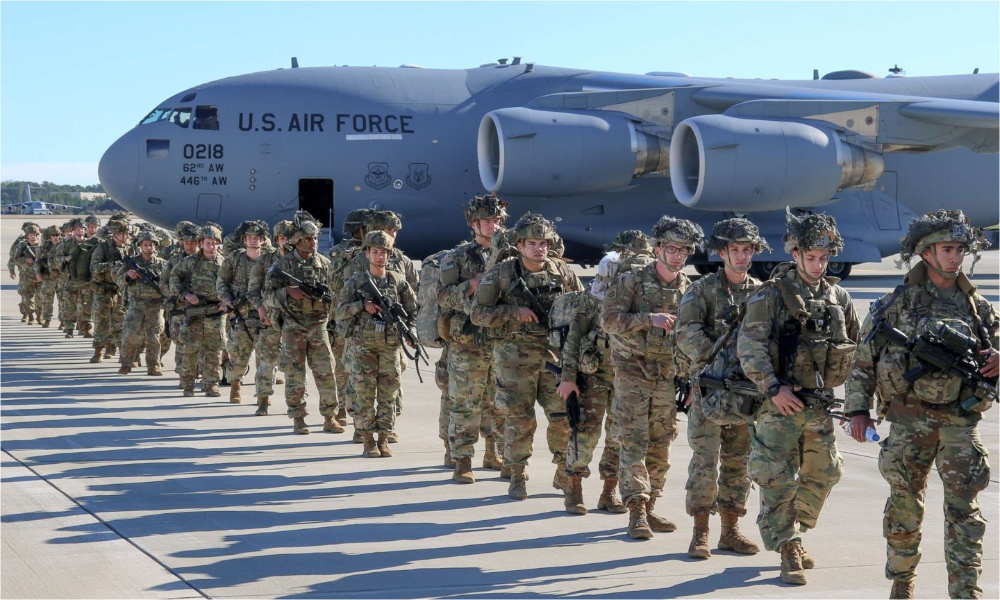
The United States is considering sending thousands of additional troops to the Middle East as the war with Iran enters a potentially more complex stage, according to U.S. officials and sources familiar with the discussions.
The move would give US President Donald Trump broader military options as the conflict, now in its third week, continues to escalate. While no final decision has been made, officials say the administration is exploring scenarios that could expand the scope of current operations, Reuters reported.
Among the options under review is securing commercial shipping through the Strait of Hormuz, a critical corridor for global energy supplies. While such a mission would rely largely on naval and air power, it could also involve deploying U.S. forces along Iran’s coastline.
Another proposal under discussion includes sending ground forces to Kharg Island, which handles the vast majority of Iran’s oil exports.
U.S. strikes have already targeted military sites on the island, but analysts say controlling the facility could be seen as more strategically valuable than destroying it outright.
Officials caution, however, that such an operation would carry significant risks due to Iran’s missile and drone capabilities.
The administration is also weighing options to secure Iran’s stockpiles of highly enriched uranium, a move that experts say would be highly complex and dangerous even for elite forces.
A White House official said no decision has been taken on deploying ground troops, emphasizing that “all options remain on the table” as the administration pursues its military objectives, including weakening Iran’s missile and naval capabilities and preventing it from acquiring nuclear weapons.
The discussions come as U.S. forces intensify their campaign against Iran. Since the start of hostilities in late February, Washington says it has conducted thousands of strikes targeting Iran’s military infrastructure, including its navy, missile systems and defense industry.
According to U.S. Central Command, more than 120 Iranian vessels have been damaged or destroyed.
Despite the scale of operations, the conflict has also taken a toll on U.S. forces. At least 13 American troops have been killed and around 200 wounded, though most injuries are reported to be minor.
Any decision to deploy ground troops could carry political consequences for Trump, who has previously pledged to avoid new foreign wars and faces skepticism among parts of the American public over deeper involvement in the Middle East.
Complicating matters further, the U.S. military is set to lose the presence of one of its key aircraft carriers, the USS Gerald R. Ford, which is being sent for maintenance following a fire.
While an amphibious ready group with more than 2,000 Marines is expected to arrive in the region, officials say broader reinforcement plans are still under consideration.
Trump has also sent mixed signals on whether the U.S. should take responsibility for securing the Strait of Hormuz, at times suggesting allies should take the lead or even questioning continued American involvement.
As military planning continues, officials stress that no immediate ground deployment is expected, but acknowledge that the situation remains fluid as Washington evaluates its next steps in the conflict.
World
Trump rejects efforts to launch Iran ceasefire talks, sources say
The war’s impact on global oil markets has significantly increased the cost for the United States.
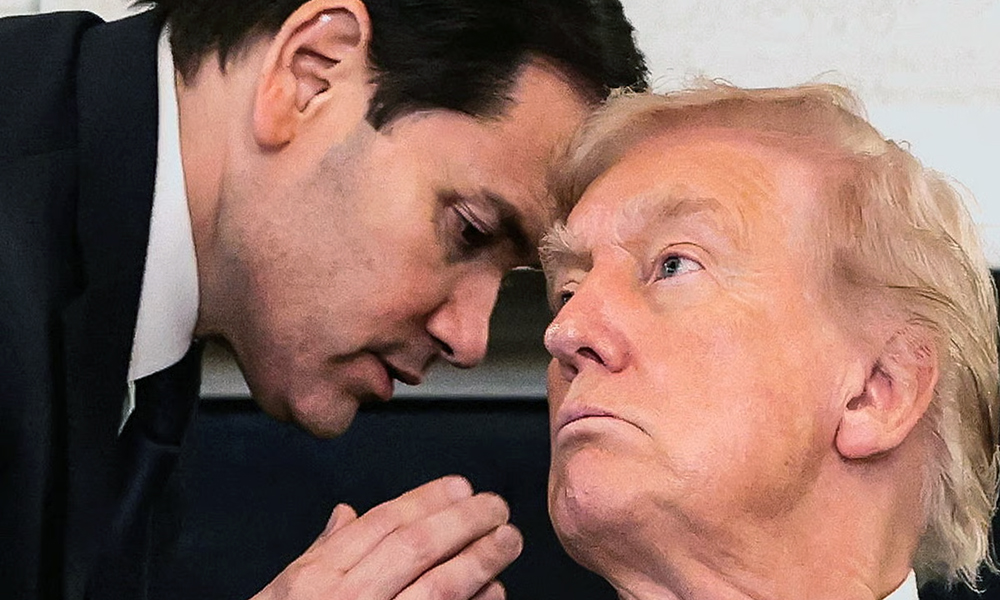
President Donald Trump’s administration has rebuffed efforts by Middle Eastern allies to start diplomatic negotiations aimed at ending the Iran war that started two weeks ago with a massive U.S.-Israeli air assault, according to three sources familiar with the efforts, Reuters reported.
Iran, for its part, has rejected the possibility of any ceasefire until U.S. and Israeli strikes end, two senior Iranian sources told Reuters, adding that several countries had been trying to mediate an end to the conflict.
The lack of interest from Washington and Tehran suggests both sides are digging in for an extended conflict, even as the widening war inflicts civilian casualties and Iran’s closure of the Strait of Hormuz sends oil prices soaring.
U.S. strikes on Iran’s Kharg Island, the country’s main oil export hub, on Friday night underscored Trump’s determination to press ahead with his military assault. Iran’s new Supreme Leader Mojtaba Khamenei has vowed to keep the Strait of Hormuz shut and threatened to step up attacks on neighboring countries.
The war has killed more than 2,000 people, mostly in Iran, and created the biggest-ever oil supply disruption as maritime traffic has halted in the Strait of Hormuz, through which a fifth of the world’s oil is transported.
Oman, which mediated talks before the war, has tried multiple times to open a line of communication, but the White House has made clear it is not interested, according to two sources, who like others in this story were granted anonymity in order to speak freely about diplomatic matters.
A senior White House official confirmed Trump has rebuffed those efforts to start talks and is focused on pressing ahead with the war to further weaken Tehran’s military capabilities, read the report.
“He’s not interested in that right now, and we’re going to continue with the mission unabated. Maybe there’s a day, but not right now,” the official said.
During the first week of the war, Trump wrote on his Truth Social platform that Iran’s leadership and military were so battered by U.S.-Israeli strikes that they wanted to talk, but that it was “Too Late!” He has a history of shifting foreign policy stances without warning, making it hard to rule out that he might test the waters for restarting diplomacy.
“President Trump said new potential leadership in Iran has indicated they want to talk and eventually will talk. For now, Operation Epic Fury continues unabated,” a second senior White House official said when asked to comment on this story.
The Iranian sources said Tehran has rejected efforts by several countries to negotiate a ceasefire until the U.S. and Israel end their airstrikes and meet Iran’s demands, which include a permanent end to U.S. and Israeli attacks and compensation as part of a ceasefire.
Egypt, which was involved in mediation before the war, has also tried to reopen communications, according to three security and diplomatic sources. While the efforts do not appear to have made progress, they have secured some military restraint from neighboring countries hit by Iran, according to one of the sources.
Egypt’s foreign ministry, the government of Oman and the Iranian government did not respond to requests for comment, Reuters reported.
The war’s impact on global oil markets has significantly increased the cost for the United States.
Some U.S. officials and advisers to Trump urge a quick end to the war, warning that surging gasoline prices could exact a high political price from the president’s Republican Party, with U.S. midterm elections looming.
Others are pressing Trump to maintain the offensive against the Islamic Republic to destroy its missile program and prevent it from obtaining a nuclear weapon, according to Reuters reporting.
Trump’s rejection of diplomatic efforts could indicate that, for now, the administration has no plans for a quick end to the war.
Indeed, both the United States and Iran appear even less willing to engage than during the opening days of the war, when senior U.S. officials reached out to Oman to discuss de-escalating, according to several sources.
One source said Iran’s top security official, Ali Larijani, and Foreign Minister Abbas Araghchi had also sought to use Oman as a conduit for ceasefire discussions that would have involved U.S. Vice President JD Vance.
But those discussions have not materialized.
Instead, Iran’s position has hardened, said a third senior Iranian source.
“Whatever was communicated previously through the diplomatic channels is irrelevant now,” said the source.
“The Guards strongly believe that if they lose control over the Strait of Hormuz, Iran will lose the war,” the source added, referring to the Islamic Revolutionary Guard Corps, an elite paramilitary force that controls large parts of the economy.
“Therefore, the Guards will not accept any ceasefire, ceasefire talks, or diplomatic efforts, and Iran’s political leaders will not engage in such talks despite attempts by several countries.”
World
White House AI czar says US should ‘declare victory and get out’ of Iran war
“This is a good time to declare victory and get out,” Sacks, Trump’s crypto and AI czar, said in an appearance on the “All-In Podcast.”
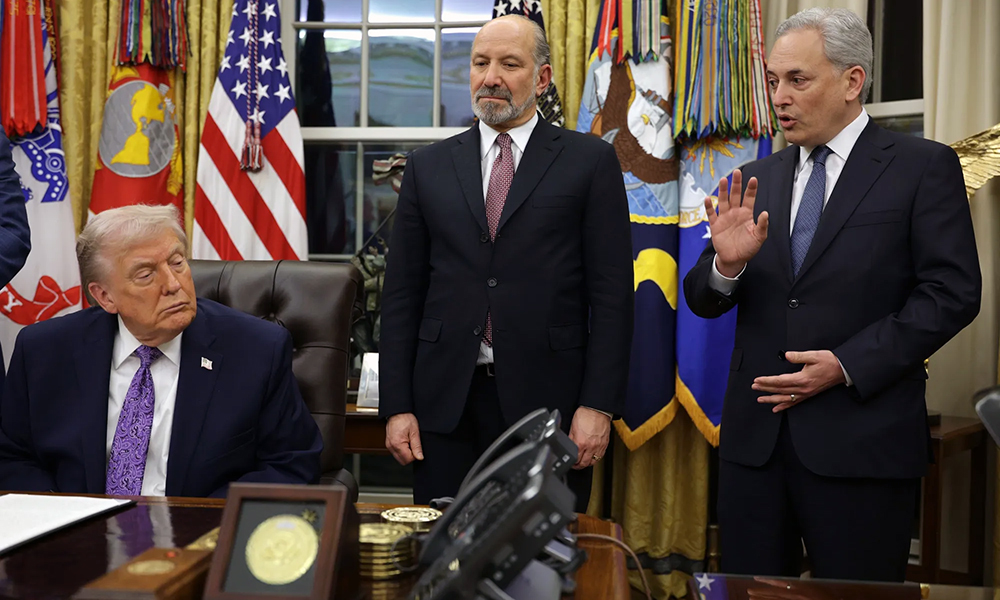
White House AI czar David Sacks said on Friday the U.S. should “declare victory and get out” of its war on Iran, a rare instance of a prominent figure in Donald Trump’s administration calling for an exit from the Iran conflict, Reuters reported.
Here are some details:
“This is a good time to declare victory and get out,” Sacks, Trump’s crypto and AI czar, said in an appearance on the “All-In Podcast.”
Sacks said the U.S. had degraded Iran’s military capabilities.
“I agree that we should try to find the off-ramp,” he added.
“If escalation doesn’t lead anywhere good, then you have to think about, well, how do you de-escalate? De-escalation, I think, involves reaching some sort of ceasefire agreement or some sort of negotiated settlement with Iran,” he said.
The U.S. and Israel attacked Iran on February 28. Iran and its ally in Lebanon, Hezbollah, have responded with strikes on Israel and other countries in the Middle East.
The war has shaken global markets and raised oil prices.
Iran’s U.N. ambassador says over 1,300 people have been killed in Iran in U.S. and Israeli attacks. Israel says 12 people have been killed in Israel by Iranian attacks. The U.S. military says seven of its members have been killed.


Tahawol: Temporary ceasefire draws broad support

Security Sources: Pakistani military shelling in Kunar and Nuristan leaves female doctor dead

Saar: Emphasis on resolving conflicts through diplomacy

UN Secretary-General condemns Pakistani airstrike on Kabul rehab center

IEA Supreme Leader: Afghanistan’s victory lies in faith and National unity

Pakistani military jet downed in Afghanistan’s Jalalabad, pilot captured alive

Afghan Air Force conducts airstrikes in Islamabad, other cities

Afghanistan’s Chief of Armed Forces underscores readiness and equipment for national defense

Afghanistan welcomes investment and technology partnerships with India

Prominent Muslim scholar issues fatwa calling for Afghanistan-Pakistan ceasefire
Tahawol: Temporary ceasefire draws broad support
Saar: Emphasis on resolving conflicts through diplomacy

Tahawol: Global reactions to Pakistan’s recent attacks discussed

Saar: Consequences of Pakistani airstrikes on Afghans discussed

Tahawol: Pakistan’s new attacks on Kabul hospital discussed
-
 Latest News4 days ago
IEA Supreme Leader issues Eid-ul-Fitr message urging unity and support for Islamic system
-
 Latest News5 days ago
Regional criticism grows amid Pakistan strikes inside Afghanistan
-
 Latest News4 days ago
Afghan airstrike targets a military camp in South Waziristan
-

 Business4 days ago
Turkmenistan, Afghanistan discuss steps to speed up land acquisition for TAPI pipeline
-

 Sport4 days ago
IPL 2026 kicks off in under two weeks; Afghan players set to shine
-

 Business5 days ago
Afghanistan expands exports through Lapis Lazuli Corridor
-
 Latest News1 day ago
IEA announces temporary pause in defensive operations against Pakistan for Eid
-
 World5 days ago
Trump rejects efforts to launch Iran ceasefire talks, sources say