
Regional
Suspected chemical blast at Iran’s Bandar Abbas port kills at least 18, injures hundreds
President Masoud Pezeshkian ordered an investigation of the incident and sent to the site his interior minister, who said efforts were continuing to extinguish the fire and prevent it from spreading to other areas, read the report.

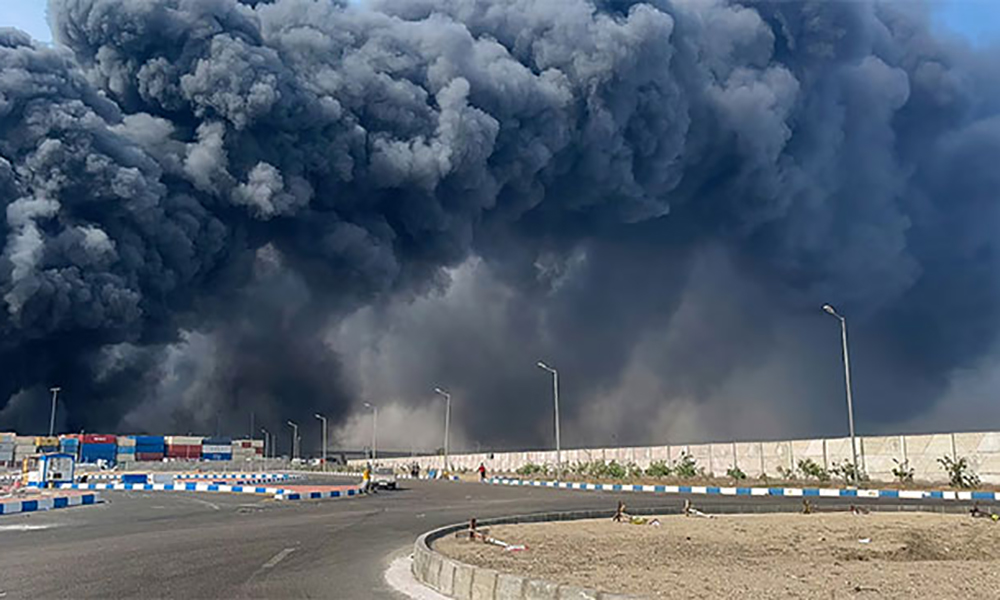
A huge blast probably caused by the explosion of chemical materials killed at least 18 people and injured more than 700 on Saturday at Iran’s biggest port, Bandar Abbas, Iranian state media reported.
The explosion, which hit the Shahid Rajaee section of the port, occurred as Iran began a third round of nuclear talks with the United States in Oman, but there was no indication of a link between the two events, Reuters reported.
Hossein Zafari, a spokesperson for Iran’s crisis management organisation, appeared to blame the explosion on poor storage of chemicals in containers at Shahid Rajaee.
“The cause of the explosion was the chemicals inside the containers,” he told Iran’s ILNA news agency.
“Previously, the Director General of Crisis Management had given warnings to this port during their visits and had pointed out the possibility of danger,” Zafari said.
However, an Iranian government spokesperson said that although chemicals had likely caused the blast, it was not yet possible to determine the exact reason.
President Masoud Pezeshkian ordered an investigation of the incident and sent to the site his interior minister, who said efforts were continuing to extinguish the fire and prevent it from spreading to other areas, read the report.
Iran’s official news channels aired footage of a vast black and orange cloud of smoke billowing up above the port in the aftermath of the blast, and an office building with its doors blown off and papers and debris strewn around.
Located near the strategic Strait of Hormoz, Shahid Rajaee port is Iran’s biggest container hub, handling a majority of the country’s container goods, according to state media.
The blast shattered windows within a radius of several kilometres and was heard in Qeshm, an island 26 kilometres (16 miles) south of the port, Iranian media said.
The semi-official Tasnim news agency posted footage of injured men lying on the road being tended to amid scenes of confusion.
State TV earlier reported that poor handling of flammable materials was a “contributing factor” to the explosion. A local crisis management official told state TV that the blast took place after several containers stored at the port exploded.
As relief workers tried to put out fires, the port’s customs officials said trucks were being evacuated from the area and that the container yard where the explosion occurred likely contained “dangerous goods and chemicals”. Activities at the port were halted after the blast, officials said.
A series of deadly incidents has hit Iranian energy and industrial infrastructure in recent years, with many, like Saturday’s blast, blamed on negligence.
They have included refinery fires, a gas explosion at a coal mine, and an emergency repair incident at Bandar Abbas that killed one worker in 2023.
Iran has blamed some other incidents on its arch-foe Israel, which has carried out attacks on Iranian soil targeting Iran’s nuclear programme in recent years and last year bombed the country’s air defences.
Tehran said Israel was behind a February 2024 attack on Iranian gas pipelines, while in 2020 computers at Shahid Rajaee were hit by a cyberattack. The Washington Post reported that Israel appeared to be behind that incident as retaliation for an earlier Iranian cyberattack, Reuters reported.
Israel has indicated it is nervous about the outcome of U.S.-Iran talks, demanding a full dismantlement of Iran’s nuclear programme. Tehran says the programme is used solely for peaceful purposes, while international observers say it is getting closer to being able to build a bomb.
There was no immediate comment from Israel’s military or Prime Minister Benjamin Netanyahu’s office when asked for comment on whether Israel was in any way involved in Saturday’s explosion.
Oil facilities were not affected by the blast on Saturday, Iranian authorities said.
The National Iranian Petroleum Refining and Distribution Company said in a statement it had “no connection to refineries, fuel tanks, distribution complexes and oil pipelines.”

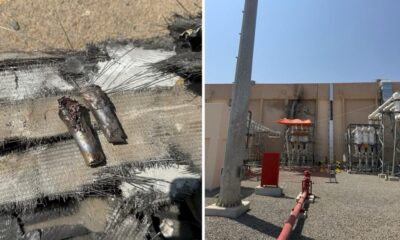




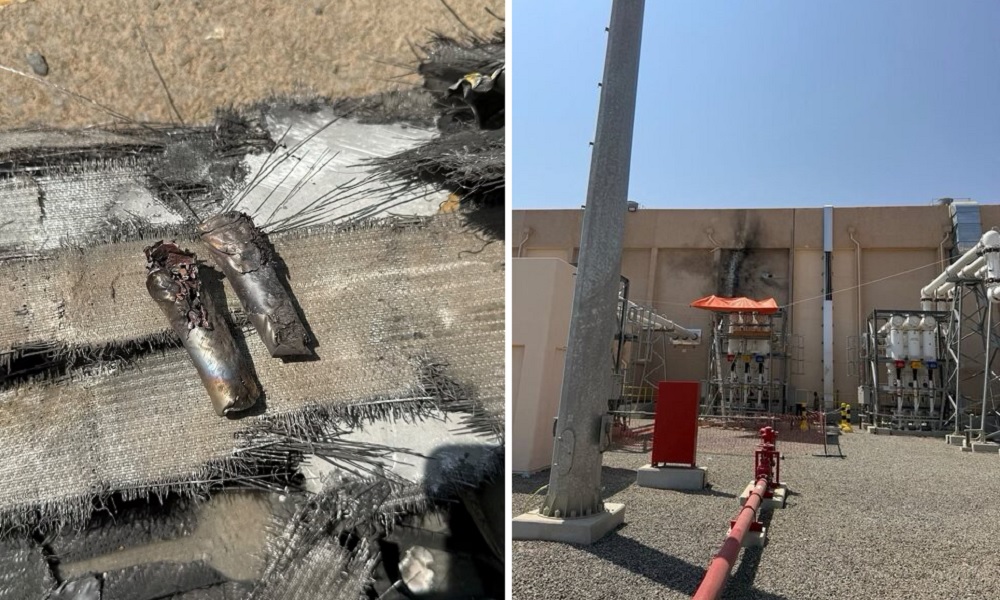
The Saudi-led coalition fighting Yemen’s Houthis said on Thursday that the Iran-aligned group had attacked a power distribution station in Medina which supplies electricity to the Prophet’s Mosque, one of Islam’s holiest sites.
The coalition said the attack put one transformer out of service but did not affect the power network. A Houthi military source, quoted by the Houthi-run Saba news agency, denied the coalition report, according to Reuters.
The Houthis later reported Saudi strikes on the Yemeni capital Sanaa and other parts of Yemen, with no immediate Saudi confirmation of the strikes.
A spokesperson for Yemen’s armed forces, which are aligned with the internationally recognised government, said coalition forces had attacked what it described as “high-value targets” in the capital Sanaa, without providing further details.
The recent escalation is the most serious fighting between Saudi Arabia and the Iran-aligned Houthis since a UN-brokered truce largely halted cross-border attacks in 2022.
Hostilities resumed this year after the Houthis declared a naval blockade on Saudi Arabia in July and began attacking Saudi territory and shipping, while Houthi forces also made major territorial gains along Yemen’s Red Sea coast.
Saudi Arabia has responded with air strikes in Yemen and backed government forces fighting to repel the Houthis.
The Saudi-led coalition said an investigation and examination of drone wreckage confirmed Houthi involvement in planning and carrying out Tuesday’s attack on the Medina power station.
A Houthi military source said the coalition claim was a “lie” intended to cover up what he described as Saudi Arabia’s failure to substantiate its earlier accusation that the Houthis targeted the Muslim holy city of Mecca, said the Saba news agency.
Saudi Arabia said two weeks ago it had intercepted and destroyed a Houthi drone south of Mecca before it entered restricted airspace over the city. The coalition described the incident as the second Houthi attempt to target Mecca since 2017, while the Houthis denied targeting Mecca or any other Islamic holy site.
The coalition said the Medina attack was part of what it described as repeated Houthi attempts to target the Two Holy Mosques and “provoke” Muslims worldwide. It said it would continue taking measures to protect the holy sites and pilgrims.
The coalition also said it had intercepted and destroyed a ballistic missile launched by the Houthis toward the southern Saudi city of Khamis Mushait. It gave no immediate details on any damage or casualties.
Local officials said early on Friday that the Houthis had also targeted the headquarters of the Saudi-led coalition forces command in Aden with several ballistic missiles and drones. There was no immediate comment from the coalition or the Houthis.
Regional
US imposes sanctions on 13 tied to Iran weapons procurement
Treasury Secretary Scott Bessent said, “Treasury will not tolerate any support to the regime and will continue to identify, expose, and isolate Iran’s enablers.”
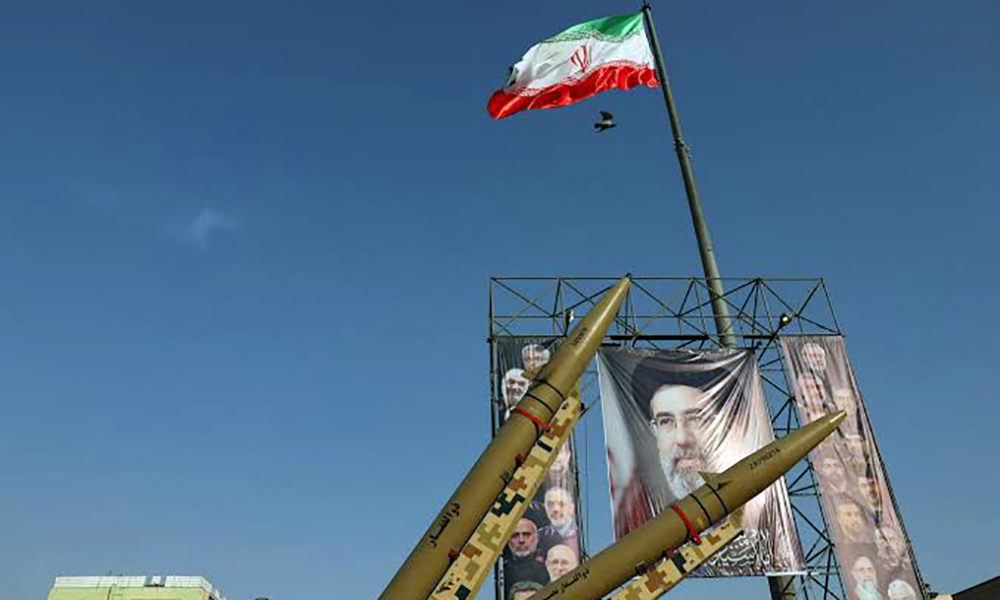
The US government announced fresh sanctions on Tuesday against 13 individuals and entities, including some based in Russia, China, Hong Kong and Pakistan, saying they helped Iran procure weapons and components.
The sanctions announced by the Treasury and State departments are part of the Trump administration’s effort to isolate Iran economically and force it to negotiate an end to the war that began with a US-Israeli strike on Iran on February 28.
Treasury Secretary Scott Bessent said, “Treasury will not tolerate any support to the regime and will continue to identify, expose, and isolate Iran’s enablers.”
Treasury said the sanctions were aimed at degrading Tehran’s ability to reconstitute its weapons programs, while increasing the costs for those who supported its procurement efforts.
Those targeted in Tuesday’s sanctions announcements include:
Seyyed Asghar Alizadeh Tabatabai, a Beijing-based representative of Iran’s Ministry of Defense and Armed Forces Logistics agency, who Treasury said had coordinated the procurement of finished weapons systems and dual-use components in China on Iran’s behalf.
Iran-based Kavoshcom Asia R and D Group, which Treasury said had procured electronics including connectors for Iran Aircraft Manufacturing Industrial Company.
Hong Kong-based EC Mojo Technology Co Limited, which Treasury said had provided electronic components in support of Kavoshcom’s procurement efforts, and EC Mojo’s China-based representative Li Fen.
Pakistan-based Waseem Pasha Tajammal, who serves as chairman of Cavalier Group, a privately owned defense company with locations in Pakistan and internationally.
Joint Stock Company Experimental Design Bureau Named After A.S. Yakovlev, a Russia-based aircraft manufacturer.
MG-Flot LLC, a Russia-based shipping company whose vessels transport weapons for the Russian government.
Saha Airlines, an Iran-based airline affiliated with the country’s air force.
Brett Erickson, managing principal with Obsidian Risk Advisors, said the latest sanctions action would do little to impede Iran’s ability to launch missiles and drones in the Strait of Hormuz. “This is optics management for the Trump administration to claim ‘We’re hammering them,’ when the reality is we’re poking them with a toothpick,” he said.
Regional
US, Iran separately talk with mediators in latest bid to end war
US officials separately spoke with mediators on Monday, US President Donald Trump told reporters at the White House, without giving further details.
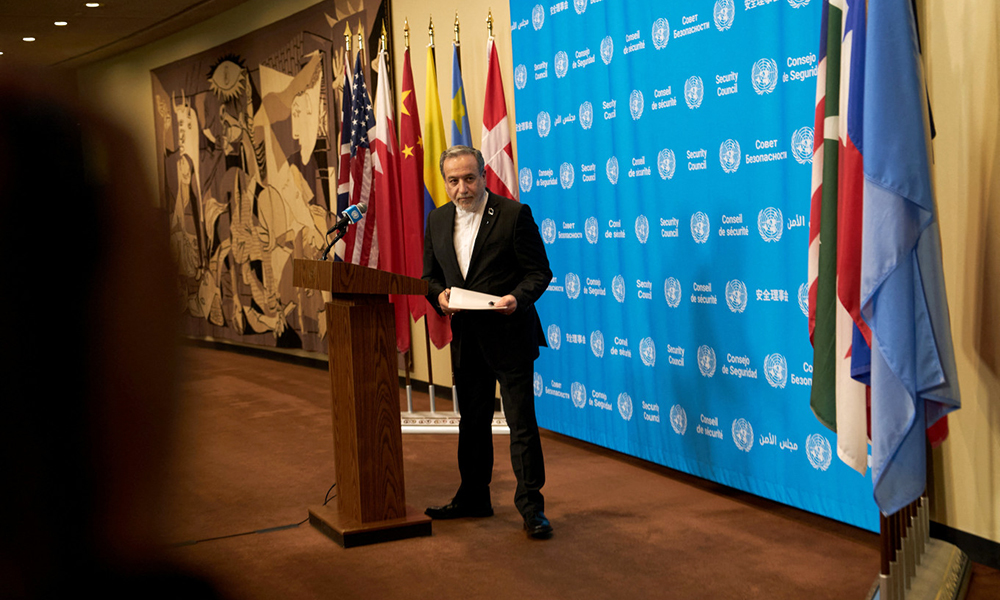
US and Iranian officials spoke separately with mediators on Monday as part of a renewed effort to end seven months of war, according to officials of both countries, Reuters reported.
Any further talks are expected to focus on an amended version of a seven-day proposal that Iran presented last week on the sidelines of the United Nations General Assembly, an official briefed on the negotiations told Reuters.
The war began in late February with US and Israeli attacks on Iran, killing thousands of people over seven months and shocking global markets as vital waterways for oil remained choked. The US and Iran have twice previously agreed to ceasefires in mediated peace talks, in April and June. Those agreements quickly unraveled.
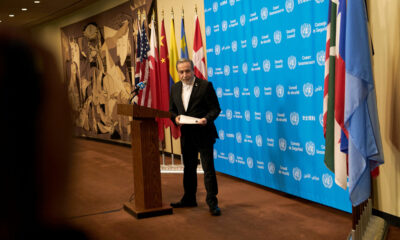
Iranian Foreign Minister Abbas Araqchi, who remained in New York after attending the General Assembly, said Iran expected to receive the US response to its latest ceasefire proposals and its conditions for restoring passage of maritime traffic in the Strait of Hormuz, according to state news agency IRNA.
“If the Americans claim they are seeking an agreement or a peaceful solution, we have presented that solution,” Araqchi said.
US officials separately spoke with mediators on Monday, US President Donald Trump told reporters at the White House, without giving further details.
Iran’s seven-day plan envisages an end to all hostilities in Iran and Lebanon, the unfreezing of billions of dollars’ worth of Iranian assets, an end to sanctions on Iranian oil and the lifting of the US blockade on Iranian ports.
Iran would then allow the reopening of the Strait of Hormuz, a vital conduit for oil tankers, and the two sides would also resume talks on Iran’s nuclear program and Trump’s wish to seize or eliminate its highly enriched uranium, read the report.
Trump said on Saturday he had rejected Iran’s proposal, saying Iran wanted a swift agreement because of the crippling economic pressure it is under. However, he also told Axios on Sunday that he expected US negotiators to engage in further talks this week.
Araqchi said on Sunday that mediators had not formally conveyed a US rejection, and that Iran was awaiting Washington’s definitive position before deciding its next steps.
“Our conditions are clear, and any move toward reopening the Strait of Hormuz is contingent on these conditions being met,” he said on Sunday, adding that only a negotiated solution could resolve the impasse.


Saudi-led coalition says Houthis attacked power station for Prophet’s Mosque in Medina

UN expert calls for accountability after Pakistani airstrikes kill civilians in Afghanistan

Tahawol: Pakistan’s airstrikes on civilians in Afghanistan discussed

Arman FC crush Toofan Herat 4-0 in ACL clash

Khurasan Faryab and Ariana Khost settle for 1-1 draw

Saudi energy group signs major Afghanistan deals covering gas exploration and pipeline plans

Iranian clubs to face Gulf opponents at neutral venues in Asian Champions League Elite

Khalilzad: Afghanistan ready to attract major investment

El Niño likely to intensify, may become strongest ever recorded, WMO says

Khyber Chamber demands reopening of Torkham crossing
Tahawol: Pakistan’s airstrikes on civilians in Afghanistan discussed

Tahawol: Improvement in Afghanistan-China relations discussed

Saar: Expanding ties with regional and global countries discussed

Tahawol: Absence of Afghanistan’s envoy at UNGA discussed

Saar: Assessment of war between Afghanistan and US discussed
-

 Latest News5 days ago
Afghanistan says 28 killed, 32 captured in Nuristan operation
-

 Sport5 days ago
Afghan bodybuilder Ali Bilal finishes runner-up at Mr Olympia for third straight year
-

 Sport4 days ago
Afghanistan vs India Asian Games quarter-final abandoned without a toss
-
 Latest News5 days ago
UNDP, UN Women launch financing initiative for Afghan women entrepreneurs
-
 Latest News5 days ago
Germany reports 488 Afghans for possible deportation, 267 have no criminal convictions
-
 Regional4 days ago
Floods, landslides kill 56 in India and 14 in Nepal
-
 World4 days ago
Trump says men arrested at UK air base used by US planned ‘big damage’
-
 Regional3 days ago
US, Iran separately talk with mediators in latest bid to end war