
Latest News
Trump administration to suspend immigrant visa processing for 75 nations

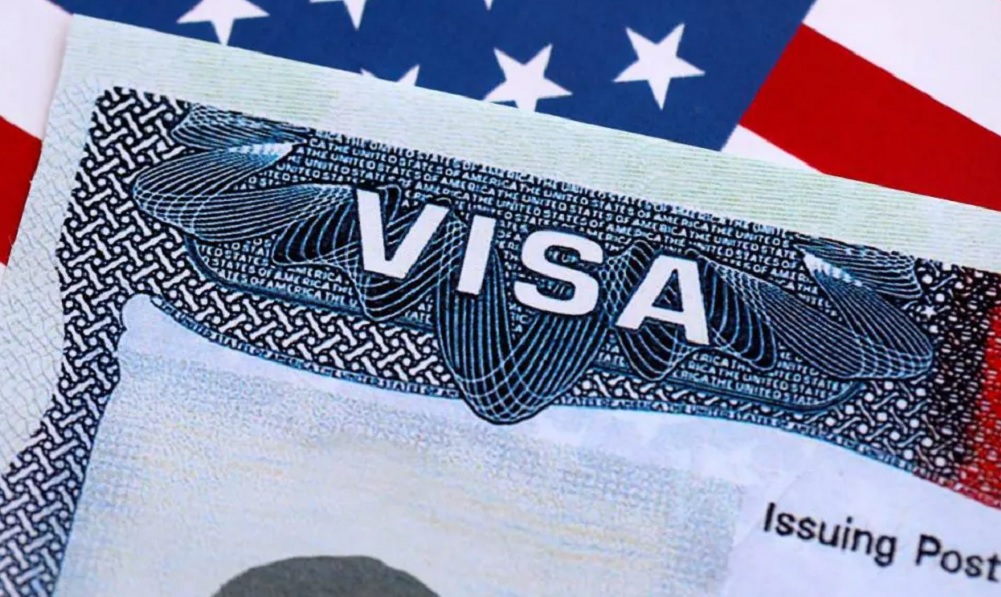
U.S. President Donald Trump’s administration is suspending processing for immigrant visas for applicants from 75 countries, a State Department spokesperson said on Wednesday, as part of Washington’s intensifying immigration crackdown.
The pause, which will impact applicants from Latin American countries including Brazil, Colombia, and Uruguay, Balkan countries such as Bosnia and Albania, South Asian countries Pakistan and Bangladesh, and those from many nations in Africa, the Middle East, and the Caribbean, will begin on January 21, the spokesperson said, Reuters reported.
A State Department cable outlining the move and seen by Reuters said the Department was undergoing a “full review” of all policies, regulations and guidance to ensure “the highest level of screening and vetting” for all U.S. visa applicants.
The cable, sent to U.S. missions, said there were indications that nationals from these countries had sought public benefits in the United States.
“Applicants from these countries are at a high risk for becoming a public charge and recourse to local, state and federal government resources in the United States,” the cable outlining the move which was reviewed by Reuters said.
The move, which was first reported by Fox News, does not impact U.S. visitor visas, which have been in the spotlight given the United States is hosting the 2026 World Cup and 2028 Olympics.
The decision follows a November directive to U.S. diplomats asking them to ensure that visa applicants are financially self-sufficient and do not risk becoming dependent on government subsidies during their stay in the U.S., according to a State Department cable seen by Reuters at the time.
“The State Department will use its long-standing authority to deem ineligible potential immigrants who would become a public charge on the United States and exploit the generosity of the American people,” said Tommy Pigott, Principal Deputy Spokesperson at the State Department.
“Immigrant visa processing from these 75 countries will be paused while the State Department reassesses immigration processing procedures to prevent the entry of foreign nationals who would take welfare and public benefits,” he added.
The cable directed U.S. consular officers to refuse any applicants whose visas have been “print-authorized” but have not been printed, or those that have been printed but have not left the consular section.
LEGAL IMMIGRATION
Trump has pursued a sweeping immigration crackdown since returning to office in January. His administration has aggressively prioritized immigration enforcement, sending federal agents to major U.S. cities and sparking violent confrontations with both migrants and U.S. citizens.
While he campaigned on stopping illegal immigration into the United States, his administration has also made legal immigration more difficult – for example, by imposing new and expensive fees, opens new tab on the applicants of H-1B visas for highly skilled workers.
“This administration has proven itself to have the most anti-legal immigration agenda in American history,” David Bier, Cato’s Director of Immigration Studies and The Selz Foundation Chair in Immigration Policy, said in a statement.
“This action will ban nearly half of all legal immigrants to the United States, turning away about 315,000 legal immigrants over the next year alone,” Bier said.
The State Department has revoked more than 100,000 visas since Trump took office, it said on Monday. The administration has also adopted a stricter policy on granting visas, with tightened social media vetting and expanded screening.
Trump, a Republican, captured the White House saying a tougher stance on immigration was needed after years of high levels of illegal immigration under his Democratic predecessor, Joe Biden.
In November, Trump had vowed to “permanently pause” migration from all “Third World Countries” following a shooting near the White House by an Afghan national that killed a National Guard member.
FULL LIST OF COUNTRIES
The list of countries that will be impacted by the suspension, according to a U.S. official, are: Afghanistan, Albania, Algeria, Antigua and Barbuda, Armenia, Azerbaijan, Bahamas, Bangladesh, Barbados, Belarus, Belize, Bhutan, Bosnia, Brazil, Cambodia, Cameroon, Cape Verde, Colombia, Democratic Republic of the Congo, Cuba, Dominica, Egypt, Eritrea, Ethiopia, Fiji, The Gambia, Georgia, Ghana, Grenada, Guatemala, Guinea, Haiti, Iran, Iraq, Ivory Coast, Jamaica, Jordan, Kazakhstan, Kosovo, Kuwait, Kyrgyzstan, Laos, Lebanon, Liberia, Libya, North Macedonia, Moldova, Mongolia, Montenegro, Morocco, Myanmar, Nepal, Nicaragua, Nigeria, Pakistan, Republic of the Congo, Russia, Rwanda, Saint Kitts and Nevis, Saint Lucia, Saint Vincent and the Grenadines, Senegal, Sierra Leone, Somalia, South Sudan, Sudan, Syria, Tanzania, Thailand, Togo, Tunisia, Uganda, Uruguay, Uzbekistan and Yemen.







Latest News
Five years out of school: Amnesty raises alarm over Afghan girls’ education
Five years on, millions of Afghan girls remain out of secondary school and unable to return to their classrooms.

Amnesty International says five years have passed since millions of girls in Afghanistan were deprived of secondary education, warning that the continued restrictions are affecting the future and aspirations of an entire generation.
The organization’s South Asia regional office said Thursday, September 17, on X that five years without access to education represent five years of injustice and lost opportunities for Afghan girls.
Despite the restrictions, Amnesty said girls across Afghanistan continue to seek ways to pursue their education, including through online learning, protests and, for some, migrating abroad to continue their studies.
Amnesty International has called on the international community to stand with Afghan women and girls and urge the Islamic Emirate to reopen girls’ secondary schools as soon as possible.
Five years on, millions of Afghan girls remain out of secondary school and unable to return to their classrooms.
The Islamic Emirate, however, has described girls’ education above the sixth grade as an internal matter and said efforts are underway to address the issue.
Latest News
Afghanistan condemns alleged drone attack on Mecca
Balkhi also warned that any threat to the holy sites could deeply anger Muslims and contribute to further instability in the region.
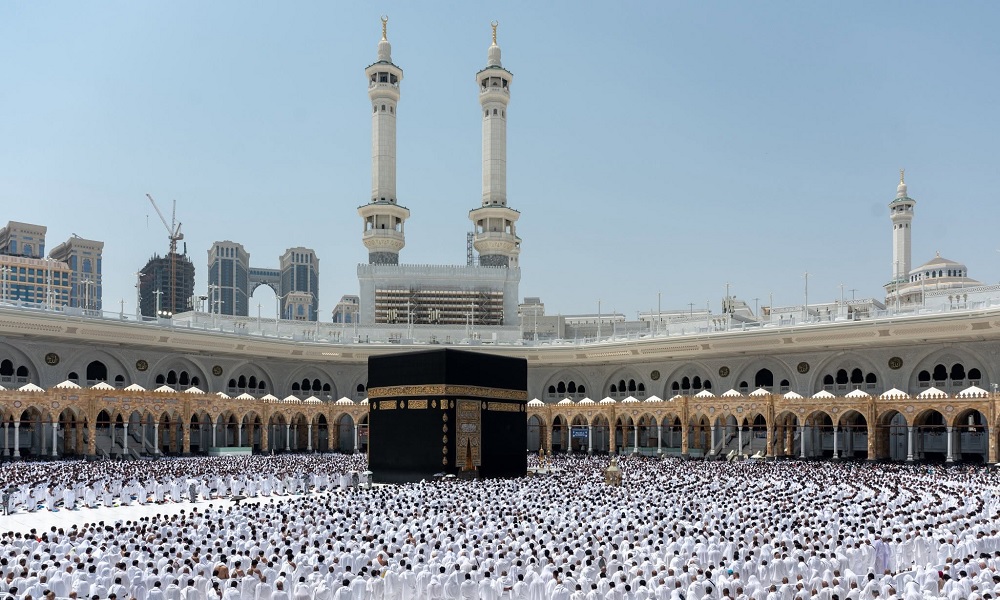
Afghanistan’s Ministry of Foreign Affairs has strongly condemned an alleged drone attack on Mecca, calling any threat to the Two Holy Cities an “unforgivable crime.”
“Any action against the Two Holy Cities that threatens the security and sanctity of these sacred sites is an unforgivable crime,” Abdul Qahar Balkhi, spokesperson for the ministry, said.
He stressed that the Two Holy Cities are sacred and highly respected sites shared by the Muslim world, and that their security and sanctity must be protected from conflicts, violence and military actions.
Balkhi also warned that any threat to the holy sites could deeply anger Muslims and contribute to further instability in the region.
Saudi Arabia’s air defences intercepted and destroyed a Houthi drone south of Mecca on Tuesday before it entered prohibited airspace over the holy city, said a spokesman for the Saudi-led military coalition fighting Yemen’s Iran-aligned Houthis.
A Houthi military source denied the group posed any threat to Mecca or other holy sites, in comments carried by the Houthi-run SABA news agency on Tuesday.
Latest News
Quetta commissioner calls for stronger coordination on Afghan refugee repatriation
According to the briefing, approximately 23,000 Afghan refugees remain in Quetta, with relevant departments continuing efforts to facilitate their repatriation.
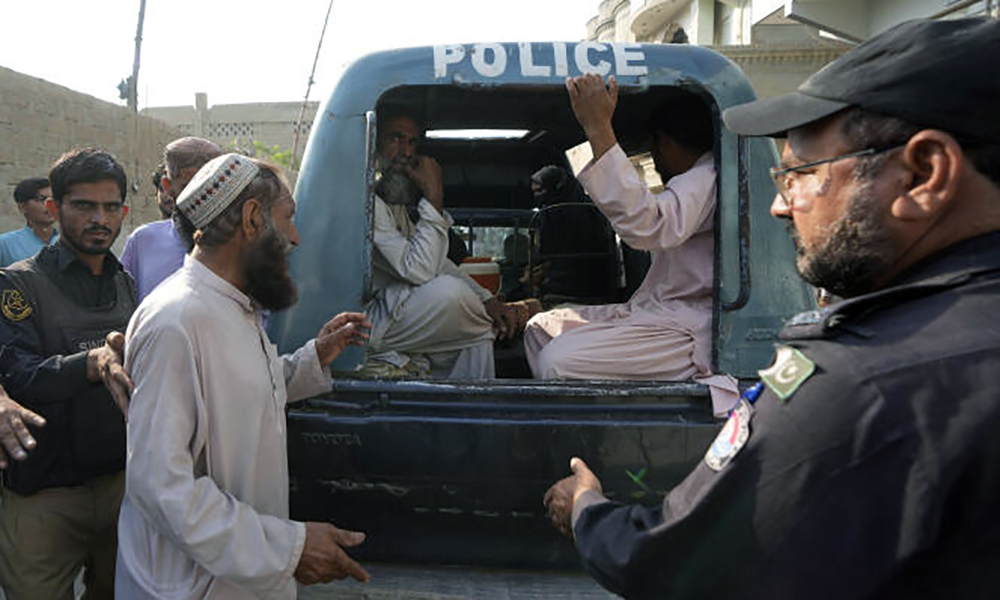
Quetta Commissioner Zeeshan Lashari has directed relevant departments to strengthen coordination to ensure the effective repatriation of Afghan refugees from Balochistan to Afghanistan.
A meeting chaired by Lashari reviewed administrative arrangements and measures related to the return of Afghan refugees.
Officials told the meeting that around 800,000 Afghan refugees in Balochistan have already been repatriated to Afghanistan, while more than 350,000 others have returned voluntarily.
According to the briefing, approximately 23,000 Afghan refugees remain in Quetta, with relevant departments continuing efforts to facilitate their repatriation.
The meeting also discussed the issue of Afghan refugees who return to Afghanistan but later attempt to re-enter Pakistan. Officials agreed to seek guidance from the Home Department on how such cases should be handled.
Lashari directed authorities to improve coordination among relevant institutions and ensure that the repatriation process is carried out effectively.
He also instructed officials to take action in accordance with applicable laws and government policy against those who attempt to re-enter Pakistan after returning to Afghanistan.


Tahawol: Reasons behind Qatari, Turkish security officials’ Kabul visit discussed

Saar: Outcome of UN Security Council meeting on Afghanistan discussed

Five years out of school: Amnesty raises alarm over Afghan girls’ education

Afghanistan condemns alleged drone attack on Mecca

Quetta commissioner calls for stronger coordination on Afghan refugee repatriation

Four mediators struggle to secure lasting Pakistan-Afghanistan ceasefire

Afghanistan’s trade diversification challenges Pakistan

Syria and Saudi Arabia condemn Kabul bombing, express solidarity with Afghanistan

Saudi energy group signs major Afghanistan deals covering gas exploration and pipeline plans

ATN secures exclusive rights to broadcast T20I series in India across Afghanistan
Tahawol: Reasons behind Qatari, Turkish security officials’ Kabul visit discussed
Saar: Outcome of UN Security Council meeting on Afghanistan discussed

Tahawol: Afghanistan’s readiness for US relations discussed

Saar: UN Security Council meeting on Afghanistan discussed

Tahawol: Afghanistan at the center of UN discussions
-

 Sport4 days ago
Zadran calls on Afghan fans to rally behind team against India
-
 Latest News4 days ago
Khalilzad warns US risks losing influence in Afghanistan to China and Russia
-
 Business4 days ago
EU and FAO launch €5m programme to strengthen Afghanistan’s agrifood sector
-
 World5 days ago
Houthi advance in Yemen puts U.S. in a new bind
-

 Regional4 days ago
Iran and UAE back joint BRICS statement urging restraint in war
-

 Sport4 days ago
India beat Afghanistan by seven wickets in first T20I
-
 Latest News3 days ago
Helmand governor, UNAMA discuss province’s key challenges
-

 Latest News3 days ago
Muttaqi defends Afghanistan’s policies, calls for stronger international ties