
Latest News
U.S. mobilizes 3,000 troops to Kabul for embassy staff drawdown

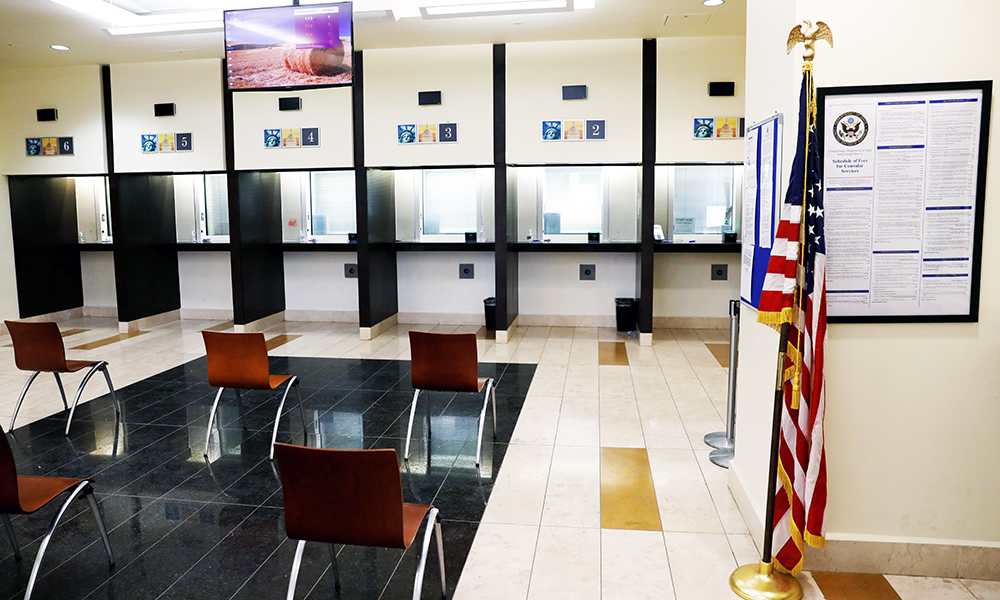
Faced with unexpectedly rapid military gains by the Taliban, the United States decided on Thursday to dramatically scale down its embassy in Kabul and send about 3,000 troops temporarily to aid the evacuation of staff, Reuters reported.
News of the drawdown, which was first reported by Reuters, underscored Washington’s rapidly deteriorating hopes that diplomacy will halt the Taliban’s advance and keep the capital in the Afghan government’s hands. The Taliban could isolate Kabul within 30 days and take it over in 90, U.S. intelligence assessments concluded this week.
“We’ve been evaluating the security situation every day to determine how best to keep those serving at the embassy safe,” said State Department spokesman Ned Price.
“We expect to draw down to a core diplomatic presence in Afghanistan in the coming weeks,” he said, adding the embassy was not closed. A person familiar with the matter said there were no guarantees the embassy would remain open.
According to the Reuters the State Department said Secretary of State Antony Blinken and Defense Secretary Lloyd Austin spoke to Afghan President Ashraf Ghani on Thursday and told him the United States “remains invested in the security and stability of Afghanistan” in the face of Taliban violence.
They said Washington was reducing its “civilian footprint” in Kabul given the “evolving security situation” and would increase the tempo of Special Immigration Visa flights for Afghans who helped the U.S. effort in the country, a State Department statement said.
The officials also said Washington remained committed to maintaining a strong diplomatic and security relationship with the Afghan government and “Secretary Blinken affirmed that the United States remained committed to support a political solution to the conflict,” it added.
President Joe Biden ordered the embassy drawdown during a meeting on Thursday with top security advisers and accepted their recommendation to do so, according to a source familiar with the situation, Reuters reported.
A decision to stay in the country might have required the commitment of many more U.S. troops there to fight a civil war, the source said, as the United States looks to end its 20-year presence prompted by the Sept. 11, 2001, attacks.
Still, the decision cast new doubt on Washington’s strategy to influence Afghanistan’s peace process by maintaining aid and diplomatic personnel even after the troop withdrawal.
Administration officials did not adjust that timetable even as Biden ordered additional troops to Afghanistan to help secure the exit of civilian personnel. The first deployment to the airport in Kabul is expected within 24 to 48 hours, Pentagon spokesman John Kirby said.
About 3,500 additional U.S. troops would be sent to the region from Fort Bragg in North Carolina to be on standby if the situation worsened, as well as 1,000 personnel to help process Afghans going through a special immigration process. It is common for the U.S. military to send in troops to evacuate personnel in combat zones.
“I don’t know that we have many choices left,” said Ronald Neumann, U.S. ambassador to Afghanistan from 2005 to 2007, about the decision to downsize the embassy. “What’s left between Kabul and the Taliban?”
STAFF REDUCTION TO BE ‘SIGNIFICANT’
Some Republican lawmakers who opposed Biden’s decision to withdraw troops said they thought it was a good idea to add them now to support the embassy drawdown.
“The Biden administration must move as swiftly as possible to get both American civilians and Afghans who have aided us out of the country as quickly as possible,” said Senator Jim Inhofe, the top Republican on the Armed Services Committee.
There are thought to be about 1,400 staff remaining at the U.S. Embassy in Kabul. Officials said the reduction in staff would be “significant.”
The military mission in Afghanistan is set to end on Aug. 31, with roughly 650 troops remaining in the country to protect the airport and embassy.
Washington is not counting on a power-sharing agreement being reached between the Kabul government and the Taliban but is seeking one to halt the fighting, according to one source. The United States has told the Taliban directly that they will face consequences if Americans are not safe, the source said.
“While the security situation in Afghanistan is deteriorating, our strategy in the region must continue to evolve,” said Representative Adam Smith, a Democrat who is chairman of the House Armed Services Committee. “The safety and security of United States personnel must always come first.”












Kazakhstan’s Foreign Minister Mukhtar Tileuberdi has called for pragmatic and coordinated international engagement with Afghanistan, saying the country’s long-term stability is closely linked to the security and sustainable development of Central Asia.
Speaking during the general debate of the 81st session of the United Nations General Assembly in New York on Friday, Tileuberdi said humanitarian assistance to Afghanistan remains essential but alone cannot break the cycle of poverty, displacement and dependency.
He said Kazakhstan supports a “pragmatic, coordinated and step-by-step” approach to international engagement with Afghanistan, with the United Nations playing a central role.
Tileuberdi also said Kazakhstan is working with the UN to operationalize the United Nations Regional Centre for the Sustainable Development Goals for Central Asia and Afghanistan in Almaty.
He said the success of the centre should be measured by the results and assistance it delivers to the region.


Abu Muslim Farah defeat Khurasan Faryab 2-0 in ACL season six

Saar: Concerns over Pakistan’s political crisis discussed

Afghanistan Champions League: Omar Zawak Herat beat Toofan Herat 1-0

Blast in Pakistan’s Dera Ismail Khan kills 11, injures 30

Ariana Afghan Airlines increases Kabul-Delhi cargo flights

Saudi energy group signs major Afghanistan deals covering gas exploration and pipeline plans

Trump floats idea of renaming Atlantic or Pacific Ocean

US hits Egyptian bank branches with Iran sanctions as war marks six months

Nepal flood rescue mission enters critical phase as thousands remain missing

Iranian clubs to face Gulf opponents at neutral venues in Asian Champions League Elite
Saar: Concerns over Pakistan’s political crisis discussed

Exclusive interview with Abdul Latif Mansoor, Minister of MRRD

Tawsia: Overview of Afghanistan’s iron mines

Tahawol: Discussion on fresh Pakistani airstrikes on Afghanistan

Saar: Calls for international support for Afghanistan discussed
-

 World5 days ago
CNN, MS NOW and Politico sue Trump, challenging White House ban
-

 Latest News3 days ago
Ariana Afghan Airlines ranks seventh among 45 Central Asian airlines
-

 Latest News5 days ago
UN reiterates call for respect for international law after Kunar airstrikes
-

 Regional4 days ago
US and Iran hold first talks since June after Trump’s ‘annihilation’ threat
-

 Latest News4 days ago
Silk Road highway in Wakhan corridor now reaches the China border
-

 Regional3 days ago
Iran airlines cancel flights as US sanctions hit
-

 Latest News5 days ago
Afghan Official: Pakistan’s airstrikes will not go unanswered
-

 Sport5 days ago
Afghan boxing referee heads to China for international festival