
Latest News
UK says Russian casualties in Ukraine 20 times higher than Soviet losses in Afghanistan
The Soviet Union invaded Afghanistan in December 1979 to prop up a communist government facing widespread insurgency.

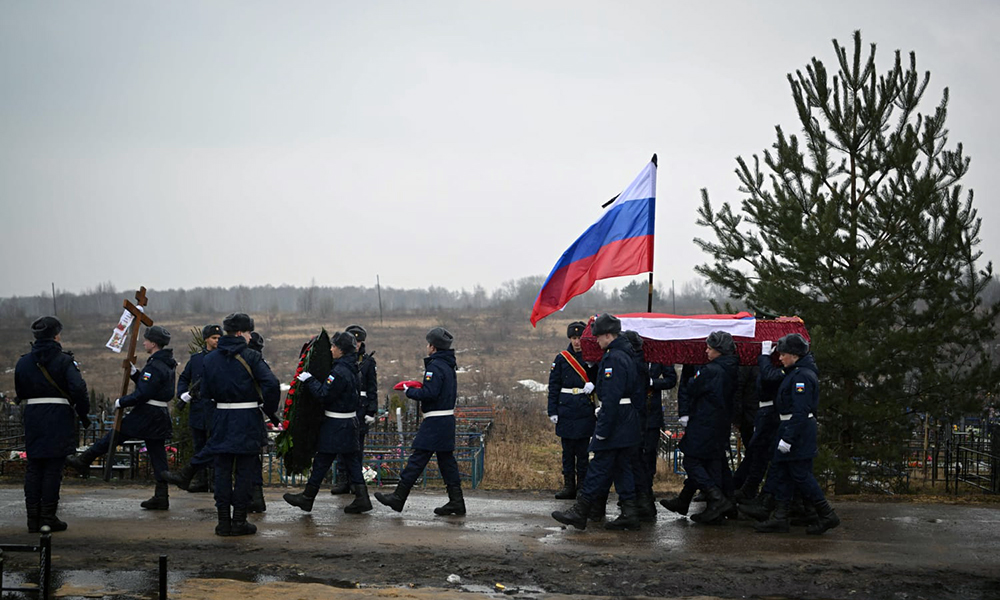
UK Foreign Secretary Yvette Cooper has claimed that Russia’s battlefield losses in Ukraine are already 20 times higher than Soviet casualties during the war in Afghanistan, underscoring what she described as the catastrophic toll of Moscow’s ongoing invasion.
Speaking at a high-level UN Security Council meeting on Tuesday, Cooper said Russia is facing severe manpower and equipment shortages. “In this war that they started, their [Russian] losses are now 20 times higher than Soviet losses in Afghanistan. They are struggling to recruit, and in some areas, their stocks are so low they have resorted to using military equipment from the 1950s,” she said, according to an Ukrinform correspondent.
The foreign secretary warned that Western allies would continue to tighten sanctions aimed at crippling Russia’s ability to finance the conflict. “We will target your ailing economy, your oil and gas revenues that are paying for this war,” she told the Russian delegation.
Cooper said falling energy revenues were already squeezing Moscow’s state budget, with oil revenues at a five-year low. “The price of war is piling up and the sanctions are tightening the screws — but we will go further. Be in no doubt,” she added.
She reaffirmed the UK’s long-term commitment to Ukraine, stressing that British support would remain “now and for decades to come.”
The remarks came during a Security Council session focused on Russia’s war against Ukraine, attended by Ukrainian President Volodymyr Zelensky, who urged continued international backing for Kyiv.
The Soviet Union invaded Afghanistan in December 1979 to prop up a communist government facing widespread insurgency.
What followed was a decade-long conflict in which Soviet forces battled Afghan mujahideen fighters backed by the United States, Pakistan, and other countries.
The war became a costly quagmire, leaving an estimated 15,000 Soviet soldiers dead and over 50,000 wounded before Moscow’s withdrawal in 1989.
The campaign is widely seen as a factor that drained the Soviet economy and hastened the collapse of the USSR.






Latest News
Security Sources: Pakistani military shelling in Kunar and Nuristan leaves female doctor dead
The sources said the vehicle was struck by gunfire and subsequently fell into the Kunar River.
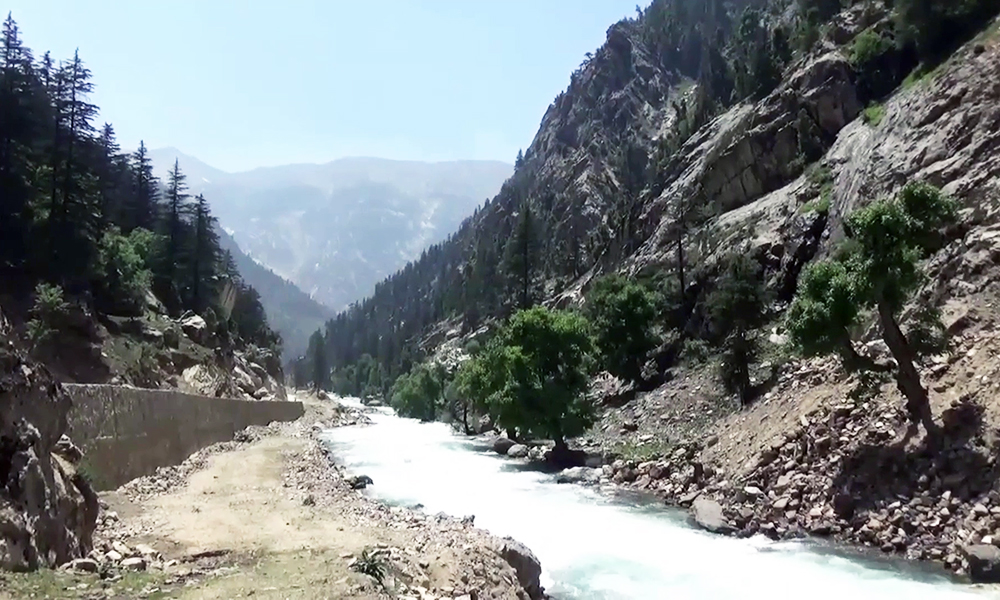
Security sources report that several security incidents in the eastern provinces of Kunar and Nuristan have resulted in the death of a female doctor, injuries to others, and several people reported missing.
According to the sources, early Thursday morning at around 9:30 a.m., Pakistani military forces opened fire on a Toyota vehicle in the Dokalam Baghcha area of Nari district in Kunar province.
The sources said the vehicle was struck by gunfire and subsequently fell into the Kunar River. As a result of the incident, a female doctor was killed and another person was injured. Five other individuals who were reportedly in the vehicle remain missing, the sources added.
In a separate incident, security sources stated that around 11:00 a.m. in the Seno area of Shultan district, Kunar province, Pakistani forces carried out artillery shelling that left one person injured. The injured individual was transferred to the provincial hospital for medical treatment.
Meanwhile, security sources in Nuristan say that despite Pakistan’s announced ceasefire, the main road between Kamdesh and Barg-e-Matal districts has been completely closed to traffic since Thursday morning.
According to the sources, the closure of the route has caused serious difficulties for local residents, preventing any movement in the area. The sources also claim that Pakistani military posts are located within close proximity of the road and have opened fire on people attempting to pass through the area.
Latest News
UN Secretary-General condemns Pakistani airstrike on Kabul rehab center
Meanwhile, a spokesperson for the Iranian Ministry of Foreign Affairs expressed concern over rising tensions between Afghanistan and Pakistan, stressing the importance of diplomacy to resolve conflicts.
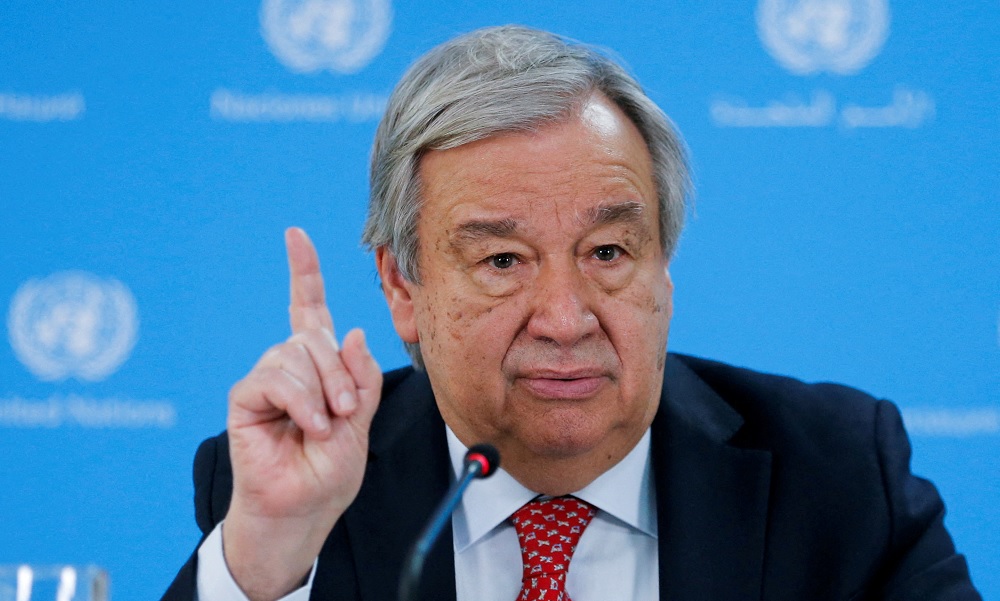
The United Nations Secretary-General has strongly condemned a Pakistani airstrike on a rehabilitation center for addicts in Kabul and expressed condolences to the families of the victims.
The attack, which occurred on March 16, reportedly left over 600 people killed or injured, according to local sources.
In an official statement, Antonio Guterres, UN Secretary-General, emphasized that under international humanitarian law, patients, medical staff, and healthcare facilities, including hospitals, must be respected and protected at all times.
Farhan Haq, Deputy Spokesperson for the UN Secretary-General, stated: “The Secretary-General strongly condemns the airstrike in Kabul, the capital of Afghanistan, on March 16, which reportedly resulted in the deaths and injuries of civilians at a medical facility.”
Haq added that Guterres has called for an independent and impartial investigation into the incident, while offering his deepest condolences to the families of the victims and wishing a speedy recovery for the injured.
The Secretary-General reiterated the urgent need to reduce tensions and immediately halt hostilities between Afghanistan and Pakistan, emphasizing that disputes should be resolved through dialogue and peaceful solutions in accordance with the UN Charter.
Meanwhile, a spokesperson for the Iranian Ministry of Foreign Affairs expressed concern over rising tensions between Afghanistan and Pakistan, stressing the importance of diplomacy to resolve conflicts.
This development comes after Afghanistan and Pakistan announced a temporary cessation of hostilities ahead of Eid al-Fitr, a move that regional officials hope will pave the way for a lasting ceasefire and ensure the protection of civilians in both countries.
Latest News
IEA Supreme Leader: Afghanistan’s victory lies in faith and National unity
Akhundzada also called on citizens to support the Islamic Emirate, stating that those serving in the current system are the sons of the same nation and people.

Eid al-Fitr prayers were held on Thursday at the Eidgah Mosque in Kandahar, led by Hibatullah Akhundzada, the supreme leader of the Islamic Emirate of Afghanistan, with a large number of residents attending the ceremony.
During his sermon, Akhundzada said that if the people of Afghanistan were meant to be destroyed by bombardments and military attacks, it would have happened during the wars with the Soviet Union and the United States.
According to the Islamic Emirate leader, the key to Afghanistan’s victory and resilience lies in reliance on Islam, preservation of religious beliefs, and unity among the people. He stressed that by adhering to Islamic values, no country would be able to harm Afghanistan.
Akhundzada also called on citizens to support the Islamic Emirate, stating that those serving in the current system are the sons of the same nation and people.
At the same time, he urged government officials to ensure justice in their duties, warning that no system can survive through oppression. He added that the implementation of decrees and laws is necessary to reform society and maintain order in the country.
The Islamic Emirate leader further said that without Islam, Afghanistan could have remained under the control of the United States and NATO, but now, according to him, the country stands as an independent and free nation.
In the economic section of his remarks, Akhundzada called on traders to avoid hoarding goods and instead assist fellow Muslims in difficult times. He warned that individuals found hoarding commodities for up to 40 days would face legal consequences.


Tahawol: Temporary ceasefire draws broad support

Security Sources: Pakistani military shelling in Kunar and Nuristan leaves female doctor dead

Saar: Emphasis on resolving conflicts through diplomacy

UN Secretary-General condemns Pakistani airstrike on Kabul rehab center

IEA Supreme Leader: Afghanistan’s victory lies in faith and National unity

Pakistani military jet downed in Afghanistan’s Jalalabad, pilot captured alive

Afghan Air Force conducts airstrikes in Islamabad, other cities

Afghanistan’s Chief of Armed Forces underscores readiness and equipment for national defense

Afghanistan welcomes investment and technology partnerships with India

Prominent Muslim scholar issues fatwa calling for Afghanistan-Pakistan ceasefire
Tahawol: Temporary ceasefire draws broad support
Saar: Emphasis on resolving conflicts through diplomacy

Tahawol: Global reactions to Pakistan’s recent attacks discussed

Saar: Consequences of Pakistani airstrikes on Afghans discussed

Tahawol: Pakistan’s new attacks on Kabul hospital discussed
-
 Latest News3 days ago
IEA Supreme Leader issues Eid-ul-Fitr message urging unity and support for Islamic system
-
 Latest News4 days ago
Regional criticism grows amid Pakistan strikes inside Afghanistan
-
 Latest News4 days ago
Afghan airstrike targets a military camp in South Waziristan
-

 Business3 days ago
Turkmenistan, Afghanistan discuss steps to speed up land acquisition for TAPI pipeline
-

 Sport4 days ago
IPL 2026 kicks off in under two weeks; Afghan players set to shine
-

 Business4 days ago
Afghanistan expands exports through Lapis Lazuli Corridor
-
 Latest News1 day ago
IEA announces temporary pause in defensive operations against Pakistan for Eid
-

 World5 days ago
Trump rejects efforts to launch Iran ceasefire talks, sources say