
Latest News
US intelligence reveals Iran’s connection to deaths of 500 U.S. troops in Iraq, Afghanistan

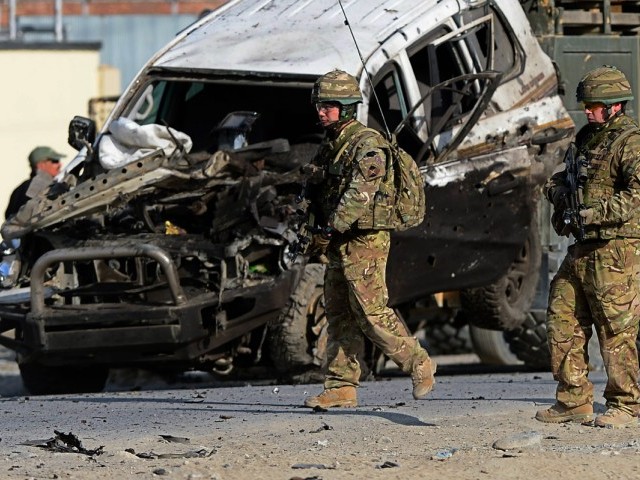

The United States intelligence reveals that At least 500 U.S. military deaths in Iraq and Afghanistan were directly linked to Iran and its support for anti-American militants.
According to Military Times, the figure underscores the controversy surrounding Washington’s deal with Tehran, a long-sought goal for the president — but one that is fiercely opposed by many Republicans in Congress and other critics.
The Military Times has written that many of those estimated 500 deaths occurred during the so-called surge in Iraq, when President George W. Bush ordered an influx of tens of thousands of troops to confront what had devolved into a sectarian civil war. Scores of American personnel were killed or maimed by highly lethal bombs, known as explosively formed penetrators, or EFPs, that Iran manufactured and supplied to Shiite militias across the border in Iraq. Many EFPs were powerful enough to destroy U.S. humvees and breach tank hulls.
The startling number emerged last week as Sen. Tom Cotton, an Arkansas Republican and Army veteran who served as an infantry officer in Iraq and Afghanistan, pressed the issue at a confirmation hearing for Marine Corps Gen. Joseph Dunford, who is Obama’s nominee to be chairman of the Joint Chiefs of Staff.
“Senator,” Dunford responded, “I know the total number of soldiers, sailors, airmen and Marines that were killed by Iranian activities, and the number has been recently quoted as about 500. We weren’t always able to attribute the casualties we had to Iranian activity, although many times we suspected it was Iranian activity even though we didn’t necessarily have the forensics to support that.”
The Defense Department does not specifically track casualties linked to Iran. The 500 estimate is a ballpark figure based on intelligence assessments, according to a Pentagon official familiar with Dunford’s remarks.
The memory of those deaths was surely a factor in the caution signaled by the Pentagon on Tuesday afternoon, after Obama’s announcement of this landmark deal between Iran, the U.S. and five other countries.
“As we implement this historic agreement, deterrence remains a major component of America’s national security,” Defense Secretary Ash Carter said in a statement. The U.S. military will remain ready to “check Iranian malign influence” and “utilize the military option if necessary,” he added.
The Iranian-made EFPs first appeared in Iraq in 2005 and for years were the most lethal weapon that American troops faced during the eight-year Iraq war.
Unlike the typical improvised explosive devices U.S. troops encountered there, the EFPs used more sophisticated technology and required more skilled milling to produce. Also known as “shaped” explosives, they used curved copper plates to direct or “shape” the bomb blast.
The estimate of 500 American deaths is probably on the low side, said David “Bo” Bolgiano, a retired Army Special Forces officer who deployed to Iraq in 2006 and 2007 with the Joint Improvised Explosive Device Defeat Organization, an organization created by the Pentagon to rapidly address the number of casualties inflicted by roadside bombs and other IEDs.
“It’s very difficult to quantify because, when you have an IED explosion that occurs in theater, you’d have to connect the dots and say, ‘Well, we have three U.S. casualties tied to that IED,’ and then that IED is tied to a specific copper-plated EFP from Iran. Often times, those forensics are missing,” Bolgiano said in an interview.
“The big EFPs from Iran were fairly easy to identify because of the metallurgy involved and the copper plate formation,” he said. “We had beyond-a-reasonable-doubt proof that Iran was the main supplier of the copper-plate EFPs,” said Bolgiano.
Troops referred to them as “IEDs,” but that’s not completely accurate, Bolgiano said.
“Improvised is a little bit misleading because it makes it sound like a basement bomb-maker, and that was not the case. The shaped charges, the copper plates, the components were anything but unsophisticated. They were designed and at the level anything that any other non-Western government would have,” Bolgiano said.
Cotton contends that number is much greater than 500, with still more American troops wounded in action as a result of Iran’s influence on U.S. adversaries in both war zones.
A spokeswoman for the senator, Caroline Rabbit, said Tuesday that Iran “has the blood of hundreds of Americans on its hands and this deal only gives them billions of dollars to continue killing Americans.” She was unable to provide Military Times with a more-detailed breakdown of those statistics, nor was the Pentagon.
American troops pulled out of Iraq in 2011 and returned last year as the Islamic State group overran Iraqi forces in places U.S. troops fought and died to liberate. In the eyes of many Iraq War veterans, to include some senior U.S. military officials, the Iraqi Shiite militias with links to Iran also have American blood on their hands.
In March, the top U.S. commander in the Middle East said he hoped the strategy for defeating Islamic State extremists will not involve an alliance with those groups.
“Three tours in Iraq commanding troops who were brutalized by some of these Shia militias … I will not — and I hope we never — coordinate or cooperate with the Shia militias,” Army Gen. Lloyd Austin, chief of U.S. Central Command, told the Senate Armed Services Committee last winter.
But after the demoralizing fall of the city of Ramadi in May, the U.S. military shifted its policy. Now, U.S. warplanes are launching airstrikes in support of some Shiite militias fighting the Islamic State under the command and control of the Iraqi government.
Dunford, who pending confirmation will become only the second Marine to serve as the U.S. military’s top officer, referred to Iran as a “malign force,” telling lawmakers that, despite a nuclear agreement, Iran will continue to exert its influence across the Middle East. One need look no farther than the Red Sea, where this past spring American naval vessels moved to block an Iranian arms shipment bound for rebel forces fighting the American-backed government in Yemen.
“If confirmed as the chairman,” Dunford said, “I’ll make sure that our leadership has a full range of military options to deal with Iranian activity.”
In a statement, Cotton indicated he believes the deal with Iran is a mistake, principally because it comes with an infusion of “tens of billions of dollars to finance its sponsorship of terrorism against the United States and our allies.”
“When I was a platoon leader in Iraq, my soldiers and I faced deadly roadside bombs, made and supplied by Iran,” the statement read. “I tried to reassure them, but I could only tell them to hope it wasn’t our day to die by Iran’s roadside bombs. If Iran obtains a nuclear weapon, I fear the United States will only be able to hope it isn’t our day to die by an Iranian nuclear bomb.” (Military Times)

The Directorate of Child Protection at the Ministry of Labor and Social Affairs announced on Saturday that in the solar year 1404, through the implementation of extensive support programs and the handling of thousands of protective cases, it has achieved significant accomplishments in securing rights, raising awareness, and improving the situation of children across Afghanistan.
According to the directorate, the registered cases have been organized into 23 different categories, allowing for targeted and specialized handling of each type of case. In the area of awareness-raising, extensive programs have also been implemented to improve the general knowledge of children and their families, resulting in 404,207 children and family members being informed about child rights, explosive hazards, environmental protection, and other important topics.
To strengthen local structures and accelerate case management, the Directorate of Child Protection, within the framework of its 1404 work plan, established 20 new committees at the district level in provincial centers. These committees play a key role in coordinating between government offices, rapidly identifying cases, and providing support services. Currently, child protection committees are active in 204 districts and regularly review and resolve children’s issues.
Latest News
Severe rainfall and natural disasters cause heavy casualties across Afghanistan
At least 61 people have been confirmed dead, with 116 others injured. Four individuals remain unaccounted for as search and rescue operations are underway.
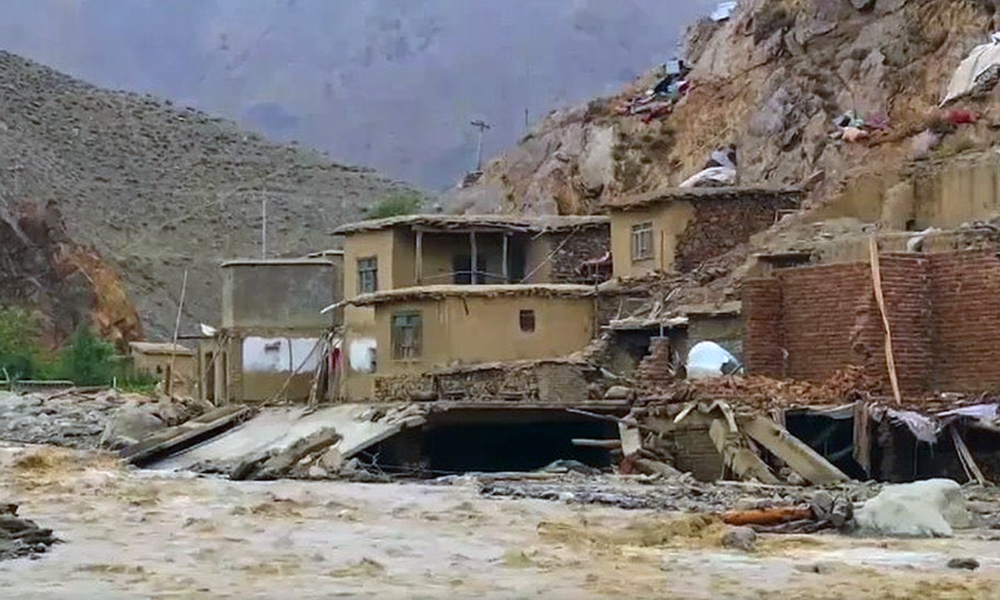
The Spokesperson for the Islamic Emirate of Afghanistan, Zabihullah Mujahid, has confirmed widespread devastation across the country following a series of natural disasters and heavy rainfall. The toll continues to rise as authorities assess the damage.
At least 61 people have been confirmed dead, with 116 others injured. Four individuals remain unaccounted for as search and rescue operations are underway. The disaster has also led to the destruction of 2,448 homes, leaving thousands displaced, while 26,841 acres of agricultural land have been severely damaged. In addition, the storm claimed the lives of 1,045 livestock animals, further exacerbating the already dire situation for rural communities.
In a statement, Mujahid emphasized the ongoing relief efforts. The Islamic Emirate is mobilizing all available resources to assist the hardest-hit regions and ensure the swift recovery of affected communities. The focus remains on providing immediate aid, including shelter, medical supplies, and food, while also beginning the long-term process of reconstruction and recovery.
Authorities have urged citizens in vulnerable areas to remain vigilant as more rain is forecast, adding to the urgency of the ongoing relief operations.
Latest News
Afghan citizens reported among casualties in US, Israeli attacks, Iran says
As of now, authorities of the Islamic Emirate of Afghanistan have not issued an official response to the claims.
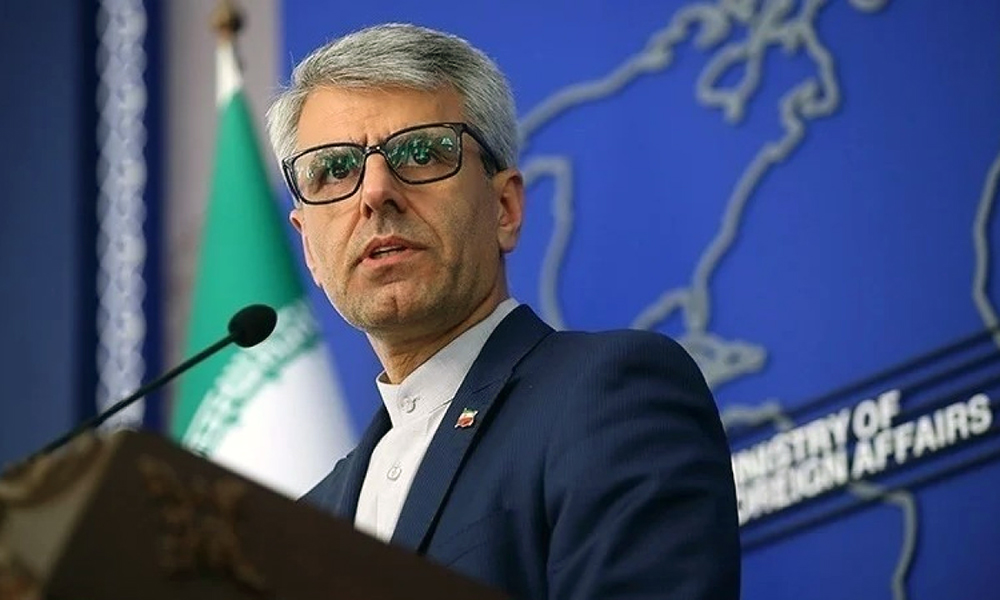
Iran’s Embassy in Kabul, citing Foreign Ministry spokesperson Esmaeil Baghaei, has stated that a number of Afghan citizens were killed or injured during what Tehran described as a 35-day military campaign carried out by the United States and Israel.
According to the statement, the Afghan nationals were living in Iran at the time of the attacks. Baghaei referred to them as “honored guests” of the country, adding that some lost their lives while others sustained injuries during the reported strikes.
He did not provide specific figures regarding the number of Afghan casualties or further details about the incidents.
As of now, authorities of the Islamic Emirate of Afghanistan have not issued an official response to the claims.


Around 15,000 cases of vulnerable Afghan children addressed over past year

Severe rainfall and natural disasters cause heavy casualties across Afghanistan

Kazakhstan eyes rare metals mining projects in Afghanistan and Rwanda

Afghan citizens reported among casualties in US, Israeli attacks, Iran says

Save the Children: Nearly one Afghan child killed or injured daily by explosive remnants

Prominent Muslim scholar issues fatwa calling for Afghanistan-Pakistan ceasefire

IEA Supreme Leader issues Eid-ul-Fitr message urging unity and support for Islamic system

14 Pakistani soldiers killed after military post falls along Durand line: MoD

Afghanistan steps in to replace Iran in supplying fruits and vegetables to Russia

Afghan airstrikes target Pakistani military sites in retaliation for air attacks

Tawsia: This week’s key economic developments in Afghanistan discussed

Tahawol: Start of talks between Kabul-Islamabad in China discussed

Saar: Ongoing US and Israeli attacks on Iran discussed

Tahawol: Ongoing US–Israeli war with Iran discussed

Saar: Afghanistan-Pakistan talks in China discussed
-
 Latest News5 days ago
TAPI gas pipeline advances 25 km in Afghanistan
-
 Latest News3 days ago
Baradar approves 17 projects worth over one billion AFN
-

 Business4 days ago
Russia backs Uzbekistan–Afghanistan trade hub, praises regional economic cooperation
-

 Sport4 days ago
ATN secures broadcast rights for inaugural Afghanistan Wrestling Premier League
-

 Sport3 days ago
ATN to broadcast second season of Ariana Snooker Championship
-
 Regional4 days ago
Gas pipeline blown up in southern Pakistan, says official
-

 Sport4 days ago
Rajasthan Royals outclass Chennai Super Kings as IPL action continues
-
 Latest News4 days ago
Islamic Relief Worldwide urges Afghanistan–Pakistan de-escalation, calls for aid to displaced