
Latest News
US may examine regaining control of Afghan assets transferred to Swiss-based fund: watchdog


Donald Trump administration may want to examine returning Afghan central bank assets from Swiss-based fund to the custody as part of the current review of foreign assistance, a US watchdog said on Thursday.
In 2022, the US transferred $3.5 billion in Afghan central bank assets previously frozen in the United States to the Swiss-based Fund for the Afghan People.
With accrued interest, the Fund has now grown to nearly $4 billion, the Office of the Special Inspector General for Afghanistan Reconstruction (SIGAR) said in a quarterly report.
According to the report, the US has spent nearly $3.71 billion in Afghanistan since withdrawing from the country in 2021. Most of that money (64.2%) went to UN agencies, the United Nations Assistance Mission in Afghanistan, and the World Bank-administered Afghanistan Resilience Trust Fund. Another $1.2 billion remains available in the funding pipeline for possible disbursement.
SIGAR said that while the assistance may have staved off famine in the face of economic collapse, it has not dissuaded the IEA from taking US citizens hostage, dismantling the rights of women and girls, allowing the country to become a terrorist safe haven.
The watchdog also said that the IEA exert some control over humanitarian activities and have at times required NGOs to sign memoranda of understanding (MOUs) as a condition for operating in Afghanistan.
On January 20, 2025, President Trump ordered a 90-day pause in U.S. foreign development assistance to assess “programmatic efficiencies and consistency with United States foreign policy.” The order requires all department and agency heads responsible for foreign assistance programs to immediately pause new obligations and disbursements of development assistance funds to foreign countries, nongovernmental organizations, international organizations, and contractors.




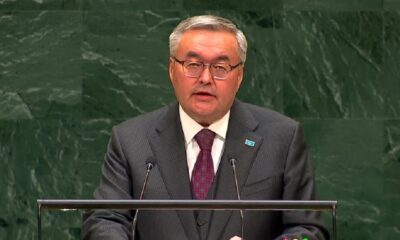





Kazakhstan’s Foreign Minister Mukhtar Tileuberdi has called for pragmatic and coordinated international engagement with Afghanistan, saying the country’s long-term stability is closely linked to the security and sustainable development of Central Asia.
Speaking during the general debate of the 81st session of the United Nations General Assembly in New York on Friday, Tileuberdi said humanitarian assistance to Afghanistan remains essential but alone cannot break the cycle of poverty, displacement and dependency.
He said Kazakhstan supports a “pragmatic, coordinated and step-by-step” approach to international engagement with Afghanistan, with the United Nations playing a central role.
Tileuberdi also said Kazakhstan is working with the UN to operationalize the United Nations Regional Centre for the Sustainable Development Goals for Central Asia and Afghanistan in Almaty.
He said the success of the centre should be measured by the results and assistance it delivers to the region.


Ariana Afghan Airlines increases Kabul-Delhi cargo flights

Khalilzad questions Pakistan’s commitment to Afghan welfare

India, UN envoy discuss Afghanistan’s humanitarian needs

Kazakhstan calls for coordinated international engagement with Afghanistan

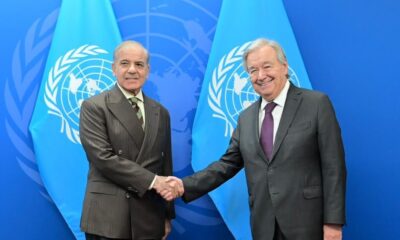
Pakistan PM, UN chief discuss Afghanistan amid rising Kabul-Islamabad tensions

Saudi energy group signs major Afghanistan deals covering gas exploration and pipeline plans

Trump floats idea of renaming Atlantic or Pacific Ocean

US hits Egyptian bank branches with Iran sanctions as war marks six months

Nepal flood rescue mission enters critical phase as thousands remain missing

Iranian clubs to face Gulf opponents at neutral venues in Asian Champions League Elite

Exclusive interview with Abdul Latif Mansoor, Minister of MRRD

Tawsia: Overview of Afghanistan’s iron mines

Tahawol: Discussion on fresh Pakistani airstrikes on Afghanistan

Saar: Calls for international support for Afghanistan discussed

Tahawol: Opening of the 81st UN General Assembly Session
-

 World4 days ago
CNN, MS NOW and Politico sue Trump, challenging White House ban
-

 Latest News3 days ago
Ariana Afghan Airlines ranks seventh among 45 Central Asian airlines
-

 Latest News4 days ago
UN reiterates call for respect for international law after Kunar airstrikes
-
 Latest News5 days ago
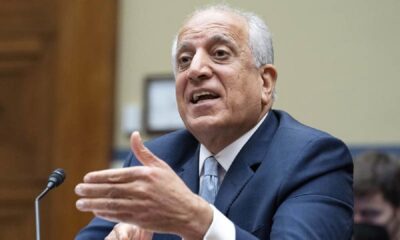
Khalilzad condemns Pakistan airstrikes, says current strategy is not working
-

 Regional3 days ago
US and Iran hold first talks since June after Trump’s ‘annihilation’ threat
-

 Latest News3 days ago
Silk Road highway in Wakhan corridor now reaches the China border
-

 Latest News4 days ago
Afghan Official: Pakistan’s airstrikes will not go unanswered
-
 Regional4 days ago
G7 foreign ministers call on Iran to stop arming Houthis