
Business
US veterans built Afghan saffron company in Chicago



Afghanistan saffron has made three US veterans become interested in building a saffron company in Chicago; They aim to cultivate peace in Afghanistan through farming
The three war veterans are hoping to give farmers there a viable alternative to growing poppy for opium.
The company is called Rumi Spice. It was started by three Afghanistan War veterans, including West Point grads and longtime best friends Kimberly Jung and Emily Miller.
“The U.S. Military has probably spent millions, if not billions, of dollars on poppy eradication in Afghanistan. And thus far it’s been largely unsuccessful. They’ve done things like set fire to the crops or just outright try to destroy the fields. But at the end of the day, we truly believe that farmers need an economic alternative. And saffron is definitely the way,” Emily Miller said.
Jung also says ” We’re not in this to make lots of money. We’re in this because we believe that connecting Afghan farmers to the international marketplace is something that’s worth fighting for – it’s worth fighting for our global security, it’s worth fighting for everyone’s future – and that it’s going to make economic sense.”
Growing saffron in Afghanistan is still relatively uncommon, while neighboring Iran grows most of the world’s saffron.

Business
Airspace transit fees generate revenue for Afghanistan as flight routes shift
The increase follows adjustments to international flight routes due to ongoing conflicts in other regions.
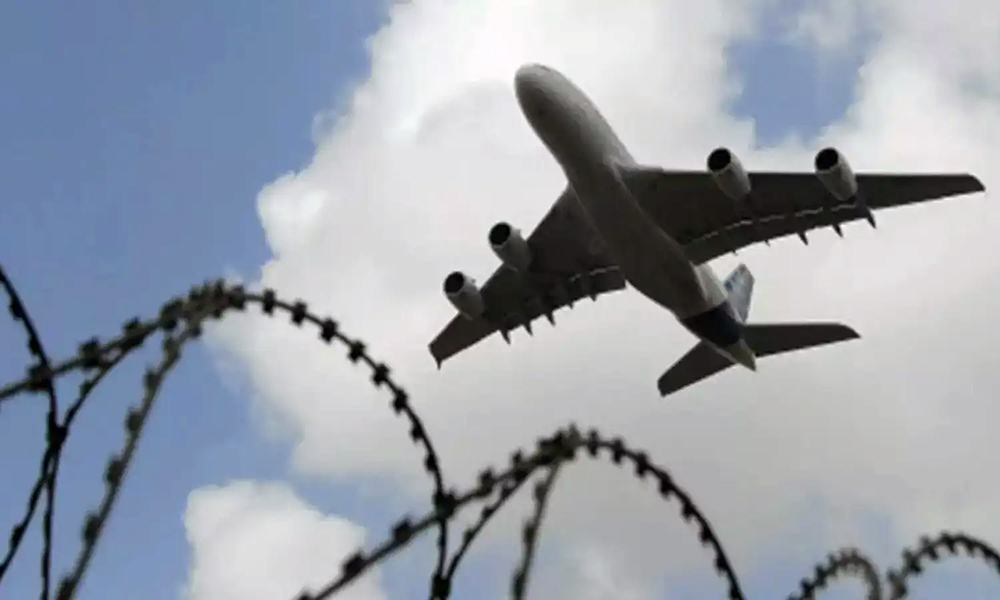
Airlines are increasingly flying over Afghanistan, generating significant transit fee revenue for the country amid changing global flight patterns.
According to industry estimates, nearly 2,000 flights now pass through Afghan airspace each week—around five times more than a year ago. With a reported overflight fee of about $700 per aircraft, this amounts to roughly $1.4 million in weekly revenue, or more than $70 million annually.
The increase follows adjustments to international flight routes due to ongoing conflicts in other regions.
Airspace restrictions linked to the war in Ukraine in the north and instability in parts of the Middle East have narrowed traditional corridors between Europe and Asia. As a result, airlines have turned more frequently to routes over Afghanistan and other countries such as Saudi Arabia.
Charging for the use of national airspace is standard international practice. These fees—often referred to as route charges—are typically calculated based on factors such as distance flown and aircraft weight.
In Europe, for example, they are coordinated through organisations like Eurocontrol and distributed to national air navigation service providers, including Switzerland’s Skyguide, to support air traffic management and infrastructure.
Afghanistan’s current system applies a flat fee per aircraft, a structure that has been in place since 2017.
By comparison, countries such as Saudi Arabia calculate overflight charges based on distance and aircraft weight, with average fees reported at around $800 per flight.
Aviation experts note that while overflight arrangements continue, operational procedures in Afghan airspace differ from those in more developed systems. Airlines are required to submit flight plans in advance and coordinate closely while transiting the area.
Meanwhile, broader regional tensions have also affected airline operations beyond routing. Some carriers have suspended or reduced services to destinations in parts of the Middle East. Switzerland’s national carrier, Swiss International Air Lines, confirmed ongoing cancellations to destinations such as Dubai and Tel Aviv.
Travel company TUI Suisse has also temporarily scaled back offerings to several countries in the region, citing shifting demand and operational considerations.
Industry observers say passenger demand is now trending toward alternative destinations, including parts of Europe and the Caribbean, as travel patterns adjust to the evolving situation.
Business
Central Asia, Afghanistan crank up Russian fuel imports as MidEast supplies dry up
Afghanistan is not exempt from Russia’s gasoline export ban, but Belarus can continue supplies.

Central Asia and Afghanistan increased fuel imports from Russia and Belarus by rail by more than 50% in the first quarter as Moscow diverts energy flows from Europe and the Iran war curbs deliveries from the Middle East, traders said on Wednesday.
The traders said supplies to the region in January-March increased to 3.347 million metric tons, Reuters reported.
Since the European Union introduced an embargo on Russia’s oil products in February 2023, the region has become the main export market for Russian fuel.
While Russia has banned gasoline exports until the end of July, many Central Asian countries, with which Russia has inter-governmental agreements on fuel supplies, are exempt from the restrictions.
Mongolia is the biggest Russian fuel importer in the region. Supplies to the country in the first quarter rose by 29% year on year to 840,000 tons, read the report.
Afghanistan is not exempt from Russia’s gasoline export ban, but Belarus can continue supplies.
Afghanistan’s imports from Russia and Belarus jumped fourfold in the first quarter compared to the same period in 2025, reaching 530,000 tons, including 231,000 tons of gasoline.
Business
Uzbekistan-Afghanistan trade posts steady growth in early 2026
Afghanistan remained one of Uzbekistan’s key trading partners, ranking among its top 20 counterparts by overall trade volume.
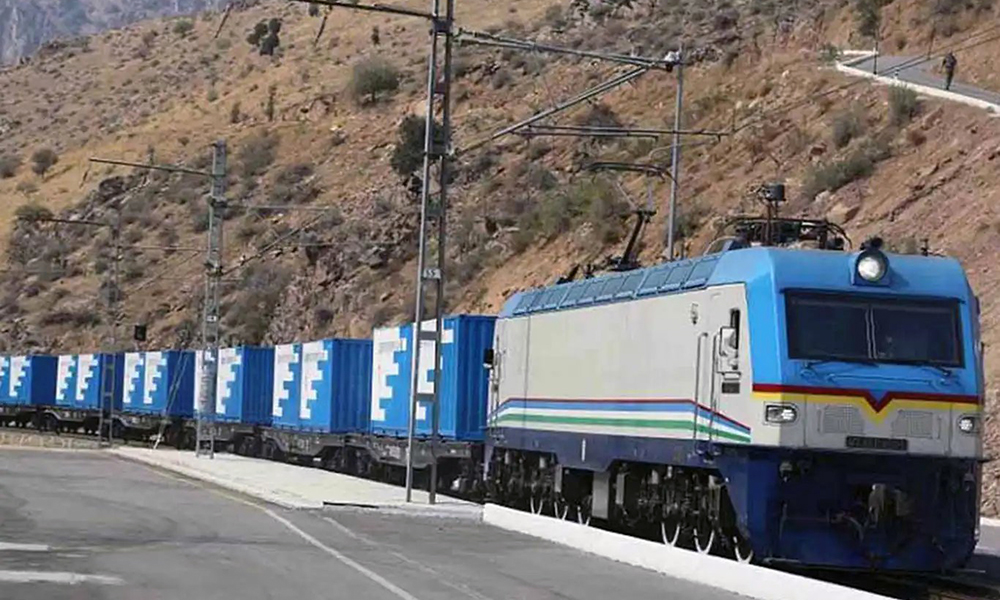
Trade between Uzbekistan and Afghanistan continued to expand in the first two months of 2026, reflecting strengthening economic ties despite ongoing regional challenges.
According to data from Uzbekistan’s National Statistics Committee, bilateral trade reached $298.4 million between January and February, marking an increase of $22.5 million — or 8.2% — compared to the same period in 2025.
The figures also show a sharp longer-term rise. Trade more than doubled compared to the first two months of 2024, when turnover stood at $131.2 million, representing a 127.5% increase over two years.
Afghanistan remained one of Uzbekistan’s key trading partners, ranking among its top 20 counterparts by overall trade volume.
Exports from Uzbekistan continued to dominate the relationship, totaling $289.1 million and accounting for nearly 97% of total trade. The export-heavy structure highlights Uzbekistan’s role as a major supplier of goods to Afghanistan, particularly agricultural products, energy resources, and manufactured items.
The growth comes as Uzbekistan expands its broader trade footprint. The country’s total foreign trade turnover reached $11.6 billion in the same period, with economic links spanning more than 160 countries worldwide.
The latest figures underscore deepening commercial engagement between Tashkent and Kabul, with trade momentum showing resilience and sustained upward growth.


Airspace transit fees generate revenue for Afghanistan as flight routes shift

Uzbekistan, Norway stress continued dialogue on Afghanistan settlement

Can Iran legally impose tolls on the Strait of Hormuz?

First endoscopic nasal tumour surgery successfully performed at Balkh regional hospital

Central Asia, Afghanistan crank up Russian fuel imports as MidEast supplies dry up

IEA supreme leader orders replacement of foreign terminology in official documents

Russia deems US military presence in Afghanistan unacceptable

Afghanistan hosts inaugural Afghanistan–Central Asia Consultative Dialogue to strengthen regional cooperation

TAPI gas pipeline advances 25 km in Afghanistan

Afghani strengthens nearly 10% against US dollar amid banking sector reforms

Tahawol: Cooperation between Afghanistan and Central Asia discussed

Saar: Calls for recognition of IEA discussed

Tahawol: Calls to strengthen Afghanistan’s border security

Saar: Discussion on UN sanctions list updates on IEA members

Tahawol: Consequences of US blockade on Strait of Hormuz discussed
-
 Latest News3 days ago
China establishes new Xinjiang county near sensitive border region
-

 World4 days ago
At least 30 dead in stampede at Haiti’s historic Laferriere Citadel
-

 International Sports4 days ago
IPL double-header delivers thrills as teams battle for momentum
-
 Regional5 days ago
Iran’s new supreme leader has severe and disfiguring wounds
-
 Latest News4 days ago
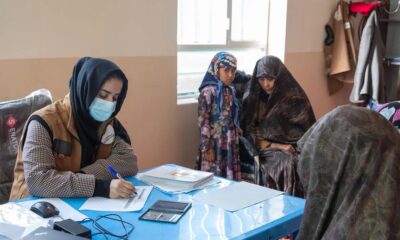
UN warns of critical funding shortfall for humanitarian aid in Afghanistan
-
 Regional4 days ago
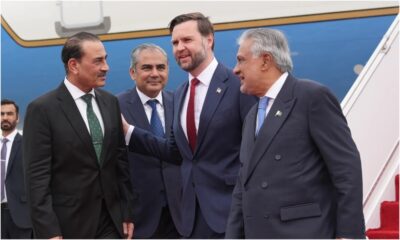
US-Iran talks end without breakthrough as Vance departs Pakistan
-
 Sport5 days ago
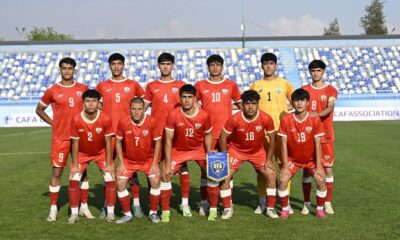
Afghanistan U-17 football team ends CAFA campaign with 3–2 loss to Tajikistan
-
 Latest News4 days ago
Global outrage triggered after deadly attack on civilians in Herat