
Latest News
Waste fears as Afghan soldiers cash in on spent ammo

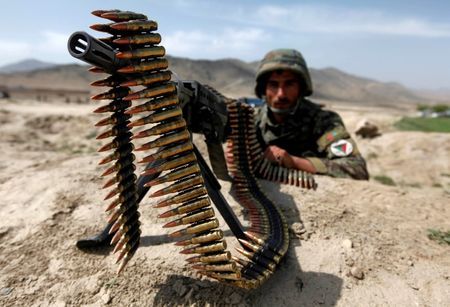

Zahir Jan, a scrap metal dealer in the southern Afghan province of Helmand, pays about 175 Afghani ($2.55) per kilo of spent cartridge casings and has no trouble finding supplies from poorly paid soldiers and policemen looking for extra cash.
If they don’t have enough on hand, he says they’re happy to fire off their weapons for 5-10 minutes until he has what he needs.
“This is a good business now and there are buyers waiting in different areas,” he said.
Along with official and media reports that some soldiers and police even sell weapons and ammunition to the Taliban, the issue illustrates a problem for commanders trying to improve controls on vital supplies like fuel and ammunition.
A senior Afghan officer in the army’s technical and weapons branch, who didn’t want to be named as he is not authorized to speak publicly, said troops in Helmand and the northern province of Kunduz fired 7,000 artillery shells in May alone.
“We asked army commanders about it and said if each shell killed only one person, we should have 3,500 Taliban dead in each province,” he said. “It’s very clear they fire aimlessly and collect the shell casings for copper and sell them.”
Another officer, a commander in Helmand who arrived in the province six months ago following a clearout of senior officers in the army’s 215th corps, estimated that up to 8 out of every 10 soldiers sold ammunition casings.
“One hundred percent, it happens,” he said, also speaking anonymously as he was not authorized to talk to the media. “The reason is the lack of a proper logistics system as well as insufficient pay and leave.”
Despite recent efforts to improve pay and conditions for Afghan soldiers, morale remains a problem, with many serving for months or even years without leave, earning around $200 a month.
The clearout of senior officers in Helmand was prompted by reports of abuse and corruption, including cases where officers stole soldiers’ pay or demanded bribes to allow them to go on leave.
Assessing just how widespread ammunition misuse is and how far the sale of cases involves deliberately or wastefully firing off ammunition rather than collecting spent cartridges from normal operations remains difficult.
The defense ministry declined to provide ammunition usage figures. But at least seven officials in different parts of the government and military said soldiers discharging their weapons purely in order to produce saleable scrap metal was a problem.
The United States spent more than $300 million from its Afghanistan Security Forces Fund on ammunition for Afghan army and police last year, Department of Defense figures show.
In a report from February, Pentagon inspectors said the systems for supplying and maintaining equipment for police and army units were “immature and unreliable”. Lack of proper controls raised the likelihood of “misuse, theft, and diversion to unauthorized purposes.”
A scandal last year involving rigged fuel contracts increased the pressure for improvements, and more attention is being given to keeping track of ammunition, which NATO officials say is a “top priority”.
“Reporting has been sketchy,” said Australian army Brigadier Scott Hicks, deputy director of the logistics and maintenance operation within the NATO-led Resolute Support training and assistance mission. “We’re getting better at it with fuel and we’re working on ammunition at the moment,” he said.
FORMS AND PAPERS
Afghan officials acknowledge there have been cases of ammunition misuse, but deny the problem is widespread.
“Several forms and papers have to be filled out to obtain ammunition and there has to be accountability for everything,” said Mohammad Radmanish, a defense ministry spokesman.
NATO officers have, however, been trying to move the Afghan army to overhaul its logistics with new computerized systems and more timely reporting from the field that would enable unusual patterns of ammunition use to be spotted more quickly.
In particular, they are trying to get away from Soviet-era supply doctrine, in which supplies are “pushed” out based on centralized estimates of likely needs.
NATO officials say the system, while relatively simple, makes it harder to see when supplies are misused. Instead, they are working to have frontline units “pull” in supplies through requests to headquarters, which must track and forecast the needs of its subordinate units.
However, they face problems convincing some Afghan commanders who are not comfortable with new methods that require more sophisticated systems and place heavy demands on a force where many soldiers are illiterate.
Kenneth Watson, civilian director of Resolute Support’s logistics and maintenance training, said more transparency was essential for foreign donors pledging billions of dollars to support Afghan forces.
“As a coalition, we have to have visibility on assets and we have no visibility with a manual-based system,” he said.
At the far end of the supply chain, such considerations weigh little for low-paid soldiers with more to worry about than foreign donors.
“Unfortunately it’s very difficult to stop,” said the commander in Helmand. Sometimes, he said, units can fire off 10,000-20,000 rounds in a single night.
“We’ll ask about casualties on our side or in the Taliban, and there isn’t even a single injury.”
Reuters

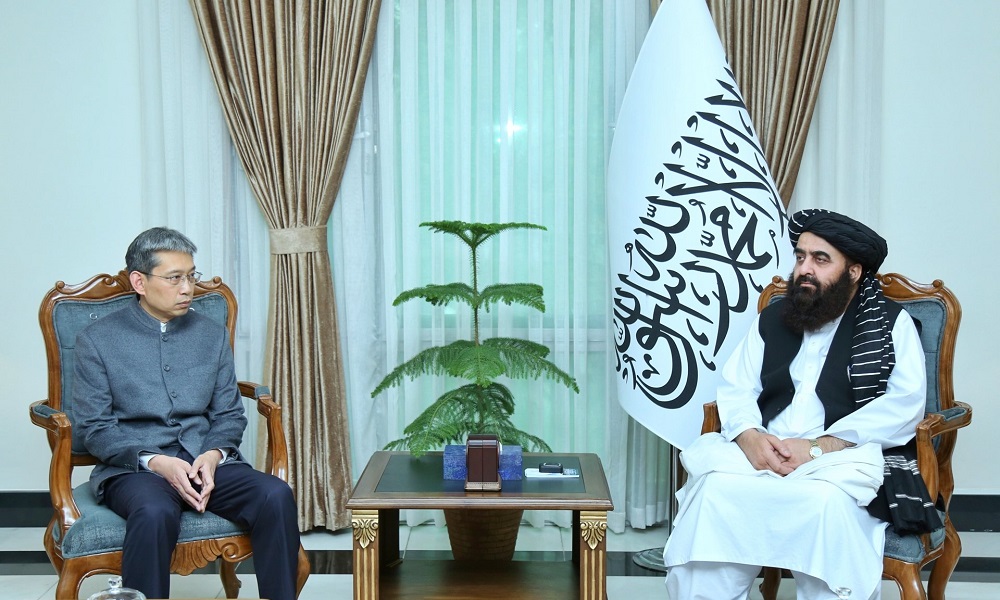
Zhao Xing, China’s ambassador to Kabul, told Amir Khan Muttaqi, Afghanistan’s foreign minister, that his country is working to create an atmosphere of trust between Afghanistan and Pakistan and has initiated talks with neutrality and cooperation.
According to a statement from the Ministry of Foreign Affairs of the Islamic Emirate, the meeting focused on bilateral cooperation, regional developments, and the ongoing dialogue process between Afghanistan and Pakistan, which took place in the city of Urumqi, China.
During the meeting, Zhao added that he hopes, given an understanding of the regional geopolitical situation, that the process of confidence-building, goodwill, and tension-free relations between Afghanistan and Pakistan will continue.
Muttaqi, while positively assessing the bilateral relations and existing cooperation between the two countries, expressed gratitude to his Chinese counterpart and their team for facilitating and hosting the Urumqi talks, as well as to Saudi Arabia, Turkey, Qatar, and the United Arab Emirates for their mediating efforts.
Muttaqi stated that so far there have been good discussions between Kabul and Islamabad and expressed hope that minor differences in interpretation do not hinder the progress of the negotiations.
The foreign minister emphasized that the Islamic Emirate of Afghanistan’s stance regarding tensions has been defensive, considering the protection of its territory a legitimate right, and remains committed to continued understanding and dialogue based on mutual respect and comprehension.
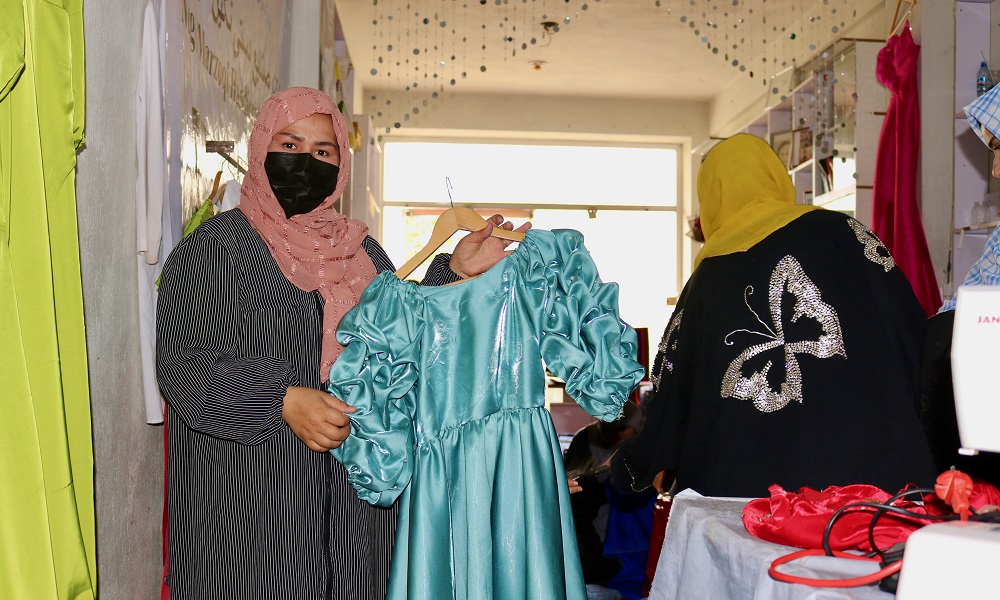
The Government of Japan, in partnership with the United Nations Development Programme, has launched a new $2.35 million initiative aimed at supporting vulnerable communities in Afghanistan facing economic hardship, climate shocks, and the aftermath of the country’s collapsing poppy economy.
The project, titled “Resilient Income Solutions Empowering Alternative Livelihoods (RISE)”, will run from March 2026 to March 2027 and target some of the country’s most affected regions, including Balkh Province and Nimroz province.
Funded by the Japan, the initiative seeks to help vulnerable Afghans, particularly women and women-led households, transition to sustainable sources of income.
The program will invest in productive infrastructure such as irrigation systems, water management facilities, and market-supporting assets, while also strengthening local value chains and supporting women-led businesses.
The project comes at a critical time, as Afghanistan faces overlapping challenges, including food insecurity, large-scale returnee movements, and limited economic opportunities. By promoting alternative livelihoods, the initiative aims to reduce reliance on illicit economies and help stabilize high-risk communities.
Japanese Ambassador to Afghanistan, Kenichi Masamoto, reaffirmed Japan’s commitment to the country’s recovery. “This project will build upon our previous support to continue providing much-needed sustainable livelihood opportunities, especially for women and vulnerable communities,” he said.
Meanwhile, Stephen Rodriques, Resident Representative of UNDP in Afghanistan, highlighted the urgency of such efforts. He described the initiative as part of a long-standing partnership between Japan and UNDP, adding that it “offers hope to vulnerable communities most affected by ongoing economic, social, and environmental crises.”
In addition to infrastructure and economic support, the RISE project will promote social cohesion by bringing together host communities and returnees through shared economic activities.
The initiative builds on UNDP’s earlier programs under the Area-Based Approach to Development Emergency Initiatives (ABADEI) and aligns with broader UN strategies for Afghanistan, with a focus on inclusive recovery and long-term stability.
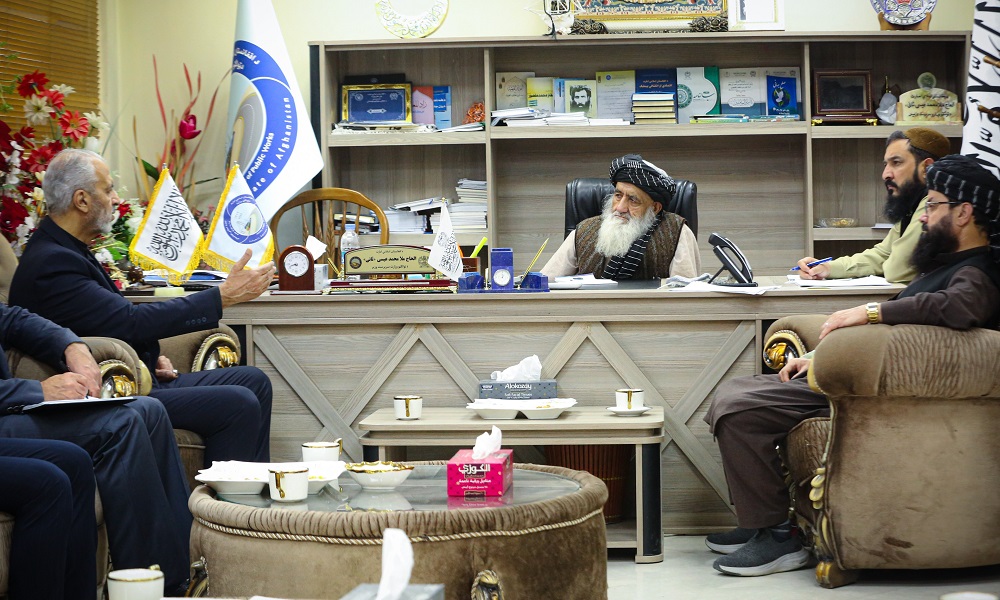
Mullah Mohammad Isa Sani, the Islamic Emirate’s Minister of Public Works, met Tuesday with Alireza Bikdeli, Iran’s ambassador in Kabul, to discuss the expansion of economic and trade relations between Afghanistan and Iran.
The talks also covered railway construction projects, increasing transport along the Khaf–Herat railway, and the comprehensive development of trade transit facilities between the two countries.
Mohammad Ashraf Haqshenas, spokesperson for the Ministry of Public Works, said that during the meeting both sides emphasized joint cooperation between Afghanistan and Iran and discussed projects related to the repair, reconstruction, and modernization of railways, roads, and bridges.
According to Haqshenas, the meeting also stressed further strengthening economic ties between Afghanistan and Iran, increasing trade exchanges, and continuing close and sustainable cooperation in infrastructure projects.


Tahawol: Ongoing negotiations between Kabul-Islamabad discussed

Saar: Afghanistan in spotlight of SCO discussed

China seeking to build trust between Afghanistan and Pakistan

Trump says ‘a whole civilisation will die tonight’; Qatar fears regional escalation

Afghanistan U-17s draw 0-0 against Turkmenistan in CAFA campaign

IEA Supreme Leader issues Eid-ul-Fitr message urging unity and support for Islamic system

14 Pakistani soldiers killed after military post falls along Durand line: MoD

IEA supreme leader orders replacement of foreign terminology in official documents

Afghan airstrikes target Pakistani military sites in retaliation for air attacks

Turkmenistan, Afghanistan discuss steps to speed up land acquisition for TAPI pipeline
Tahawol: Ongoing negotiations between Kabul-Islamabad discussed
Saar: Afghanistan in spotlight of SCO discussed

Tahawol: Continuation of Middle East crisis discussed

Saar: Ongoing Kabul-Islamabad talks in China discussed

Tawsia: This week’s key economic developments in Afghanistan discussed
-
 Latest News3 days ago
IEA supreme leader orders replacement of foreign terminology in official documents
-
 Latest News3 days ago
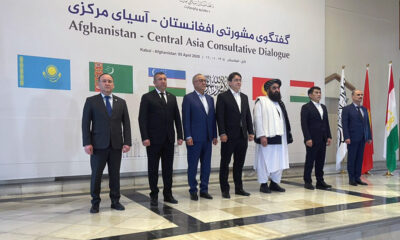
Afghanistan hosts inaugural Afghanistan–Central Asia Consultative Dialogue to strengthen regional cooperation
-
 Business5 days ago
Tripartite agreement to launch new Russia–Turkmenistan–Afghanistan transit corridor
-
 Latest News5 days ago
China says Afghanistan–Pakistan peace talks show progress
-

 Business4 days ago
Kazakhstan eyes rare metals mining projects in Afghanistan and Rwanda
-
 Regional5 days ago
Iran claims it shot down US F-35 jet
-
 World5 days ago
US Army chief of staff fired by Hegseth, sources say
-
 Latest News5 days ago
Afghan doctors urged to support Iranian health institutions amid US and Israeli attacks