
Latest News
White House will continue to assist Afghans ‘without supporting’ the IEA

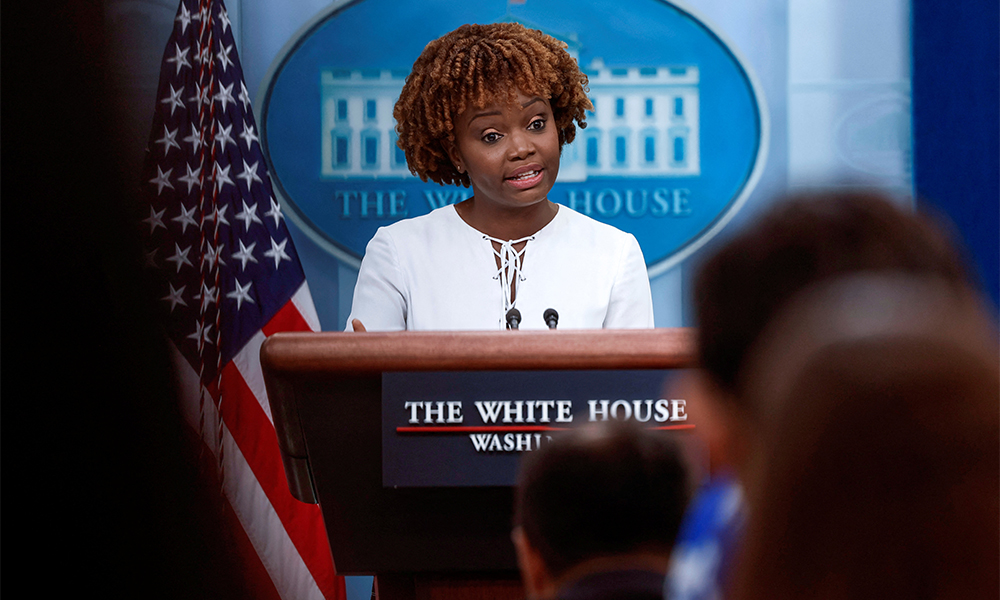
Karine Jean-Pierre, the White House press secretary, said Monday that the US will continue to support the Afghan people, but will do so without “bolstering” the Islamic Emirate of Afghanistan (IEA).
Jean-Pierre said in response to a question about Afghan girls’ education that US President Joe Biden has always been very clear about the importance of girls, not just in America but globally, being able to live freely and be able to go to school and get an education.
Jean-Pierre also said that the Biden administration has been very clear in laying out its concerns, such as girls’ education, with the IEA.
“We have been consistent with that. We’ve been very clear of that. And so, we also remain laser-focused on trying to support and assist the Afghan people without bolstering the Taliban (IEA),” Jean-Pierre said.
“And so, that’s something that we’re going to continue to do. That’s something that the President is going to continue to be clear about — not just him but his administration. And so, that doesn’t end today or — or — and two years ago. That certainly will continue throughout his administration.”
“We’re going to assist the Afghanistan — Afghan people as much as we can, without bolstering the Taliban (IEA). And that has been our commitment, our commitment not just the last two years, certainly, for the past few decades,” she added.
The Islamic Emirate, however, considers America to be a “false claimant of human rights” and says that women’s rights are better protected now than when the Americans were in Afghanistan because the Americans “did not even respect women’s lives and women and children were always victims in their bombings”.



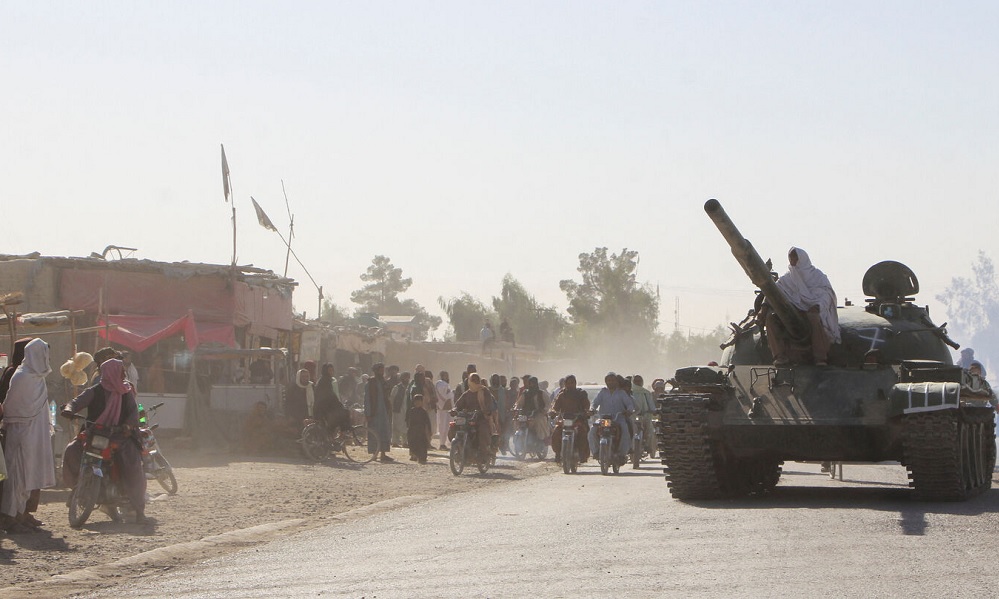
In an opinion article published on Sunday, Financial Times warned that rising tensions between Afghanistan and Pakistan risk spiraling into a wider conflict, and urged the international community to urgently re-engage with the troubled region.
The publication noted that nearly five years after the Islamic Emirate’s return to power, global attention has largely faded, despite growing instability. It highlighted restrictions on women’s rights and the worsening relationship between Kabul and Islamabad, once close allies.
According to the article, Pakistan’s ties with the IEA have sharply deteriorated since 2021. Islamabad accuses Afghan authorities of harboring militant groups responsible for attacks inside Pakistan—an allegation the IEA denies.
Recent weeks have seen a surge in violence, including cross-Durand Line airstrikes and clashes that have reportedly killed over 1,000 people and displaced more than 100,000. One of the deadliest incidents involved an airstrike on a drug rehabilitation center in Kabul, which Afghan officials say killed hundreds.
The newspaper warned that continued escalation could destabilize South and Central Asia and risk turning Afghanistan into a hub for militant activity once again.
It criticized Pakistan’s military approach, saying airstrikes alone cannot end insurgencies, and called for sustained ceasefire efforts following a temporary truce during Eid al-Fitr.
The editorial urged major powers, including the United States and China, to play a more active diplomatic role. It also pointed to China’s strategic interests in the region and suggested Beijing could step forward as a mediator.
Despite past failed attempts at peace, the Financial Times stressed that the risks are too high for the world to remain disengaged.
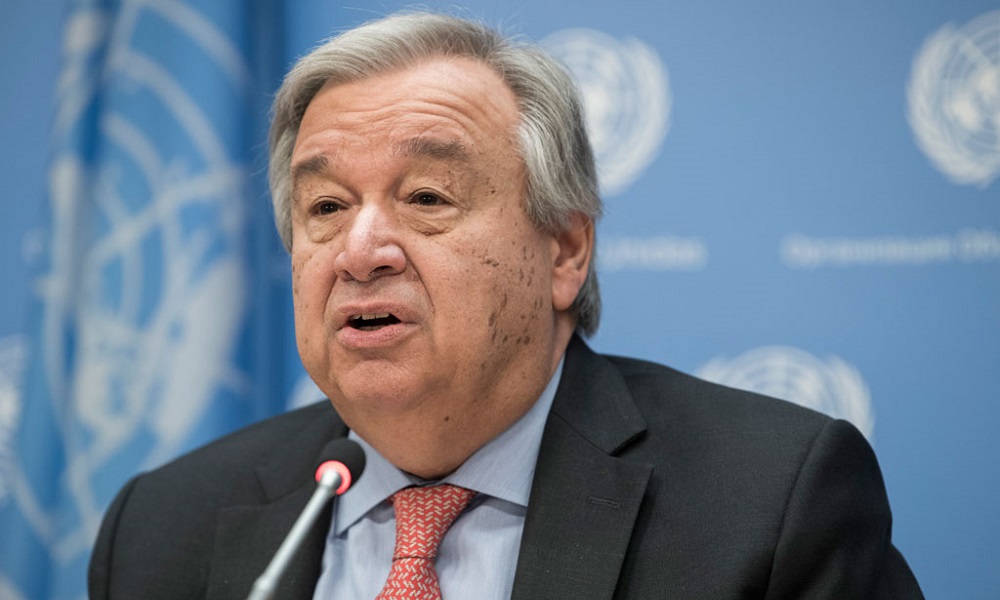
Marking World Water Day, UN Secretary-General António Guterres on Sunday stressed that access to safe water and sanitation is essential for protecting the rights and health of women and girls, urging governments to take stronger action.
In his message, the Secretary-General warned that women and girls bear the greatest burden where water and sanitation services are inadequate. Many are forced to use unsafe facilities, care for relatives affected by waterborne diseases and spend hours each day collecting water—often missing out on education and opportunities.
Highlighting this year’s theme, “Where water flows, equality grows,” Guterres said improving water access can play a key role in advancing gender equality.
He called on governments to boost investment in water and sanitation systems by improving service delivery, strengthening workforce capacity and ensuring sustainable financing. He also urged developed nations to support these efforts by sharing technology, expertise and funding to build resilient infrastructure.
The UN chief emphasized the importance of including women in decision-making processes to ensure water systems effectively meet community needs.
While noting that water scarcity can contribute to conflict, Guterres said it can also foster cooperation and peace. He pointed to the upcoming UN Water Conference as an opportunity for countries to accelerate progress toward universal access to water and sanitation.
“Together, let’s make water a force for gender equality,” he said, calling for global efforts to ensure no community is left behind.
Latest News
Water crisis deepens in Afghanistan as families struggle for access
Traditional sources such as wells and karezes—underground channels that have sustained communities for generations—are now under severe strain.
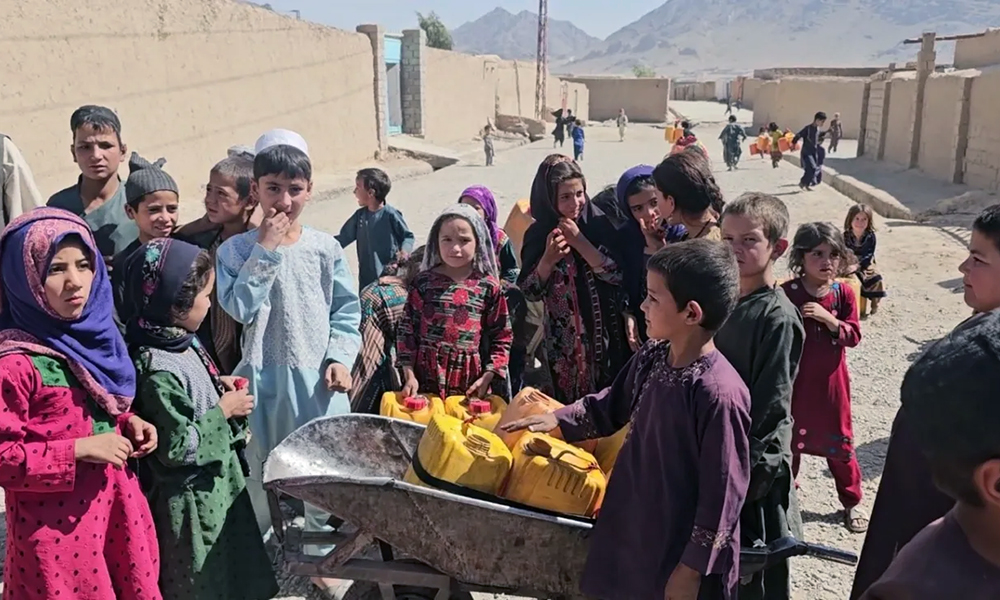
As the world marks World Water Day, Afghanistan is facing a worsening water crisis, with millions of people struggling to access safe and reliable supplies.
Years of drought, declining rainfall, rapid population growth and the return of families from neighbouring countries have placed increasing pressure on already fragile water systems.
Traditional sources such as wells and karezes—underground channels that have sustained communities for generations—are now under severe strain.
In many rural areas, families are forced to rely on unsafe surface water or travel long distances to meet daily needs. Women and children are most affected, often spending hours each day collecting water.
Urban centres, including Kabul, Mazar-e-Sharif and Kandahar, are also grappling with shortages. Rapid population growth and unregulated groundwater extraction have led to significant depletion, leaving many households dependent on private wells or water deliveries.
The situation in Kandahar is particularly severe. Reports indicate that numerous wells have dried up, while others have dropped to depths of more than 100 metres.
Local community leader Fazil Rahman described water shortages as the most pressing challenge in his area, noting that even deep boreholes are failing to produce sufficient supply. He added that the crisis is disrupting education and livelihoods, as children are often forced to spend hours fetching water instead of attending school.
In response, the International Committee of the Red Cross (ICRC), in partnership with the Urban Water Supply and Sewage State-Owned Corporation, launched a water infrastructure project in Kandahar in 2025. The initiative aims to improve access for more than 100,000 residents through expanded pipelines, new household connections and solar-powered pumping systems.
The ICRC has also upgraded a major water pumping station in Herat, now supplying water to more than 400,000 people through tens of thousands of household connections.
Beyond urban areas, water scarcity is also affecting agriculture, the backbone of many rural livelihoods. Reduced irrigation has led to lower crop yields and increased risks of food insecurity and malnutrition.
To support affected communities, the ICRC has rehabilitated irrigation canals, karezes and flood protection systems in several provinces, including projects in Parwan Province.
Despite these efforts, humanitarian organisations warn that aid alone will not be enough. Long-term investment in infrastructure, improved water management and stronger policies will be essential to address the crisis.
Without sustained and coordinated action, experts caution that water shortages could continue to threaten public health, food security and stability across Afghanistan.


World must re-engage to prevent all-out Afghanistan-Pakistan war: Financial Times

UN chief urges investment in water systems to advance gender equality

North Korea’s Kim Jong Un reappointed as president of state affairs, KCNA says

Tahawol: Possibility of US ground forces entering Iran war discussed

Water crisis deepens in Afghanistan as families struggle for access

Pakistani military jet downed in Afghanistan’s Jalalabad, pilot captured alive

Afghan Air Force conducts airstrikes in Islamabad, other cities

Prominent Muslim scholar issues fatwa calling for Afghanistan-Pakistan ceasefire

Afghan air force strikes key Pakistani military installations in retaliatory operation

IEA: Special circle in Pakistan has launched mission to destabilize region
Tahawol: Possibility of US ground forces entering Iran war discussed

Saar: Using US prisoners as political pressure

Tahawol: Pakistan’s efforts to destabilise Afghanistan

Saar: Decline in international assistance to Afghanistan

Tawsia: Assessment of Afghanistan’s economic activities in 1404
-
 Latest News5 days ago
IEA announces temporary pause in defensive operations against Pakistan for Eid
-
 Latest News5 days ago
Karzai accuses Pakistan of seeking to destabilise Afghanistan after Kabul strike
-
 Latest News4 days ago
Pakistani shelling hits Kunar districts despite ‘pause in hostility’ over Eid
-

 Sport3 days ago
Afghanistan national buzkashi falls short in Kokpar World Championship semifinals
-

 Regional4 days ago
Pakistan among top nuclear threats to America, US intelligence chief tells senate
-
 Latest News5 days ago
Muslim scholars condemn Kabul hospital attack, urge ceasefire
-

 Latest News5 days ago
UNAMA puts death toll from Pakistan’s attack on Kabul’s Omid Hospital at 143
-
 Latest News4 days ago
Peshawar High Court grants bail to 68 detained Afghan nationals, including minors