
Latest News
Younis Qanuni appointed as new chief of HPC

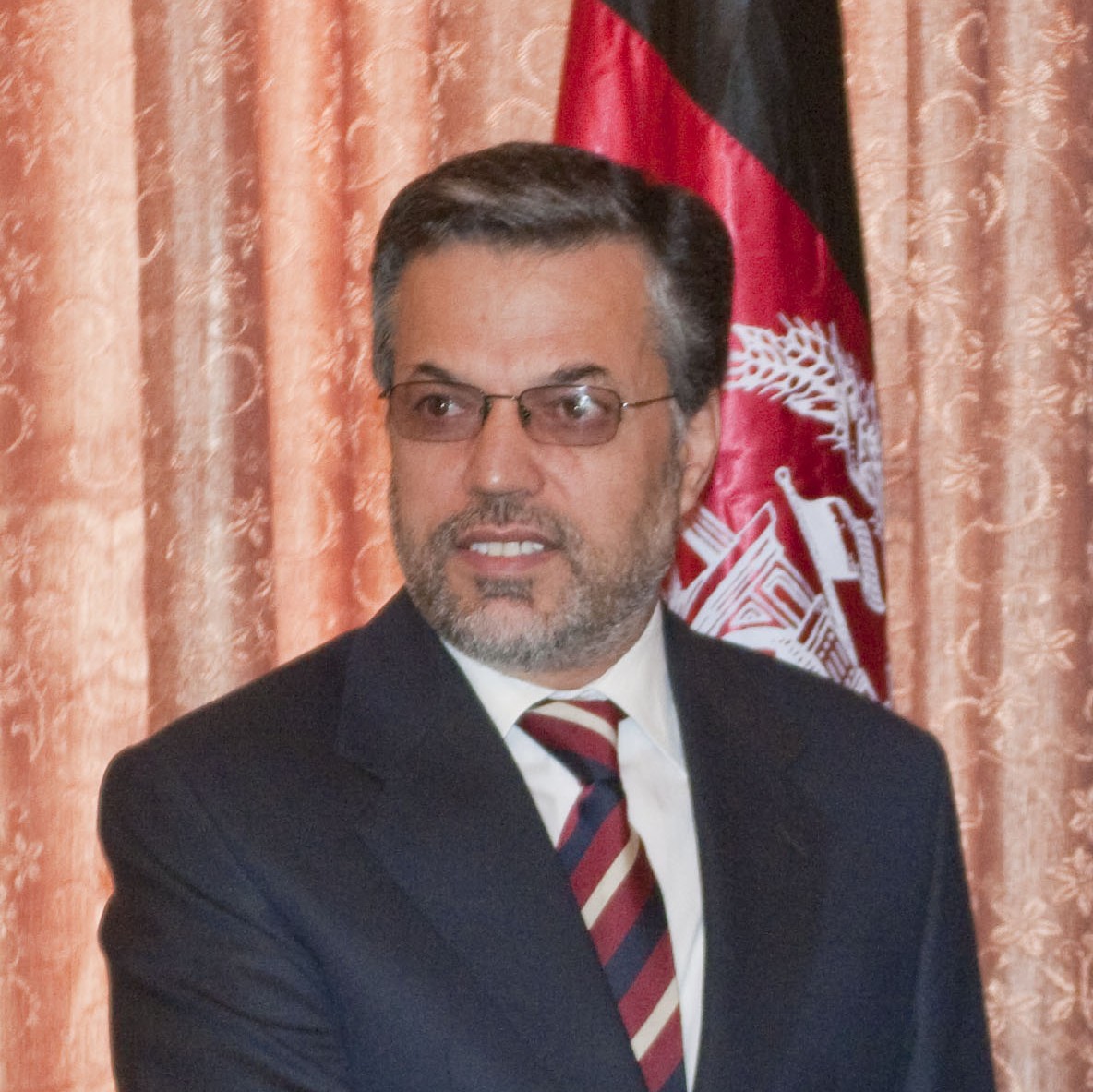

Former chairman of Wolesi Jirga and former vice president, Muhammad Younis Qanuni appointed as the new Chairman of Afghanistan High Peace Council.
A source close to the National Unity Government (NUG) says that the measure was taken in National Security Council chaired by President Ashraf Ghani.
The source refused to present further details.
Mohammad Yunis Qanuni was born in 1957 in the Panjsher Valley. He is from the Panjshir Valley’s town of Rokha.
During the 1992-96 government of President Burhanuddin Rabbani, Qanooni was deputy defense minister, then interior minister.
Following Operation Enduring Freedom in 2001, Qanuni served as chief negotiator for the Northern Alliance delegation to the Bonn conference on Afghanistan after the Taliban fell from power, Qanuni served as the Interior Minister in Afghanistan’s Interim Administration headed by Chairman Hamid Karzai.
When Afghanistan’s Transitional Government was formed in 2002, Hamid Karzai chose Qanuni to be his Education Minister, what he didn’t accept.
Qanooni was reelected as a Wolesi Jirga Member 2010 and then former vice president After Marshal Fahim’s death.
The Afghanistan High Peace Council (HPC) is a body of the Afghanistan Peace and Reintegration Program, appointed by former President Hamid Karzai to negotiate with elements of the Taliban. The HPC was established on 5 September 2010.

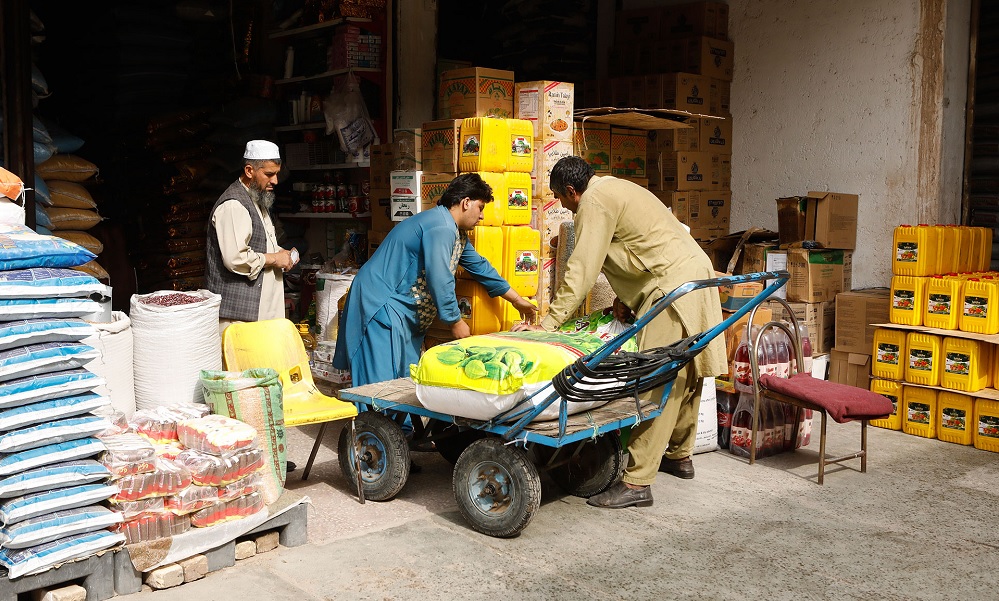
The United Nations says nearly one million additional Afghan children at risk of malnutrition could have received food assistance if tensions with Pakistan and the war involving Iran had not sharply increased transport costs and disrupted supply routes.
Carl Skau, deputy executive director of the World Food Programme, told AFP that Afghanistan is facing an escalating nutrition emergency, with malnutrition cases reaching record levels in 2025.
“It is a nutrition crisis here in Afghanistan,” Skau said, adding that the rise in malnutrition this year is even worse than last year’s unprecedented surge.
According to WFP estimates released in January, around five million Afghan women and children are expected to suffer life-threatening malnutrition this year.
The crisis has been compounded by a near-total closure of the Durand Lin for eight months, as well as the broader economic fallout from the conflict involving Iran. The disruptions have driven up food and fuel prices and affected supply chains.
“If we weren’t struggling with the supply chain, both delays and costs, we would be able to feed a million more children here in Afghanistan,” Skau said.
He cited the example of thousands of tons of fortified biscuits intended for Afghan schoolchildren that were originally scheduled to enter Afghanistan through Pakistan. After the Durand Line closure, the supplies were rerouted through Dubai and Iran, but renewed regional conflict forced another diversion through several countries, including Saudi Arabia, Turkiye, Georgia and Turkmenistan.
“It’s about to arrive this week, but it’s taken… months. It cost us way more,” Skau said.
The WFP has also struggled to secure funding for Afghanistan, receiving only eight percent of its targeted budget for this year.
Latest News
U.S. reups $6 million reward for information on American missing in Afghanistan since 2014

The United States has renewed two rewards totaling $6 million for information leading to the whereabouts or safe return of American freelance writer Paul Edwin Overby Jr., who disappeared in Afghanistan 12 years ago.
According to the Federal Bureau of Investigation, Overby vanished in May 2014 while conducting research for a book in Afghanistan’s Khost province. Before disappearing, he had reportedly said he might cross into Pakistan.
“For over a decade, FBI agents and analysts have worked tirelessly to find Paul and bring him home,” said Darren Cox, assistant director in charge at the FBI. “We will continue to coordinate with partner agencies and pursue all credible leads until we can provide Paul’s family with the answers they’ve waited 12 years to hear.”
In May 2018, the FBI Washington Field Office announced a reward of up to $1 million for information that leads to Overby’s location, recovery, and return. The U.S. State Department’s Rewards for Justice program is also offering a reward of up to $5 million.
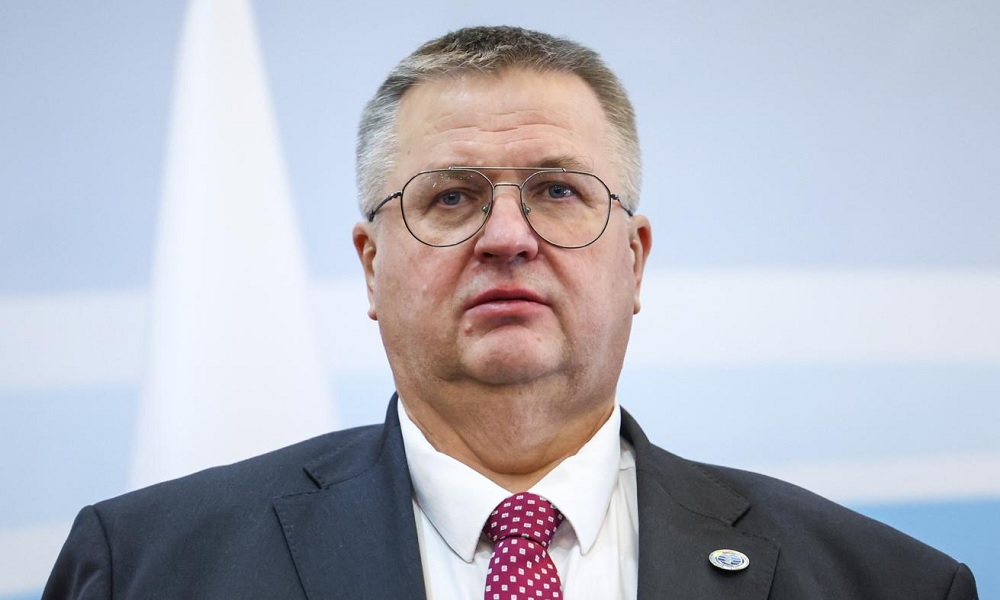
Afghanistan has asked Russia to send medical teachers to help train Afghan students, according to Russian Deputy Prime Minister Alexei Overchuk.
Speaking on the sidelines of the Russia – Islamic World: KazanForum, Overchuk said Afghan officials expressed strong interest in Russian medical education during recent talks between the two sides, TASS news agency reported.
“In addition, there is a very strong interest in Russian medicine. They have also asked us to send teachers to teach medicine to Afghan students,” Overchuk told reporters, adding that discussions over the past two years have covered a wide range of topics.
According to him, the talks also focused on fuel exports, agriculture, investment cooperation, and trade expansion between the two countries.
Overchuk said Russia sees significant potential for growth in bilateral trade with Afghanistan. He noted that trade volumes between the two sides have risen sharply in recent months.
“Today, we have established diplomatic relations with Afghanistan. Regular contacts are maintained, including between interested agencies,” he said.
The Russian deputy prime minister stated that bilateral trade currently stands at around $326 million according to Russian figures, while Afghan estimates place it closer to $500 million. He added that trade during the first two months of this year increased 2.6 times compared to the same period last year.
Overchuk also said Afghan officials are interested in importing Russian automobiles and agricultural products.
“Afghans remember very well the products the Soviet Union once supplied, including Soviet cars and trucks,” he said. “They say it would be great if Russia could once again establish such supplies to their country.”
The 17th International Economic Forum “Russia – Islamic World: KazanForum” is being held from May 12 to 17 in Kazan, Russia.
Meanwhile, Nuruddin Azizi, Afghanistan’s Minister of Industry and Commerce, has said that Afghanistan is exploring the possibility of sending migrant workers to Russia and sees Moscow’s interest in this matter.
“Various agencies are working on issues related to migrant workers,” he noted. “There is a shared interest, both on the part of Russia and on the part of Afghanistan, in achieving tangible results.”
According to the minister, “the only obstacle that exists is language issues.” “Nevertheless, we are making efforts to overcome this obstacle. A joint commission is working on this issue to find a common solution and achieve results,” Azizi added.


Durand Line closure, Iran conflict worsening hunger crisis in Afghanistan: UN

Trump says ISIS second-in-command Abu-Bilal al-Minuki killed by US and Nigerian forces

U.S. reups $6 million reward for information on American missing in Afghanistan since 2014

Russia asked to send medical teachers to Afghanistan: Overchuk

Pakistan delegation to Afghanistan delayed amid Middle East tensions: Afridi

New Afghanistan-China transport corridor launched via Turkmenistan

Bayat Power extends gas supply deal with Afghan Gas

Germany to launch online visa system for Afghan study and work applicants in Pakistan

Afghanistan moves toward self-sufficiency in car battery production

Airspace transit fees generate revenue for Afghanistan as flight routes shift

Tawsia: Economic opportunities for Afghanistan discussed

Saar: Problems of Afghan refugees in Iran discussed

Tahawol: Donald Trump’s trip to China discussed

Saar: Hopes for easing tensions between Kabul-Islamabad discussed

Tahawol: China’s optimism on Kabul–Islamabad talks discussed
-
 Business3 days ago
Afghanistan signs $46 million deal to develop standard laboratory complexes
-
 Latest News4 days ago
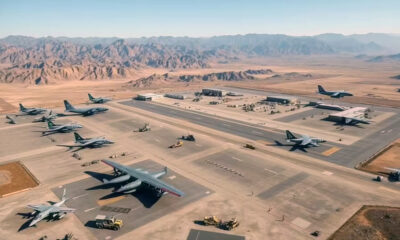
Iran allegedly relocates aircraft to Pakistan and Afghanistan amid US strike fears: CBS Reports
-
 Latest News5 days ago
Afghanistan seeks closer trade cooperation with Uzbekistan
-
 Latest News4 days ago
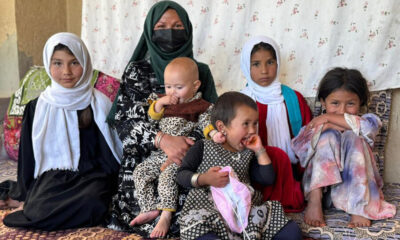
UN warns hunger crisis in Afghanistan deepening, women and children most affected
-

 Latest News4 days ago
UNAMA reports hundreds of civilian casualties in Pakistan-linked violence across Afghanistan
-

 Latest News5 days ago
Afghan powerlifting team wins six medals at World Cup series in Belarus
-
 Regional4 days ago
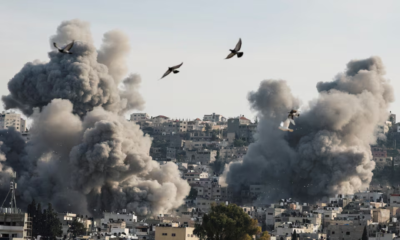
UNICEF reports 70 children killed in West Bank and East Jerusalem since 2025
-

 World4 days ago
Americans don’t think Trump has explained Iran war goals, Reuters/Ipsos poll shows