
Latest News
Al-Qaeda ‘very active’ in Afghanistan: U.S. Commander

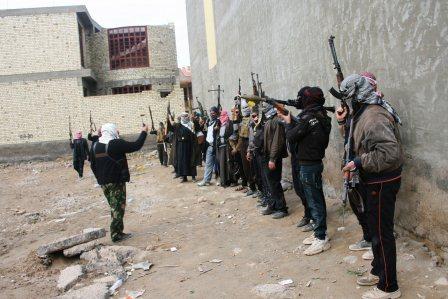
Afghanistan’s top defense official has warned that al Qaeda — the reason the United States first invaded Afghanistan — is “very active” and a “big threat” in the country.
A senior U.S. official said they were concerned about al Qaeda leaders in remote areas of the country and there may be many more core operatives in Afghanistan than previously thought.
The warnings of al Qaeda’s resurgence come as Afghanistan faces perhaps the most significant summer fighting season in decades, with government security forces facing huge internal challenges, the Taliban both gaining ground and building links to al Qaeda, and ISIS increasing its footprint in the country.
Acting Defense Minister Masoom Stanikzai told CNN that al Qaeda were keeping a low profile but expanding.
“They are really very active. They are working in quiet and reorganizing Afghanistan’s top defense official has warned that al Qaeda — the reason the United States first invaded Afghanistan — is “very active” and a “big threat” in the country.
A senior U.S. official said they were concerned about al Qaeda leaders in remote areas of the country and there may be many more core operatives in Afghanistan than previously thought.
The warnings of al Qaeda’s resurgence come as Afghanistan faces perhaps the most significant summer fighting season in decades, with government security forces facing huge internal challenges, the Taliban both gaining ground and building links to al Qaeda, and ISIS increasing its footprint in the country.
“They are working behind other networks, giving them support and the experience they had in different places. And double their resources and recruitment and other things. That is how — they are not talking too much. They are not making press statements. It is a big threat.”
Major General Jeff Buchanan, Deputy Chief of Staff for the U.S. military presence in Afghanistan, said the recent discovery and destruction of an al Qaeda training camp in Kandahar province meant previous U.S. estimates of the group’s strength were being revised.
“If you go back to last year, there were a lot of intel estimates that said within Afghanistan al Qaeda probably has 50 to 100 members, but in this one camp we found more than 150.”
He admitted there was a gap in U.S. knowledge of the problem, and warned the group’s core focus was still attacking the West.
“There’s not thousands of them, but clearly in remote parts of Afghanistan there are al Qaeda leaders we’re concerned about and what they’re capable of doing.”
U.S. officials said the number of core al Qaeda operatives in Afghanistan could be as high as 300, but that number does include other facilitators and sympathizers in their network.
The now-destroyed training camp — attacked in a lengthy operation by U.S. special forces and Afghan commandos in October — showed a high degree of sophistication “with ties back to al Qaeda and a subset called al Qaeda in the Indian Subcontinent,” Buchanan said.
“To find them in Afghanistan was quite troubling.”
Al Qaeda in the Indian Subcontinent has not previously been associated much with Afghanistan. The discovery of any presence of them in the country raises concerns Afghanistan is once again becoming a safe haven for international terrorist networks whose main focus is attacks outside Afghanistan, including the West.
Stanikzai also expressed concern over growing ties between al Qaeda and the Taliban.
The Afghan militant group was thought to have regretted its decision to harbor Osama bin Laden before the September 11, 2001 terrorist attacks, because it led the U.S. to launch a war to remove them from power.
Yet since Mullah Akhtar Mohammad Mansour became leader in mid-2015, the group has grown closer to al Qaeda. The Taliban’s current deputy commander, Siraj Haqqani, is the head of the feared Haqqani militant network and al Qaeda’s top facilitator in Afghanistan, according to U.S. officials.
“The big cover is the Taliban,” said Stanikzai.
“They need the fighters, they need the support and they need recruitment from other places, and this is why (the Taliban) embrace them.”
U.S. General John Campbell, former commander in Afghanistan, has referred to a “renewed partnership between the two groups. Buchanan said the relationship has since “grown stronger.”
This burgeoning partnership poses a problem for any attempt by the U.S. and Afghan governments to negotiate a political settlement with the Taliban.
Official U.S. policy is that the militant group must renounce international terrorism before any talks begin. Yet analysts fear the opposite is occurring, with the Taliban-al Qaeda relationship only growing stronger.
The Taliban have also openly stated they are not currently interested in peace talks, though U.S. and Afghan officials insist some moderates do want to talk.
“Many leaders in the Taliban are willing to enter into constructive peace talks,” Stanikzai said.
“From a military point of view, we have to have the flexibility to target them. When it comes to negotiation, you cannot just burn everything.”
CNN

International Sports
RCB, Gujarat Titans secure wins in Sunday IPL double-header
In the first match, Gujarat Titans defeated Lucknow Super Giants by seven wickets with eight balls to spare.

Two contrasting but equally compelling matches marked Sunday’s action in the Indian Premier League (IPL), with Gujarat Titans cruising to victory in the afternoon and Royal Challengers Bengaluru prevailing in a high-scoring evening clash.
In the first match, Gujarat Titans defeated Lucknow Super Giants by seven wickets with eight balls to spare. Lucknow posted 164/8 in their 20 overs, but Gujarat chased down the target comfortably, finishing on 165/3 in 18.4 overs.
Pacer Prasidh Krishna delivered a match-winning spell, taking 4/28 and earning Player of the Match honours. With the bat, captain Shubman Gill led from the front with 56 off 40 balls, while Jos Buttler added a quickfire 60, guiding Gujarat to a comfortable win.
The evening encounter at Mumbai’s Wankhede Stadium saw Royal Challengers Bengaluru defeat Mumbai Indians by 18 runs in a run-fest. Bengaluru posted a formidable 240/4 in their 20 overs, powered by a blistering 78 from Phil Salt and a half-century from captain Rajat Patidar.
Mumbai Indians mounted a strong chase, finishing on 222/5, with Sherfane Rutherford top-scoring with 71 off 31 balls. However, the target proved too steep as Bengaluru held their nerve to secure victory.
The results continue to shape an increasingly competitive early phase of the IPL season, with teams beginning to build momentum in the standings.
Monday’s match
Attention now turns to Monday’s fixture, where Sunrisers Hyderabad face Rajasthan Royals. Both sides will be aiming to strengthen their positions, with key players expected to play decisive roles in what promises to be another closely fought contest.
All IPL matches are being broadcast live and exclusively on Ariana Television Network (ATN) across Afghanistan.
Latest News
China establishes new Xinjiang county near sensitive border region
The county will fall under the administration of Kashgar Prefecture, a historic hub that has long served as a gateway between China and Central and South Asia.
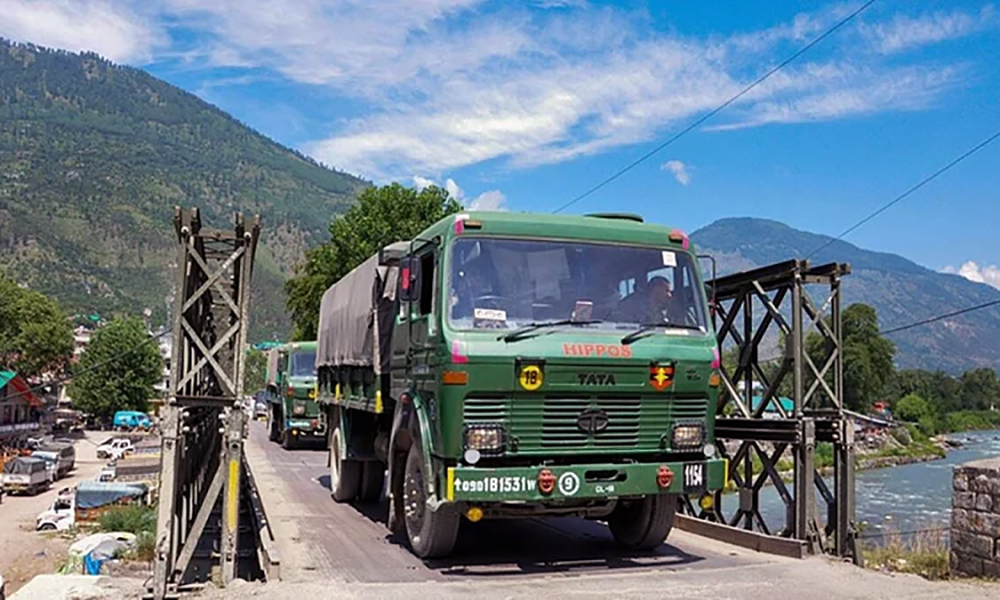
China has created a new county in its far-western Xinjiang Uyghur Autonomous Region, close to the borders with Afghanistan and Pakistan-administered Kashmir, in a move seen as reinforcing control over a strategically sensitive frontier.
The county, named Cenling, lies near the Karakoram Mountains and in proximity to the narrow Wakhan Corridor — a remote strip of Afghan territory that separates Tajikistan from Pakistan-administered Kashmir and links directly to China’s western border.
Authorities in Xinjiang announced the formation of the new administrative unit on March 26, though specific details about its boundaries and subdivisions have not been made public.
The county will fall under the administration of Kashgar Prefecture, a historic hub that has long served as a gateway between China and Central and South Asia.
The move marks the third new county established in Xinjiang in just over a year, following the creation of Hean and Hekang. Those earlier developments drew objections from India, which said parts of the jurisdictions overlap with its claimed territory in Ladakh, including areas of the disputed Aksai Chin.
Analysts say the creation of Cenling reflects Beijing’s growing emphasis on strengthening governance and security in its border regions. The area’s proximity to the Wakhan Corridor has long been viewed as strategically significant, particularly amid Chinese concerns about cross-border movement of militants.
The corridor has historically been seen as a potential route for members of the East Turkestan Islamic Movement, which China accuses of seeking to carry out attacks in Xinjiang.
Experts note that expanding administrative structures in frontier areas can help Beijing tighten oversight, improve local governance, and reinforce stability in regions that have experienced ethnic tensions and security challenges.
Kashgar also plays a key role in China’s regional connectivity ambitions, serving as a starting point for the China-Pakistan Economic Corridor, a multi-billion-dollar infrastructure network linking western China to the Arabian Sea through Pakistan-administered territory.
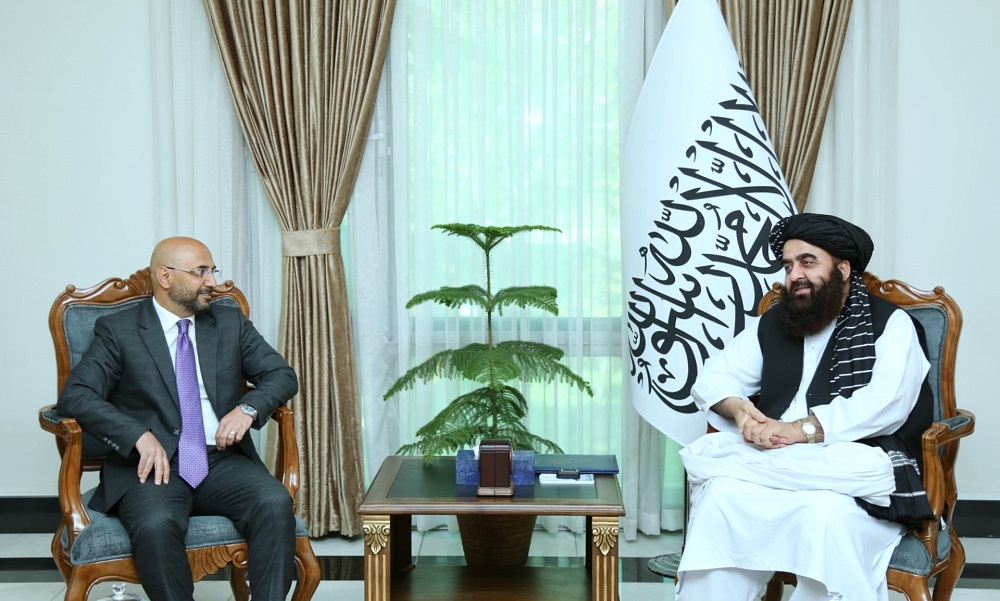
Amir Khan Muttaqi, the Foreign Minister of the Islamic Emirate, met with Turkish Chargé d’Affaires to Kabul, Sadin Ay Yildiz, to discuss regional developments and the recent Kabul–Islamabad talks held in the city of Urumqi in China.
According to a statement issued by the Afghan foreign ministry, Muttaqi described the negotiations with Pakistan as positive and expressed hope that “minor technical issues will not hinder the progress of the talks.”
Muttaqi also assessed relations between Afghanistan and Turkey as positive and described Ankara’s previous role in mediation as valuable.
Yildiz likewise stated that positive relations between Afghanistan and Pakistan are of special importance to Ankara and that his country will continue its efforts in this regard.


RCB, Gujarat Titans secure wins in Sunday IPL double-header

Afghanistan–Uzbekistan forum secures $520 million in trade and investment deals

China establishes new Xinjiang county near sensitive border region

US military says it will start blockade of all ships going to and from Iran on Monday

Economic shock of Middle East war to cast shadow over IMF, World Bank meetings

IEA Supreme Leader issues Eid-ul-Fitr message urging unity and support for Islamic system

IEA supreme leader orders replacement of foreign terminology in official documents

14 Pakistani soldiers killed after military post falls along Durand line: MoD

Turkmenistan, Afghanistan discuss steps to speed up land acquisition for TAPI pipeline

IPL 2026 kicks off in under two weeks; Afghan players set to shine

Tahawol: Failure of US–Iran talks in Islamabad discussed

Saar: Iran–US talks in Islamabad end inconclusive

Tahawol: Historic US-Iran talks in Pakistan discussed

Saar: Talks between Iran and US in Pakistan discussed

Tawsia: New transit route with Tatarstan, MoU with Uzbekistan discussed
-

 Business3 days ago
Etihad Airways to expand Kabul–Abu Dhabi flights to daily service amid surging demand
-

 International Sports4 days ago
IPL 2026: Gujarat Titans edge Delhi Capitals in last-ball thriller
-
 Regional5 days ago
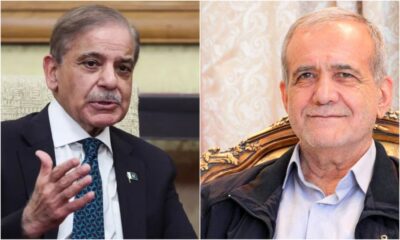
Pakistan PM holds 45-minute call with Iranian President
-

 International Sports4 days ago
FIFA appoints record number of match officials for 2026 World Cup
-
 Latest News4 days ago
US explores third-country resettlement for stranded Afghan allies in Qatar
-

 Regional4 days ago
Israel prepares for long conflict despite US–Iran ceasefire efforts
-

 Business4 days ago
Afghanistan faces economic strains following a ‘series of shocks’ last year
-

 Latest News3 days ago
UK backs Afghanistan–Pakistan talks, calls dialogue key to lasting peace