
Latest News
Senators Accused Security Officials of Failure in Preventing Civilian Causalities

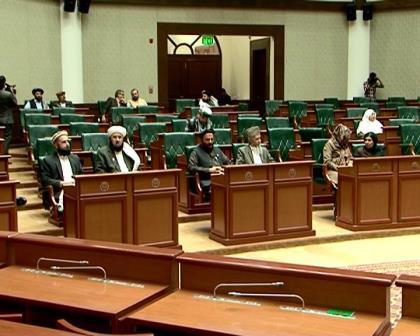
 A number of Afghan senators have declared that the lack of a strong political will for suppressing the armed oppositions has led the enemies to step up attacks in many parts of the country.
Senators accused security officials of failure in providing security and preventing civilian causalities.
They emphasized that practical solutions should be find out for eliminating these challenges.
“We all should stand in a unique rank within the current existence conspiracies against the country. Unfortunately, there is no political will for uprooting the Taliban group,” said Senator Muhammad Alam Izad Yar.
Senator Jumauddin Geyanwall said, “A political solution should be found for the security challenges. Currently, nearly 15 provinces are under threat and its main perpetrators are the security officials.”
Meanwhile, chairman of the Senate House emphasized that the conspiracies by the intelligence of the region were organized with their servants in the country and we have to stand against them.
“The government should take serious measures against these strange servants and the Afghan people should stand alongside the system,” said Fazlulhadi Muslimyar, chairman of Senate.
Afghan Senators stressed that the government should persuade the world to further press Pakistan to stop supporting terrorism.
2016 is the worst year for civilians in the Afghan conflict since UNAMA started systematically documenting casualties in 2009.
Its annual report looking at the protection of civilians in 2016 found the trend towards more casualties in 2016 particularly marked for women and children.
For women, IEDs are now the second biggest killer, with increased fighting in and around populated centers and a growing number of women trying to escape the conflict or get back home.

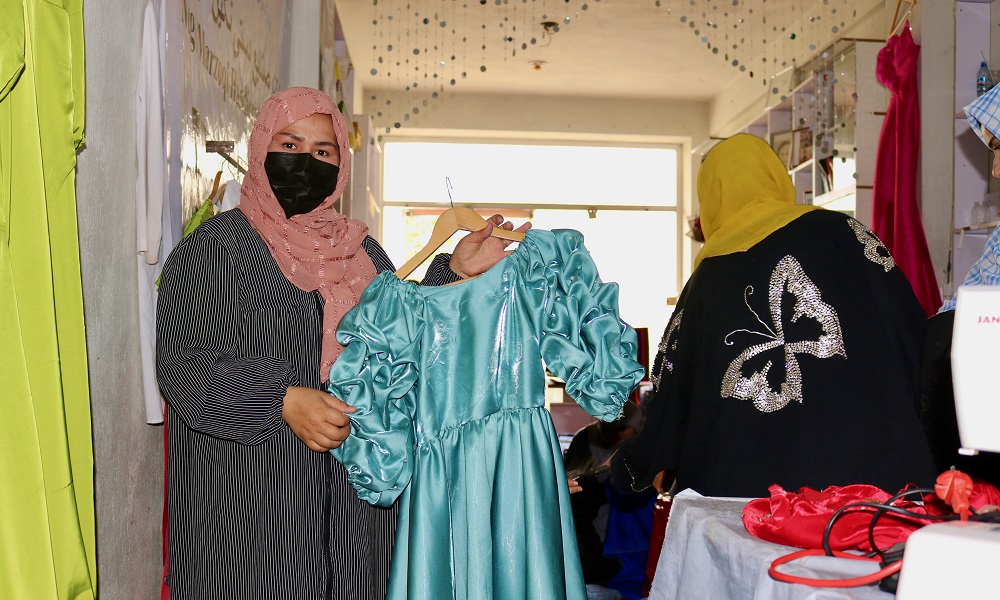
The Government of Japan, in partnership with the United Nations Development Programme, has launched a new $2.35 million initiative aimed at supporting vulnerable communities in Afghanistan facing economic hardship, climate shocks, and the aftermath of the country’s collapsing poppy economy.
The project, titled “Resilient Income Solutions Empowering Alternative Livelihoods (RISE)”, will run from March 2026 to March 2027 and target some of the country’s most affected regions, including Balkh Province and Nimroz province.
Funded by the Japan, the initiative seeks to help vulnerable Afghans, particularly women and women-led households, transition to sustainable sources of income.
The program will invest in productive infrastructure such as irrigation systems, water management facilities, and market-supporting assets, while also strengthening local value chains and supporting women-led businesses.
The project comes at a critical time, as Afghanistan faces overlapping challenges, including food insecurity, large-scale returnee movements, and limited economic opportunities. By promoting alternative livelihoods, the initiative aims to reduce reliance on illicit economies and help stabilize high-risk communities.
Japanese Ambassador to Afghanistan, Kenichi Masamoto, reaffirmed Japan’s commitment to the country’s recovery. “This project will build upon our previous support to continue providing much-needed sustainable livelihood opportunities, especially for women and vulnerable communities,” he said.
Meanwhile, Stephen Rodriques, Resident Representative of UNDP in Afghanistan, highlighted the urgency of such efforts. He described the initiative as part of a long-standing partnership between Japan and UNDP, adding that it “offers hope to vulnerable communities most affected by ongoing economic, social, and environmental crises.”
In addition to infrastructure and economic support, the RISE project will promote social cohesion by bringing together host communities and returnees through shared economic activities.
The initiative builds on UNDP’s earlier programs under the Area-Based Approach to Development Emergency Initiatives (ABADEI) and aligns with broader UN strategies for Afghanistan, with a focus on inclusive recovery and long-term stability.
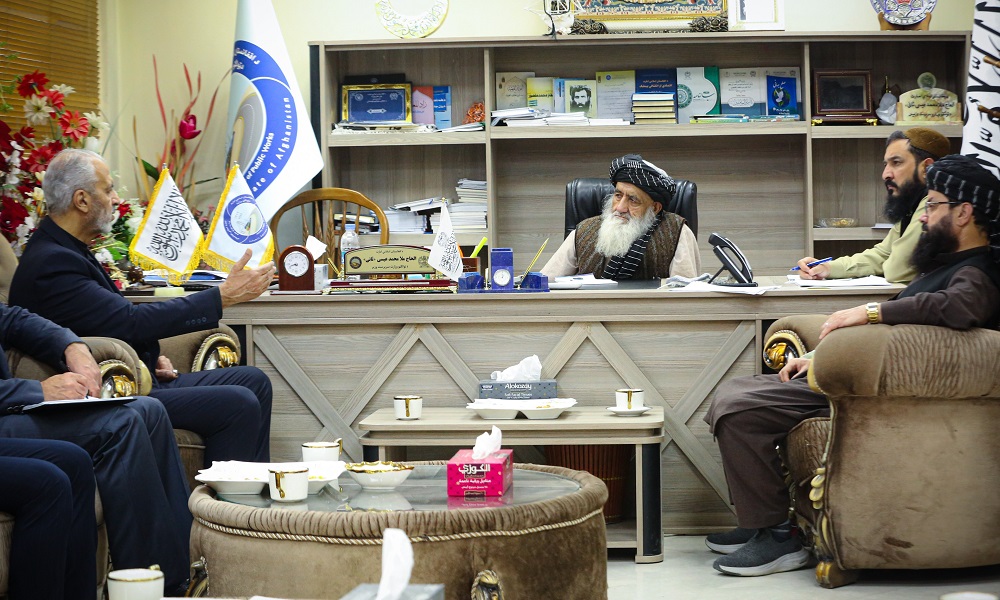
Mullah Mohammad Isa Sani, the Islamic Emirate’s Minister of Public Works, met Tuesday with Alireza Bikdeli, Iran’s ambassador in Kabul, to discuss the expansion of economic and trade relations between Afghanistan and Iran.
The talks also covered railway construction projects, increasing transport along the Khaf–Herat railway, and the comprehensive development of trade transit facilities between the two countries.
Mohammad Ashraf Haqshenas, spokesperson for the Ministry of Public Works, said that during the meeting both sides emphasized joint cooperation between Afghanistan and Iran and discussed projects related to the repair, reconstruction, and modernization of railways, roads, and bridges.
According to Haqshenas, the meeting also stressed further strengthening economic ties between Afghanistan and Iran, increasing trade exchanges, and continuing close and sustainable cooperation in infrastructure projects.
Latest News
Karzai calls on UN to condemn Pakistan’s attacks on Afghan territory
Karzai also criticized Pakistan’s historical approach toward Afghanistan, noting that over the past four decades.
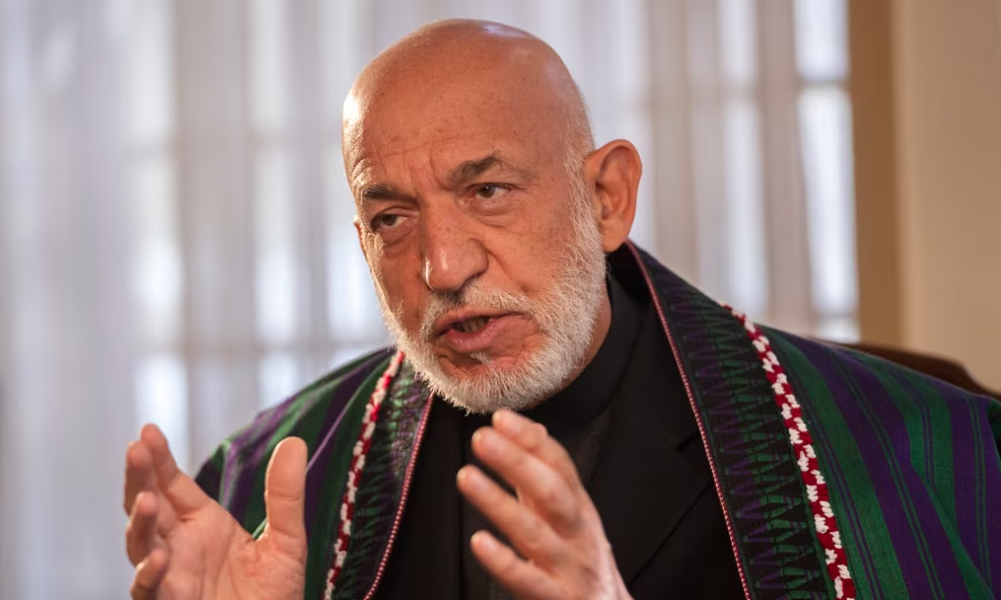
Former Afghan President Hamid Karzai has urged the United Nations to publicly condemn recent attacks by Pakistan on Afghan soil, calling them violations of international law that undermine regional stability.
In a letter to UN Secretary-General António Guterres, Karzai highlighted that the attacks have caused civilian casualties and inflicted significant damage to Afghanistan’s national infrastructure. He warned that continued cross-border aggression could exacerbate instability in an already volatile region.
Karzai also criticized Pakistan’s historical approach toward Afghanistan, noting that over the past four decades, Islamabad has often used militancy and extremism as instruments of influence. “This strategy has consistently threatened Afghanistan’s sovereignty and fueled cycles of violence,” Karzai wrote.
The former president appealed to the UN Secretary-General to leverage diplomatic channels and international mechanisms to prevent further violations. He emphasized that decisive action by the international community could reduce tensions and help avert a deepening regional crisis.
These remarks come amid renewed tensions along the Afghanistan-Pakistan border, where skirmishes and airstrikes have been reported intermittently over the past several months. Analysts warn that without sustained diplomatic engagement, the border disputes could escalate into broader confrontations, threatening peace efforts in both countries.
Karzai’s call reflects growing international concern over the stability of South and Central Asia, particularly as Afghanistan continues to rebuild after years of conflict and Pakistan navigates its own internal security challenges.


Japan and UNDP launch $2.35 million livelihoods initiative in Afghanistan

Afghan Public Works Minister and Iran envoy discuss economic, trade ties in Kabul

Millions of Afghans continue to rely on humanitarian health services

Karzai calls on UN to condemn Pakistan’s attacks on Afghan territory

Afghanistan, Uzbekistan sign $400 million trade deals in push to deepen ties

IEA Supreme Leader issues Eid-ul-Fitr message urging unity and support for Islamic system

14 Pakistani soldiers killed after military post falls along Durand line: MoD

Afghan airstrikes target Pakistani military sites in retaliation for air attacks

Turkmenistan, Afghanistan discuss steps to speed up land acquisition for TAPI pipeline

IPL 2026 kicks off in under two weeks; Afghan players set to shine

Tahawol: Continuation of Middle East crisis discussed

Saar: Ongoing Kabul-Islamabad talks in China discussed

Tawsia: This week’s key economic developments in Afghanistan discussed

Tahawol: Start of talks between Kabul-Islamabad in China discussed

Saar: Ongoing US and Israeli attacks on Iran discussed
-
 Latest News2 days ago
IEA supreme leader orders replacement of foreign terminology in official documents
-
 Latest News2 days ago
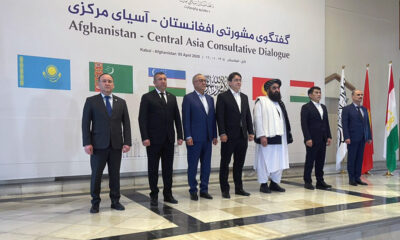
Afghanistan hosts inaugural Afghanistan–Central Asia Consultative Dialogue to strengthen regional cooperation
-
 Business4 days ago
Tripartite agreement to launch new Russia–Turkmenistan–Afghanistan transit corridor
-
 Latest News4 days ago
China says Afghanistan–Pakistan peace talks show progress
-

 Business3 days ago
Kazakhstan eyes rare metals mining projects in Afghanistan and Rwanda
-
 Regional4 days ago
Iran claims it shot down US F-35 jet
-
 Regional4 days ago
Kuwait’s Mina al-Ahmadi oil refinery hit by drones, fires break out
-
 World4 days ago
US Army chief of staff fired by Hegseth, sources say