
Latest News
Top US general ‘not convinced’ troops killed for Russian bounty

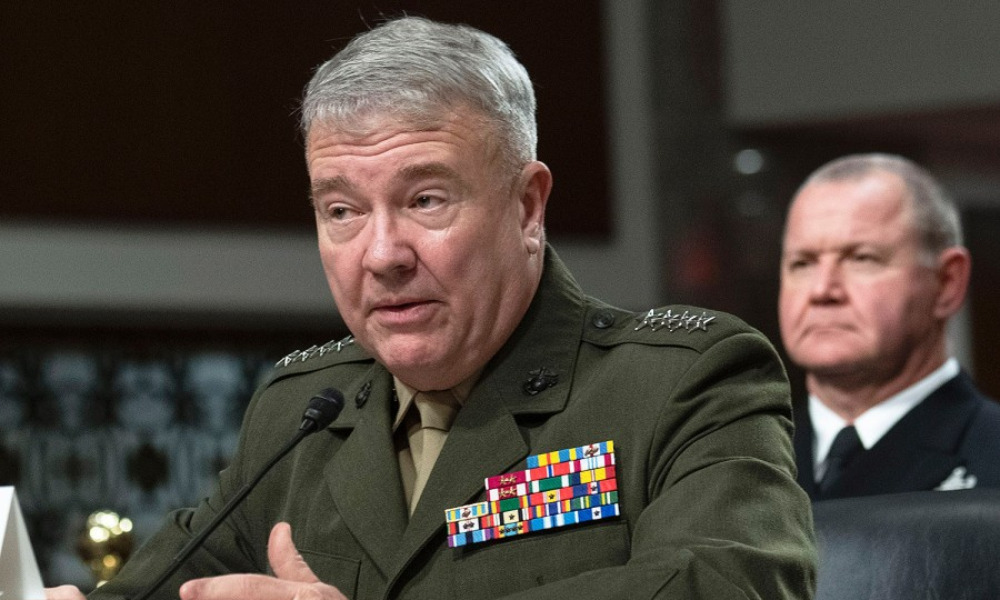
A top US general said intelligence suggesting Russia paid bounties to the Taliban to kill American troops in Afghanistan was a matter of concern but said he was not convinced this had resulted in the death of any US military personnel.
This comes after the Washington Post reported late last month that alleged Russian bounties offered to Taliban-linked militants to kill coalition forces in Afghanistan reportedly resulted in the deaths of several US military members over the past few months.
According to the Washington Post, the intelligence emerged following US military interrogations of captured militants in recent months.
However, the Pentagon has subsequently said it had “no corroborating evidence” to validate the allegations. Moscow has also denied any truth in the allegations.
On Tuesday, the head of US Central Command, General Frank McKenzie, told reporters that the US has not increased force protection measures in Afghanistan as a result of the information but said he has asked his intelligence staff to investigate the matter.
“I sent the intelligence guys back to continue to dig on it. And I believe they’re continuing to dig right now,” he said.
“I’m very familiar with this material and I’m a theatre commander and I’ve had an opportunity to look at it. I found it very worrisome. I just didn’t find that there was a causative link there,” McKenzie said.
He said however, that Russia has long been a threat in Afghanistan. McKenzie said that the Russians were “not our friends in Afghanistan and they do not wish us well.”
The US has in the past accused Russia of possibly providing support, including weapons, to elements of the Taliban. Russia has however always denied having supported the insurgents.
But McKenzie said that whether the Russians were paying them or not, “the Taliban have done their level best to carry out operations against us.”
US forces in Afghanistan suffered a total of 10 deaths from hostile gunfire or improvised bombs in 2018, and 16 in 2019. Two have been killed this year.

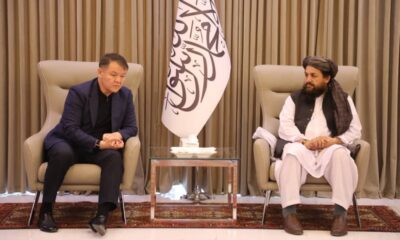




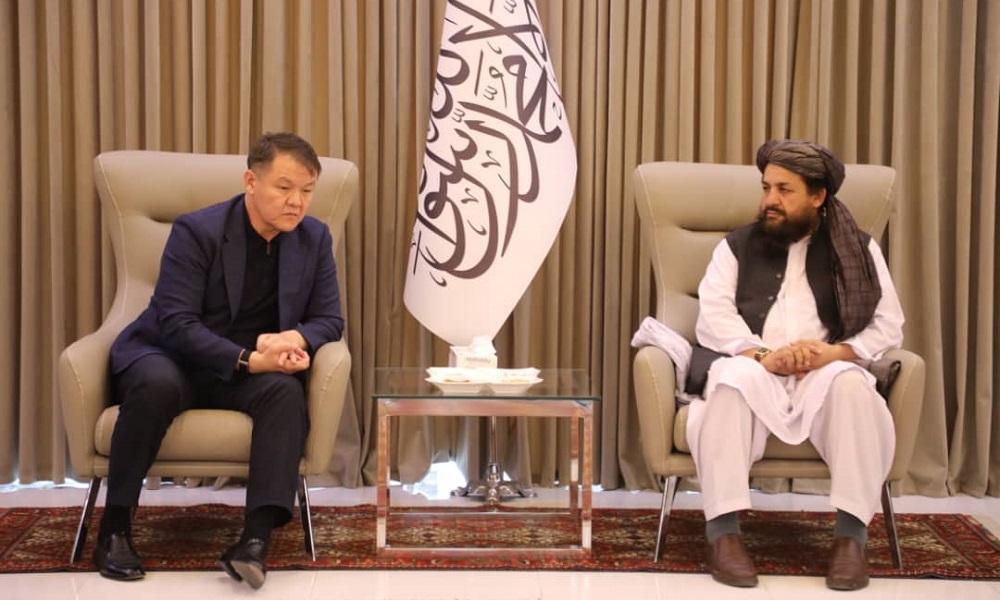
A high-ranking Uzbek delegation comprising government officials and private sector representatives from the Republic of Karakalpakstan arrived in Kabul on Saturday to discuss the expansion of trade and economic cooperation with Afghanistan.
The delegation is headed by Amanbay Orinbayev, Chairman of the Supreme Council of Karakalpakstan.
According to a statement from the Ministry of Industry and Commerce, the delegation is expected to hold talks with Nooruddin Azizi, the Minister of Industry and Commerce, focusing on strengthening bilateral trade and economic relations.
The ministry said the visiting delegation will also participate in trade connectivity meetings and business-to-business sessions aimed at enhancing commercial cooperation between the two sides.
As part of the visit, the Uzbek delegation is also scheduled to travel to Balkh province, where members will attend additional trade meetings and inaugurate an exhibition showcasing Uzbekistan’s domestic products.
Latest News
SAARC failure pushes Pakistan toward trilateral ties with Afghanistan, China, Bangladesh: Dar
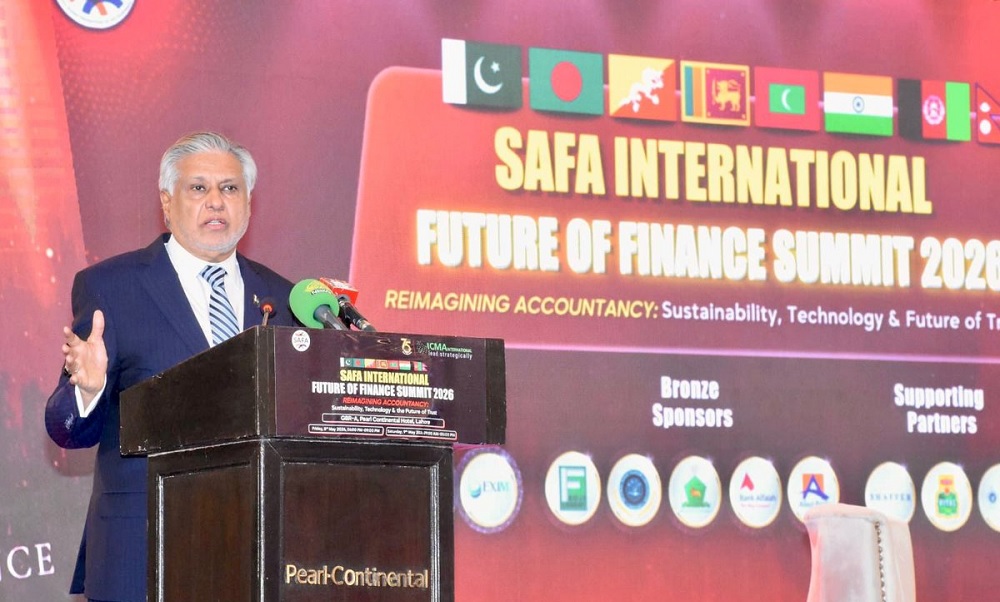
Pakistan’s Deputy Prime Minister and Foreign Minister Mohammad Ishaq Dar has said that the failure of the South Asian Association for Regional Cooperation (SAARC) is pushing Pakistan toward exploring trilateral cooperation frameworks involving Afghanistan, China, and Bangladesh.
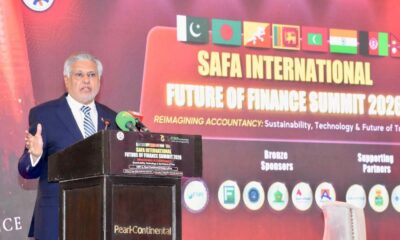
Speaking at the South Asian Federation of Accountants (SAFA) Conference in Lahore on Friday, Dar said SAARC has “unfortunately not been able to kick off,” limiting regional economic integration and cooperation.
He said Pakistan is now looking at alternative regional arrangements to strengthen economic connectivity and trade, including trilateral formats such as China–Pakistan–Afghanistan and China–Pakistan–Bangladesh.
Dar stressed that South Asia cannot remain in “isolation,” noting that the region, home to nearly two billion people, is missing significant economic opportunities due to weak cooperation among neighbouring countries.
The South Asian Association for Regional Cooperation (SAARC) was established in 1985 to promote economic and regional integration among South Asian countries, including Afghanistan, Bangladesh, Bhutan, India, Maldives, Nepal, Pakistan, and Sri Lanka.
The organisation was designed to encourage cooperation in areas such as trade, development, education, and cultural exchange. However, in recent years, SAARC’s effectiveness has been significantly limited due to political tensions between member states, particularly between India and Pakistan, leading to stalled summits and reduced regional engagement.
As a result, regional economic cooperation in South Asia has largely remained underdeveloped compared to other regional blocs around the world.


High-ranking Uzbek delegation arrives in Kabul to boost trade ties

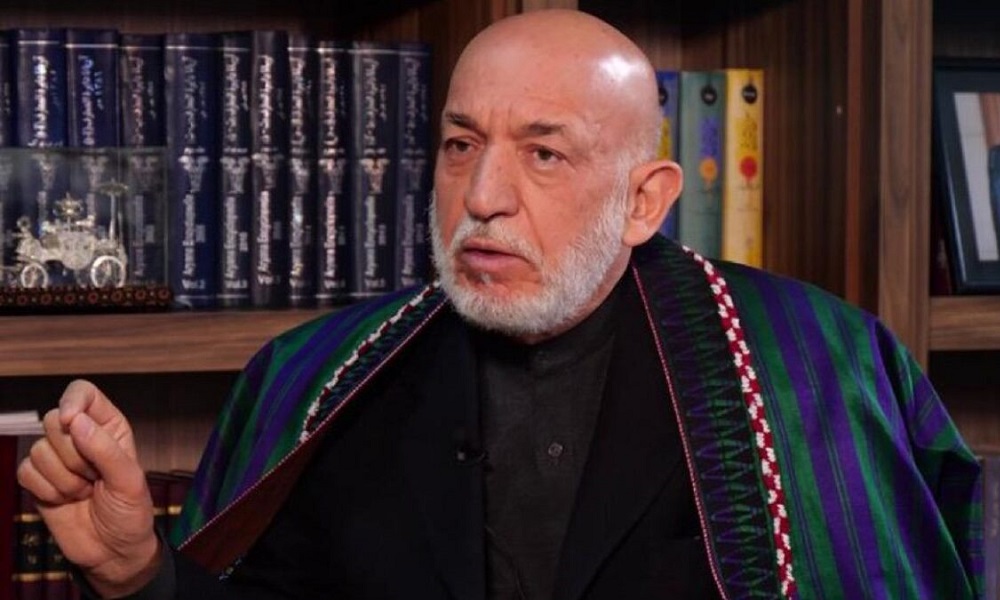
Karzai: Pakistan seeking to legitimize Durand Line, authorities must clarify

Los Angeles to welcome the world with historic FIFA World Cup 2026 opening event

SAARC failure pushes Pakistan toward trilateral ties with Afghanistan, China, Bangladesh: Dar

Canada to host opening ceremony for FIFA World Cup 2026 in Toronto

Bayat Power extends gas supply deal with Afghan Gas

Etihad Airways to expand Kabul–Abu Dhabi flights to daily service amid surging demand

Afghanistan’s new cricket head coach Richard Pybus arrives in Kabul

Afghanistan moves toward self-sufficiency in car battery production

Germany to launch online visa system for Afghan study and work applicants in Pakistan

Tawsia: Discussion on Afghanistan’s economic path and position

Tahawol: Pressure on Afghan refugees from Tajikistan to Europe discussed

Saar: Ongoing criticism of Pakistan’s Afghanistan policy discussed

Tahawol: Diplomatic turn in Iran–US confrontation discussed

Saar: Expanding interaction between countries and IEA discussed
-
 Business1 day ago
New Afghanistan-China transport corridor launched via Turkmenistan
-
 Latest News4 days ago
Pakistan’s Achakzai pushes for Afghanistan dialogue amid economic strain
-
 Business3 days ago
Afghanistan presses Chinese contractor over delays in Mes Aynak copper project
-
 Business3 days ago
Uzbekistan launches new cargo corridor linking China and Afghanistan
-
 Latest News4 days ago
Food prices surge 20% in Afghanistan as Hormuz crisis disrupts supply routes
-
 Latest News5 days ago
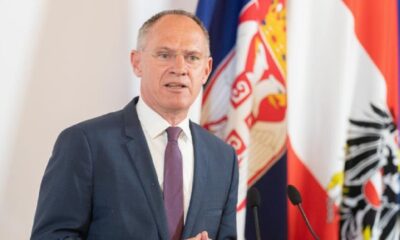
Austrian interior minister heads to Uzbekistan to finalize Afghan deportation deal
-

 Sport5 days ago
All eyes on Jeddah as AFC U-17 Asian Cup 2026 kicks off
-

 International Sports4 days ago
Mumbai Indians pull off record chase as IPL action continues