
Business
World Bank warns of increased poverty due to COVID-19 shock

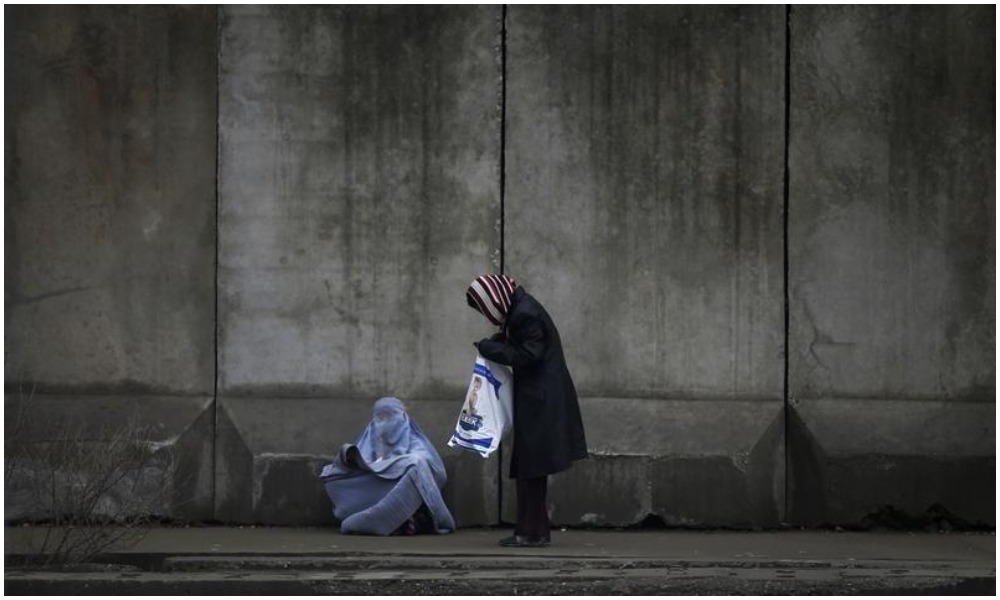
The World Bank has stated that a clear commitment from international partners to continue grant support would help reduce uncertainty and improve investor confidence in Afghanistan which would in turn enable the country to recover from the severe impacts of the COVID-19 crisis.
In its twice-yearly report, the World Bank stated that South Asia as a whole is set to plunge into its worst-ever recession due to the pandemic which will take a heavy toll on informal workers and push millions of people in the region into extreme poverty.
According to the report, although Afghanistan experienced moderate growth in 2019 as the agricultural sector recovered from the impacts of drought, the economy is estimated to have contracted sharply in the first half of 2020 due to economic disruptions associated with nation-wide lockdowns, border closures, and declining remittance inflows.
In addition, the report stated that medium-term prospects are subject to high levels of uncertainty, related to the COVID-19 pandemic, peace talks and future international security and aid support.
“Given the shock to the economy, poverty is expected to increase in 2020,” the report stated.
While there was significant growth in wheat production, the World Bank said this was not enough to offset the large negative impact of COVID-19 on other sectors of the economy.
The World Bank stated that while inflation was low in 2019 (averaging 2.3 percent) it increased significantly in 2020.
One reason was that in March and April 2020 – during lockdown – panic buying and import disruptions resulted in a sharp increase in food prices, which led government to adopt administrative measures to prevent price gouging.
Government also initiated an emergency wheat distribution program that resulted in a food inflation decline in the months that followed.
In the first quarter of 2020 Afghanistan registered a growth in exports of 11 percent year-on-year, which reflected the improved performance of air corridors. However, a weak domestic demand led to a 14 percent decline in imports.
“In the second quarter of 2020, both imports and exports fell precipitously given border closures and disruptions to trade and transportation, with greater absolute declines in imports driving an improvement in the trade and current account balances,” the report read.
With the onset of the COVID-19 crisis, weak economic activity, disruptions to trade and compliance, revenue performance deteriorated significantly and revenue estimates for 2020 were revised downward by over 30 percent (from Afs 209 billion to 144 billion) in the budget mid-year review.
“Total domestic revenue collection at end-June reached Afs 74.7 billion, 20 percent lower than the initial budget target,” the report stated.
Poverty meanwhile is believed to have worsened in 2019 surpassing 54.5 percent amid continued violence and political uncertainty and “in the first half of 2020, with declining household incomes due to economic hardship, higher food prices due to COVID-19, a significant fall in remittances, and high returnee flows, poverty is estimated to have further increased,” the report read.
According to the report, the outlook for the rest of 2020 was grim as the GDP is expected to contract by 5.5 percent – again largely due to the impact of the pandemic.
“In following years, the pace of recovery is expected to be constrained in a context of continued insecurity, uncertainties regarding the outcome of planned peace talks, and questions about the level and duration of international security and aid support.
“The trade deficit is projected to narrow to 26 percent of GDP down from 30.4 percent in 2019. While exports are projected to fall by 24 percent, imports are expected to decline by around 18 percent,” read the report.
World Bank analysis meanwhile suggests that the combination of reduced incomes and higher prices could drive the poverty rate to as high as 72 percent in the medium term.
“Over the medium term, the poverty outlook hinges on the pace of economic recovery and the continued provision of international aid and humanitarian support,” the report read.
“The main source of downside risk to the outlook stems from possible further adverse COVID-19 developments,” the World Bank stated adding that additional sources of risk include further political instability, a deterioration of security conditions, uncertainties associated with the planned peace agreement with the Taliban, and precipitous reductions in aid flow.
“By contrast, on the upside, a sustainable and credible political settlement with the Taliban could help boost growth, confidence and private investment,” the bank stated.
In terms of recommendations, the World Bank stated that given Afghanistan’s declining revenues and constrained fiscal potential, public expenditures need to be carefully directed to protecting the vulnerable, limiting long-term economic damage, and establishing solid foundations for economic recovery.
“To support households, the government should prioritize: i) targeted social protection measures; and ii) ensuring the continued provision of basic services, especially healthcare.
“To support the private sector, priorities include: i) pursuing business regulatory reforms to facilitate new investment; ii) expanding access to credit; iii) ensuring the continued provision of basic infrastructure; and iv) avoiding accumulating arrears to private sector vendors.”






Business
Afghanistan raises import tariffs on several goods to support domestic industry
Under the new rates, the customs tariff on bottles has increased from 12% to 16%, while the tariff on construction paint has risen from 16% to 30%.

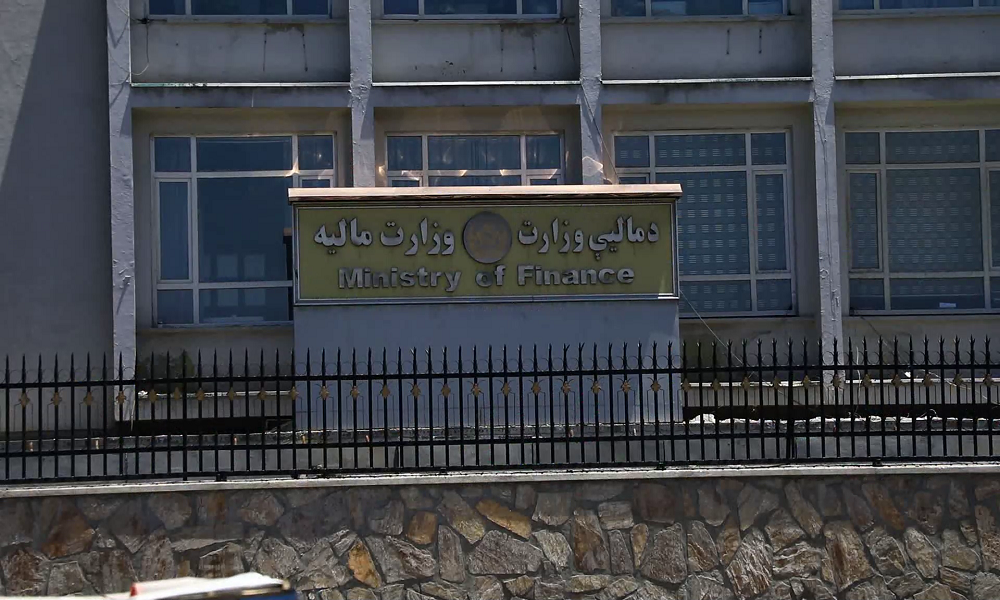
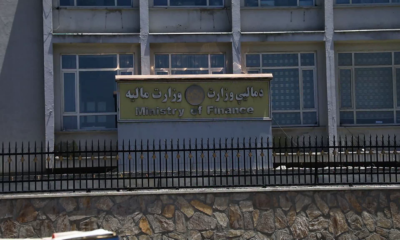
Afghanistan’s Ministry of Finance says it has increased customs tariffs on several imported goods as part of measures aimed at supporting domestic production and industrial growth.
The ministry said the Tariff Committee approved the changes during its third meeting of the 1405 solar year.
Under the new rates, the customs tariff on bottles has increased from 12% to 16%, while the tariff on construction paint has risen from 16% to 30%.
Tariffs on leather footwear and plaster have each increased from 50% to 80%, while the rate on sanitary diapers has risen from 20% to 25%.
At the same time, the tariff on heart springs has been reduced from 8% to 3.5%.
The Ministry of Finance said customs tariffs on cement, iron pipes, refrigerators and raw materials used in carpet production are also under review.
According to the ministry, the tariff adjustments are intended to protect domestic industries, strengthen local production and create conditions for further growth in trade.
Business
Afghanistan-Kazakhstan trade reaches $581 million in six months
The latest discussions come as Kabul and Astana work on a bilateral economic cooperation roadmap, with the two countries aiming to increase annual trade to $3 billion.
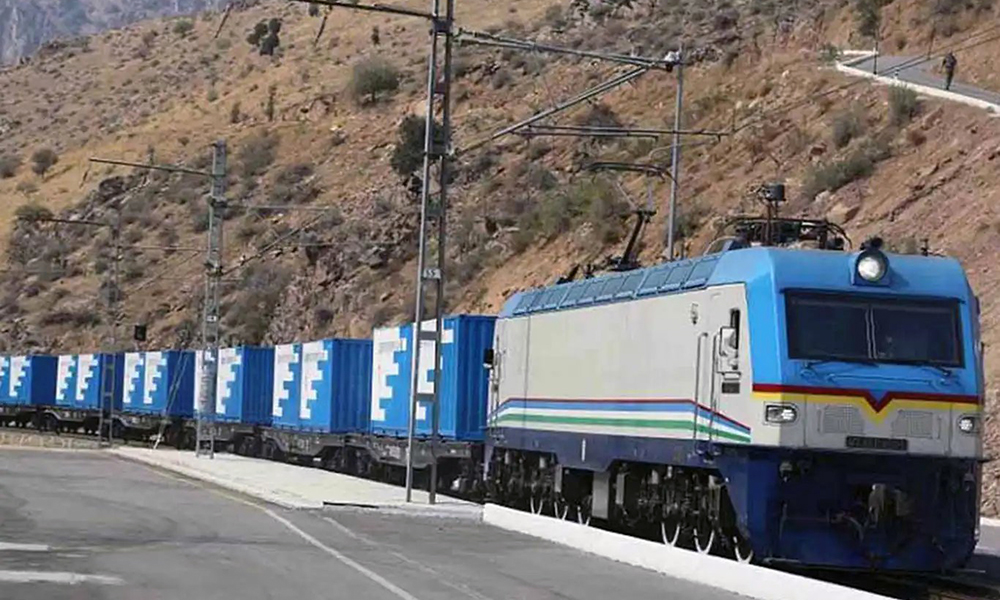
Trade between Afghanistan and Kazakhstan reached $581 million in the past six months, officials in Afghanistan’s western Herat province said.
The figure was discussed during a meeting between Herat Governor Noor Ahmad Islam Jar and a Kazakh delegation led by Yerkin Tukumov, Kazakhstan’s special representative for Afghanistan.
Tukumov stressed the need to expand transit capacity and remove customs barriers to facilitate increased trade between the two countries. He also invited Afghan officials to attend a joint economic meeting scheduled to take place in Kazakhstan.
Islam Jar highlighted Herat’s strategic location and security, describing the province as having significant potential to serve as a hub for investment and regional trade.
Afghanistan and Kazakhstan have previously discussed expanding trade in agricultural products, including Afghan agricultural exports in exchange for flour imports from Kazakhstan.
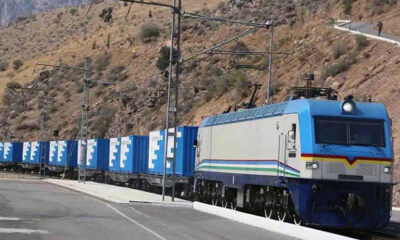
The two sides have also reached understandings on cooperation over the Torghundi-Herat railway project, which is intended to strengthen transport and trade links.
The latest discussions come as Kabul and Astana work on a bilateral economic cooperation roadmap, with the two countries aiming to increase annual trade to $3 billion.
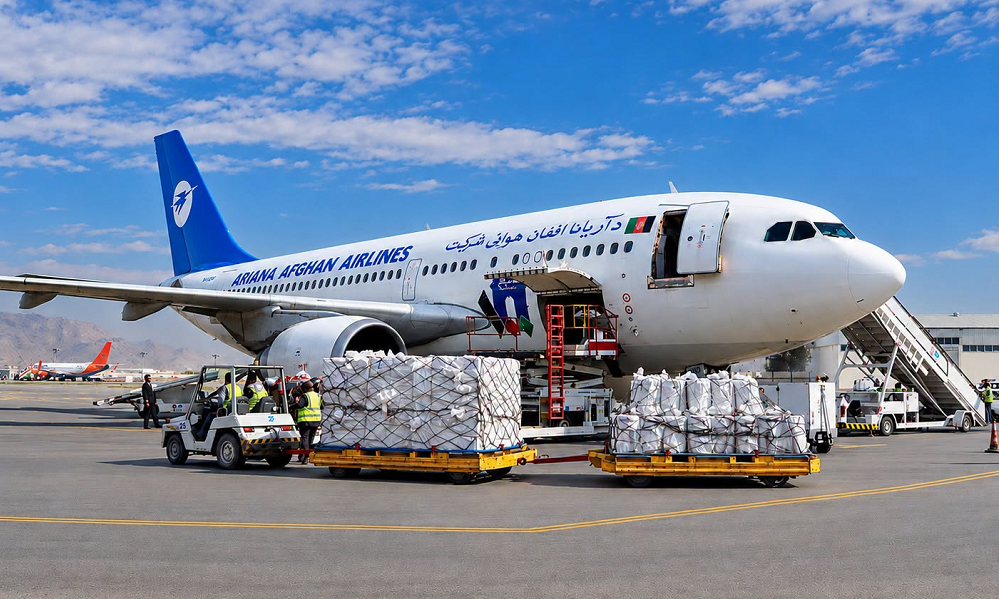
Ariana Afghan Airlines has increased cargo flights between Kabul and Delhi to facilitate the transportation of commercial goods and support Afghan traders.
In a statement issued Saturday, the airline said it will now operate two scheduled cargo flights daily on the Kabul-Delhi route, up from one flight per day previously.
The airline said Afghan traders and commercial companies can use the daily cargo services to transport their goods quickly, safely and reliably between Afghanistan and India.
Ariana Afghan Airlines said it is working to further expand and improve its air cargo services to support trade, meet the needs of Afghan traders and facilitate Afghanistan’s exports and imports.


Health minister visits Belarus to expand medical cooperation

Afghanistan vs India Asian Games quarter-final abandoned without a toss

Afghanistan raises import tariffs on several goods to support domestic industry

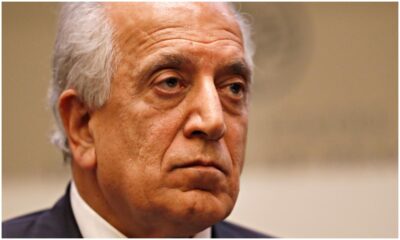
Khalilzad calls for end to Pakistan’s ‘double game’, urges new chapter with Afghanistan

Afghanistan-Kazakhstan trade reaches $581 million in six months

Saudi energy group signs major Afghanistan deals covering gas exploration and pipeline plans

Trump floats idea of renaming Atlantic or Pacific Ocean

Nepal flood rescue mission enters critical phase as thousands remain missing

Iranian clubs to face Gulf opponents at neutral venues in Asian Champions League Elite

Khalilzad: Afghanistan ready to attract major investment

Saar: Afghanistan’s image at UNGA

Saar: Concerns over Pakistan’s political crisis discussed

Exclusive interview with Abdul Latif Mansoor, Minister of MRRD

Tawsia: Overview of Afghanistan’s iron mines

Tahawol: Discussion on fresh Pakistani airstrikes on Afghanistan
-

 Latest News5 days ago
Ariana Afghan Airlines ranks seventh among 45 Central Asian airlines
-

 Regional4 days ago
Iran airlines cancel flights as US sanctions hit
-

 Sport4 days ago
Afghanistan open Asian Games cricket campaign with win over Japan
-
 World4 days ago
Trump welcomes Chinese President Xi as US-China summit gets underway
-

 Latest News1 day ago
Afghanistan says 28 killed, 32 captured in Nuristan operation
-

 World1 day ago
Trump rejects Iranian proposal to open Hormuz and end fighting
-
 Latest News4 days ago
Khalilzad warns Pakistan-Afghanistan tensions likely to worsen after fresh airstrikes
-

 Sport1 day ago
Afghan bodybuilder Ali Bilal finishes runner-up at Mr Olympia for third straight year