
Latest News
Parts of Helmand cleared of Taliban, operation ongoing: MoD

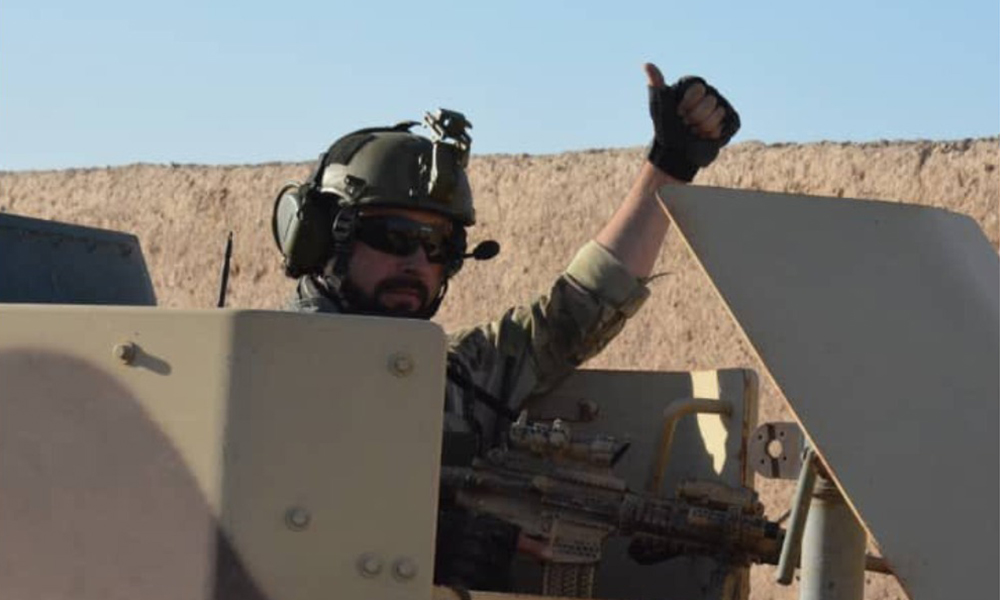
Afghan Ministry of Defense (MoD) said Wednesday that several parts of Nad Ali and Nawa district of Helmand have been cleared of Taliban fighters in an ongoing operation by Afghan Special Forces.
According to the ministry the operation was launched on Monday in the districts and in Lashkargah city, capital of Helmand, after several areas fell to the Taliban 15 days ago.
The ministry said that during the operation at least 100 Taliban fighters were killed and wounded.
Government officials claimed that dozens of foreign fighters, especially Pakistani fighters, have been involved in the Helmand war, a claim that the Taliban has denied.
Following days of skirmishes in the province, the Ministry of Defense said Tuesday that fresh Special Forces were deployed to the province on Tuesday night.
“Our operation, which started on Monday, saw progress in the areas of Bolan, Nawa and Nad Ali. In this operation, nearly 100 enemy [fighters] were killed and wounded, we have no casualties, only three of our soldiers were slightly wounded,” said Afghan Army Chief of Staff Yasin Zia.
Chief of General Staff of the Armed Forces said these forces will provide better security for the residents.
One of the displaced residents said however that two weeks ago, the Taliban took control of the area he was living in and he was forced to flee and find refuge in Lashkargah city.
“Now the forces have recaptured our areas and cleared the Taliban so we are coming back to our homes and areas,” said the displaced resident.
Last week Ghulam Bahauddin Jailani, State Minister for Natural Disaster Management said that it has allocated 20 million AFNs to address the needs of those affected by the fighting in Helmand.
According to Helmand officials around 5,000 to 7,000 refugees registered with the officials.
Afghan Special Forces who went in on Tuesday night said they are making headway against the Taliban, and that the insurgent group has suffered a high casualty rate and that they are retreating.
On Sunday the Taliban’s designated shadow deputy governor for Helmand, Mawlawi Ghafoor, who reportedly led the recent fighting against government forces in the province, was arrested by security forces in Nahr-e- Saraj district, said the Helmand governor’s office.
The latest conflict in Helmand has raised concern both nationally and internationally and widespread condemnation of the Taliban’s actions has been voiced.
This also comes amid stalled peace talks in Doha between the Afghan government representatives and the Taliban.
Reports indicate that the disputes between the two side, has led them to show interest in approving some sort of facilitator or mediator.
The spike in violence however has many people concerned and on Tuesday UNAMA stated in a new report that although the overall civilian casualty figure for the first nine months of this year had dropped by about 30 percent against the same period last year, the harm done to civilians remains inordinate and shocking.
In their latest quarterly report, UNAMA documented 5,939 civilian casualties (2,117 killed and 3,822 injured) from 1 January to 30 September 2020.
The mission said the period from 1 October is outside the scope of UNAMA’s latest quarterly report, but “raises its increasing concern over the intensification of the fighting in Helmand, as well as several indiscriminate attacks in Nangarhar, Laghman and Ghor along with an airstrike in Takhar and a suicide attack targeting civilians in Kabul that taken together killed and injured more than 400 civilians.”
The Taliban rejected the report and said it was a unilateral report.
But the issue of stalled peace talks has raised concerns among Afghanistan’s international partners and on Tuesday their Special Representative for Afghanistan Reconciliation Zalmay Khalilzad headed for Doha where he will meet with negotiating teams to press both sides to immediately reduce the levels of violence that Afghan civilians are forced to bear.
The General Secretariat of the Organization of Islamic Cooperation (OIC) has also stepped in and on Tuesday night reiterated its call to all parties to the conflict to focus on achieving a successful outcome in the stalled peace talks.
Condemning the recent surge in violence in Afghanistan “that has caused many casualties including women and children”, the General Secretariat urged all stakeholders to reduce violence, declare an immediate ceasefire and resort to dialogue as the only way forward towards reaching comprehensive reconciliation and lasting peace in Afghanistan.
The OIC Secretary-General, Dr. Yousef A Al Othaimeen, recalled the OIC’s initiatives and efforts towards reconciliation and lasting peace within the framework of the Afghan-owned, Afghan-led peace process.












Kazakhstan’s Foreign Minister Mukhtar Tileuberdi has called for pragmatic and coordinated international engagement with Afghanistan, saying the country’s long-term stability is closely linked to the security and sustainable development of Central Asia.
Speaking during the general debate of the 81st session of the United Nations General Assembly in New York on Friday, Tileuberdi said humanitarian assistance to Afghanistan remains essential but alone cannot break the cycle of poverty, displacement and dependency.
He said Kazakhstan supports a “pragmatic, coordinated and step-by-step” approach to international engagement with Afghanistan, with the United Nations playing a central role.
Tileuberdi also said Kazakhstan is working with the UN to operationalize the United Nations Regional Centre for the Sustainable Development Goals for Central Asia and Afghanistan in Almaty.
He said the success of the centre should be measured by the results and assistance it delivers to the region.


Abu Muslim Farah defeat Khurasan Faryab 2-0 in ACL season six

Saar: Concerns over Pakistan’s political crisis discussed

Afghanistan Champions League: Omar Zawak Herat beat Toofan Herat 1-0

Blast in Pakistan’s Dera Ismail Khan kills 11, injures 30

Ariana Afghan Airlines increases Kabul-Delhi cargo flights

Saudi energy group signs major Afghanistan deals covering gas exploration and pipeline plans

Trump floats idea of renaming Atlantic or Pacific Ocean

US hits Egyptian bank branches with Iran sanctions as war marks six months

Nepal flood rescue mission enters critical phase as thousands remain missing

Iranian clubs to face Gulf opponents at neutral venues in Asian Champions League Elite
Saar: Concerns over Pakistan’s political crisis discussed

Exclusive interview with Abdul Latif Mansoor, Minister of MRRD

Tawsia: Overview of Afghanistan’s iron mines

Tahawol: Discussion on fresh Pakistani airstrikes on Afghanistan

Saar: Calls for international support for Afghanistan discussed
-

 World5 days ago
CNN, MS NOW and Politico sue Trump, challenging White House ban
-

 Latest News3 days ago
Ariana Afghan Airlines ranks seventh among 45 Central Asian airlines
-

 Latest News5 days ago
UN reiterates call for respect for international law after Kunar airstrikes
-

 Regional4 days ago
US and Iran hold first talks since June after Trump’s ‘annihilation’ threat
-

 Latest News3 days ago
Silk Road highway in Wakhan corridor now reaches the China border
-

 Regional3 days ago
Iran airlines cancel flights as US sanctions hit
-

 Latest News5 days ago
Afghan Official: Pakistan’s airstrikes will not go unanswered
-
 Regional5 days ago
G7 foreign ministers call on Iran to stop arming Houthis