
Business
ADB Approves $100 Million Grant to Support Afghanistan’s COVID-19 Response

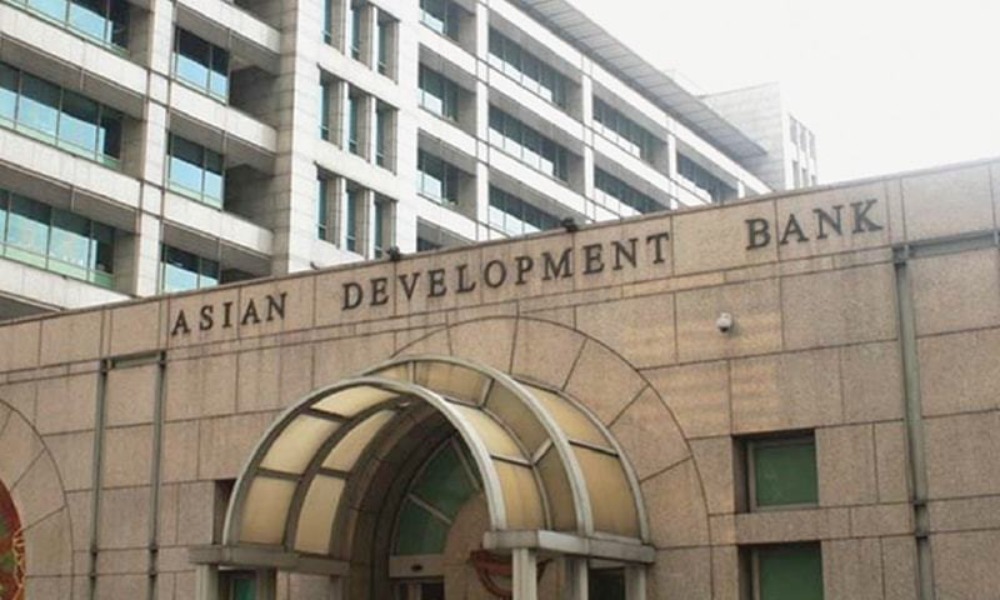
The Asian Development Bank (ADB) on Wednesday approved a $100 million grant to help the Government of Afghanistan respond to the coronavirus disease (COVID-19) pandemic, the statement said.
“ADB reaffirms its full commitment to supporting Afghanistan in its fight against COVID-19 and reducing the adverse impact of the pandemic on the lives of Afghans and the economy,” said ADB President Masatsugu Asakawa. “The assistance will help strengthen the health system, expand social protection for the poor and vulnerable population while ensuring gender mainstreaming, and support macroeconomic stabilization and job creation in Afghanistan.”
Afghanistan’s economic outlook has deteriorated during the COVID-19 pandemic because of business lockdowns, a sharp drop in household incomes, and a downturn in regional trade and remittances. ADB forecasts Afghanistan’s gross domestic product (GDP) to contract by 5.0% this year. Nearly 250,000 micro, small, and medium-sized enterprises (MSMEs), accounting for over 80% of nonagricultural employment, have been hit hard. The unemployment rate is projected to rise to 37.9% in 2020 from 23.9% in 2019. The budget deficit including grants has nearly tripled, reaching 3% of GDP in 2020, compared to 2019. Spikes in food prices due to disruptions in the food supply have increased the food insecurity risks.
According to the statement the national poverty rate is projected to reach up to 72% this year from 55% in 2017, with an additional 6 million people falling into poverty. A health emergency of such magnitude has aggravated the pressure on the country’s inadequate health care system, compounded by increasing transmission risks from internally displaced persons, returning migrants, and refugees.
To mitigate the adverse impacts of the pandemic, the government rolled out its comprehensive countercyclical pandemic response package of $633.9 million, comprising health, social protection, and macroeconomic stabilization measures. ADB’s COVID-19 Active Response and Expenditure Support (CARES) Program grant will support the delivery of the government’s response package, read the statement.
The program has several components. It will support the government in conducting a nationwide gender-sensitive public awareness campaign for COVID-19, scaling up the capacity of medical facilities, including gender-sensitive treatment facilities and the availability of medical supplies and equipment.
It will help the government extend its targeted social safety nets, including daily bread assistance to at least 310,000 poor households; water and electricity bill coverage for at least 350,000 households in Kabul, with priority given to women-headed households; coverage of over 130,000 old-age pensioners and their female heirs, including biometric registration; one-time cash transfers of 6,000 afghanis ($78) to at least 41,500 internally displaced persons and refugees; and remuneration packages for at least 32,570 disabled persons and the families of people killed in conflicts.
The program will also support the implementation of stabilization measures covering state-owned enterprises, job creation in the agriculture sector, and MSMEs. The MSME support will comprise tax exemptions, subsidized lending, vocational training, and market access.
The grant also features measures to promote good governance and anticorruption, including having a monitoring and evaluation specialist at the Ministry of Finance (MOF) to support program implementation and reporting, electronic tracking of fund flows at the MOF, and auditing of pandemic-related spending by the Supreme Audit Office, which are built into the assistance. ADB had earlier provided technical assistance to strengthen debt management and monitoring of fiscal risks, as well as project management capacity, procurement systems, and safeguards compliance.
The CARES Program is funded through the COVID-19 pandemic response option (CPRO) under ADB’s Countercyclical Support Facility. CPRO was established as part of ADB’s $20 billion expanded assistance for developing member countries’ COVID-19 response announced in April. Visit ADB’s website to learn more about its ongoing response.
This comes after in May, ADB approved a $40 million emergency assistance grant for Afghanistan. It supports the construction of 15 and rehabilitation of 5 hospitals and medical facilities, adding more than 1,100 new hospital beds; procurement of urgent medicines, medical supplies, and equipment; and training of at least 3,000 health workers, including 900 women, in COVID-19 surveillance, prevention, and treatment.




Iran says reducing border and customs barriers is essential to increasing trade and economic exchanges with Afghanistan, as officials report a sharp rise in rail freight between the two countries.
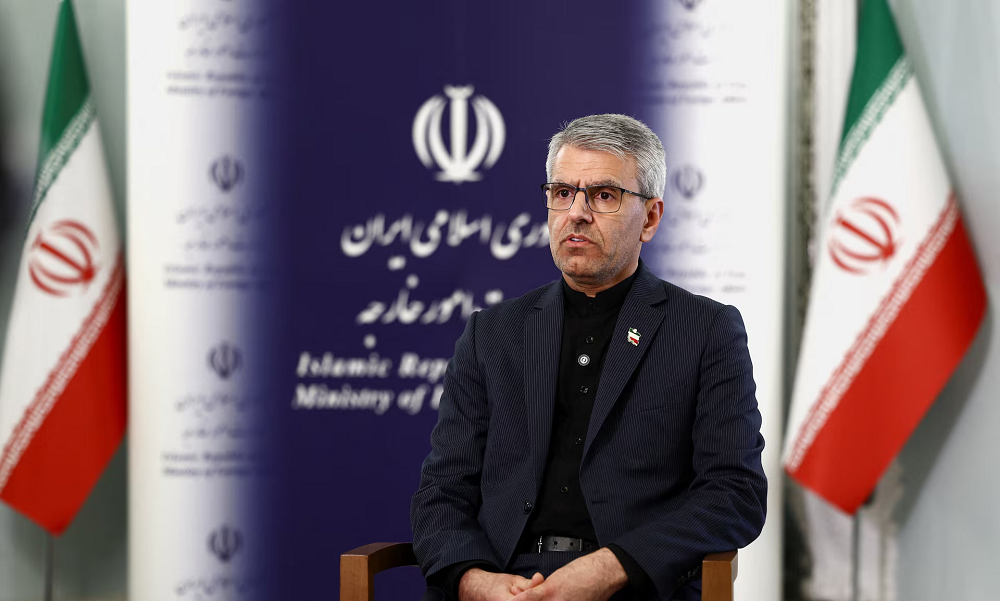
Iranian Foreign Ministry spokesman Esmail Baghaei said at a weekly press briefing that Tehran and Kabul have discussed ways to facilitate economic and commercial cooperation, particularly by reducing customs and border obstacles.
Baghaei said the issue was discussed during a meeting between Afghanistan’s Deputy Prime Minister for Economic Affairs and Iran’s president. He added that important measures have since been placed on the agenda and that constructive exchanges have continued at the ministerial level.
The Iranian official expressed hope that the process would help increase bilateral trade and remove existing obstacles to the movement of goods between the two countries.
Meanwhile, Jabbar Ali Zakari, Iran’s deputy minister of roads and urban development and head of the country’s railway company, said rail freight between Iran and Afghanistan has increased significantly.
Zakari said less than 15,000 tonnes of goods were transported by rail between the two countries annually in the past, while the figure has now reached around 130,000 tonnes per month.
He said Iran expects the volume to reach approximately 1.5 million tonnes annually if the current trend continues.
Iranian officials say expanding railway links with Afghanistan and other regional countries could further strengthen trade, transit and connectivity between Iran, Afghanistan and Central Asia.
Business
Afghanistan’s trade diversification challenges Pakistan
The disruption affects both sides of the border, including farmers, transporters, commission agents, wholesalers and retailers.
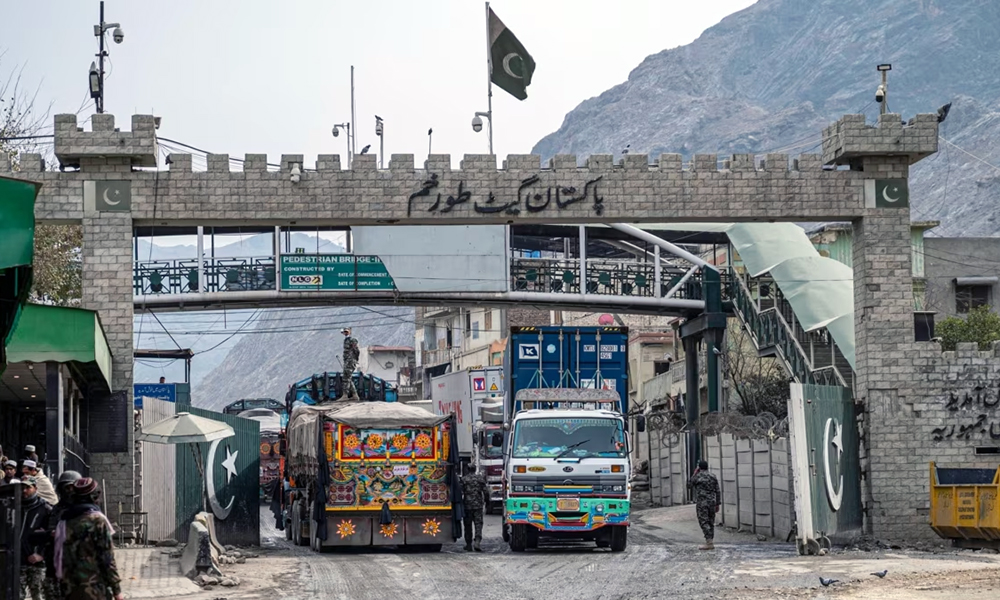
Five years after the Islamic Emirate of Afghanistan (IEA) returned to power in Kabul, Afghanistan’s economic relationship with Pakistan is undergoing a structural shift. For Khyber-Pakhtunkhwa, particularly Peshawar, the issue is increasingly one of industrial resilience and competitiveness.
The clearest evidence is Afghanistan’s transit trade through Pakistan. Container traffic reached a record 102,886 containers worth $6.7 billion in Fiscal Year 2023 (FY23), but fell to 54,114 in FY24 and 42,959 in FY25. In FY26, it collapsed to just 11,592 containers valued at $367 million, according to customs data cited by Dawn.
The figures indicate that Pakistan’s October 2025 border restrictions accelerated a decline that had already begun.
Afghanistan has increasingly diversified its trade routes, with Iran emerging as a major alternative. The World Bank’s Afghanistan Economic Monitor says the Iranian corridor has become a key part of the country’s import supply chain.
In FY25, Iran accounted for 31.3 percent of Afghan imports, while direct imports from Iran and goods transiting through Iran together represented 48.6 percent. Central Asian routes are also gaining importance.
For Pakistan, the loss extends beyond transit fees. It risks losing its traditional position as Afghanistan’s principal gateway to international markets.
The decline is also hitting businesses in Khyber-Pakhtunkhwa. For decades, Afghan demand supported manufacturers, wholesalers, transporters, clearing agents and warehouses linking Karachi’s ports with Peshawar and the border markets.
Cement, construction materials, food products, pharmaceuticals, textiles and consumer goods have traditionally found markets in Afghanistan. As Afghan orders decline, manufacturers face lower demand while already dealing with high energy, financing and transport costs, Dawn reported.
Agriculture is particularly vulnerable because fruits and vegetables cannot withstand prolonged border delays. In 2025, five southern Afghan provinces exported 44,225 tonnes of grapes worth $13.8 million, with nearly 43,000 tonnes going to Pakistan. So far in 2026, exports have fallen to just 256 tonnes valued at about $100,000, according to the Associated Press.
The disruption affects both sides of the border, including farmers, transporters, commission agents, wholesalers and retailers.
At the centre of the issue is the Afghanistan-Pakistan Transit Trade Agreement, designed to give Afghanistan access to Pakistani seaports while offering Pakistan a potential trade corridor to Central Asia. But security concerns, smuggling, regulatory disputes and political tensions have steadily weakened the arrangement.
Pakistan has legitimate concerns about transit cargo being diverted into its domestic market, while Afghan traders face higher costs and uncertainty from additional requirements, inspections and border delays.
If alternative routes through Iran and Central Asia become commercially viable, traders have an incentive to establish new supply chains – and winning that business back could prove difficult.
The consequences are particularly serious for Khyber-Pakhtunkhwa, where Peshawar’s commercial ecosystem has long depended on trade with Afghanistan and Central Asia.
The Pak-Afghan Joint Chamber of Commerce and Industry estimates Pakistani exporters suffered around $225 million in losses over eight months this year because of restrictions and blockades. It puts annual Pakistani exports to Afghanistan at around $1.5 billion and exports to Central Asian markets through Afghanistan at about $800 million.
Pakistan therefore cannot treat the decline in Afghan transit trade solely as a security or diplomatic issue.
Business
89 traders and industrialists invest $68 million in Afghanistan, creating over 4,000 jobs
According to Fitrat, the investments have so far generated direct employment for more than 4,000 people.
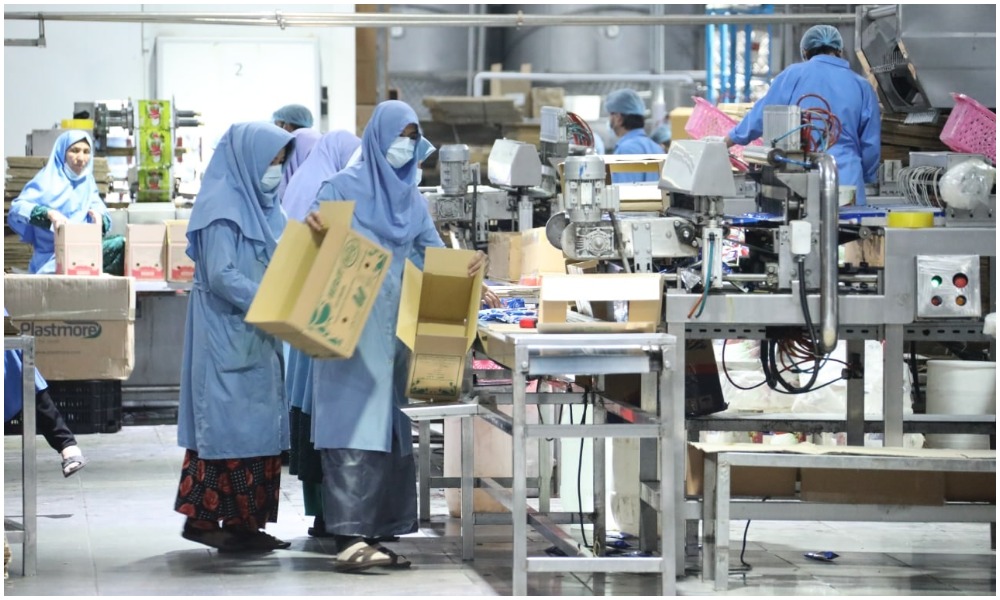
A total of 89 traders and industrialists have transferred capital to Afghanistan over the past two years, investing $68 million and directly creating more than 4,000 jobs, the Islamic Emirate said.
Hamdullah Fitrat, deputy spokesperson for the Islamic Emirate, said the investors had received the necessary facilities and support to establish and expand businesses in the country.
Fitrat said the group includes one large-scale investor, 74 medium-scale investors and 14 small-scale investors.
He added that 288 jeribs of land had been allocated to the investors in industrial parks across Afghanistan.
According to Fitrat, the investments have so far generated direct employment for more than 4,000 people.
He said the documents of a further 15 traders and investors are currently under review. Once the legal procedures are completed, they will also be eligible to receive similar facilities and incentives.


Tottenham face Charlton as ATN brings live EFL Cup action to Afghan fans

Trump administration issues pause on visa appointments for applicants worldwide

UNICEF warns one million Afghan children at risk of death from malnutrition

US spy chief visits Russia for meetings, media reports

Bagrami, Chahar Asyab set to become part of Kabul city

Pakistan’s governance system has ‘collapsed’: Mohsin Naqvi

Afghanistan exports first stone shipment to US in $100,000 trade milestone

AFC confirms clubs for 2026/27 competitions; draw set for August 18

Only two days to go before Afghanistan and Ireland begin ODI series

Four mediators struggle to secure lasting Pakistan-Afghanistan ceasefire

Tahawol: Aisha Wahab’s emphasis on US ties with IEA

Saar: Guterres’s concern regarding global conflicts discussed

Saar: Afghanistan’s uncertain future in SCO

Tahawol: IEA seeking Afghanistan seat at UN

Saar: U.S. sanctions against Iran
-
 Latest News3 days ago
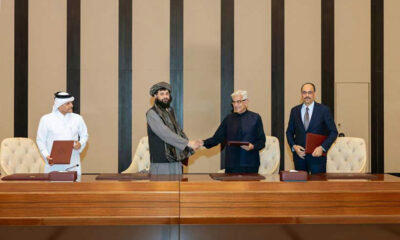
Four mediators struggle to secure lasting Pakistan-Afghanistan ceasefire
-
 Latest News4 days ago
Syria and Saudi Arabia condemn Kabul bombing, express solidarity with Afghanistan
-
 Latest News4 days ago
US judge strikes down Trump visa suspension for 75 countries, including Afghanistan
-

 Sport4 days ago
Afghanistan-India T20I series could see major schedule change
-
 Business2 days ago
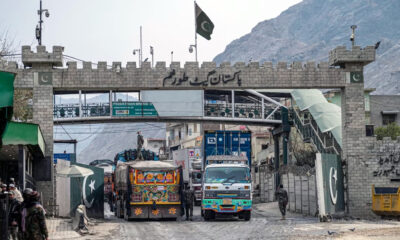
Afghanistan’s trade diversification challenges Pakistan
-
 Latest News4 days ago
Achakzai urges Pakistan to end hostility towards Afghanistan
-

 Latest News3 days ago
AfghanEvac warns US court ruling does not reopen door for Afghans
-

 Sport5 days ago
Abaseen Defenders clinch Khan Hospital Kabul Premier League Season 4 title