
Latest News
Taliban deliberately target journalists: Watchdog

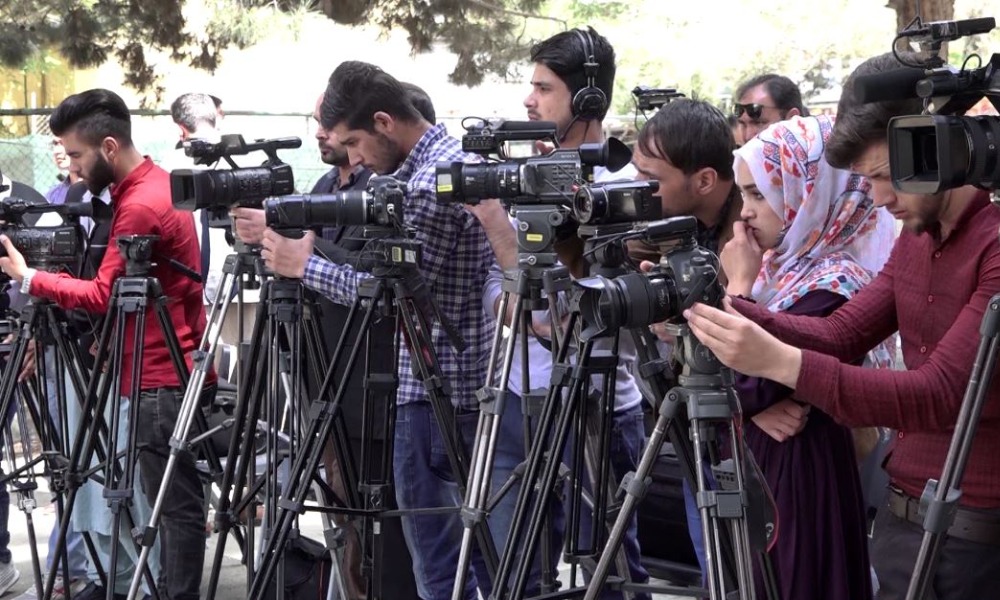
The Human Rights Watch (HRW) has accused the Taliban of “deliberately” targeting journalists and other media workers, including women in Afghanistan.
The watchdog said in a statement that threats and attacks against journalists have increased sharply since the start of the negotiations between the Afghan government and the Taliban in Doha, the capital of Qatar.
According to the statement, such attacks have increased “concerns about preserving freedom of expression and the media in any peace settlement.”
The Watchdog has found that the Taliban commanders and fighters have engaged in a pattern of threats, intimidation, and violence against members of the media in areas where the Taliban have significant influence, as well as in Kabul.
“Those making the threats often have an intimate knowledge of a journalist’s work, family, and movements and use this information to either compel them to self-censor, leave their work altogether, or face violent consequences.”
“Provincial and district-level Taliban commanders and fighters also make oral and written threats against journalists beyond the areas they control. Journalists say that the widespread nature of the threats has meant that no media workers feel safe.”
“A wave of threats and killings has sent a chilling message to the Afghan media at a precarious moment as Afghans on all sides get set to negotiate free speech protections in a future Afghanistan,” said Patricia Gossman, associate Asia director.
“By silencing critics through threats and violence, the Taliban have undermined hopes for preserving an open society in Afghanistan,” she said.
Human Rights Watch interviewed 46 members of the Afghan media between November 2020 and March 2021, seeking information on the conditions under which they work, including threats of physical harm.
The HRW stated that those interviewed included 42 journalists in Badghis, Ghazni, Ghor, Helmand, Kabul, Kandahar, Khost, Wardak, and Zabul provinces and four who had left Afghanistan due to threats.
The Watchdog noted that in a number of cases that Human Rights Watch documented, Taliban forces detained journalists for a few hours or overnight.
“In several cases they or their colleagues were able to contact senior Taliban officials to intercede with provincial and district-level commanders to secure their release, indicating that local commanders are able to take decisions to target journalists on their own without approval from senior Taliban military or political officials.”
The statement said that the Taliban officials at their political office in Doha, Qatar, have denied that their forces threaten the media and say that they require only that journalists respect Islamic values.
But Taliban commanders throughout Afghanistan have threatened journalists specifically for their reporting, the HRW said, adding that the Taliban commanders have considerable autonomy to carry out punishments, including targeted killings.
According to the Watchdog, women journalists, especially those appearing on television and radio, face particular threats.
The recent wave of violent attacks has driven several prominent women journalists to give up their profession or leave Afghanistan altogether.
“Female reporters may be targeted not only for issues they cover but also for challenging perceived social norms prohibiting women from being in a public role and working outside the home.”
A journalist covering the fighting in Helmand province said that one of his sources told him the Taliban were looking for him and he should lie low. “The majority of Afghan journalists feel intimidated and threatened,” he said. “All the journalists are scared because everyone feels like they could be next.”
The watchdog has called on the Taliban leadership to “immediately cease intimidation, threats, and attacks against journalists and other media workers.”
“They should urgently provide clear, public directives to all Taliban members to end all forms of violence against journalists and other media workers, and intimidation, harassment, and punishment of Afghans who have criticized Taliban policies. The Taliban leadership should also explicitly reject violence against women in the media,” the HRW said.
Gossman stated: “It’s not enough for Taliban officials in Doha to issue blanket denials that they’re targeting journalists when Taliban forces on the ground continue to intimidate, harass, and attack reporters for doing their jobs.”
“Countries supporting the peace process should press for firm commitments from all parties to protect journalists, including women, and uphold the right to free expression in Afghanistan,” she said.
“Since the beginning of the spike in targeted killings in early November [2020], supporters of the group [Taliban] have welcomed the killings of journalists on social media, calling these killings in many cases a religious duty. Taliban supporters accuse journalists of being agents of Western countries, and corrupted by Western values, thereby legitimizing any violence against journalists and the media as not only being permissible but a key part of their war,” said the Afghan Journalists Security Committee (AJSC) quoted by the HRW.
According to the HRW findings, the Taliban commanders and fighters have long targeted the media, accusing them of being aligned with the Afghan government or international military forces.
“If journalists report unfavorably about Taliban actions or military operations, the Taliban often accuse them of being spies,” the watchdog said.
The Taliban, so far, has not commented about this report. The group, however, constantly denied its involvement in Targeting civil activists, journalists, and media workers.












Kazakhstan’s Foreign Minister Mukhtar Tileuberdi has called for pragmatic and coordinated international engagement with Afghanistan, saying the country’s long-term stability is closely linked to the security and sustainable development of Central Asia.
Speaking during the general debate of the 81st session of the United Nations General Assembly in New York on Friday, Tileuberdi said humanitarian assistance to Afghanistan remains essential but alone cannot break the cycle of poverty, displacement and dependency.
He said Kazakhstan supports a “pragmatic, coordinated and step-by-step” approach to international engagement with Afghanistan, with the United Nations playing a central role.
Tileuberdi also said Kazakhstan is working with the UN to operationalize the United Nations Regional Centre for the Sustainable Development Goals for Central Asia and Afghanistan in Almaty.
He said the success of the centre should be measured by the results and assistance it delivers to the region.


Abu Muslim Farah defeat Khurasan Faryab 2-0 in ACL season six

Saar: Concerns over Pakistan’s political crisis discussed

Afghanistan Champions League: Omar Zawak Herat beat Toofan Herat 1-0

Blast in Pakistan’s Dera Ismail Khan kills 11, injures 30

Ariana Afghan Airlines increases Kabul-Delhi cargo flights

Saudi energy group signs major Afghanistan deals covering gas exploration and pipeline plans

Trump floats idea of renaming Atlantic or Pacific Ocean

US hits Egyptian bank branches with Iran sanctions as war marks six months

Nepal flood rescue mission enters critical phase as thousands remain missing

Iranian clubs to face Gulf opponents at neutral venues in Asian Champions League Elite
Saar: Concerns over Pakistan’s political crisis discussed

Exclusive interview with Abdul Latif Mansoor, Minister of MRRD

Tawsia: Overview of Afghanistan’s iron mines

Tahawol: Discussion on fresh Pakistani airstrikes on Afghanistan

Saar: Calls for international support for Afghanistan discussed
-

 World5 days ago
CNN, MS NOW and Politico sue Trump, challenging White House ban
-

 Latest News3 days ago
Ariana Afghan Airlines ranks seventh among 45 Central Asian airlines
-

 Latest News5 days ago
UN reiterates call for respect for international law after Kunar airstrikes
-

 Regional4 days ago
US and Iran hold first talks since June after Trump’s ‘annihilation’ threat
-

 Latest News3 days ago
Silk Road highway in Wakhan corridor now reaches the China border
-

 Latest News5 days ago
Afghan Official: Pakistan’s airstrikes will not go unanswered
-
 Regional5 days ago
G7 foreign ministers call on Iran to stop arming Houthis
-

 Regional3 days ago
Iran airlines cancel flights as US sanctions hit