
Latest News
Blinken admits a civil war or Taliban takeover is a possibility

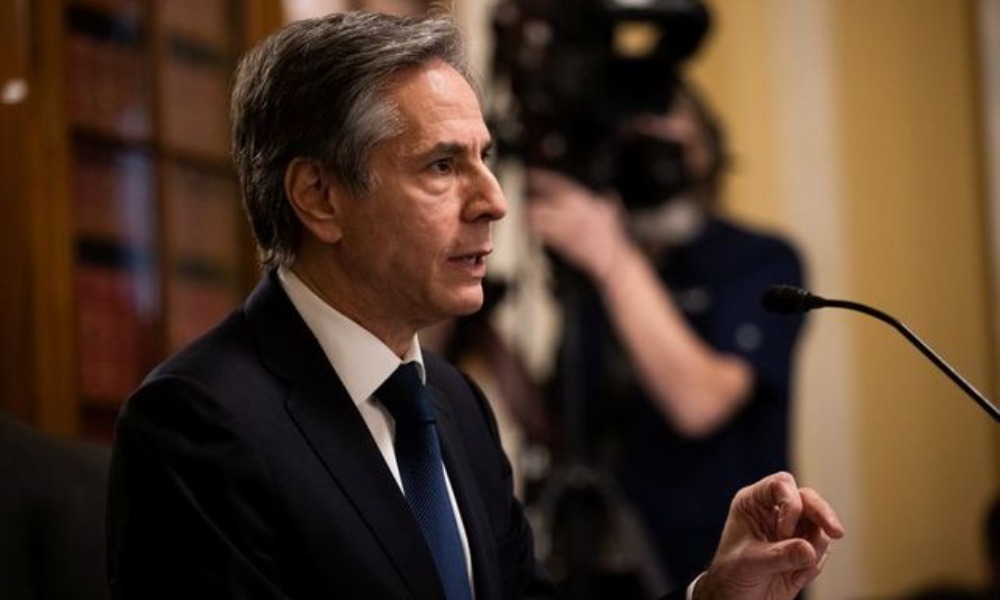
Secretary of State Anthony Blinken said Tuesday Afghanistan could be taken over by Taliban or descend into civil war when the US withdraws troops by September 11 – the 20th anniversary of 9/11.
Blinken told CNN a civil war or Taliban takeover in Afghanistan is “certainly a possible scenario” when the US withdraws all its troops from the country.
The Biden administration is “planning for every scenario” but stated the US is “not disengaging from Afghanistan” and will continue to be “deeply engaged” in supporting the country long after troops have left.
But the decision has divided opinion with some officials and lawmakers voicing concerns that pulling troops out of Afghanistan too quickly could lead to retaliation from the Taliban.
Democratic Senator Jeanne Shaheen of New Hampshire, who is on the Foreign Relations Committee, told CNN “it’s difficult to see a scenario that doesn’t end in civil war or a Taliban takeover.”
Blinken addressed these concerns Tuesday, admitting that unrest is a possible consequence. “That is certainly a possible scenario,” he said.
He urged what he described as “free riders” in the region to start using their “influence” to help keep the country stable.
“I don’t think ultimately either the Afghan government or the Taliban do, none of Afghanistan’s neighbors do, neighbors and other countries in the region that have basically been free riders for the last 20 years, as we’ve been engaged there with our NATO allies and partners who are now going to have to decide, given their interests in a relatively stable Afghanistan, given the influence that they have, whether they’re going to try to use that influence in a way that keeps things within the 40-yard line,” he said.
Blinken denied that the withdrawal of troops was the US “disengaging” from the country, saying the nation continues to be committed to “its people, development, economic assistance, humanitarian assistance, support for the security forces.”
“So a lot of people are having their minds concentrated by the president’s decision and besides that – even as we are withdrawing our forces, we are not disengaging from Afghanistan,” he said adding the US remains “deeply engaged in the diplomacy, in support for the Afghan government and its people.”
“We have trained over the years more than 300,000 of them so all to that remains and there are different actors are work now who I hope will keep moving this in a more positive than negative direction.”
He added: “But we have to plan, we are planning for every scenario.”
Blinken also insisted that the Biden administration is working to ensure Afghan locals who “put their lives on the line” working with US forces and diplomats in the country over the last two decades can apply to be expedited to the US.
Thousands of people worked alongside the US on the ground in the country and have been left fearful for their lives once the US withdraws.
“We have had this program in Iraq and also in Afghanistan and we want to make sure that people who put their lives on the line, working with American folks in uniform, working with our diplomats who put, not just themselves in jeopardy, potentially their families as well, can get expedited consideration if they decide that they want to try to come to the United States,” he said.
“We have got about 18,000 people already in the pipeline, 9,000 of whom are relatively far along, another 9,000 are just at the beginning of the process, and you know, clearly more are likely to sign up, so we are working very hard to make sure that we’ve got in place the resources to work that program – to work it quickly, expeditiously.”
Blinken called on the lawmakers in the House and the Senate to “work together and make sure that the program has the resources it needs.”
US Special Representative for Afghanistan Reconciliation Zalmay Khalilzad said on Tuesday he hoped many Afghans will want to stay to “contribute to the nation’s future” but said it was crucial the US protects those who feel they need to leave the nation.
“Failing to do so sends a global message – Don’t fight with the Americans, because when they’re finished they leave you behind. That’s not something we can tolerate,” he said.












Kazakhstan’s Foreign Minister Mukhtar Tileuberdi has called for pragmatic and coordinated international engagement with Afghanistan, saying the country’s long-term stability is closely linked to the security and sustainable development of Central Asia.
Speaking during the general debate of the 81st session of the United Nations General Assembly in New York on Friday, Tileuberdi said humanitarian assistance to Afghanistan remains essential but alone cannot break the cycle of poverty, displacement and dependency.
He said Kazakhstan supports a “pragmatic, coordinated and step-by-step” approach to international engagement with Afghanistan, with the United Nations playing a central role.
Tileuberdi also said Kazakhstan is working with the UN to operationalize the United Nations Regional Centre for the Sustainable Development Goals for Central Asia and Afghanistan in Almaty.
He said the success of the centre should be measured by the results and assistance it delivers to the region.


Abu Muslim Farah defeat Khurasan Faryab 2-0 in ACL season six

Saar: Concerns over Pakistan’s political crisis discussed

Afghanistan Champions League: Omar Zawak Herat beat Toofan Herat 1-0

Blast in Pakistan’s Dera Ismail Khan kills 11, injures 30

Ariana Afghan Airlines increases Kabul-Delhi cargo flights

Saudi energy group signs major Afghanistan deals covering gas exploration and pipeline plans

Trump floats idea of renaming Atlantic or Pacific Ocean

US hits Egyptian bank branches with Iran sanctions as war marks six months

Nepal flood rescue mission enters critical phase as thousands remain missing

Iranian clubs to face Gulf opponents at neutral venues in Asian Champions League Elite
Saar: Concerns over Pakistan’s political crisis discussed

Exclusive interview with Abdul Latif Mansoor, Minister of MRRD

Tawsia: Overview of Afghanistan’s iron mines

Tahawol: Discussion on fresh Pakistani airstrikes on Afghanistan

Saar: Calls for international support for Afghanistan discussed
-

 World5 days ago
CNN, MS NOW and Politico sue Trump, challenging White House ban
-

 Latest News3 days ago
Ariana Afghan Airlines ranks seventh among 45 Central Asian airlines
-

 Latest News5 days ago
UN reiterates call for respect for international law after Kunar airstrikes
-

 Regional4 days ago
US and Iran hold first talks since June after Trump’s ‘annihilation’ threat
-

 Latest News3 days ago
Silk Road highway in Wakhan corridor now reaches the China border
-

 Regional3 days ago
Iran airlines cancel flights as US sanctions hit
-

 Latest News5 days ago
Afghan Official: Pakistan’s airstrikes will not go unanswered
-
 Regional5 days ago
G7 foreign ministers call on Iran to stop arming Houthis