
Latest News
Stoltenberg says Afghan forces can cope alone

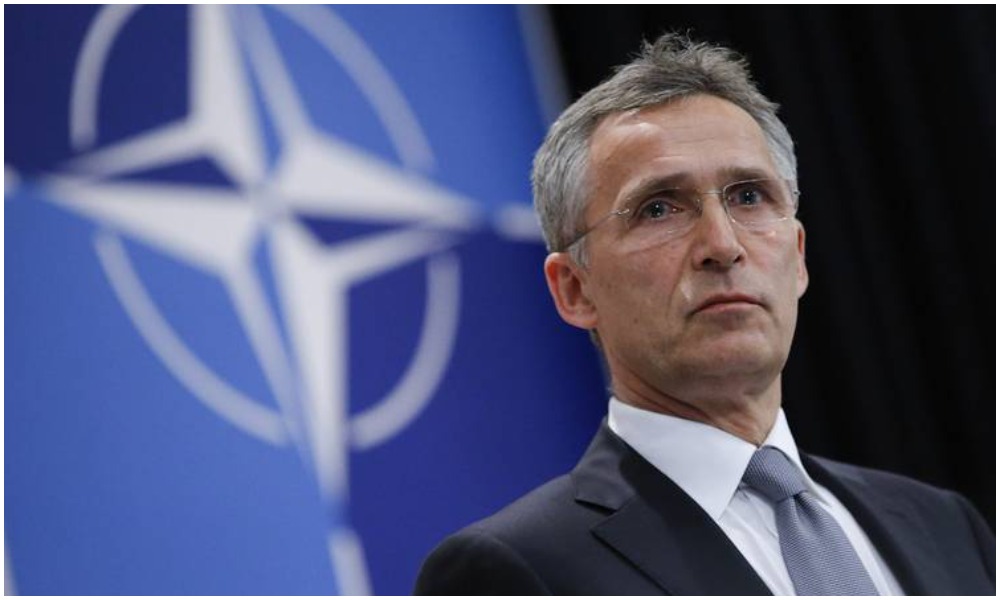
NATO Secretary-General Jens Stoltenberg said Thursday that the government and the Afghan security forces are strong enough to stand on their own without the help of foreign troops.
In an interview with the Associated Press, Stoltenberg said: “I think that the Afghans, they also realize that we have been there now for 20 years and we have invested heavily in blood and treasure in Afghanistan.”
“Afghanistan has come a long way, both when it comes to building strong, capable security forces, but also when it comes to social and economic progress. At some stage, it has to be the Afghans that take full responsibility for peace and stability in their own country,” Stoltenberg said.
Stoltenberg said that NATO countries would continue to support Afghanistan through civilian experts who will help to advise government ministries, by funding the security forces and with support for slow-moving peace talks between Kabul and the Taliban.
He said that NATO is also “looking into the possibility of providing some training out of country for the Afghan security forces, but no final decision has been taken.”
U.S. military leaders are still grappling with how best to carry out President Joe Biden’s order to withdraw all American troops from Afghanistan by September while helping Afghan forces and monitoring the threat that prompted the U.S. invasion of the country 20 years ago, AP reported.
Biden and Stoltenberg will meet with the other leaders of the 30-nation military alliance on June 14 to usher in a new era in trans-Atlantic ties after four tumultuous years of the former Trump administration. The other big issue will be Afghanistan, although no Afghan leaders are due to attend the Brussels summit, AP reported.
Asked about the impact of leaving Afghanistan without the security guarantee that has helped keep the Taliban at bay, Stoltenberg said that “there are risks entailed to the decision of ending NATO’s military mission in Afghanistan. We have been very transparent and clear-eyed about that.”
“At the same time, to continue to stay means that we will also have to take some risks; the risk of more fighting, the risk of being forced to increase the number of troops there, and the risk of remaining with a (military) mission,” he said.
Many officials have expressed concern that once the U.S. leaves, the government and its armed forces will be quickly overrun by the Taliban. Violence has steadily mounted in recent months as the drawdown gathered pace, AP reported.
It remains unclear what level of security might be needed, and who would provide it, to protect international embassies spread around the capital Kabul. The city’s airport, the main international gateway to Afghanistan, and the route to it must also be protected.
Stoltenberg said that NATO plans to provide financial support to keep Kabul airport up and running, but — just a few months before the alliance ends its biggest, costliest and most ambitious mission ever — the details of how all this might play out remained unclear.







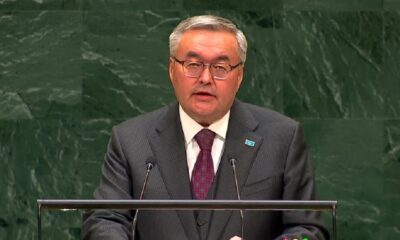




Kazakhstan’s Foreign Minister Mukhtar Tileuberdi has called for pragmatic and coordinated international engagement with Afghanistan, saying the country’s long-term stability is closely linked to the security and sustainable development of Central Asia.
Speaking during the general debate of the 81st session of the United Nations General Assembly in New York on Friday, Tileuberdi said humanitarian assistance to Afghanistan remains essential but alone cannot break the cycle of poverty, displacement and dependency.
He said Kazakhstan supports a “pragmatic, coordinated and step-by-step” approach to international engagement with Afghanistan, with the United Nations playing a central role.
Tileuberdi also said Kazakhstan is working with the UN to operationalize the United Nations Regional Centre for the Sustainable Development Goals for Central Asia and Afghanistan in Almaty.
He said the success of the centre should be measured by the results and assistance it delivers to the region.


Saar: Concerns over Pakistan’s political crisis discussed

Afghanistan Champions League: Omar Zawak Herat beat Toofan Herat 1-0

Blast in Pakistan’s Dera Ismail Khan kills 11, injures 30

Ariana Afghan Airlines increases Kabul-Delhi cargo flights

Khalilzad questions Pakistan’s commitment to Afghan welfare

Saudi energy group signs major Afghanistan deals covering gas exploration and pipeline plans

Trump floats idea of renaming Atlantic or Pacific Ocean

US hits Egyptian bank branches with Iran sanctions as war marks six months

Nepal flood rescue mission enters critical phase as thousands remain missing

Iranian clubs to face Gulf opponents at neutral venues in Asian Champions League Elite
Saar: Concerns over Pakistan’s political crisis discussed

Exclusive interview with Abdul Latif Mansoor, Minister of MRRD

Tawsia: Overview of Afghanistan’s iron mines

Tahawol: Discussion on fresh Pakistani airstrikes on Afghanistan

Saar: Calls for international support for Afghanistan discussed
-

 World5 days ago
CNN, MS NOW and Politico sue Trump, challenging White House ban
-

 Latest News3 days ago
Ariana Afghan Airlines ranks seventh among 45 Central Asian airlines
-

 Latest News4 days ago
UN reiterates call for respect for international law after Kunar airstrikes
-
 Latest News5 days ago
Khalilzad condemns Pakistan airstrikes, says current strategy is not working
-

 Regional3 days ago
US and Iran hold first talks since June after Trump’s ‘annihilation’ threat
-

 Latest News3 days ago
Silk Road highway in Wakhan corridor now reaches the China border
-

 Latest News4 days ago
Afghan Official: Pakistan’s airstrikes will not go unanswered
-

 Sport4 days ago
Afghan boxing referee heads to China for international festival