
Latest News
Afghan central bank board member asks Biden, IMF to release funds

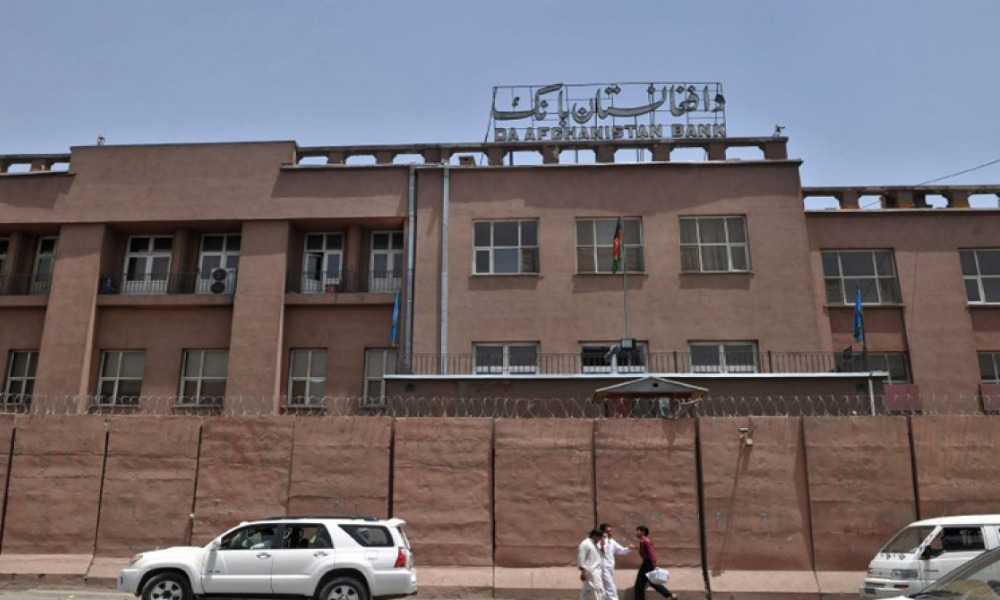
A senior board member of Afghanistan’s central bank is urging the US Treasury and the International Monetary Fund to take steps to provide the Taliban-led government limited access to the country’s reserves to avoid economic disaster.
The Taliban took over Afghanistan with astonishing speed, but it appears unlikely that they will get quick access to most of the roughly $10 billion in assets held by Da Afghanistan Bank (DAB), which are mostly outside of the country, Reuters reported.
US President Joe Biden’s administration has said any central bank assets the Afghan government have in the United States will not be made available to the Taliban, and the IMF has said the country will not have access to the lender’s resources.
Shah Mehrabi, an economics professor at Montgomery College in Maryland and a member of the bank’s board since 2002, told Reuters in a telephone interview on Wednesday that Afghanistan faces an “inevitable economic and humanitarian crisis” if its international reserves remain frozen.
Mehrabi stressed he does not speak for the Taliban but is making this push in his capacity as a sitting board member. He said he plans to meet with US lawmakers this week, and hopes to talk to US Treasury officials soon as well.
“If the international community wants to prevent an economic collapse, one way would be to allow Afghanistan to gain limited and monitored access to its reserves,” he told Reuters.
“Having no access will choke off the Afghan economy, and directly hurt the Afghan people, with families pushed further into poverty.”
Mehrabi is proposing that Washington allow the new government in Kabul a limited amount of access each month, perhaps in the range of $100m to $125m to start with, that would be monitored by an independent auditor.
“The Biden administration should negotiate with the Taliban over the money in the same way they negotiated over the evacuation,” he said.
If the assets remain entirely frozen, then inflation will continue to soar, Afghans will not be able to afford basic necessities, and the central bank will lose its main tools for conducting monetary policy, he said.
The Taliban can survive on customs duties, increasing opium production, or selling off captured American military gear, but everyday Afghans will suffer and be solely reliant on international aid if the country does not have access to currency, Mehrabi added.
After nearly 20 years of American intervention, the Afghan economy is heavily dollarised, and depends on imports that largely must be purchased with foreign currency, he said.
With overseas reserves off-limits, Da Afghanistan Bank may be undermined after having cultivated a non-political, technocratic institution that so far has been allowed to continue its work under the Taliban, Mehrabi said.
“Their work there is not based on who is in power,” he said, noting that he has not been personally in touch with Taliban representatives, but is in daily contact with colleagues running operations there now.
Ajmal Ahmady, who led the central bank until the capture of Kabul, has said about $7 billion of DAB’s assets was held as a mixture of cash, gold, bonds and other investments at the US Federal Reserve.
Most of the rest is in other international accounts and at the Bank for International Settlements, a bank for central banks based in Switzerland, and not physically in DAB vaults, he said – leaving about 0.2 percent or less of the total accessible to the Taliban.












Kazakhstan’s Foreign Minister Mukhtar Tileuberdi has called for pragmatic and coordinated international engagement with Afghanistan, saying the country’s long-term stability is closely linked to the security and sustainable development of Central Asia.
Speaking during the general debate of the 81st session of the United Nations General Assembly in New York on Friday, Tileuberdi said humanitarian assistance to Afghanistan remains essential but alone cannot break the cycle of poverty, displacement and dependency.
He said Kazakhstan supports a “pragmatic, coordinated and step-by-step” approach to international engagement with Afghanistan, with the United Nations playing a central role.
Tileuberdi also said Kazakhstan is working with the UN to operationalize the United Nations Regional Centre for the Sustainable Development Goals for Central Asia and Afghanistan in Almaty.
He said the success of the centre should be measured by the results and assistance it delivers to the region.


Abu Muslim Farah defeat Khurasan Faryab 2-0 in ACL season six

Saar: Concerns over Pakistan’s political crisis discussed

Afghanistan Champions League: Omar Zawak Herat beat Toofan Herat 1-0

Blast in Pakistan’s Dera Ismail Khan kills 11, injures 30

Ariana Afghan Airlines increases Kabul-Delhi cargo flights

Saudi energy group signs major Afghanistan deals covering gas exploration and pipeline plans

Trump floats idea of renaming Atlantic or Pacific Ocean

US hits Egyptian bank branches with Iran sanctions as war marks six months

Nepal flood rescue mission enters critical phase as thousands remain missing

Iranian clubs to face Gulf opponents at neutral venues in Asian Champions League Elite
Saar: Concerns over Pakistan’s political crisis discussed

Exclusive interview with Abdul Latif Mansoor, Minister of MRRD

Tawsia: Overview of Afghanistan’s iron mines

Tahawol: Discussion on fresh Pakistani airstrikes on Afghanistan

Saar: Calls for international support for Afghanistan discussed
-

 World5 days ago
CNN, MS NOW and Politico sue Trump, challenging White House ban
-

 Latest News3 days ago
Ariana Afghan Airlines ranks seventh among 45 Central Asian airlines
-

 Latest News5 days ago
UN reiterates call for respect for international law after Kunar airstrikes
-

 Regional4 days ago
US and Iran hold first talks since June after Trump’s ‘annihilation’ threat
-

 Latest News3 days ago
Silk Road highway in Wakhan corridor now reaches the China border
-

 Regional3 days ago
Iran airlines cancel flights as US sanctions hit
-

 Latest News5 days ago
Afghan Official: Pakistan’s airstrikes will not go unanswered
-
 Regional5 days ago
G7 foreign ministers call on Iran to stop arming Houthis