
Latest News
OIC urges Afghanistan to root out terrorists, cautions against ‘spoilers’

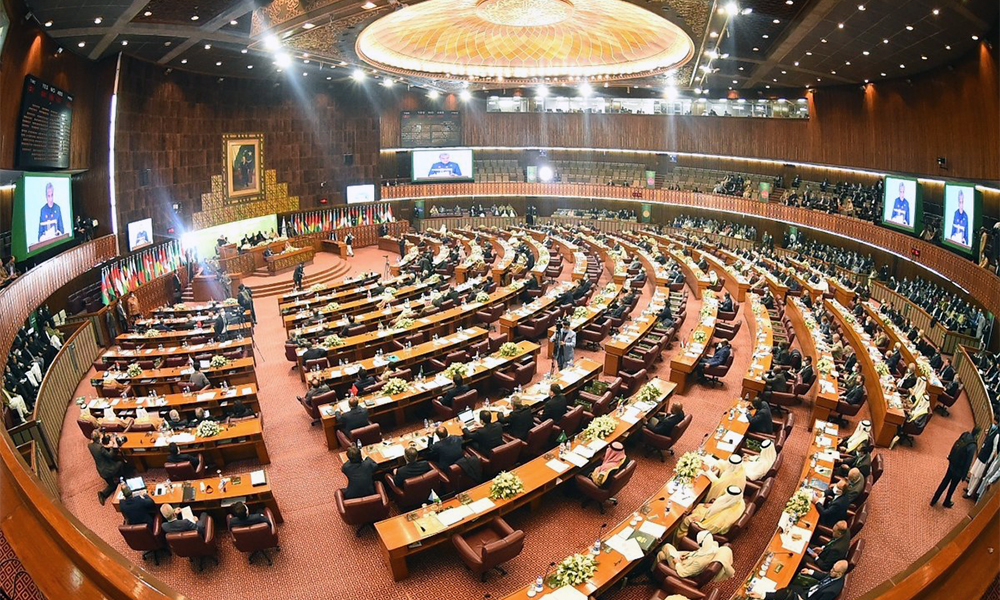
The Organization of Islamic Cooperation (OIC) this weekend put forward a wide range of recommendations during its Extraordinary Session of the Council of Foreign Ministers in Islamabad in a bid to tackle the Afghanistan crisis, noting that a key component was security as well as dealing with the unfolding humanitarian crisis.
In its draft resolution document, drawn up ahead of the summit and of which Ariana News has a copy, the OIC called on Afghanistan to take concrete steps against all terrorist organizations in particular Al-Qaeda, Daesh and its affiliates, ETIM, and TTP.
The OIC also urged “the international community to remain cautious against the possibility of incitement and the role of spoilers, both inside and outside the country, to derail efforts aimed at peace and stability in Afghanistan”.
In addition, the council expressed “deep alarm at the deteriorating humanitarian crisis in Afghanistan,” and noted the need for the continuation of economic cooperation to improve the humanitarian situation in the country.
The OIC also expressed concern at the worsening economic situation in the country, which is “further compounded by the continued freeze of overseas Afghan assets as well as other international assistance, exacerbating the urgent cash-flow problems, including payment of remuneration to public officials, and hindering the provision of essential public and social services to the people of Afghanistan.”
The OIC warned that an economic meltdown in Afghanistan would lead to a mass exodus of refugees, promote extremism, terrorism, and instability, which in turn would have dire consequences for regional and international peace and stability.
The OIC noted 31 points in its draft resolution, which are as follows:
1. Affirms solidarity of the OIC Member States with the Afghan people in their quest for a peaceful, united, stable, sovereign and prosperous Afghanistan.
2. Urges Afghanistan to abide by the principles and purposes enshrined in the UN Charter and the Charter of the OIC and respect its commitments under international agreements and conventions, including its obligations under international human rights covenants, especially with regards to the rights of women, children, youth, elderly and people with special needs as well as the preservation of family values, as enshrined in Islamic teachings and principles.
3. Takes note of the UN system-wide reports that the humanitarian crisis in Afghanistan is unfolding at a pace and scale hitherto unknown in the recent memory.
4. Encourages the United Nations system in particular UN High Commissioner for Refugees (UNHCR), UN Office for Coordination of Humanitarian Affairs (OCHA), World Food Programme (WFP), United Nations International Children’s Emergency Fund (UNICEF), United Nations Development Programme (UNDP), to pursue joint operation with the OIC for the delivery of urgent humanitarian aid.
5. Welcomes the initiative of Uzbekistan to create under the auspices of the United Nations a regional Logistic Hub in Termez City to provide urgent humanitarian assistance to the people of Afghanistan.
6. Calls upon the international community to provide urgent, and sustained humanitarian assistance to Afghanistan as well as to the major Afghan refugee-hosting countries.
7. Urges the international community in general, and the UN Security Council in particular, to ensure that existing targeted sanctions do not impede the provision of humanitarian aid or economic resources to preserve the institutions, schools and hospitals in Afghanistan and to allow multilateral development institutions, United Nations Agencies, Funds and Programmes and other humanitarian organizations to channel existing assistance and assets towards humanitarian assistance.
8. Affirms the importance of sustained engagement of the international community with Afghanistan, especially in supporting humanitarian and development needs of the Afghan people.
9. Decides that the OIC will play a leading role in the delivery of humanitarian and development aid to the people of Afghanistan.
10. Requests the General Secretariat to take immediate steps to reinforce the OIC Mission in Kabul with human, financial and logistical resources, enabling it to forge global partnerships and streamline aid operations on the ground.
11. Acknowledges that Afghanistan is facing serious liquidity challenges, and resolves to continue focusing on measures to ease access to legitimate banking services.
12. Underscores that Afghanistan’s access to its financial resources would be pivotal in preventing a collapse and in reviving the economic activity and in this regard, recognizes the importance of taking related actions such as unlocking the channels of financial and in-kind flow of assistance and resources to the people of Afghanistan, and exploring realistic pathways towards unfreezing Afghanistan’s financial assets.
13. Decides to establish a Humanitarian Trust Fund, under the aegis of the Islamic Development Bank, to serve as a vehicle to channel humanitarian assistance to Afghanistan including in partnership with other international actors.
14. Decides that the OIC General Secretariat, together with the Islamic Development Bank and Humanitarian Trust Fund, shall commence discussions with the UN system organizations to device a road map for mobilizing actions in relevant fora to unlock the financial and banking channels to resume liquidity and flow of financial and humanitarian assistance, and to devise a mechanism for the disbursement of urgent and sustained humanitarian assistance to the people of Afghanistan.
15. Requests the Islamic Development Bank to expeditiously operationalize the Humanitarian Trust Fund by the first quarter of 2022.
16. Calls on the OIC Member States, the Islamic Financial Institutions, donors and other international partners to announce pledges to the Humanitarian Trust Fund for Afghanistan as well as to provide humanitarian assistance to Afghanistan.
17. Decides that OIC General Secretariat shall engage with the World Health Organization and other relevant stakeholders for securing vaccines as well as other medical supplies, technical and related assistance for the people of Afghanistan in context of Covid-19 pandemic and other persistent and emerging health concerns.
18. Decides to launch an Afghanistan Food Security Programme, and requests the Islamic Organization for Food Security (IOFS) to undertake necessary work in this regard using the capacity of the Organization’s Food Security Reserves, when necessary.
19. Encourages OIC Member States, international donors, the UN Funds and Programmes and other international actors to generously contribute to the Afghanistan Food Security Programme.
20. Reiterates its call on the OIC Secretary-General to engage with donor financial institutions to provide necessary humanitarian and economic assistance to Afghanistan as well as Afghan refugees in neighbouring countries.
21. Urgently appeals to OIC member States, international community including the UN system, international organizations, and international financial institutions to continue to provide all possible and necessary recovery, reconstruction, development, financial, educational, technical and material assistance for Afghanistan as policy tools to promote realization and enjoyment of fundamental rights and freedoms by all Afghan citizens.
22. Reaffirms the importance of combating terrorism in Afghanistan and ensuring that the territory of Afghanistan is not used as a platform or safe haven by any terrorist group or organization.
23. Calls upon Afghanistan to take concrete steps against all terrorist organizations in particular Al-Qaeda, Deash and its affiliates, ETIM, and TTP.
24. Reaffirms that peace, security and stability in Afghanistan would also contribute to the safe and dignified return of all Afghan refugees, and internally displaced persons and to play their constructive role in the development of Afghanistan.
25. Urges the international community to remain cautious against the possibility of incitement and the role of spoilers, both inside and outside the country, to derail efforts aimed at peace and stability in Afghanistan.
26. Calls upon the Afghan authorities to continue to work towards greater inclusiveness and including by developing a roadmap to strengthen participation of all Afghans including women and girls to participate in all aspects of the Afghan society.
27. Underscores the need for concerted efforts to rebuild the necessary capacity of the relevant state institutions of Afghanistan to address challenges posed by terrorism, narcotics, smuggling, money laundering, organized crime, and irregular migration.
28. Decides to appoint Ambassador Tarig Ali Bakheet, Assistant Secretary General for Humanitarian, Cultural and Family Affairs at the OIC General Secretariat, as Special Envoy of the Secretary General of the Organization of Islamic Cooperation (OIC) for Afghanistan, supported by a secretariat and the OIC Office in Afghanistan to coordinate aid and assistance efforts, and mandated to pursue economic and political engagement with Afghanistan, and to submit periodic reports.
29. Requests the OIC Secretary General to arrange for a delegation of prominent religious scholars and Ulama led by the International Islamic Fiqh Academy and other relevant religious institutions, to engage with Afghanistan on issues of vital concern, such as, but not limited to, tolerance and moderation in Islam, equal access to education and women’s rights in Islam.
30. Requests the OIC Secretary General to present a report in coordination with the Islamic Development Bank and the Special Envoy of the Secretary General of the Organization Islamic Cooperation for Afghanistan to the 48th session of the Council of Foreign Ministers regarding measures taken to implement this resolution, and the steps taken and resources required to strengthen OIC Mission in Afghanistan.
31. Also requests the OIC Secretary General to present a report to the 48th session which identifies measures to address the humanitarian and economic situation in Afghanistan as well as to highlight any practical difficulties being faced in the provision of humanitarian aid or related funds, financial assets, or economic resources to Afghanistan by the OIC Member States, OIC financial and humanitarian institutions and organizations.



Latest News
UNAMA acting chief visits Islam Qala border to assess support for returnees
UN launched a $529 million response plan aimed at assisting around 2.7 million Afghans expected to return from Iran and Pakistan between April and December 2026.
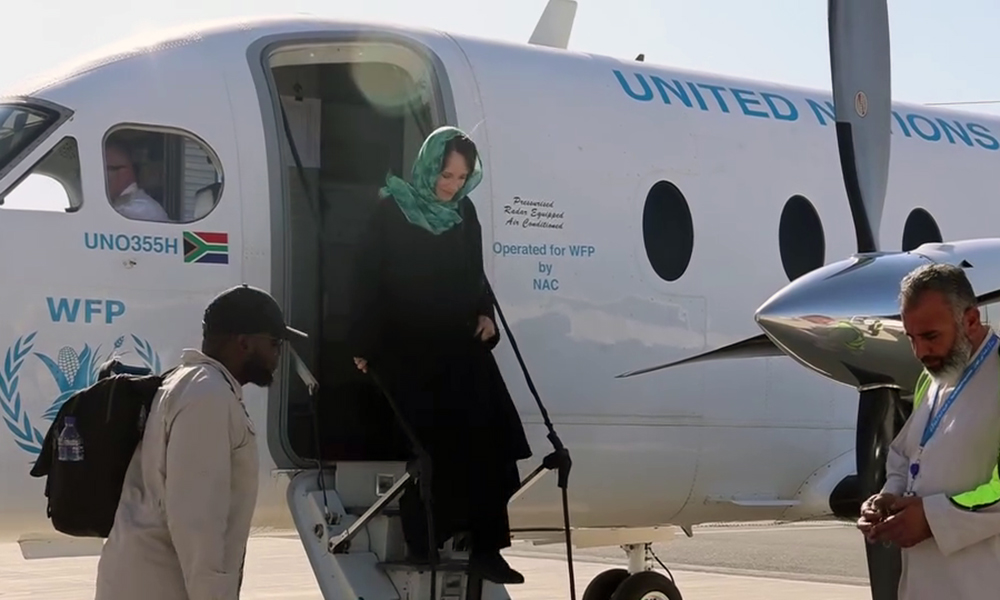
Georgette Gagnon, UNAMA’s acting head, visited western Afghanistan, including the Islam Qala border crossing, to see firsthand UN efforts to support millions of Afghans returning from neighboring Iran and Pakistan.
Earlier this year, the UN launched a $529 million response plan aimed at assisting around 2.7 million Afghans expected to return from Iran and Pakistan between April and December 2026.
Latest News
Trump: Unlike Afghanistan, US took all equipment from Iraq
Trump said the withdrawal from Iraq marked the end of what he described as a costly military involvement, adding that he had set a clear mission and instructed commanders to complete it without allowing the US presence to become permanent.
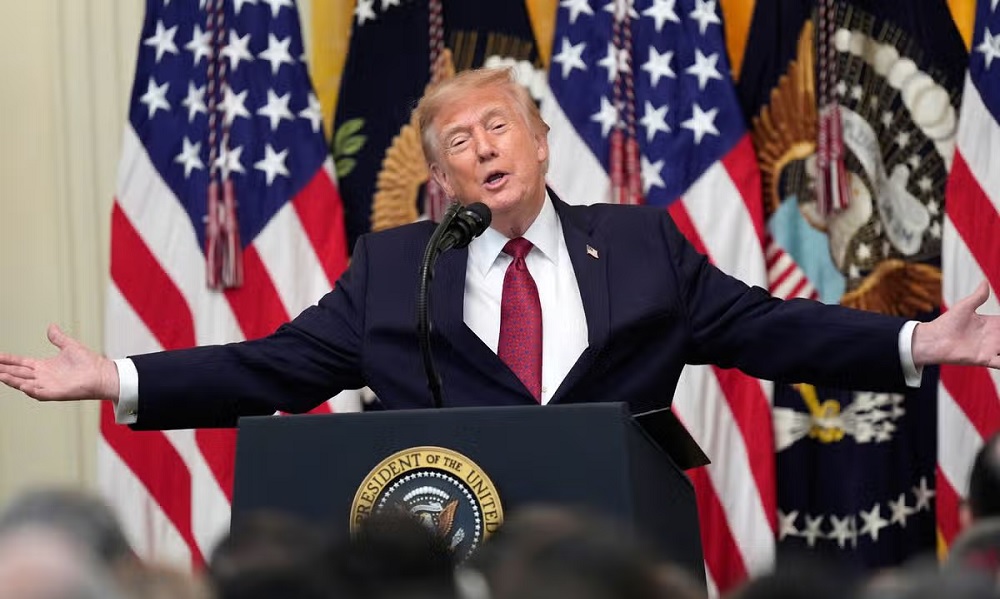
US President Donald Trump on Wednesday compared the withdrawal of US forces from Iraq with the 2021 US withdrawal from Afghanistan, saying military equipment had been left behind in Afghanistan, while US forces leaving Iraq took their equipment with them.
Speaking at a White House event, Trump referred to the final departure of US-led coalition forces and equipment from Erbil Air Base in northern Iraq, which marked the end of the US military mission against Daesh in Iraq.
“I said, take a little longer. Take everyone. We left all of the equipment, if you remember, in Afghanistan. Everything was left behind,” Trump said.
“I said, ‘I want every screw taken. If there’s a screw lying on the ground, take it. If we have a canvas tent, take it.’ We took everything,” he added.
He also mentioned the August 2021 attack at Kabul airport that killed 13 US soldiers.
Trump said he had become acquainted with the families of the US service members killed in the attack and also highlighted those who were seriously wounded.
“What happened to those—to their children should never have been allowed to happen,” he said, adding that 48 wounded service members were severely injured and “never get mentioned.”
Trump said the withdrawal from Iraq marked the end of what he described as a costly military involvement, adding that he had set a clear mission and instructed commanders to complete it without allowing the US presence to become permanent.
The US military announced on Wednesday that its forces and equipment had completed an orderly departure from Erbil Air Base, formally ending Operation Inherent Resolve in Iraq. The US-led mission began in 2014 to fight Daesh after the group seized large areas of Iraq and Syria. The US is continuing its counter-Daesh mission in Syria from a headquarters in Jordan.
Trump said the US had entered Iraq to fight the Islamic State and that the group no longer controlled a territorial “caliphate.”
“We came to fight a caliphate, and there is no longer a caliphate, so we are going home indeed,” he said.
Latest News
Karzai condemns Pakistani airstrikes on Kunar and Helmand
In a statement, Karzai expressed condolences to the families of those killed and wished a swift recovery to those injured.
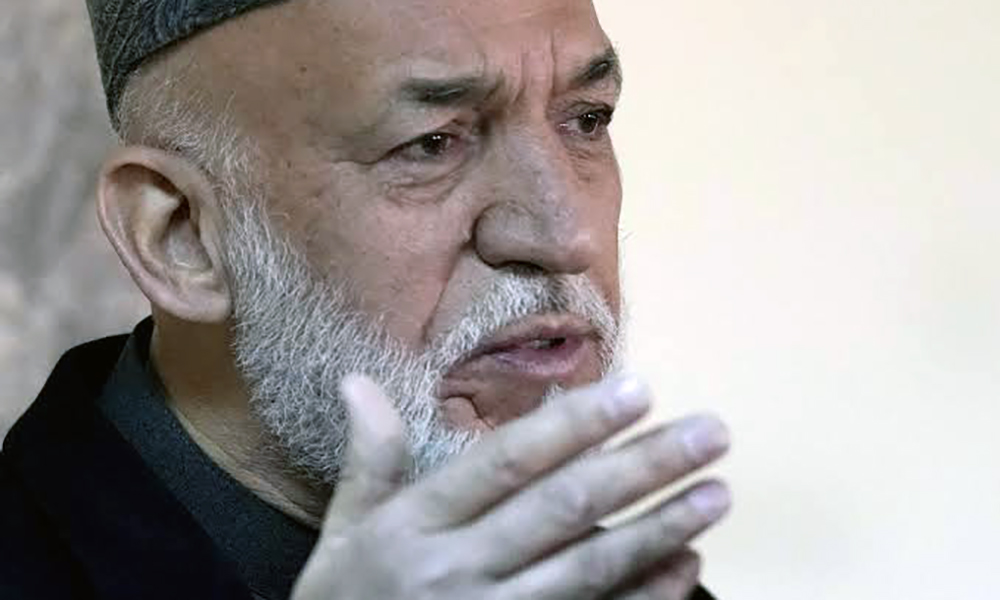
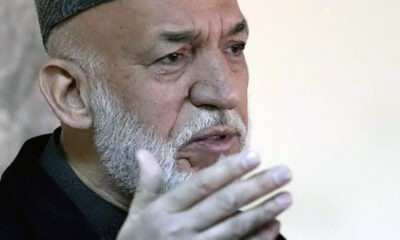
Former Afghan President Hamid Karzai has strongly condemned recent Pakistani airstrikes on residential areas in Kunar and Helmand provinces, saying the attacks resulted in civilian casualties, including women and children.
In a statement, Karzai expressed condolences to the families of those killed and wished a swift recovery to those injured.
Karzai described the actions by Pakistani forces as a violation of Afghanistan’s sovereignty and territorial integrity, stressing that Afghans would stand united in defending their country against foreign aggression.
He also called on Pakistan’s leaders to review what he described as confrontational and hostile policies toward Afghanistan, urging Islamabad to avoid actions that harm Afghan civilians.
Karzai further called for an end to the promotion of extremism and division, and urged Pakistan to engage with Afghanistan on the basis of good-neighborly relations and civilized cooperation.


UNAMA acting chief visits Islam Qala border to assess support for returnees

Rashid Khan, Azmatullah Omarzai maintain top spots in ICC ODI rankings

Trump: Unlike Afghanistan, US took all equipment from Iraq

Afghanistan, Belarus discuss expanding industrial and trade cooperation

Karzai condemns Pakistani airstrikes on Kunar and Helmand

Saudi energy group signs major Afghanistan deals covering gas exploration and pipeline plans

Iranian clubs to face Gulf opponents at neutral venues in Asian Champions League Elite

Khalilzad: Afghanistan ready to attract major investment

Ariana Television Network secures exclusive rights to Afghanistan’s 2026/27 cricket series

El Niño likely to intensify, may become strongest ever recorded, WMO says

Tahawol: Improvement in Afghanistan-China relations discussed

Saar: Expanding ties with regional and global countries discussed

Tahawol: Absence of Afghanistan’s envoy at UNGA discussed

Saar: Assessment of war between Afghanistan and US discussed

Saar: Afghanistan’s image at UNGA
-

 Sport4 days ago
Afghan bodybuilder Ali Bilal finishes runner-up at Mr Olympia for third straight year
-
 Latest News4 days ago
Afghanistan says 28 killed, 32 captured in Nuristan operation
-
 World4 days ago
Trump rejects Iranian proposal to open Hormuz and end fighting
-

 Sport5 days ago
Afghanistan Champions League: Omar Zawak Herat beat Toofan Herat 1-0
-
 Sport3 days ago
Afghanistan vs India Asian Games quarter-final abandoned without a toss
-
 Latest News4 days ago
UNDP, UN Women launch financing initiative for Afghan women entrepreneurs
-
 Latest News4 days ago
Germany reports 488 Afghans for possible deportation, 267 have no criminal convictions
-
 Regional4 days ago
Aimal Wali Khan calls Dera Ismail Khan attack a ‘state failure’