
Latest News
UN food agency alarmed by Afghan food, fuel prices

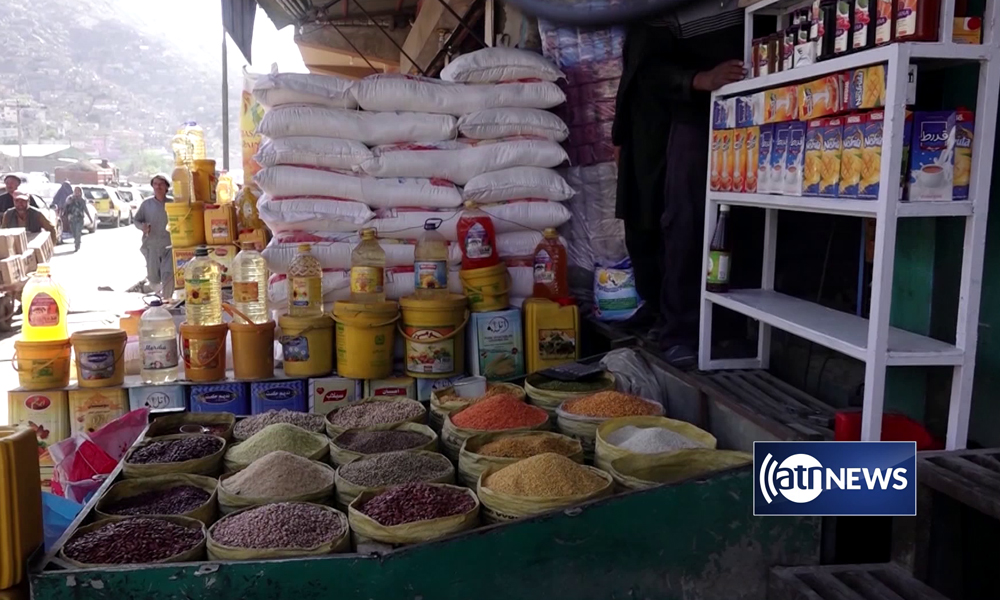
An official with the U.N. food agency warned Friday that with Russia’s war in Ukraine taking an increasing toll on the global economy, the ripples of that conflict will further increase food and fuel prices in Afghanistan.
Currently, as many as 95% of the country’s 38 million people don’t have enough to eat or money to buy food, The Associated Press reported.
Shelley Thakral, a spokeswoman for the World Food Program, said that food prices in Afghanistan rose nearly 40% over the last eight months.
The WFP has spent $1 billion feeding millions of Afghans this year but needs another $1.6 billion, Thakral added.
“The worrying thing, I think and this includes Afghanistan as well as all the other hunger spots across the world, is the rise in food and fuel prices,” said Thakral.
So far, donor countries have not sidelined Afghanistan but she said they “have to dig deeper” as Europe deals with the shockwaves of the war and the 3.2 million refugees who have fled Ukraine since Russia launched its invasion on February 24.
Thakral’s remarks echoed those of U.N. refugee chief Filippo Grandi, who warned during a visit to Kabul on Tuesday that the war in Ukraine could siphon off money from humanitarian crisis elsewhere, including in Afghanistan, and that soaring food prices could cripple humanitarian efforts.
While most of Afghanistan’s wheat supplies come from Kazakhstan and Uzbekistan, Thakral said the increasing food and fuel cost as a result of the war could add up to 20% to the costs of providing humanitarian assistance, AP reported.
When the Islamic Emirate of Afghanistan (IEA) swept to power in August, international donor money, which paid more than 80% percent of Afghanistan’s bills, dried up and the country’s economy went into free fall.
There was food on Kabul markets on Friday but Masihullah, standing by his small grocery stall, said no one has money. Most people don’t have jobs, Masihullah said.
A sack of flour costs nearly $28 and most Afghans are now below the poverty line, which means they earn $1.90 a day or less, AP reported.
Thakral said 80% of Afghans are in debt because they have had to borrow to pay for food or medicines and even working Afghans look to the WFP for food aid because they don’t make enough to be able to afford the food on the market.
A Human Rights Watch report released Thursday said that since January, about 13,000 newborns have died from malnutrition and hunger-related diseases in Afghanistan and 3.5 million children need nutritional support.
“If the countries we import food from face a challenge, we face a challenge,” said Masihullah.
“There is war between Russia and Ukraine, so we are affected … there is a high increase in prices of oil and wheat.”
A U.K. pledging summit to be held later this month expects to raise $4.4 billion to stave off a worsening humanitarian crisis in Afghanistan, said Thakral.
“Right now in Afghanistan, what we need to sustain is the attention on the people here,” she said.






Latest News
France holds talks with IEA on deporting Afghan nationals: diplomatic source
The diplomatic source stressed that the talks did not represent a change in France’s broader position on Afghanistan.
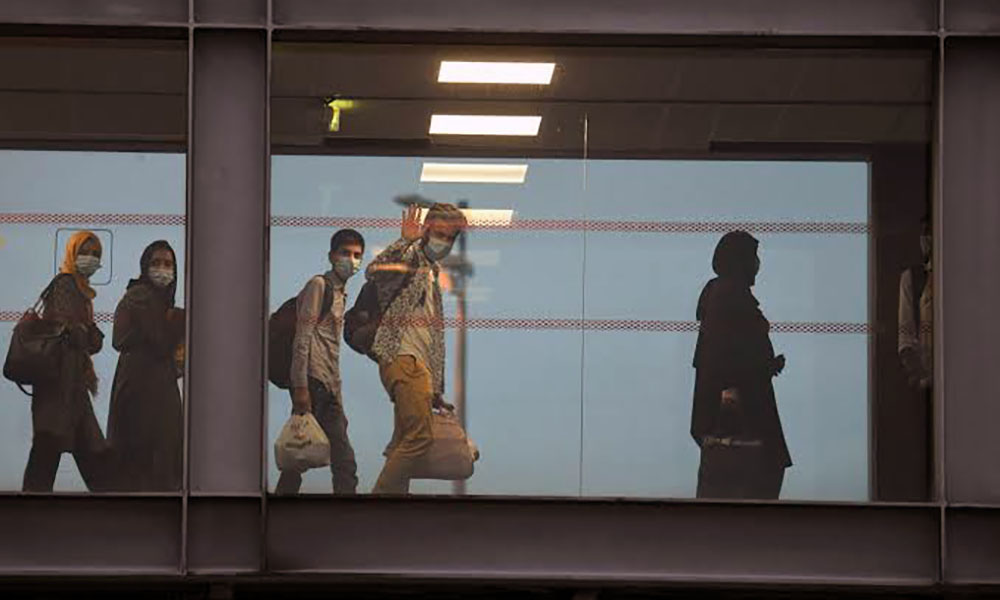
France has begun talks with the Islamic Emirate of Afghanistan (IEA) to facilitate the deportation of Afghan nationals from France, a diplomatic source told AFP on Wednesday.
The discussions mark a significant development as Paris has maintained no diplomatic relations with the IEA since it returned to power in August 2021. France’s embassy in Kabul also remains closed.
The diplomatic source said France, like a number of other European countries, has initiated a “technical dialogue” with the IEA to facilitate the direct removal of Afghan nationals living in France without legal status who are considered a threat to public order.
France is among about 20 European Union countries, including Germany, Belgium and Sweden, seeking to accelerate the return of Afghan nationals, particularly those convicted of crimes.
The source did not provide an estimate of the number of people who could be deported. However, another source familiar with the matter told AFP that the number could be “hundreds.”
France’s Foreign Ministry did not respond to questions about whether IEA representatives could travel to France as part of efforts to speed up deportation procedures.
The diplomatic source stressed that the talks did not represent a change in France’s broader position on Afghanistan.
“This technical dialogue does not call our position on Afghanistan into question,” the source said, adding that France would continue to support the Afghan population, particularly Afghan women.
The IEA, which is not formally recognised by the European Union, has sought greater international engagement and recognition since returning to power.
A June meeting between IEA officials and EU lawmakers drew criticism from human rights organisations and left-wing groups in the European Parliament.
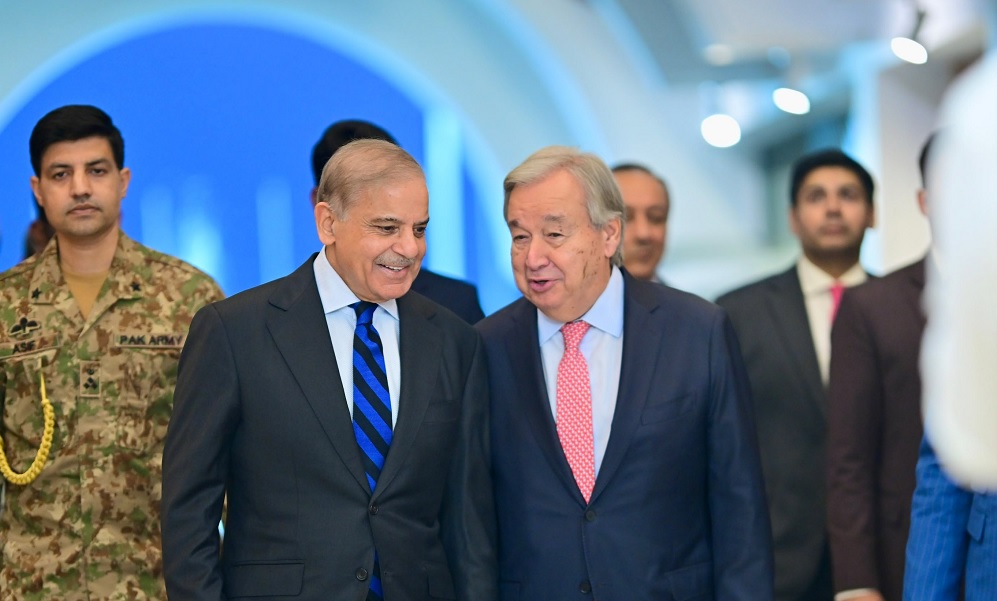
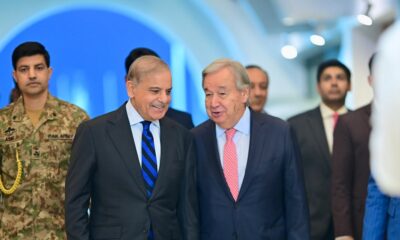
Pakistan Prime Minister Shehbaz Sharif has stressed that a peaceful and stable Afghanistan is in Pakistan’s interest, while calling for “concrete and verifiable” action against terrorist groups that Islamabad alleges are operating from Afghan territory.
Pakistan’s Prime Minister’s Office said Sharif made the remarks on Wednesday during a meeting with UN Secretary-General António Guterres in Islamabad.
The Pakistani prime minister expressed serious concern over what he described as “terrorism originating from Afghanistan.”
He said Pakistan wants a peaceful and stable Afghanistan, but stressed the need for concrete action against groups that Islamabad accuses of carrying out attacks from Afghan territory.
Separately, Guterres met with Pakistan army chief, Syed Asim Munir who also raised terrorism concerns.
The meetings come amid heightened tensions between Pakistan and Afghanistan, with Islamabad repeatedly accusing armed groups of using Afghan territory to launch attacks against Pakistan. Officials of the Islamic Emirate have repeatedly rejected the allegations and said Afghanistan’s territory will not be used against other countries.
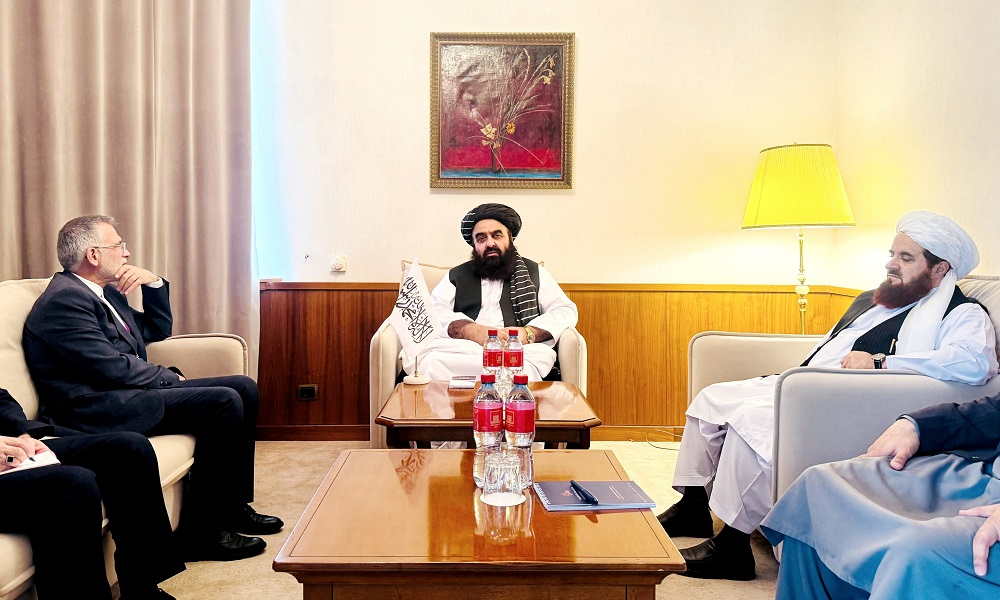
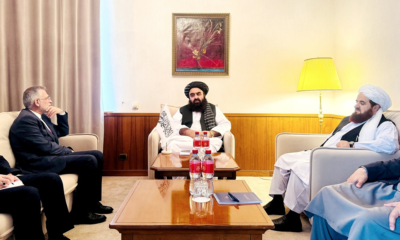
Amir Khan Muttaqi, Minister of Foreign Affairs, met on Wednesday with Mohammad Reza Bahrami, a representative of Iran’s Ministry of Foreign Affairs, on the sidelines of the eighth meeting of the Moscow Format and discussed ways to expand bilateral relations.
The Ministry of Foreign Affairs said the two sides exchanged views on Afghanistan-Iran relations, regional developments, and ways to strengthen mutual cooperation between the two countries.
Muttaqi expressed appreciation for Iran’s engagement with Afghanistan and its constructive participation in regional meetings, emphasizing the need to further expand relations between Kabul and Tehran.
Meanwhile, Mohammad Reza Bahrami stressed the importance of relations between the two countries and shared Iran’s views on regional cooperation, stability, and expanding economic engagement between Afghanistan and Iran.


France holds talks with IEA on deporting Afghan nationals: diplomatic source

Pakistan PM, army chief raise security concerns in meetings with UN chief

Denmark says Russia has conducted sabotage attacks against its defense firms

Tahawol: Consequences of US war in Afghanistan reviewed

Saar: Expulsion of Afghan refugees from Pakistan discussed

UAE firm eyes investment in Salang’s second tunnel and pharmaceutical factories

US Treasury ratchets up pressure on Iran with sweeping new aviation sanctions

EU and FAO launch €5m programme to strengthen Afghanistan’s agrifood sector

Omar Zawak, Toofan Herat secure victories in Afghanistan Champions League

Crystal Palace cruise into EFL Cup fourth round
Tahawol: Consequences of US war in Afghanistan reviewed
Saar: Expulsion of Afghan refugees from Pakistan discussed

Tahawol: Discussion on outcome of Moscow Format meeting

Saar: Expansion of relations between Kabul and Moscow discussed

Tahawol: Afghanistan-Iran: shared opportunities and challenges discussed
-

 Sport3 days ago
Cricket Bonanza: Afghanistan set for packed international schedule
-
 Regional4 days ago
India, Pakistan summon top diplomats over border incident
-
 Latest News4 days ago
Afghanistan inaugurates 121 km Wakhan road to China border
-
 Sport5 days ago
Rashid Khan plans to build cricket academy and stadium in Nangarhar
-

 Sport4 days ago
ACL: Sorkh Poshan extend perfect run with 1-0 win over Khurasan
-

 Sport3 days ago
Afghanistan U19 to face Bangladesh, Oman in Youth ODIs
-

 Sport4 days ago
ACL: Toofan Herat crush Sarsabz Yashlar 3-0
-
 Latest News5 days ago
Iran’s Qaani: We must strengthen the belt of defense and dignity from Afghanistan to Yemen