
Climate Change
Heatwaves: world reels from wildfires, floods as US, China discuss climate crisis

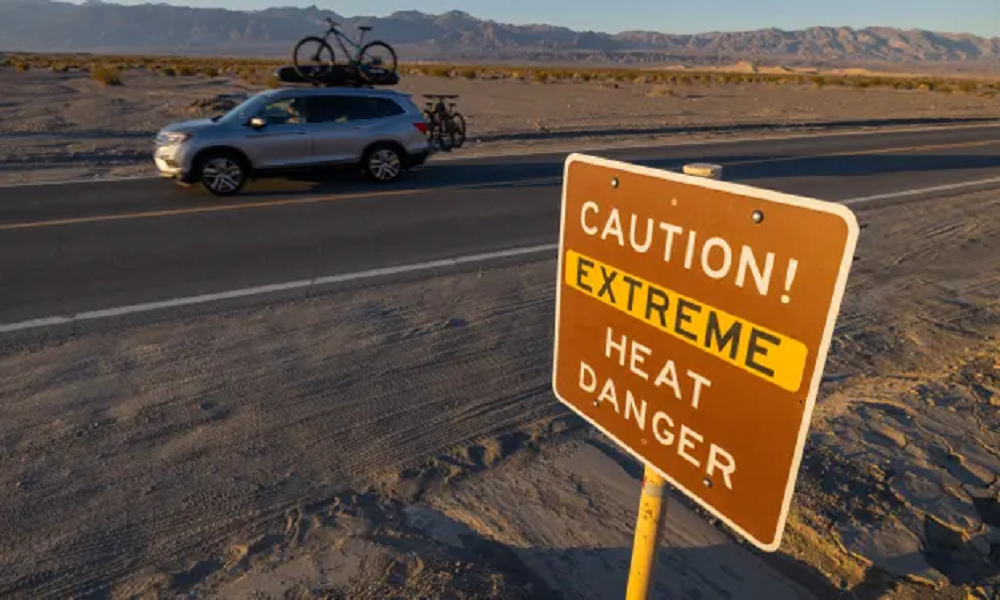
Asia, Europe and the United States baked under extreme heat on Monday as global temperatures soared toward alarming highs and U.S. leaders sought to reignite climate diplomacy with China.
The United States was scorched by record-setting heat in the West and South, lashed with flood-triggering rain in the Northeast, and choked by wildfire smoke in the Midwest, Reuters reported.
A heat dome parked over the western United States pushed the temperature in California’s Death Valley desert to 53 Celsius on Sunday, among the highest temperatures recorded on Earth in the past 90 years.
Phoenix hit 45.5C on Monday, matching a historic record of 18 straight days over 43.3C with the forecast showing the record likely to extend for at least another week.
The U.S. heatwave coincided with extreme temperatures elsewhere throughout the Northern Hemisphere.
A remote town in China’s arid northwest, Sanbao, registered a national record of 52.2C. Wildfires in Europe raged ahead of a second heat wave in two weeks that was set to send temperatures as high as 48C, while authorities in Italy and France issued heat-related health warnings.
Even in Phoenix, accustomed to hot weather, the prolonged bout of extreme heat is testing people and worrying officials. The international charitable organization Salvation Army has opened 11 cooling centers and sent out a mobile unit to deliver relief to homeless people who have difficulty reaching the sites.
“Extreme heat is Arizona’s natural disaster. So for the Salvation Army, this is a disaster response,” said Scott Johnson, a spokesperson for the organization in the U.S. Southwest.
The heat killed 425 people in the Phoenix-area’s Maricopa County last year, so the Salvation Army mobile unit distributes urgently needed cold water, hats, sunscreen and hygiene kits to those in need.
“It feels like you’re inside of a dryer, the dryer at the laundromat. And it’s suffocating,” said Cristina Hill, an unhoused woman who benefited from the outreach on Monday and said she suffered a heat stroke last year. “I cry all the time. I yell at the heat.”
Another unhoused woman, Maritza Villegas, said she has gotten shaky and jittery from the heat, which provoked dry heaves.
“This means a whole lot – the world – because without water I’d be in the hospital right now,” Villegas said of the assistance.
Scientists have long warned that climate change, caused by CO2 emissions from burning fossil fuels, will make heat waves more frequent, severe and deadly. They say governments need to take drastic actions to reduce omissions to prevent climate catastrophe.
The European Union’s Copernicus Climate Change Service says 2022 and 2021 were the continent’s hottest summers on record.
The extreme global temperatures underscored the urgency in talks that resumed between China and the United States on climate change, especially as scientists say the target of keeping global warming within 1.5 degrees Celsius of pre-industrial levels is moving beyond reach.
U.S. climate envoy John Kerry met Chinese counterpart Xie Zhenhua in Beijing, urging joint action to cut methane emissions and coal-fired power.
“In the next three days, we hope we can begin taking some big steps that will send a signal to the world about the serious purpose of China and the United States to address a common risk, threat, challenge to all of humanity created by humans themselves,” Kerry said.
“It is toxic for both Chinese and for Americans and for people in every country on the planet.”
Prolonged high temperatures in China are threatening power grids and crops and raising concerns about a repeat of last year’s drought, the most severe in 60 years.
Typhoon Talim was gaining strength and due to make land at night along China’s southern coast, forcing the cancellation of flights and trains in the regions of Guangdong and Hainan.
In South Korea, torrential rains left 40 people dead as river levees collapsed causing flash floods. They followed the heaviest recorded rain in the capital Seoul last year.
An unrelenting heatwave continued in Europe as well, Reuters reported.
Italy’s health ministry on Monday issued red weather alerts – signaling a possible health threat for anyone exposed to the heat – for 20 of the country’s 27 main cities on Tuesday, with the number expected to rise to 23 on Wednesday.
France’s public health agency said the current stretch of hot weather would probably hospitalize or kill “many” people, as heat waves have done almost every summer since 2015. The World Meteorological Organization said the extreme heat and rainfall was expected to extend into August.
“In many parts of the world, today is predicted to be the hottest day on record,” tweeted Tedros Adhanom Ghebreyesus, director-general of the World Health Organisation.
“The #ClimateCrisis is not a warning. It’s happening. I urge world leaders to ACT now.”
As many as 61,000 people may have died in Europe during heat waves last summer, with a repetition feared this season.
“My worry is really health – the health of vulnerable people who live just below the rooftops of houses which are not prepared for such high temperatures,” said Robert Vautard, a climate scientist and director of France’s Pierre-Simon Laplace Institute. “That could create a lot of deaths.”





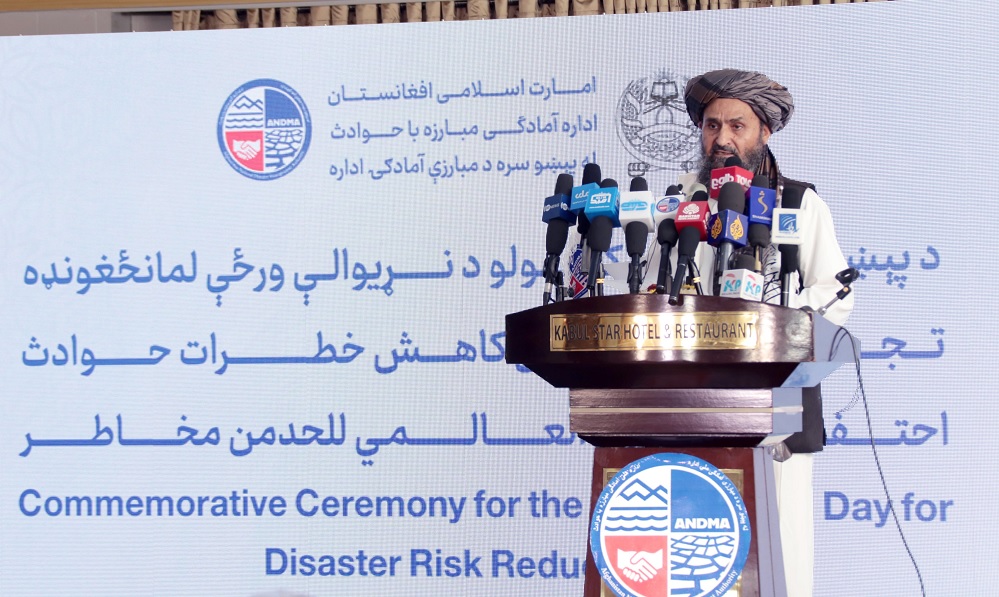
Mullah Abdul Ghani Baradar, Deputy Prime Minister for Economic Affairs, has called for Afghanistan to have fair access to international financial and technical assistance to combat climate change and reduce losses caused by natural disasters.
Speaking at a ceremony marking the International Day for Disaster Risk Reduction, Baradar said Afghanistan continues to suffer from the effects of climate change despite having no significant role in greenhouse gas emissions or global climate degradation.
He added that Afghanistan suffered severe social and economic losses last year due to earthquakes, seasonal floods and droughts. These disasters caused casualties and extensive financial losses, as well as damage to public infrastructure.
Emphasizing the need for climate justice, Baradar said: “It is inconsistent with the principles of global climate justice that we have no role in creating the problem, yet must bear its severe consequences and pay the price for the destruction caused by others.”
He urged the international community, the United Nations and climate-related organizations not to allow political considerations to interfere with efforts to combat climate change.
Baradar said climate change affects everyone and that protecting the global climate is a shared responsibility of all countries, without exception.
He stressed that fair access to international financial and technical assistance to reduce losses caused by natural disasters and climate change is Afghanistan’s right.
The Deputy Prime Minister for Economic Affairs also called on the international community to provide practical assistance by supplying modern meteorological equipment, early warning systems, advanced rescue equipment and support to strengthen Afghanistan’s technical capacity.
He further said the Islamic Emirate had made significant efforts to construct buildings that meet standards for resilience against natural disasters, build standard retaining walls to control water flows, and protect and restore forests. He added that these efforts would continue.
Climate Change
Afghanistan on climate front line as Kabul faces groundwater warning
Participants also highlighted growing pressure on already limited water and other community resources following the return of large numbers of Afghan migrants.
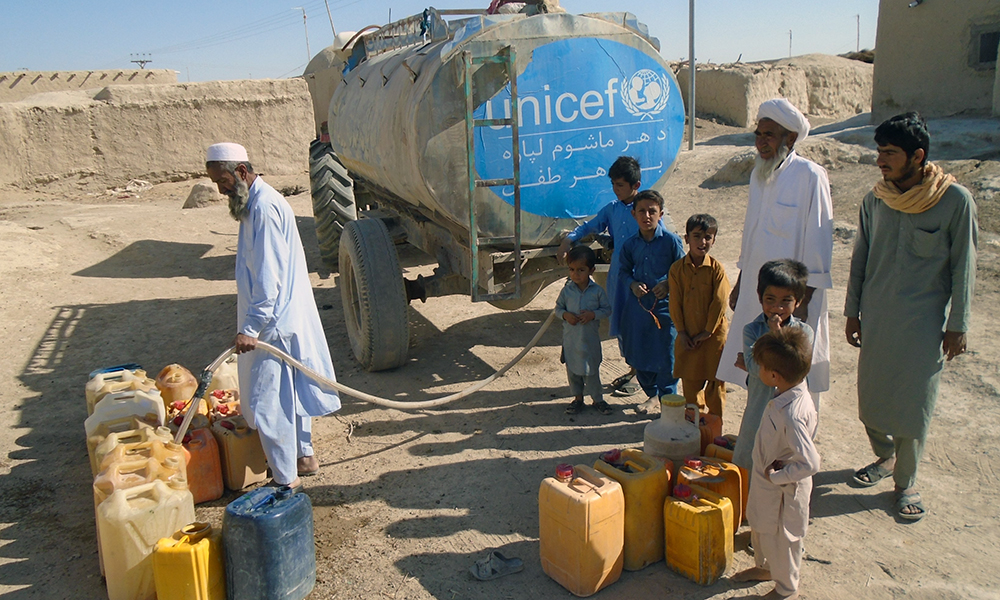
Afghanistan is among the countries most vulnerable to climate change despite contributing less than 0.1 percent of global greenhouse gas emissions, UN officials and experts said at a meeting on the sidelines of the United Nations General Assembly in New York.
The meeting, titled “Afghanistan on the Front Line of Climate and Migration Pressures,” brought together UN representatives, experts and Afghan activists to discuss the country’s worsening water crisis, drought, floods, displacement and the impact of climate change.
Selwin Hart, Adviser to the UN Secretary-General on Climate Action, said Afghanistan faces severe climate vulnerability, environmental degradation, economic fragility and limited institutional capacity.
“Afghanistan accounts for less than 0.1 percent of global greenhouse gas emissions, but faces severe climate vulnerability, environmental degradation, economic fragility and limited institutional capacity,” Hart said.
He said drought had severely affected Afghan communities for four consecutive years between 2021 and 2024, while flash floods this spring affected more than 73,000 people.
Participants also highlighted growing pressure on already limited water and other community resources following the return of large numbers of Afghan migrants.
Najibullah Sadid, a water resources and climate change expert, warned that Kabul could become the first capital in the world to face severe groundwater shortages by 2030.
Kabul’s groundwater resources have been declining amid growing demand, with the city’s population estimated at around seven million. Experts have warned that continued overuse and reduced water availability could put the capital under severe water stress in the coming years.
Switzerland’s representative to the United Nations said his country supports Afghanistan’s efforts to address climate change and water security and is working through various channels to strengthen capacity in these areas.
He said Switzerland supports initiatives including the UN Regional Centre for Preventive Diplomacy in Central Asia and the Global Network of Women in Water Diplomacy, as well as the network’s activities in Central Asia and Afghanistan.
Participants called for Afghanistan’s climate crisis to be addressed through greater international cooperation and responsibility. They also urged improved access for Afghanistan and local institutions to financial resources for climate adaptation and compensation for climate-related losses.
Climate Change
El Niño likely to intensify, may become strongest ever recorded, WMO says
A very strong El Niño can significantly shift rainfall and temperature patterns worldwide, and fuel extreme weather, like typhoons.
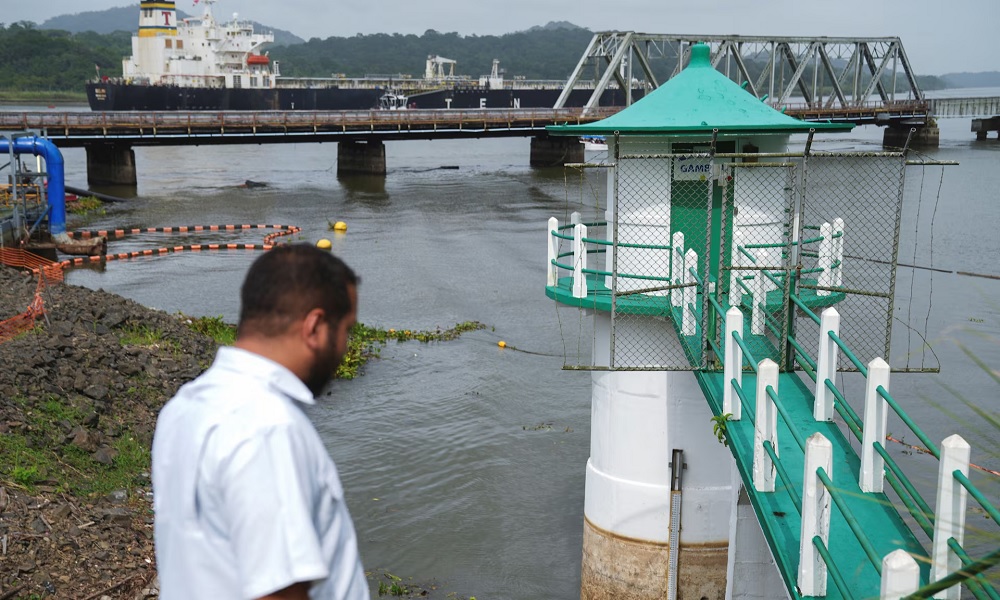
The El Niño weather phenomenon is set to intensify further into 2027 and could be the strongest ever, raising risks of extreme weather into next year, the World Meteorological Organization said on Thursday.
“If this trajectory continues, it may be stronger than anything since our monitoring began. So literally off the charts we have used for the past four decades,” WMO Secretary-General Celeste Saulo told a Geneva press conference, Reuters reported.
The U.N. weather agency said its forecasts showed a near 100% likelihood that El Niño will persist through February 2027, fuelled by exceptionally warm Pacific Ocean temperatures. This is the first time it has expressed such a degree of certainty, the WMO said.
A very strong El Niño can significantly shift rainfall and temperature patterns worldwide, and fuel extreme weather, like typhoons.
“El Niño is being supersized before our eyes. The science leaves no room for doubt: The planet is in uncharted waters, and those waters are heating up,” said United Nations Secretary-General Antonio Guterres.
El Niño is a periodic warming of sea surface temperatures in the eastern Pacific caused by weakening trade winds. It occurs naturally every two to seven years and tends to last up to 12 months, causing intense rains and droughts across Latin America.
This year’s phenomenon has already had an impact on soft commodities in tropical areas, causing a severe food crisis across Central America’s Dry Corridor.
It is set to peak towards the end of this year, the WMO said in a statement. But its effects will continue into 2027 and are set to leave higher global temperatures next year in its wake, Saulo said.
Saulo said the WMO was stepping up preparedness and early warning efforts in preparation.
“WMO is committed to working closely with partners across the United Nations and humanitarian system to provide the climate intelligence and insights needed to support disaster management and climate-sensitive sectors like agriculture, health, energy and water resources,” she said.


ARCS, UNAMA discuss aid for families affected by past hardships

Afghanistan’s new Wakhan road to China faces major hurdles

EU allocates 12 million euros for humanitarian assistance in Afghanistan

Afghanistan beat Bangladesh by seven wickets to reach tri-series final

Russia to expand security and defence cooperation with Afghanistan
Cricket Bonanza: Afghanistan set for packed international schedule

Afghanistan says 28 killed, 32 captured in Nuristan operation

Silk Road highway in Wakhan corridor now reaches the China border

Afghanistan on climate front line as Kabul faces groundwater warning

ACB announces Afghanistan squads for Bangladesh, Zimbabwe series

Tahawol: Doha meeting and Afghanistan’s political and economic future discussed

Saar: Concerns over expansion of conflict between Iran and US discussed

Governments warn citizens over security risks in France after riots

Tahawol: Iran’s reaction to Pakistan’s mediation discussed

Saar: Review of SCO meeting in Tajikistan
-

 Sport5 days ago
Afghanistan reach Brazil futsal tournament final after beating Cape Verde 4-2
-
 World4 days ago
Violent protests spread across Europe as Albanian PM blames ‘foreign hand’
-

 Sport4 days ago
Afghanistan finish runners-up after 6-0 defeat to Brazil in futsal final
-

 World5 days ago
France rocked by nationwide clashes, looting and fires
-
 Business5 days ago
Dogharoun border handling 70% of Iran’s exports to Afghanistan
-

 Sport5 days ago
Toofan Herat beat Istiqlal Kabul 2-0 in Afghanistan Champions League clash
-

 Regional5 days ago
Rubio heads to Central Asia while other US officials hit foreign policy hot spots
-
 Business4 days ago
Iran calls for extending Herat railway to Uzbekistan border