
Climate Change
Study reveals how much carbon damage would cost corporations if they paid for their emissions

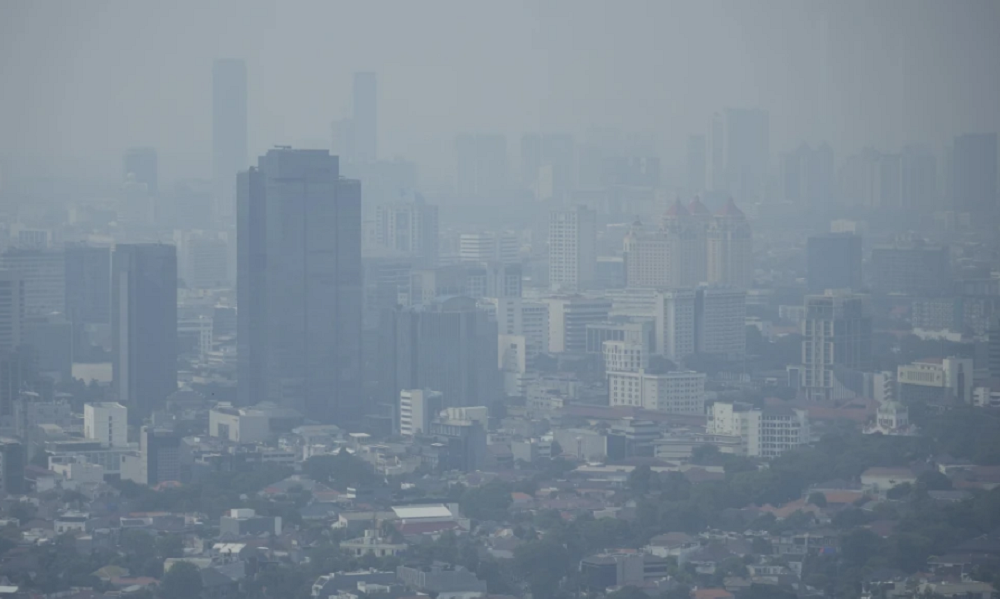
The world’s corporations produce so much climate change pollution, it could eat up about 44% of their profits if they had to pay damages for it, according to a study by economists of nearly 15,000 public companies.
The “corporate carbon damages” from those publicly owned companies analyzed — a fraction of all the corporations — probably runs in the trillions of dollars globally and in the hundreds of billions for American firms, one of the study authors estimated in figures that were not part of the published research. That’s based on the cost of carbon dioxide pollution that the United States government has proposed, the Associated Press reported.
Nearly 90% of that calculated damage comes from four industries: energy, utilities, transportation and manufacturing of materials such as steel. The study in Thursday’s Journal Science by a team of economists and finance professors looks at what new government efforts to get companies to report their emissions of heat-trapping gases would mean, both to the firm’s bottom lines and the world’s ecological health.
Earlier this year, the European Union enacted rules that would eventually require firms to disclose carbon emissions and the United States Securities and Exchange Commission and the state of California are looking at similar regulations.
Study co-author Christian Leuz, a finance and accounting professor at the University of Chicago, said the idea “of shining the light on corporate activities that have costs to society is very powerful, but it is not enough to save the planet.” An earlier study of his found that after fracking firms disclosed their pollution rates, those contamination levels dropped 10% to 15%, he said.
The idea is consumers and stockholders would see the damage and pressure firms to be cleaner, Leuz said.
Outside economists agreed.
Leuz and his colleagues used a private analysis firm that finds or estimates carbon emissions of some publicly owned companies and analyzed the carbon pollution from 14,879 firms. Then they compared them to company revenues and profits.
That calculation shows “which activities are particularly costly to society from a climate perspective,” Leuz said. Still, he cautioned that “it would not be correct to just blame the companies. It is not possible to divide responsibility for these damages between the firms that make the products and consumers who buy them.”
The calculations are for only a fraction of the world’s corporations, with many public companies not included and private firms not listed at all, Leuz said.
The economists didn’t identify or tease out single companies but instead grouped firms by industry and by country. And they only used direct emissions, not what happens downstream. So the gas in a person’s car does not count toward an oil company’s emissions or corporate carbon damages.
The calculations use the US Environmental Protection Agency’s $190 cost per ton for carbon dioxide emissions and the study doesn’t give a bottom line number in dollars, just in percent of profit and revenues. Only when asked by The Associated Press did Leuz estimate it in the trillions of dollars.
At $190 a ton, the utility industry averaged damages more than twice its profits. Materials manufacturing, energy and transportation industries all had average damages that exceeded their profits.
On the opposite end, the banking and insurance industries averaged climate damages that were less than 1% of their profits.
When looking at companies based on countries, Russia and Indonesia were the top for corporate climate damages, while the United Kingdom and the United States were the lowest. Leuz said that reflects the age and efficiency of the companies and which type of industries were based in countries.
Several outside experts said the study made sense within certain limits, while a few found faults with some of the choices of what to count, saying not counting downstream emissions is a problem. Because it doesn’t count those it “does not provide an incentive to reduce these to the level needed,” said Bill Hare, CEO of Climate Analytics, which studies global emissions and reduction efforts.
“The results are important but perhaps not that surprising,” said Stanford University economist Marshall Burke. “The bigger take-home is the number of caveats that are needed to do this analysis, indicating what a mess our emissions accounting systems currently are.”
Appalachian State University’s Gregg Marland, who helps track global emissions by country, said “good numbers do allow us to know who is producing the products that consumers want with the least contribution to climate change.”
Nobel prize winning economist Paul Romer, formerly of the World Bank and now at Boston College, said the damage estimates are useful but need to be interpreted accurately, “without the moralistic framing and induced urge to punish.”
Romer used the example of his move from New York to Boston. The initial move would go under the moving company’s corporate carbon damage, but when he took some books from his home they would not. Misusing corporate carbon damage figures could put the moving company out of business and he’d drive his stuff instead, so total carbon emissions would not be changed. Shifting to zero carbon fuel makes more sense, he said.








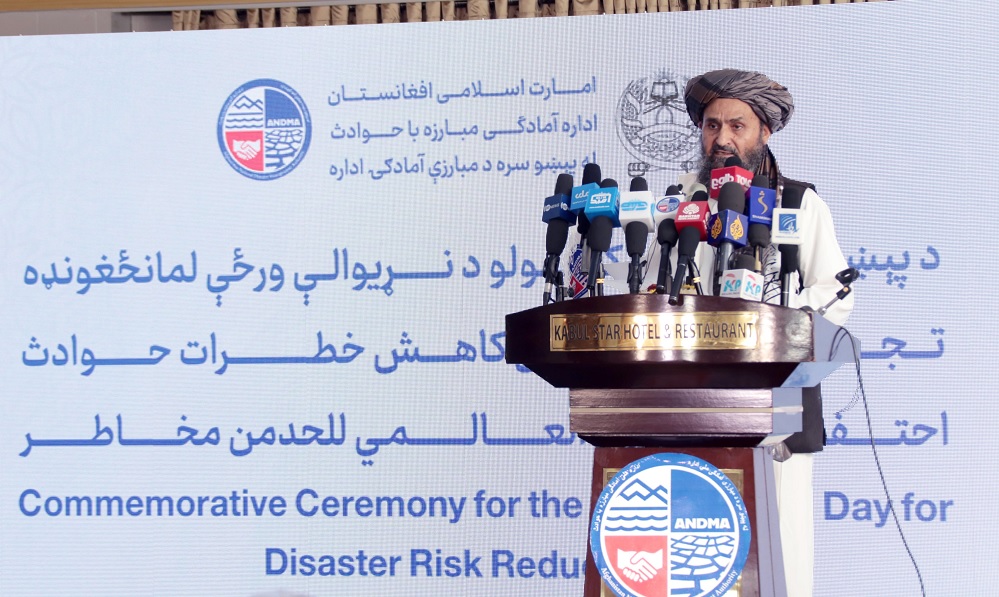
Mullah Abdul Ghani Baradar, Deputy Prime Minister for Economic Affairs, has called for Afghanistan to have fair access to international financial and technical assistance to combat climate change and reduce losses caused by natural disasters.
Speaking at a ceremony marking the International Day for Disaster Risk Reduction, Baradar said Afghanistan continues to suffer from the effects of climate change despite having no significant role in greenhouse gas emissions or global climate degradation.
He added that Afghanistan suffered severe social and economic losses last year due to earthquakes, seasonal floods and droughts. These disasters caused casualties and extensive financial losses, as well as damage to public infrastructure.
Emphasizing the need for climate justice, Baradar said: “It is inconsistent with the principles of global climate justice that we have no role in creating the problem, yet must bear its severe consequences and pay the price for the destruction caused by others.”
He urged the international community, the United Nations and climate-related organizations not to allow political considerations to interfere with efforts to combat climate change.
Baradar said climate change affects everyone and that protecting the global climate is a shared responsibility of all countries, without exception.
He stressed that fair access to international financial and technical assistance to reduce losses caused by natural disasters and climate change is Afghanistan’s right.
The Deputy Prime Minister for Economic Affairs also called on the international community to provide practical assistance by supplying modern meteorological equipment, early warning systems, advanced rescue equipment and support to strengthen Afghanistan’s technical capacity.
He further said the Islamic Emirate had made significant efforts to construct buildings that meet standards for resilience against natural disasters, build standard retaining walls to control water flows, and protect and restore forests. He added that these efforts would continue.
Climate Change
Afghanistan on climate front line as Kabul faces groundwater warning
Participants also highlighted growing pressure on already limited water and other community resources following the return of large numbers of Afghan migrants.
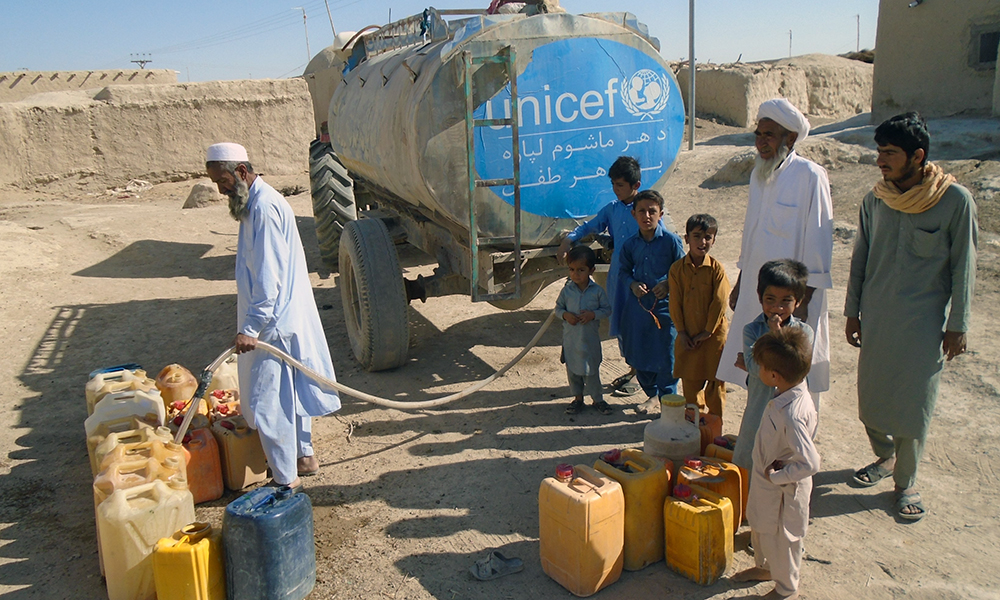
Afghanistan is among the countries most vulnerable to climate change despite contributing less than 0.1 percent of global greenhouse gas emissions, UN officials and experts said at a meeting on the sidelines of the United Nations General Assembly in New York.
The meeting, titled “Afghanistan on the Front Line of Climate and Migration Pressures,” brought together UN representatives, experts and Afghan activists to discuss the country’s worsening water crisis, drought, floods, displacement and the impact of climate change.
Selwin Hart, Adviser to the UN Secretary-General on Climate Action, said Afghanistan faces severe climate vulnerability, environmental degradation, economic fragility and limited institutional capacity.
“Afghanistan accounts for less than 0.1 percent of global greenhouse gas emissions, but faces severe climate vulnerability, environmental degradation, economic fragility and limited institutional capacity,” Hart said.
He said drought had severely affected Afghan communities for four consecutive years between 2021 and 2024, while flash floods this spring affected more than 73,000 people.
Participants also highlighted growing pressure on already limited water and other community resources following the return of large numbers of Afghan migrants.
Najibullah Sadid, a water resources and climate change expert, warned that Kabul could become the first capital in the world to face severe groundwater shortages by 2030.
Kabul’s groundwater resources have been declining amid growing demand, with the city’s population estimated at around seven million. Experts have warned that continued overuse and reduced water availability could put the capital under severe water stress in the coming years.
Switzerland’s representative to the United Nations said his country supports Afghanistan’s efforts to address climate change and water security and is working through various channels to strengthen capacity in these areas.
He said Switzerland supports initiatives including the UN Regional Centre for Preventive Diplomacy in Central Asia and the Global Network of Women in Water Diplomacy, as well as the network’s activities in Central Asia and Afghanistan.
Participants called for Afghanistan’s climate crisis to be addressed through greater international cooperation and responsibility. They also urged improved access for Afghanistan and local institutions to financial resources for climate adaptation and compensation for climate-related losses.
Climate Change
El Niño likely to intensify, may become strongest ever recorded, WMO says
A very strong El Niño can significantly shift rainfall and temperature patterns worldwide, and fuel extreme weather, like typhoons.
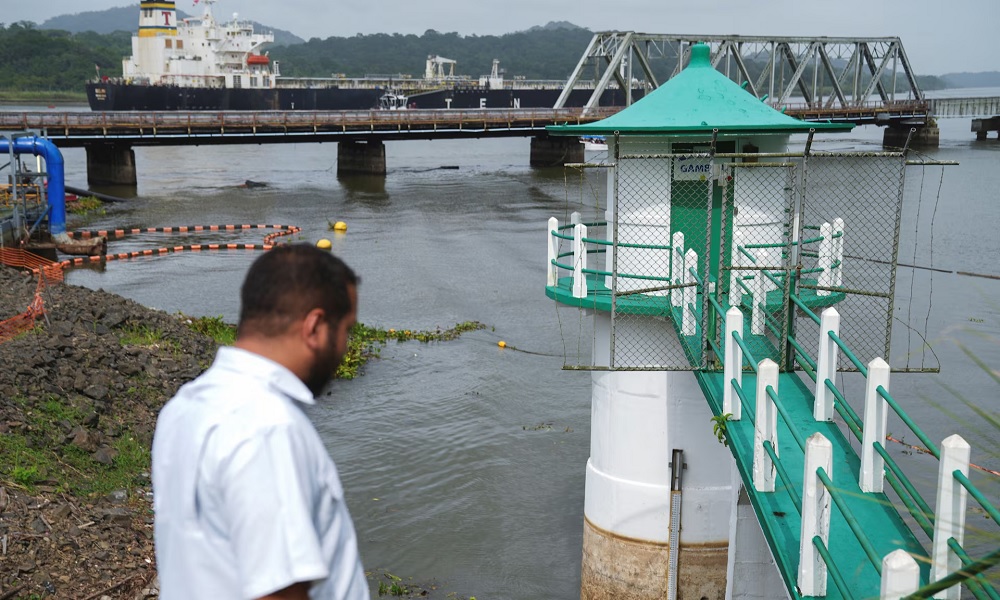
The El Niño weather phenomenon is set to intensify further into 2027 and could be the strongest ever, raising risks of extreme weather into next year, the World Meteorological Organization said on Thursday.
“If this trajectory continues, it may be stronger than anything since our monitoring began. So literally off the charts we have used for the past four decades,” WMO Secretary-General Celeste Saulo told a Geneva press conference, Reuters reported.
The U.N. weather agency said its forecasts showed a near 100% likelihood that El Niño will persist through February 2027, fuelled by exceptionally warm Pacific Ocean temperatures. This is the first time it has expressed such a degree of certainty, the WMO said.
A very strong El Niño can significantly shift rainfall and temperature patterns worldwide, and fuel extreme weather, like typhoons.
“El Niño is being supersized before our eyes. The science leaves no room for doubt: The planet is in uncharted waters, and those waters are heating up,” said United Nations Secretary-General Antonio Guterres.
El Niño is a periodic warming of sea surface temperatures in the eastern Pacific caused by weakening trade winds. It occurs naturally every two to seven years and tends to last up to 12 months, causing intense rains and droughts across Latin America.
This year’s phenomenon has already had an impact on soft commodities in tropical areas, causing a severe food crisis across Central America’s Dry Corridor.
It is set to peak towards the end of this year, the WMO said in a statement. But its effects will continue into 2027 and are set to leave higher global temperatures next year in its wake, Saulo said.
Saulo said the WMO was stepping up preparedness and early warning efforts in preparation.
“WMO is committed to working closely with partners across the United Nations and humanitarian system to provide the climate intelligence and insights needed to support disaster management and climate-sensitive sectors like agriculture, health, energy and water resources,” she said.


Saar: Review of SCO meeting in Tajikistan

Russian troops arrive in Uzbekistan for joint military exercises

Government assesses 115 private hospitals in Kabul, only two earn top grade

Arman FC begin second half of Afghanistan Champions League with 2-0 win

Pakistan FM urges IEA not to allow Afghan soil to be used against Pakistan

Cricket Bonanza: Afghanistan set for packed international schedule

Afghanistan says 28 killed, 32 captured in Nuristan operation

Silk Road highway in Wakhan corridor now reaches the China border

CNN, MS NOW and Politico sue Trump, challenging White House ban

Afghanistan on climate front line as Kabul faces groundwater warning
Saar: Review of SCO meeting in Tajikistan

Trump blames migrants for violence in France as US midterms loom

Tahawol: US–Iran tensions escalate with mutual threats

Saar: IEA–UNAMA relations: five years under review

Iran calls for extending Herat railway to Uzbekistan border
-

 Sport2 days ago
Afghanistan reach Brazil futsal tournament final after beating Cape Verde 4-2
-

 Latest News4 days ago
Nearly 19.2 million Afghans face winter hunger as child malnutrition set to surge, UN agencies warn
-

 Regional4 days ago
Trump says US may strike Iran’s ‘Pickaxe Mountain’ nuclear facility
-

 Business4 days ago
Regional partners seek progress on Trans-Afghan corridor and CASA railway
-

 World5 days ago
Trump says he is talking to Russia and China about denuclearization
-
 Latest News3 days ago
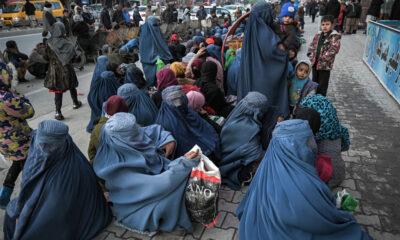
Afghanistan’s hunger crisis deepens as 16 million face food insecurity ahead of winter
-

 Sport4 days ago
Afghanistan Champions League: Abu Muslim Farah beat Sarsabz Yashlar 3-1
-

 Latest News4 days ago
Lavrov warns of western-backed ‘color revolutions,’ raises concerns over Afghanistan’s regional security