
Latest News
Second phase of construction of Qosh Tepa canal inaugurated

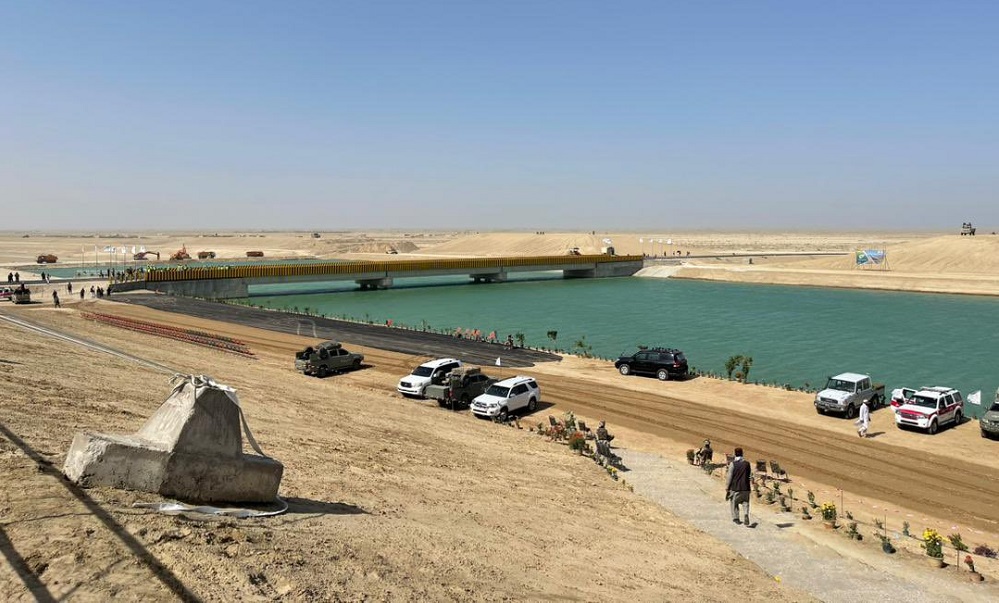
The second phase of construction of Qosh Tepa irrigation canal in northern Afghanistan was inaugurated on Wednesday in the presence of senior officials of the Islamic Emirate.
At a ceremony officials of the Islamic Emirate said neighboring countries should not worry about the creation of the canal because their rights will be respected and Afghanistan will use only the share it is entitled to from Amu River.
“We will release the water that is standing now. We will inaugurate the bridge. We will also inaugurate the second phase, which is 65 kilometers long from here,” Mullah Abdul Ghani Baradar, economic deputy of the prime minister, said.
Acting Minister of Interior Affairs Sirajuddin Haqqani said: “We are pleased to come here for the start of the second phase of Qosh Tepa. Please accept that we are all united for rebuilding Afghanistan. If it is the government or the people, we are all united.”
Officials assured countries like Tajikistan, Uzbekistan and Turkmenistan that the project will not harm them and their rights will be ensured.
Abdul Salam Hanafi, administrative deputy of the Prime Minister, said: “Others should not worry that we will push the entire Amu River to this side. Inshallah, we respect the rights of our neighbors and we want friendly, good and close relations with all neighbors.”
Mohammad Yaqub Mujahid, Acting Minister of Defense, said: “We will never violate the rights of the neighboring countries that they have from the Amu River, and we will not interfere in anyone’s rights. But at the same time, we want to get our rights and no one should create obstacles in this regard.”
Officials of the Islamic Emirate emphasized that the door for diplomatic talks is open to the countries that are concerned and that this is the first time in history that Afghanistan uses water from Amu River.
Sher Mohammad Abbas Stankzai, political deputy of the Ministry of Foreign Affairs, said: “We again assure [everyone] that if our neighbors are concerned in this regard, we are ready to talk to them through diplomatic channels and exchange our delegations. Let’s sit together and resolve their concerns diplomatically.”
Qosh Tepa canal is of great economic importance for Afghanistan because it can turn Afghanistan into a food production hub in the region.
Attaullah Omari, Acting Minister of Agriculture and Livestock, said: “This will be a canal that will make us self-reliant in the food sector. We will have food independence. We will no longer need to import from neighbors. We will no longer have various diseases and plant and animal pests.”
Officials of the Islamic Emirate said at the ceremony that the government is determined to manage all the waters of the country.

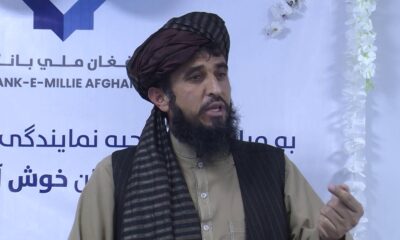

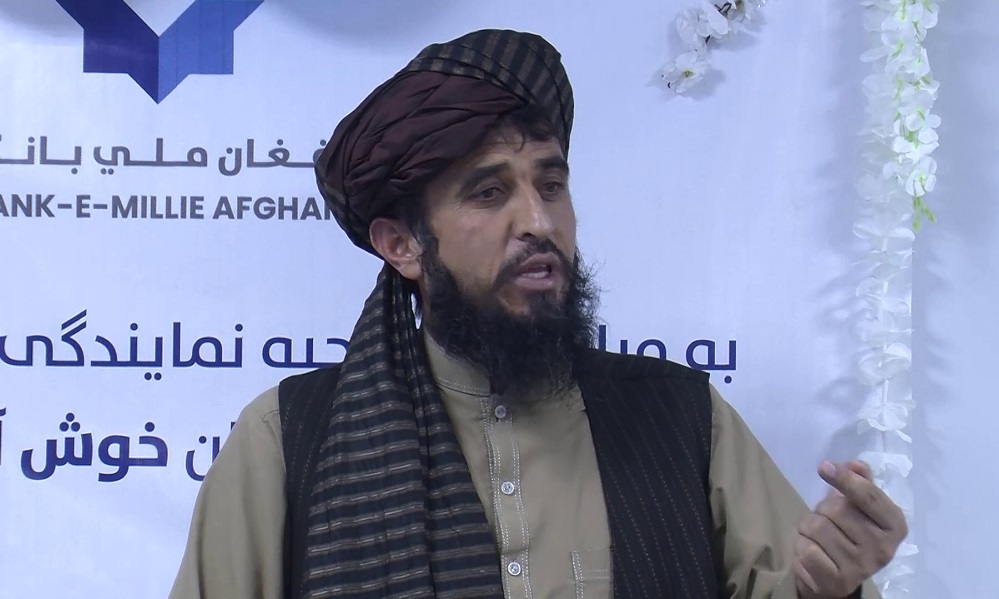
Local officials in Afghanistan’s northeastern Badakhshan province have called on traders to help prevent drug trafficking and invest their capital in legal and productive sectors.
Jamaluddin Haqjo, deputy governor of Badakhshan, made the remarks during the opening of the first branch of the Bank-e-Millie Afghan in Fayzabad, the provincial capital.
Haqjo said thousands of people across Afghanistan are currently addicted to drugs and urged traders not to invest in drug trafficking.
Meanwhile, other local officials attending the ceremony called on people to contribute to the country’s economic development rather than oppose the government.
They said expanding economic activities could help reduce poverty and other challenges affecting thousands of families.
Officials also urged banks and traders to conduct their activities in accordance with Islamic principles.
The newly opened Bank-e-Millie Afghan branch is expected to provide banking services to residents of Badakhshan. Bank officials said government employees receiving their salaries through the bank would also be eligible for loan services in accordance with the bank’s policies.
Residents welcomed the opening of the branch, saying it would make banking services more accessible. They also called for banks to establish branches in remote districts of Badakhshan.
Officials urged traders and government institutions to support the bank by investing and using its services.
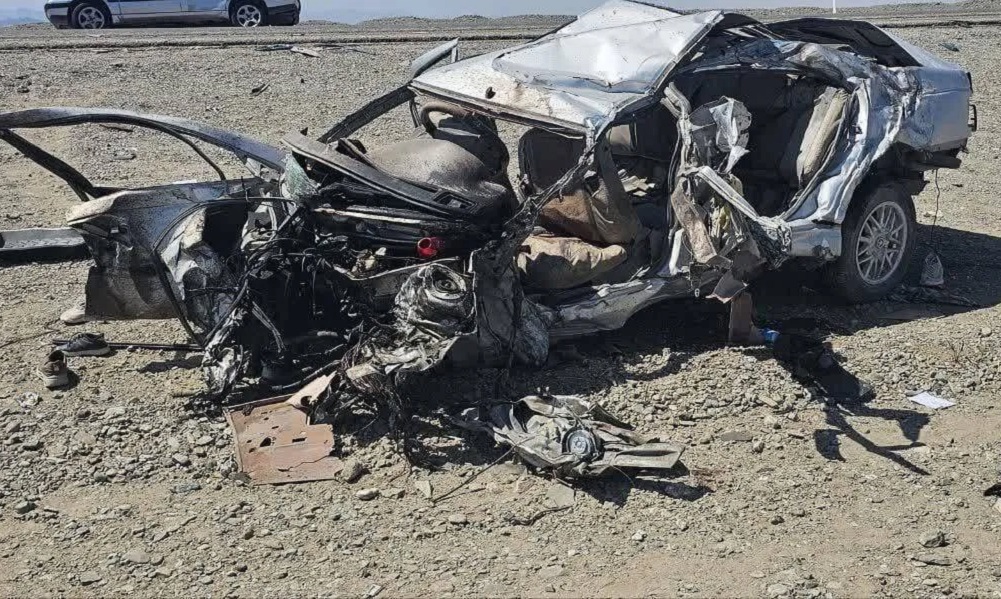
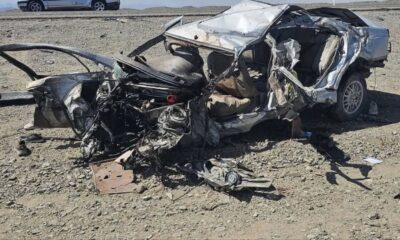
Seven Afghan migrants have been killed after a vehicle carrying Afghan migrants collided with a fuel-carrying vehicle in Iran’s Sistan and Baluchestan province.
According to the human rights organization HalVash, the accident occurred on Friday in the Sarbaz area of Sistan and Baluchestan.
Siyavash Mohbi, the head of Iran’s traffic police in Sistan and Baluchestan, said the Afghan nationals had entered Iran illegally.
He added that nine other people were injured in the incident.
Mohbi attributed the accident to the negligence of the driver of the vehicle carrying the migrants.


Badakhshan official calls on traders to help prevent drug trafficking

World leaders return to UN amid wars in Middle East and Ukraine

Asian Games open in Japan as Afghanistan sends 34 athletes

Seven Afghan migrants killed in traffic accident in Iran’s Sistan and Baluchestan

OIC to hold Afghanistan Contact Group meeting on sidelines of UN General Assembly

Four mediators struggle to secure lasting Pakistan-Afghanistan ceasefire

Syria and Saudi Arabia condemn Kabul bombing, express solidarity with Afghanistan

Afghanistan’s trade diversification challenges Pakistan

Saudi energy group signs major Afghanistan deals covering gas exploration and pipeline plans

ATN secures exclusive rights to broadcast T20I series in India across Afghanistan

Tahawol: Kabul’s warning over any threat from Pakistan discussed

Debate on Afghanistan and New Investment Opportunities

Tahawol: Reasons behind Qatari, Turkish security officials’ Kabul visit discussed

Saar: Outcome of UN Security Council meeting on Afghanistan discussed

Tahawol: Afghanistan’s readiness for US relations discussed
-
 Latest News4 days ago
UN warns of mounting humanitarian and human rights pressures in Afghanistan
-
 Regional4 days ago
Saudi Arabia calls alleged Mecca attack a ‘red line’ as Houthis deny involvement
-
 Latest News4 days ago
Five Years On: IEA touts economic growth despite international isolation
-

 Sport4 days ago
India take 2-0 lead in 3-match series against Afghanistan
-

 Sport5 days ago
Nabi reaches 2,500 T20I runs
-
 Latest News3 days ago
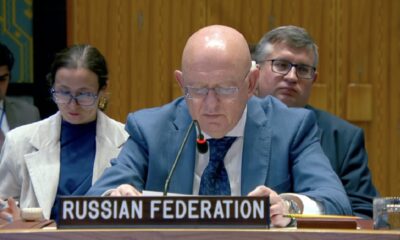
Russia urges dialogue and economic support for Afghanistan, warns against excessive pressure
-

 Latest News3 days ago
Five years out of school: Amnesty raises alarm over Afghan girls’ education
-

 Sport4 days ago
ACL: Ariana Khost win, Aino Mina and Khurasan Faryab draw