
Business
IEA plans regional energy trade hub with Russian oil in mind

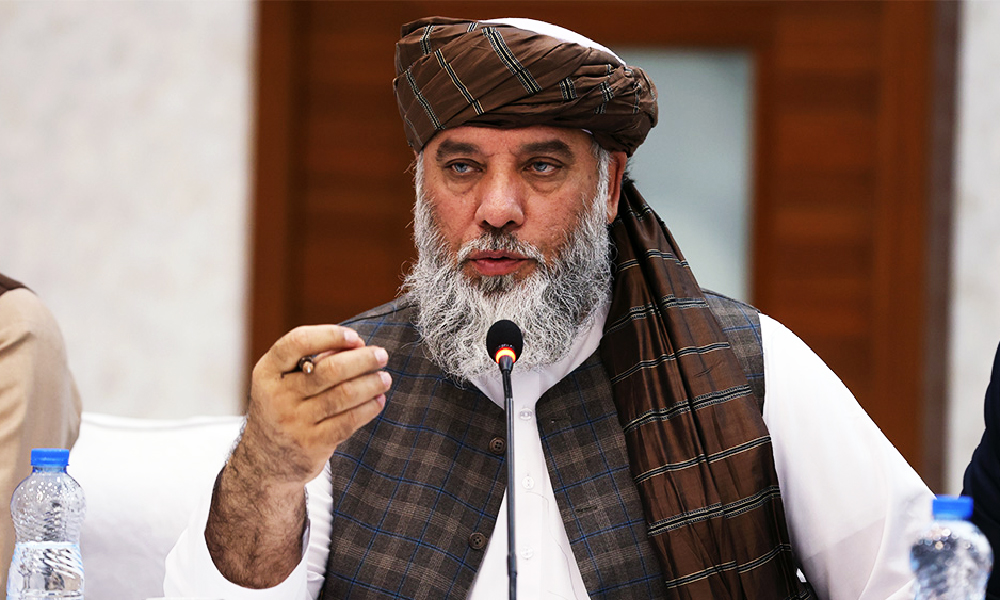
The Islamic Emirate of Afghanistan (IEA) has agreed with Kazakhstan and Turkmenistan to build a logistics hub in western Afghanistan aimed at making the war-torn nation a major logistics point for regional exports, including oil from Russia to South Asia, the country’s commerce minister said.
Following a meeting between representatives of the three countries in the Afghan capital last week, IEA’s acting commerce minister Nooruddin Azizi told Reuters that technical teams would draw up a written agreement within two months on the formal plans for the hub, which all three countries would invest in after six months of talks.
As foreign aid to Afghanistan falls and the predominantly agricultural economy is marred by persistent drought, its officially unrecognised IEA government has faced questions over how to fund development and avoid economic stagnation, Reuters reported.
Azizi said the new hub was part of broader efforts to take advantage of Afghanistan’s strategic location, once a thoroughfare for the ancient Silk Road trade route, lying between South and Central Asia and sharing borders with China and Iran.
“Based on our discussions, a logistics centre is going to be established in Herat province, which can connect the north to South Asia,” Azizi said, adding that the Taliban (IEA) was eyeing the millions of tons of oil they expected Russia would be selling in coming years to South Asian countries, particularly Pakistan, to pass through the new hub.
“The three countries have done their best to prove Afghanistan’s claim as a connectivity point,” he said.
“Reaching Pakistan through Afghanistan will be the best option,” Azizi added, saying they were focused on Russia’s petroleum exports and that Kazakhstan was also planning to export goods through Herat into South Asian markets.
Kazakhstan’s trade ministry said in a statement to Reuters that it wanted to develop roads and a railway through Afghanistan to connect with South Asia and the Gulf, with the hub serving as an important logistics point.
“The creation of the hub will allow for the development of multi-modal services by consolidating truck shipments in the dry port where they will be sorted and sent along railroads on the North-South corridor to sea ports in the Gulf, Pakistan, and Indian Ocean, towards India,” the statement said.
Azizi said the logistics hub’s initial capacity would be one million tons of oil but he did not give a date for when it would be operational.
Turkmenistan’s government did not immediately respond to a request for comment and the Russian government did not respond to a request for comment during a national holiday.
Pakistan’s foreign office and energy minister did not respond to a request for comment. Pakistan is a major trading partner with Afghanistan and has signed on to regional energy connectivity agreements, Reuters reported.
However, Islamabad has had strained relations with the IEA in recent years over accusations Afghanistan is harbouring anti-Pakistan militants, which Kabul denies.
Cash-strapped Pakistan last year became Russia’s latest customer, snapping up discounted crude that has been banned from European markets due to Russia’s war on Ukraine.
Afghanistan also buys oil, gas and wheat from Russia at discounted rates.
Azizi said that the IEA was also speaking with Chinese authorities on building a road through the remote, narrow Wakhan corridor that connects Afghanistan with China and that they hoped Afghanistan would eventually develop into a route for trade between China and Iran. He said Afghan commerce ministry officials had been recently been sent to China for training.





Business
TAPI gas deliveries to Afghanistan and Pakistan expected to begin in 2027
Turkmenistan regards TAPI as a key project for diversifying its gas exports and strengthening regional economic cooperation.
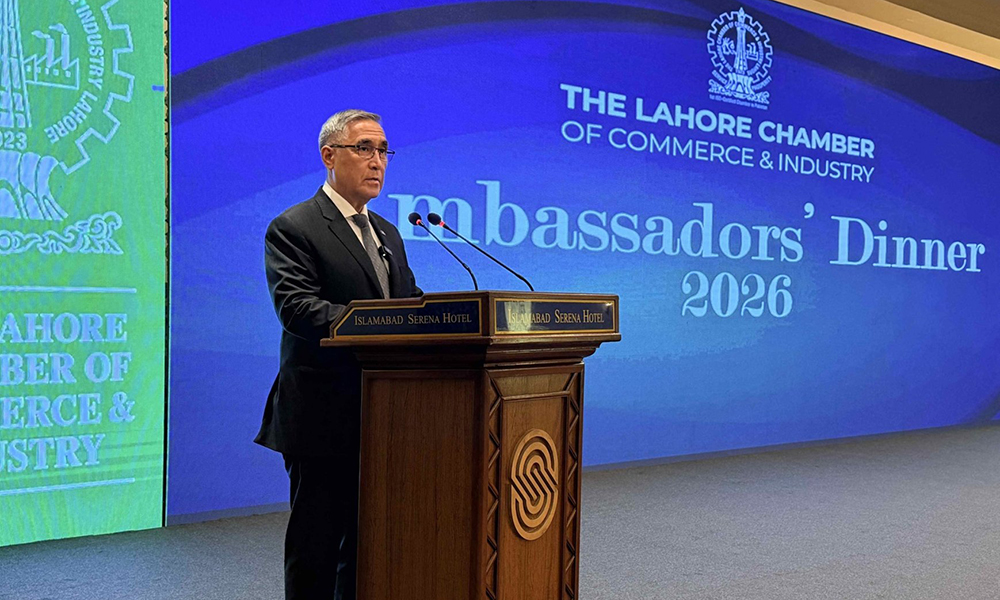
Turkmenistan expects natural gas supplies to Afghanistan and Pakistan through the Turkmenistan-Afghanistan-Pakistan-India (TAPI) pipeline to begin in 2027, according to the Turkmen Embassy in Islamabad.
Turkmen Ambassador Atajan Movlamov said construction of the strategically important Serhetabat-Herat section of the pipeline is expected to be completed by the end of this year.
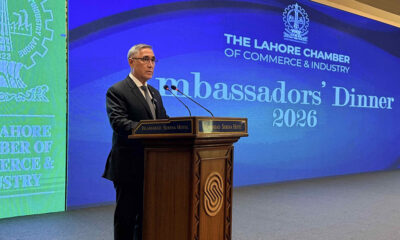
Movlamov made the remarks during an Ambassadors’ Dinner hosted by the Lahore Chamber of Commerce and Industry in Islamabad.
He said the implementation of TAPI and other regional energy projects could strengthen Pakistan’s energy security while creating new opportunities for industrial development and economic growth.
The planned 1,800-kilometre pipeline is designed to transport up to 33 billion cubic metres of natural gas annually from Turkmenistan’s giant Galkynysh gas field through Afghanistan to Pakistan and India.
Turkmenistan regards TAPI as a key project for diversifying its gas exports and strengthening regional economic cooperation.
The Galkynysh field, which is the main resource base for TAPI, is among the world’s largest gas fields, with estimated reserves of more than 27 trillion cubic metres.
The project has faced years of delays, but recent construction and developments in the regional energy sector have renewed attention to TAPI as a potential link between Central Asian gas resources and South Asian energy markets.
Business
Dogharoun handles 60% of Iran’s exports to Afghanistan
Modoudi invited machinery manufacturing companies in Iran to establish operations in the area.
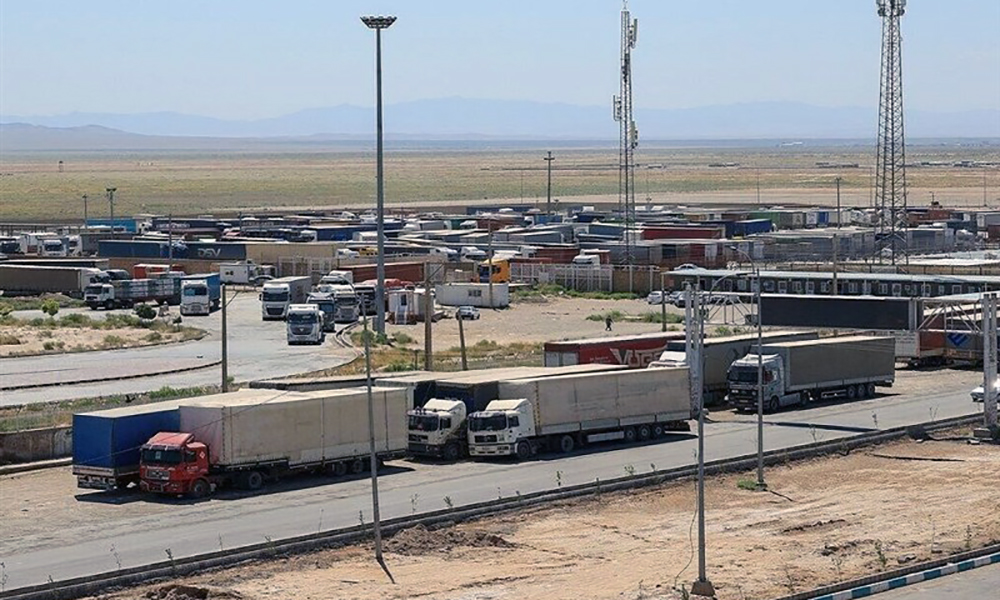
Mohammadreza Modoudi, CEO of the Dogharoon Free Zone, has criticized what he described as the neglect of Dogharoun’s potential, saying Iran ranks first among all countries in terms of exports of goods to Afghanistan.
He said 60 percent of this large volume of exports passes through the Dogharoun border crossing, adding that, despite this, the region’s significant potential has been overlooked.
Modoudi invited machinery manufacturing companies in Iran to establish operations in the area.
He said it is time to take a realistic approach and transform Dogharoun from a transit route into a major hub for production, value-chain development and a driving force for international trade.
Business
EU and FAO launch €5m programme to strengthen Afghanistan’s agrifood sector
FAO Representative in Afghanistan Richard Trenchard said agrifood businesses had shown potential to grow and create jobs despite difficult conditions.
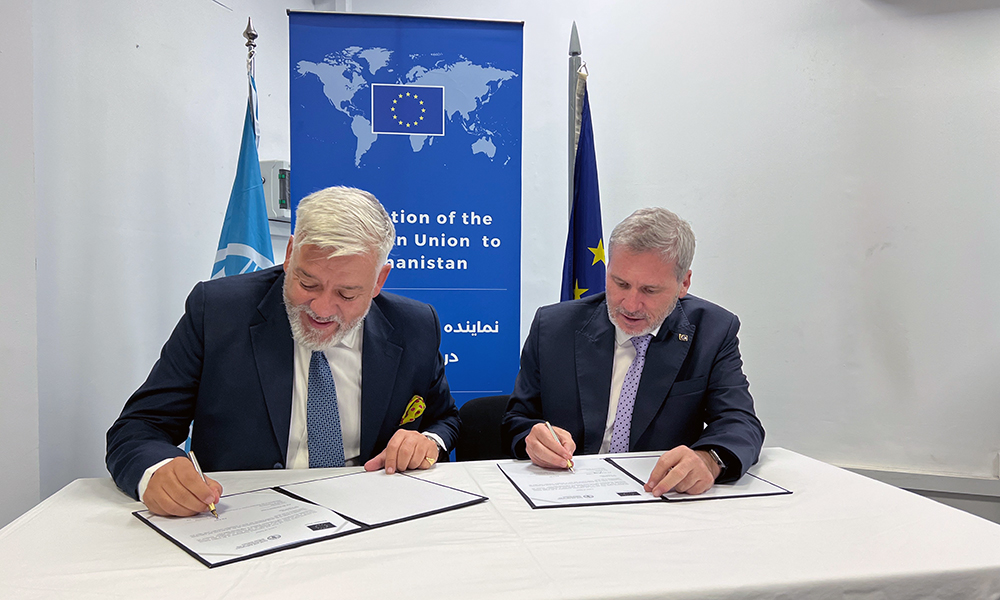
The European Union (EU) and the Food and Agriculture Organization of the United Nations (FAO) have launched a €5 million initiative to help Afghan farmers and agribusinesses access markets, improve incomes and withstand climate and economic shocks.
The programme will target vulnerable households, including returnees, internally displaced people and host communities, particularly in areas affected by food insecurity, climate risks and limited economic opportunities. Women and youth will be key beneficiaries.
Four one-stop service hubs will connect farmers and rural entrepreneurs with agricultural advice, specialised services, businesses and markets. Farmers will also gain access to FAO climate analysis and early-warning information to help them make timely production and marketing decisions.
The initiative will restore 2,000 hectares of degraded forests and rangelands and support 250 women- and community-led nurseries, combining environmental protection with new livelihood opportunities.
FAO will also provide matching grants and technical and business support to established agrifood and environmentally sustainable enterprises with growth potential. Participating businesses will contribute their own resources, helping expand processing, source from more local farmers and create rural jobs.
Nicola Bellomo, the EU’s new Chargé d’Affaires for Afghanistan, said the programme reflected the EU’s commitment to food security and economic empowerment.
“Afghanistan’s agricultural potential remains undervalued and constrained by the country’s extreme climate vulnerability,” Bellomo said, adding that the partnership would strengthen agricultural services, support agribusiness growth and promote nature-based solutions.
FAO Representative in Afghanistan Richard Trenchard said agrifood businesses had shown potential to grow and create jobs despite difficult conditions.
“When farmers can produce with confidence, businesses can grow and products can reach markets, agriculture becomes a powerful engine for recovery and resilience,” he said.


22 Russian tourists arrive in Badakhshan’s Wakhan

Afghan Official: Pakistan’s airstrikes will not go unanswered

Peshawar High Court halts deportation of Afghan medical students

TAPI gas deliveries to Afghanistan and Pakistan expected to begin in 2027

G7 foreign ministers call on Iran to stop arming Houthis

Four mediators struggle to secure lasting Pakistan-Afghanistan ceasefire

Afghanistan’s trade diversification challenges Pakistan

Saudi energy group signs major Afghanistan deals covering gas exploration and pipeline plans

ATN secures exclusive rights to broadcast T20I series in India across Afghanistan

Afghanistan squad announced for three-match T20I series against India

Tahawol: Uncertain future of Afghanistan’s permanent UN seat

Saar: Pakistan military strikes Afghan provinces discussed

Tahawol: Impact of middle East war on Afghanistan

Saar: Pakistan blames Afghanistan for deadly attack

Tahawol: Kabul’s warning over any threat from Pakistan discussed
-

 Latest News5 days ago
Five years out of school: Amnesty raises alarm over Afghan girls’ education
-
 Latest News4 days ago
Afghanistan seeks stronger ties with Saudi Arabia, dialogue with Pakistan: Mujahid
-
 Latest News4 days ago
Afghan man in Germany kills wife and goes to police station
-
 Regional4 days ago
China presses Iran to help rein in Houthis after Saudi appeal
-

 World3 days ago
US and Denmark reach deal on Greenland, Trump says
-
 World4 days ago
UN allows Palestinian president to again speak via video after US denies visa
-
 Latest News3 days ago
Afghan official meets Iranian oil minister to discuss energy cooperation
-
 Latest News3 days ago
Afghanistan condemns mosque attack in Khyber Pakhtunkhwa