
Latest News
US commission opens inquiry of Afghanistan war
The 16-member bipartisan panel has been tasked by Congress with determining what went wrong and what US leaders could do differently the next time the United States goes to war.


A coterie of former US government officials and academics on Friday opened what will be an extensive examination of America’s 20-year war in Afghanistan, the nation’s longest conflict.
“Today we make history,” said Shamila N. Chaudhary, co-chair of the Afghanistan War Commission, the Washington Post reported. “Never before has the United States commissioned such a wide-ranging independent legislative assessment of its own decision-making in the aftermath of a conflict.”
The 16-member bipartisan panel has been tasked by Congress with determining what went wrong and what US leaders could do differently the next time the United States goes to war. Their mandate encompasses policies and actions taken by four presidential administrations, the US military, the State Department, US allies, and many other agencies, organizations and people.
The commission has 18 months to carry out its research and until August 2026 to deliver a final public report.
The chaotic US withdrawal from Afghanistan has repeatedly been criticized by some members of the Congress and the Republicans.
The Republican-led House Foreign Affairs Committee is expected next month to deliver a final report detailing the findings of its investigation of the withdrawal.
The war commission’s 4½-hour discussion Friday, held in Washington, featured former ambassadors, military officers and CIA personnel as witnesses. It drew a small crowd of observers, many of whom were also connected to the war.
Colin F. Jackson, co-chair of the commission said it will endeavor to produce “a full, objective, rigorous, unvarnished and unflinching account of our performance as a government and a military,”
There were convoluted chains of command throughout the war; disruptive personality clashes between American decision-makers and agencies; and commanding officers served tours of duty that were so short as to represent “the institutional equivalent of a frontal lobotomy,” said another witness, Ronald Neumann, a former ambassador to Afghanistan.
There was a terribly devised system for parliamentary elections that invited fraud, said Noah Coburn, a political anthropologist who provided testimony Friday. There was too much public meddling in Afghan politics by US leaders, and too little policy input solicited from the Afghans. Poor US decisions when it came to security partners, development and investments fueled corruption, which spread mistrust of the government and support for the anti-government Islamic Emirate, said Coburn.
Among the obvious points of interest, Jackson said, will be the decision to invade Afghanistan in the aftermath of the 9/11 terrorist attacks. The commissioners will examine the decision to surge US forces in Afghanistan in 2009. They will look at the decision-making that went into negotiations with the Islamic Emirate. And of course, they will look at decisions related to the withdrawal.
“For so many of us, the war still lingers in our minds. We carry the moral, physical and emotional injuries in our daily lives,” Chaudhary said. “Closure may not be possible for everyone.” But a space is needed for “civic discourse,” she added.









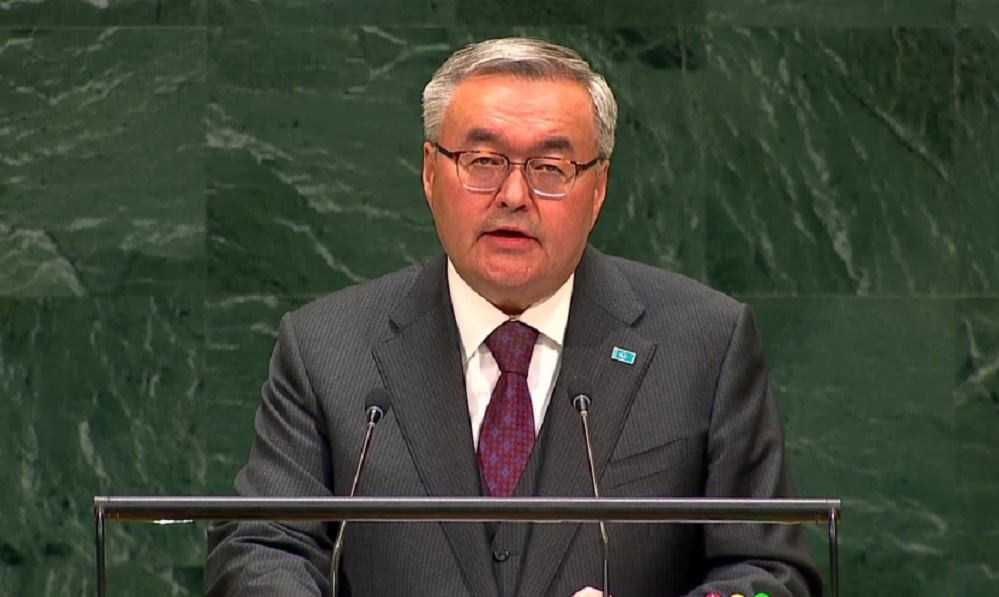
Kazakhstan’s Foreign Minister Mukhtar Tileuberdi has called for pragmatic and coordinated international engagement with Afghanistan, saying the country’s long-term stability is closely linked to the security and sustainable development of Central Asia.
Speaking during the general debate of the 81st session of the United Nations General Assembly in New York on Friday, Tileuberdi said humanitarian assistance to Afghanistan remains essential but alone cannot break the cycle of poverty, displacement and dependency.
He said Kazakhstan supports a “pragmatic, coordinated and step-by-step” approach to international engagement with Afghanistan, with the United Nations playing a central role.
Tileuberdi also said Kazakhstan is working with the UN to operationalize the United Nations Regional Centre for the Sustainable Development Goals for Central Asia and Afghanistan in Almaty.
He said the success of the centre should be measured by the results and assistance it delivers to the region.


Abu Muslim Farah defeat Khurasan Faryab 2-0 in ACL season six

Saar: Concerns over Pakistan’s political crisis discussed

Afghanistan Champions League: Omar Zawak Herat beat Toofan Herat 1-0

Blast in Pakistan’s Dera Ismail Khan kills 11, injures 30

Ariana Afghan Airlines increases Kabul-Delhi cargo flights

Saudi energy group signs major Afghanistan deals covering gas exploration and pipeline plans

Trump floats idea of renaming Atlantic or Pacific Ocean

US hits Egyptian bank branches with Iran sanctions as war marks six months

Nepal flood rescue mission enters critical phase as thousands remain missing

Iranian clubs to face Gulf opponents at neutral venues in Asian Champions League Elite
Saar: Concerns over Pakistan’s political crisis discussed

Exclusive interview with Abdul Latif Mansoor, Minister of MRRD

Tawsia: Overview of Afghanistan’s iron mines

Tahawol: Discussion on fresh Pakistani airstrikes on Afghanistan

Saar: Calls for international support for Afghanistan discussed
-

 World5 days ago
CNN, MS NOW and Politico sue Trump, challenging White House ban
-

 Latest News3 days ago
Ariana Afghan Airlines ranks seventh among 45 Central Asian airlines
-

 Latest News4 days ago
UN reiterates call for respect for international law after Kunar airstrikes
-

 Regional3 days ago
US and Iran hold first talks since June after Trump’s ‘annihilation’ threat
-

 Latest News3 days ago
Silk Road highway in Wakhan corridor now reaches the China border
-

 Latest News4 days ago
Afghan Official: Pakistan’s airstrikes will not go unanswered
-
 Sport4 days ago
Afghan boxing referee heads to China for international festival
-

 Regional4 days ago
G7 foreign ministers call on Iran to stop arming Houthis