
Latest News
UK contributes $50 million to WFP’s programs in Afghanistan
Nearly $29 million will go to families as cash or vouchers to buy food at local markets or receive it from local commercial retailers.

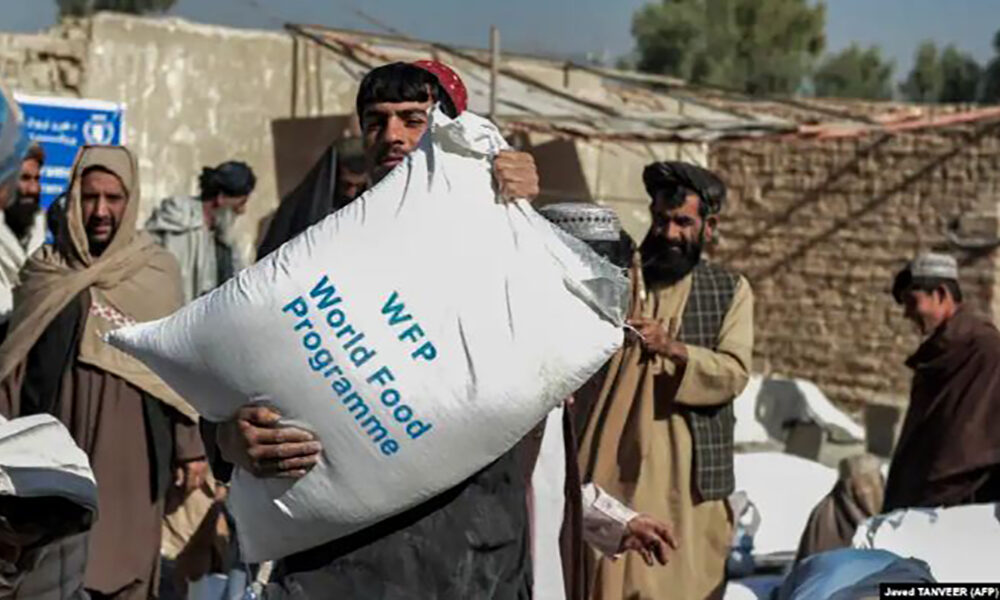
The United Nations World Food Programme (WFP) in Afghanistan has welcomed a £40 million (over US$50 million) contribution from the United Kingdom for emergency food assistance in Afghanistan.
The UK’s Foreign, Commonwealth and Development Office’s (FCDO) contribution will help WFP support more than 1.2 million people with emergency food assistance.
According to a statement issued by the UN agency, plans to provide preventive malnutrition treatment for nearly 150,000 children and more than 140,000 pregnant and breastfeeding mothers.
The funding will also enable 77,000 food-insecure people to participate in asset creation projects that help communities become more productive and resilient to the impacts of the climate crisis.
“The UK remains committed to supporting the people of Afghanistan,” said UK Minister for the Middle East and North Africa, Hamish Falconer.
“This new funding to the World Food Programme will help more than one million people with vital emergency food and nutrition assistance. We are also investing in interventions that will help build the resilience of vulnerable communities, better equipping them to prepare for the impacts of climate change,” he said.
WFP meanwhile said that with this funding they will be able to procure almost 9,000 tons of essential food items including fortified wheat flour, fortified vegetable oil, split peas, and iodized salt for distribution under its emergency and resilience programmes and over 1,900 tons of specialized nutritious food to prevent malnutrition.
Nearly $29 million will go to families as cash or vouchers to buy food at local markets or receive it from local commercial retailers.
“WFP often remains the last lifeline for Afghan women and families who can barely make ends meet and need food assistance to survive,” said Hsiao-Wei Lee, WFP Country Director in Afghanistan.
“With support from our partners like the United Kingdom, WFP can reach some of the most vulnerable people but importantly also continue to build a more resilient, food secure future for rural communities.”












Kazakhstan’s Foreign Minister Mukhtar Tileuberdi has called for pragmatic and coordinated international engagement with Afghanistan, saying the country’s long-term stability is closely linked to the security and sustainable development of Central Asia.
Speaking during the general debate of the 81st session of the United Nations General Assembly in New York on Friday, Tileuberdi said humanitarian assistance to Afghanistan remains essential but alone cannot break the cycle of poverty, displacement and dependency.
He said Kazakhstan supports a “pragmatic, coordinated and step-by-step” approach to international engagement with Afghanistan, with the United Nations playing a central role.
Tileuberdi also said Kazakhstan is working with the UN to operationalize the United Nations Regional Centre for the Sustainable Development Goals for Central Asia and Afghanistan in Almaty.
He said the success of the centre should be measured by the results and assistance it delivers to the region.


Abu Muslim Farah defeat Khurasan Faryab 2-0 in ACL season six

Saar: Concerns over Pakistan’s political crisis discussed

Afghanistan Champions League: Omar Zawak Herat beat Toofan Herat 1-0

Blast in Pakistan’s Dera Ismail Khan kills 11, injures 30

Ariana Afghan Airlines increases Kabul-Delhi cargo flights

Saudi energy group signs major Afghanistan deals covering gas exploration and pipeline plans

Trump floats idea of renaming Atlantic or Pacific Ocean

US hits Egyptian bank branches with Iran sanctions as war marks six months

Nepal flood rescue mission enters critical phase as thousands remain missing

Iranian clubs to face Gulf opponents at neutral venues in Asian Champions League Elite
Saar: Concerns over Pakistan’s political crisis discussed

Exclusive interview with Abdul Latif Mansoor, Minister of MRRD

Tawsia: Overview of Afghanistan’s iron mines

Tahawol: Discussion on fresh Pakistani airstrikes on Afghanistan

Saar: Calls for international support for Afghanistan discussed
-

 World5 days ago
CNN, MS NOW and Politico sue Trump, challenging White House ban
-

 Latest News3 days ago
Ariana Afghan Airlines ranks seventh among 45 Central Asian airlines
-

 Latest News5 days ago
UN reiterates call for respect for international law after Kunar airstrikes
-

 Regional4 days ago
US and Iran hold first talks since June after Trump’s ‘annihilation’ threat
-

 Latest News3 days ago
Silk Road highway in Wakhan corridor now reaches the China border
-

 Latest News5 days ago
Afghan Official: Pakistan’s airstrikes will not go unanswered
-

 Sport4 days ago
Afghan boxing referee heads to China for international festival
-

 Regional3 days ago
Iran airlines cancel flights as US sanctions hit