
Regional
Gulf states must not allow use of airspace against Iran, Iranian official says
The Iranian official said Tehran did not discuss the issue of Gulf Arab oil producers raising output if Iranian production were disrupted during any escalation.

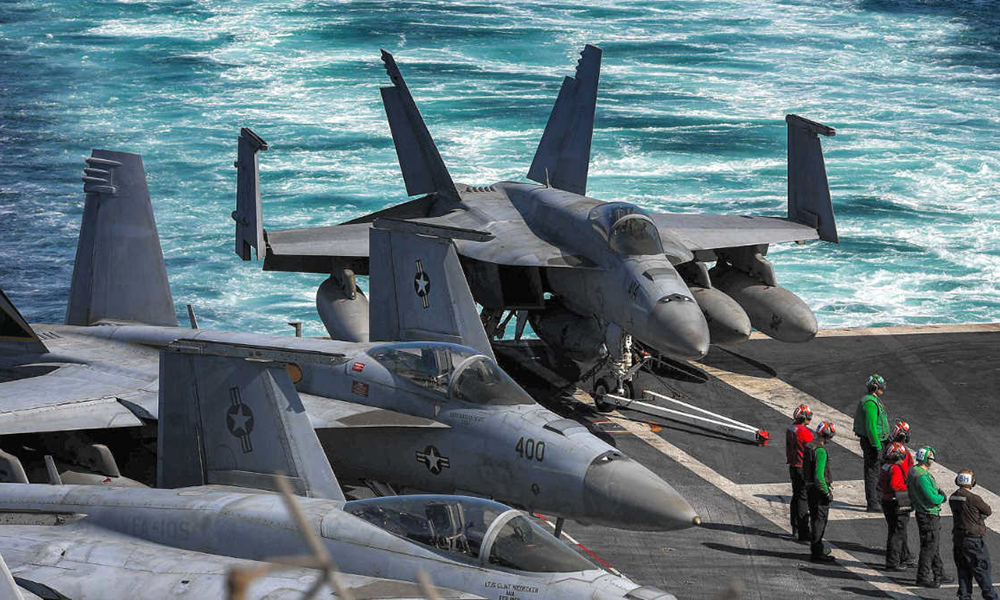
Tehran has told Gulf Arab states it would be “unacceptable” if they allowed use of their airspace or military bases against Iran and warned that any such move would draw a response, a senior Iranian official said.
The official also said any action by Gulf states to balance oil markets should Iranian energy facilities be hit by Israel was not part of the discussions so far, Reuters reported.
The comments come amid growing concern over possible Israeli retaliation for last week’s Iranian missile attack, as Iran’s Foreign Minister Abbas Araqchi visits Saudi Arabia and other Gulf states including Qatar for talks on Wednesday.
They followed discussions between Iran and Gulf Arab capitals last week on the sidelines of an Asia conference in Qatar, when Gulf states sought to reassure Iran of their neutrality in any conflict between Tehran and Israel.
“Iran made it clear that any action by a Persian Gulf country against Tehran, whether through the use of airspace or military bases, will be regarded by Tehran as an action taken by the entire group, and Tehran will respond accordingly,” the senior Iranian official told Reuters.
“The message emphasised the need for regional unity against Israel and the importance of securing stability,” he said.
“It also made clear that any assistance to Israel, such as allowing the use of a regional country’s airspace for actions against Iran, is unacceptable.”
U.S. President Joe Biden is expected to hold a telephone call on Wednesday with Israeli Prime Minister Benjamin Netanyahu that will include discussion of any plans to strike Iran, according to a person familiar with the matter, read the report.
Washington hopes to weigh in on whether the response is appropriate, a separate person briefed on the discussions said. The White House did not respond to a request for comment.
Biden said last Friday he would think about alternatives to striking Iranian oil fields if he were in Israel’s shoes. Last week he also said he would not support Israel striking Iranian nuclear sites.
The Iranian official said Tehran did not discuss the issue of Gulf Arab oil producers raising output if Iranian production were disrupted during any escalation.
U.S. news website Axios, citing Israeli officials, reported last week that Israel could target oil production facilities within Iran as retaliation.
The Organization of Petroleum Exporting Countries, OPEC, which is de-facto led by Saudi Arabia, has enough spare oil capacity to make up any loss of Iranian supply if an Israeli retaliation knocks out some of the country’s facilities, Reuters reported.
Much of OPEC’s spare capacity is in the Middle East Gulf region. Iran has not threatened to attack Gulf oil facilities but has previously warned that if “Israel supporters” intervene directly their interests in the region would be targeted.
Top oil exporter Saudi Arabia has had a political rapprochement with Tehran in recent years, which has helped ease regional tensions, but relations remain difficult.
Saudi Arabia has been wary of an Iranian strike on its oil facilities since a 2019 attack on its key refinery at Abqaiq briefly shut down more than 5% of global oil supply. Iran denied involvement.
A Western diplomat in the Gulf said that during Thursday’s Gulf-Iran meeting in Doha, Iran made clear that Tehran had called for regional unity in the face of an Israeli attack and that it considered neutrality of Gulf states a bare minimum.
The diplomat said Iran had made clear that Tehran would keep a close eye on how each Gulf country responded in the case of an Israeli attack, and also how U.S. bases housed in their countries were used.
Bahrain, Kuwait, Qatar, Saudi Arabia and the United Arab Emirates all host U.S. military facilities or troops.










Regional
Turkey lays out plans for defence pact with Pakistan and Saudi Arabia
Turkey, which has NATO’s second-largest army, has said the pact with nuclear-armed Pakistan and top oil exporter Saudi Arabia was open to expansion.
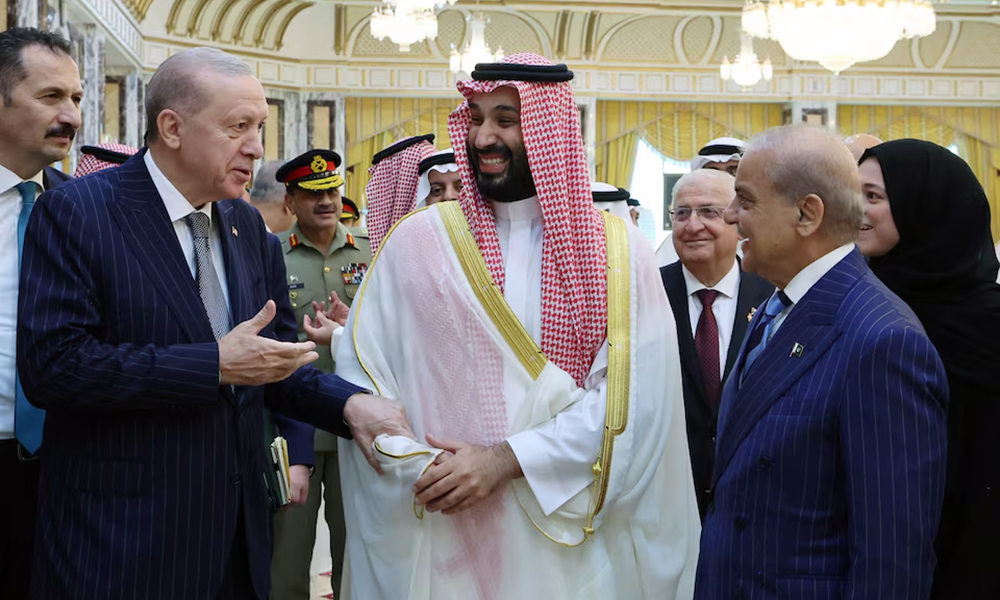
Turkey, Saudi Arabia and Pakistan will group senior ministers, hold joint exercises and deepen defence industry cooperation under a military pact signed between the regional powers last week, Turkey’s defence ministry said on Thursday.
The three Sunni Muslim U.S. allies, alarmed by a regional conflagration that has brought Iranian missile fire onto Gulf oil exporters, signed the “Mecca Joint Defence Agreement” on August 7. They said the accord stipulates that an armed attack against any member would be regarded as an attack on all, similar to NATO’s Article 5 collective defence clause, Reuters reported.
At a weekly briefing in Ankara, the defence ministry said the pact’s fundamental goal was to ensure defence and military ties were put on a “more institutional and sustainable” footing.
“Under the accord, strategic political and military mechanisms plan to be established involving the Defence Ministers, Foreign Ministers, and Chiefs of General Staff/Armed Forces Commanders, and that coordination among the three countries will be conducted at the highest level,” it said.
The ministry added that joint military exercises involving land, naval, and air forces, as well as air defence and unmanned systems were planned, in addition to deeper defence industry cooperation.
“The aim is to provide not only product and system supply, but also joint development and production, technology cooperation, and sustainable maintenance and logistics support,” it said, adding that unmanned and autonomous systems, electronic warfare and artificial intelligence capabilities would be prioritised.
Turkey, which has NATO’s second-largest army, has said the pact with nuclear-armed Pakistan and top oil exporter Saudi Arabia was open to expansion — with Egypt as a potential candidate — and did not seek to replace any existing alliances, read the report.
The ministry also said Turkey was participating in meetings in Jeddah aimed at establishing an international coalition to protect Red Sea shipping.
Regional
Iran says no progress on reviving interim peace deal with US
Throughout the conflict, Trump has alternated between threats of escalation and claims that a peace deal is imminent.
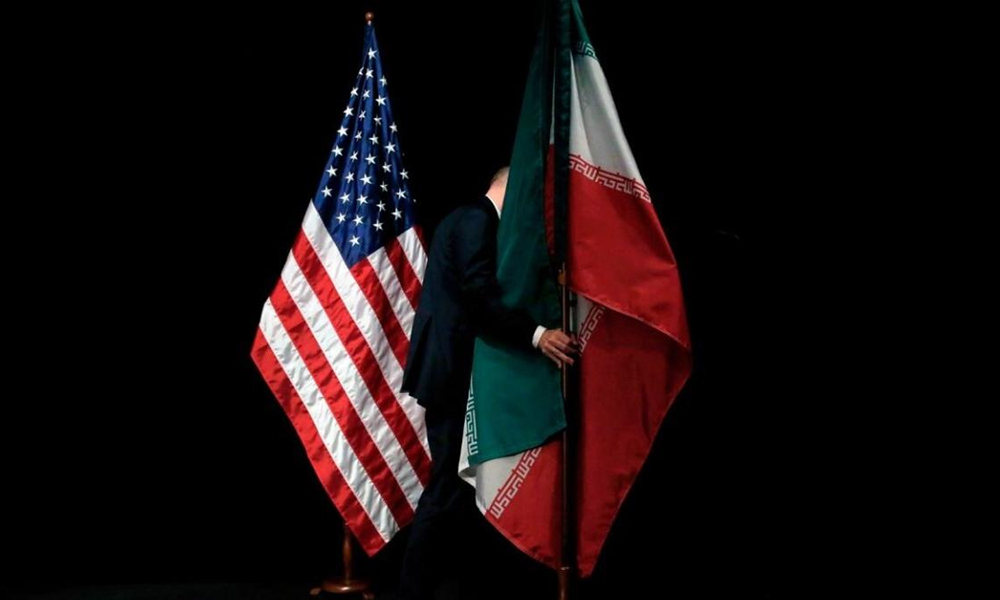
Iran and the United States remain at loggerheads over efforts to agree a permanent end to the war in the Gulf, according to a senior Iranian source, who said there had been no progress in talks to revive the interim deal agreed in June and define a time frame to implement it, Reuters reported.
The comments came as U.S. President Donald Trump issued yet another broadside against Iran’s leaders, dealing a further blow to hopes for a resolution to the crisis, following new attacks on shipping in the region on Tuesday.
The deal agreed in June declared an “immediate and permanent termination of military operations on all fronts”, but quickly unravelled, with Trump saying it was “over” on July 7 and Iran’s foreign ministry declaring it “suspended” a week later.
The U.S. accuses Iran of failing to honor an agreement under the deal to reopen the vital Strait of Hormuz shipping route. Tehran says Washington has reneged on its commitments, including lifting a blockade of Iranian ports and releasing frozen Iranian assets.
“One of the issues that is being discussed via mediators is the U.S. returning to the interim agreement and defining a time frame for implementing the commitments. There has been absolutely no progress on this issue,” the Iranian source said.
Trump said on Wednesday that the U.S. has “total control” over the Strait of Hormuz.
But the Persian Gulf Strait Authority, the body Iran set up to manage the waterway, said it remains blocked and will not be reopened until Iran’s conditions are accepted.
“Iran is all talk and no action, the Bully of the Middle East No Longer,” Trump said on his Truth Social platform.
Throughout the conflict, Trump has alternated between threats of escalation and claims that a peace deal is imminent.
Thousands of people have been killed in the conflict, mainly in Iran and Lebanon, since the U.S. and Israel launched attacks on Iran on February 28, read the report.
Iran has struck U.S. assets and infrastructure in countries including Oman, Jordan, Kuwait, Israel, the United Arab Emirates and Saudi Arabia.
The June interim ceasefire agreement set a 60-day period, extendable by mutual consent, within which Iran and the U.S. were expected to reach a final deal limiting Tehran’s nuclear program and lifting U.S. sanctions.
The Iranian source dismissed a report on Wednesday from Turkey’s Anadolu news agency that quoted Pakistani government sources as saying they had agreed to extend that 60-day period.
“There is no talk of an extension because, from Iran’s perspective, there is no period that began and therefore nothing to extend. The United States violated the interim agreement 48 hours after it was reached and withdrew from it a few days later,” the source told Reuters.
The Strait of Hormuz, a narrow waterway between Iran and Oman and the entrance to the Gulf, handled a fifth of global oil and liquefied natural gas flow before the war.
Benchmark Brent crude futures have surged since the start of the war in February, hitting a peak of $126 a barrel, roughly 75% above pre-war levels, with choppy trade reflecting concerns over disruptions to Gulf oil supplies and shifting signals on peace talks.
On Tuesday, in separate incidents, a suspected and a U.S. Navy MH-60 helicopter fired two Hellfire missiles to , the U.S. military said.
Oil prices rose but then steadied in volatile trading on Wednesday, after forecasters cut projections for 2026 oil demand. Brent crude futures were trading at around $88 a barrel and U.S. West Texas Intermediate crude at around $83 a barrel.
Regional
New attacks on shipping as Iran war talks hit fresh impasse
Oil prices gained and global shares retreated amid renewed pessimism about a quick end to the conflict. Brent crude futures climbed 1.4% to settle at $88.91 per barrel and U.S. crude rose 1.3% to $83.20.
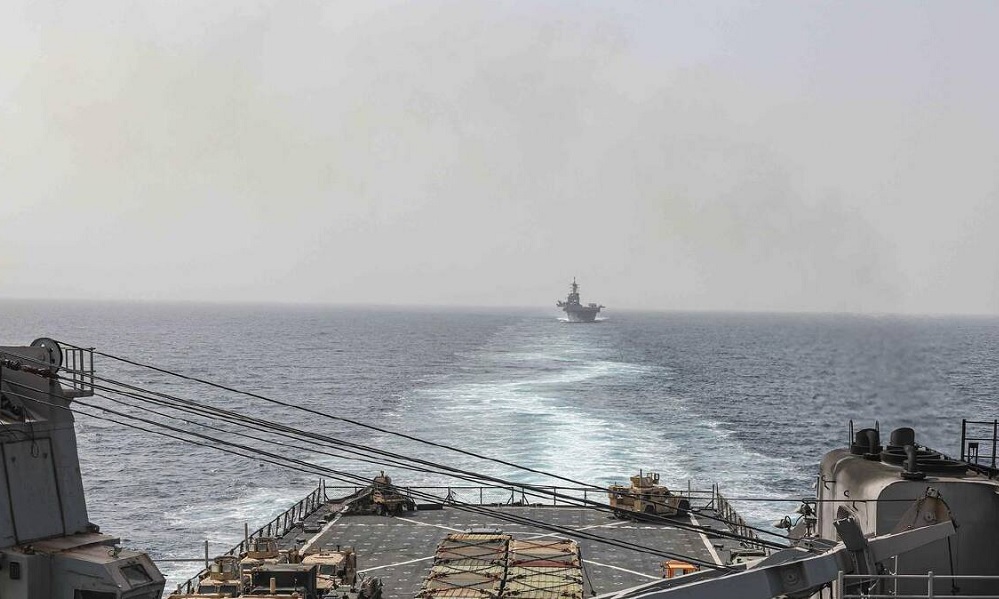
The U.S. and Yemen’s Iran-aligned Houthis reported separate attacks on shipping on Tuesday as prospects for ending the Iran war appeared to dim, with Tehran saying the Strait of Hormuz would remain closed unless Washington accepts its conditions.
The attacks, in the Gulf of Oman leading to the strait and at the entrance to the Red Sea — both vital chokepoints for global oil supplies — come as the war shows no signs of ending despite repeated assertions from U.S. President Donald Trump of a deal being imminent, Reuters reported.
Oil prices gained and global shares retreated amid renewed pessimism about a quick end to the conflict. Brent crude futures climbed 1.4% to settle at $88.91 per barrel and U.S. crude rose 1.3% to $83.20.
At the southern end of the Red Sea, four crew members were killed in a suspected Houthi attack on a small cargo vessel in the Bab el-Mandeb Strait on Tuesday, Yemen’s Transport Ministry said. Two Yemeni rescuers from an anti-Houthi military group were also killed, Yemen’s Coast Guard said.
The fatalities aboard the Egyptian-owned Tihamah would be the first deaths on shipping by Yemen’s Iran-aligned Houthis since the Iran war began.
The Houthi-run news agency Saba reported that the group, which said last month it would impose a naval blockade on Saudi Arabia in the Red Sea, attacked a Saudi ship carrying military equipment in the Bab el-Mandeb Strait. It did not name the ship, and there was no immediate Saudi response to the report.
The U.S. military, meanwhile, said a U.S. Navy MH-60 helicopter fired two Hellfire missiles to disable the steering gear of a Panama-flagged cargo ship.
The ship ignored repeated warnings to stop violating a naval blockade on Iranian ports, the U.S. Central Command said. Maritime sources told Reuters the ship was hit off Pakistan while sailing into the Gulf of Oman.
STEPPED UP RHETORIC
Both Iran and the United States have stepped up rhetoric in the past two days.
Iran’s top security official, Mohsen Rezaei, said on Tuesday that the vital Strait of Hormuz shipping route will remain closed unless the U.S. accepts Iran’s conditions to end the war – the release of Iran’s frozen assets and an end to conflicts throughout the region, including in Lebanon and Gaza.
That followed a new demand from Trump on Monday that Iran should pay compensation for people killed in 50 years of wars, attacks and protests.
Throughout the conflict, Trump has alternated between threats of escalation and claims that a peace deal is imminent.
In an interview released late on Monday, he suggested the uncertainty could last for a while, saying he might just “bop along” and let Tehran fail economically, or hit them “really, really hard.”
“I’m sort of negotiating,” Trump told Real America’s Voice. “They’re very devious negotiators.”
Speaking to reporters after a visit to Ohio on Tuesday, Trump said “Iran is going fine, going just absolutely fine.”
“We totally control the Strait of Hormuz … Nobody else, only us,” he said.
“At some point, maybe they’ll do something and then they get blown away,” he said of Iran. “But right now, we’re in a very good position. We have a country that has been the bully of the Middle East for 50 years, really 51 if you think about it … and they’re no longer the bully of the Middle East.”
Asked about an incident in which he switched planes in Turkey last month because of worries over reports of a potential Iranian assassination threat, Trump suggested the alternative aircraft may have faced greater risk.
“That would be the plane I think that they would be more likely to go for,” he told reporters after The Washington Post broke the story about him secretly taking a military flight instead of Air Force One in an operation involving him being moved between aircraft in a catering truck.
“Any consequential president has a lot of threats,” Trump added. “I don’t worry about anything.”
The comments from Rezaei, appointed on Sunday as second-in-command of the body that coordinates Iran’s security and foreign policy, were the strongest indication the Strait of Hormuz would not reopen to shipping anytime soon. The waterway handled a fifth of global oil and liquefied natural gas flow before the war.
“As long as America does not change its behaviour and does not accept Iran’s conditions, the Strait of Hormuz will not be opened,” Rezaei said, according to the semi-official Tasnim news agency.
There was no immediate comment from Washington on Iran’s latest comments.
Thousands of people have been killed in the conflict since the U.S. and Israel launched attacks on Iran on February 28.
Iran has struck U.S. assets and infrastructure in countries including Oman, Jordan, Kuwait, Israel, the United Arab Emirates and Saudi Arabia.
Raising the prospect of further escalation, Mohammad Reza Naqdi, an adviser to the commander of Iran’s Revolutionary Guards, said on Iranian state TV on Tuesday that the corps was developing the ability to carry out operations “on enemy soil.”
“We need to be able to move the operations to the enemy’s soil, whenever this is needed and ordered,” he said. “This is the characteristic of the offensive doctrine that has to be attained.”


Afghanistan cannot reach full potential without women and girls: UK envoy

Tajikistan sends protest note to Afghanistan after airspace violation, civilian death

IEA rejects Pakistan’s concerns, says Afghan soil will not be used against any country

FM Muttaqi says Islamic Emirate sees no need for talks with opponents

Pakistan wants peace and stability in Afghanistan: Shehbaz Sharif

Pakistan’s governance system has ‘collapsed’: Mohsin Naqvi

Spain sweep FIFA World Cup player awards after historic triumph

Iran, Afghanistan and Tajikistan discuss expanding regional transit cooperation

Afghanistan temporarily eases fuel import standards to help curb rising prices

First Chinese transit shipment arrives in Herat via Iran’s railway corridor

Tahawol: Trade cooperation between Afghanistan and Iran discussed

Saar: Discussion on Islamic Emirate’s five-year journey

Tahawol: Afghanistan’s future in the global press discussed

Saar: The Islamic Emirate’s five-year rule discussed

Tahawol: Hamid Karzai’s call for Afghan reconciliation discussed
-
 Sport4 days ago
Abasin Defenders stun Kabul Zalmi in Kabul Premier League
-

 Sport4 days ago
Kabul Premier League gets underway with high-scoring opener
-
 Regional4 days ago
Iran ties Hormuz reopening to US concessions on several demands
-

 Sport4 days ago
Afghanistan beat Ireland by 3 wickets in third ODI
-
 Latest News4 days ago
MoU on TAPI gas purchase signed between Afghan Gas and Türkmengaz
-

 Latest News1 day ago
HesabPay unveils new visa card and digital payment app in Kabul
-

 Sport3 days ago
Abasin Defenders beat Shamshad Eagles by four wickets in Kabul Premier League
-

 Sport2 days ago
Afghanistan to host India for three-match T20I series in Delhi