
World
Israel, Hezbollah agree to ceasefire brokered by US and France, to take effect Wednesday
Netanyahu said he was ready to implement a ceasefire deal and would respond forcefully to any violation by Hezbollah.

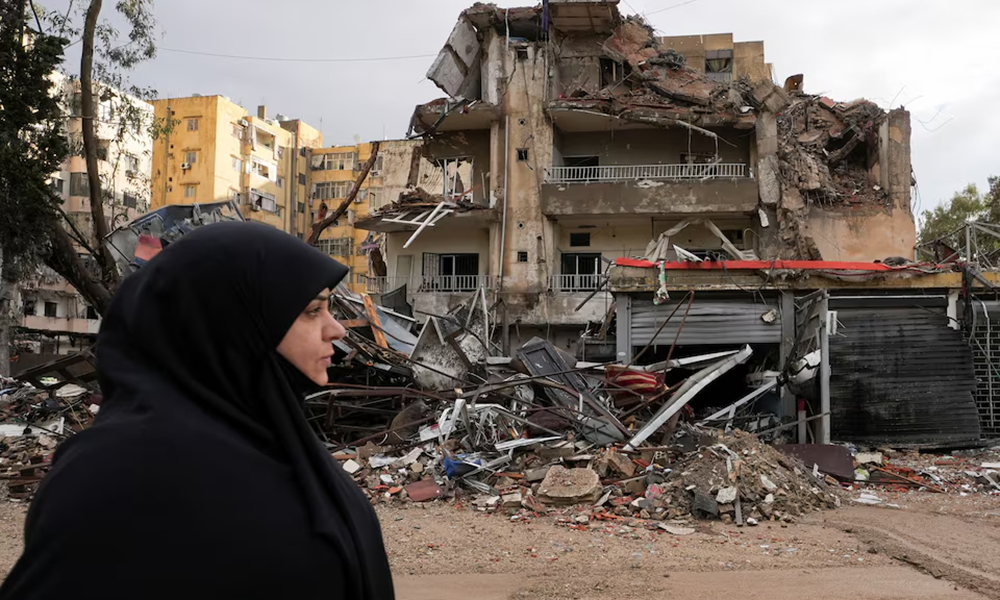
A ceasefire between Israel and Iran-backed group Hezbollah will take effect on Wednesday after both sides accepted an agreement brokered by the United States and France, U.S. President Joe Biden said on Tuesday.
The accord cleared the way for an end to a conflict across the Israeli-Lebanese border that has killed thousands of people since it was ignited by the Gaza war last year.
Biden, who made remarks at the White House shortly after Israel’s security cabinet approved the agreement in a 10-1 vote, said he had spoken to Israel’s Prime Minister Benjamin Netanyahu and Lebanon’s caretaker Prime Minister Najib Mikati. Fighting would end at 4 a.m. local time (0200 GMT), he said.
“This is designed to be a permanent cessation of hostilities,” Biden said. “What is left of Hezbollah and other terrorist organizations will not be allowed to threaten the security of Israel again.”
Israel will gradually withdraw its forces over 60 days as Lebanon’s army takes control of territory near its border with Israel to ensure that Hezbollah does not rebuild its infrastructure there, Biden said.
“Civilians on both sides will soon be able to safely return to their communities,” he said.
French President Emmanuel Macron cheered the signing of the deal on social-media platform X, saying it was “the culmination of efforts undertaken for many months with the Israeli and Lebanese authorities, in close collaboration with the United States.”
Lebanon’s Mikati issued a statement welcoming the deal. Foreign Minister Abdallah Bou Habib earlier said the Lebanese army would be ready to have at least 5,000 troops deployed in southern Lebanon as Israeli troops withdraw.
Netanyahu said he was ready to implement a ceasefire deal and would respond forcefully to any violation by Hezbollah.
Netanyahu, who faces some opposition to the deal from within his coalition government, said the ceasefire would allow Israel to focus on the threat from Iran, replenish depleted arms supplies and give the army a rest, and to isolate Hamas, the militant group that triggered war in the region when it attacked Israel from Gaza last year.
“We will enforce the agreement and respond forcefully to any violation. Together, we will continue until victory,” Netanyahu said.
“In full coordination with the United States, we retain complete military freedom of action. Should Hezbollah violate the agreement or attempt to rearm, we will strike decisively.”
Netanyahu said Hezbollah, which is allied to Palestinian militant group Hamas, was considerably weaker than it had been at the start of the conflict.
“We have set it back decades, eliminated … its top leaders, destroyed most of its rockets and missiles, neutralized thousands of fighters, and obliterated years of terror infrastructure near our border,” he said.
The United Nations Special Coordinator for Lebanon, Jeanine Hennis-Plasschaert, welcomed the ceasefire deal in a statement, commending the parties to the agreement.
“Now is the time to deliver, through concrete actions, to consolidate today’s achievement.”
A senior U.S. official, briefing reporters on condition of anonymity, said the U.S. and France would join a mechanism with the UNIFIL peacekeeping force that would work with Lebanon’s army to deter potential violations of the ceasefire. U.S. combat forces would not be deployed, the official said.
The Lebanon ceasefire came after a change of attitudes on both sides in late October, the official said.
Biden, who leaves office in January, said his administration would continue to push for an elusive ceasefire and hostage-release deal in Gaza, where Israel is battling Hamas, as well as for a deal to normalize relations between Israel and Saudi Arabia.
Despite the diplomatic breakthrough, hostilities raged as Israel dramatically ramped up its campaign of airstrikes in Beirut and other parts of Lebanon, with health authorities reporting at least 18 killed.
The Israeli military said it struck “components of Hezbollah’s financial management and systems” including a money-exchange office.
Israel issued more evacuation warnings late on Tuesday, just hours before the ceasefire was due to take effect.
Hezbollah also kept up rocket fire into Israel.
Israel’s air force intercepted three launches from Lebanese territory, the military said, in an extensive missile barrage on Tuesday night that led to warning alarms in approximately 115 settlements.
Alia Ibrahim, a mother of twin girls from the southern village of Qaaqaiyat al-Snawbar, who had fled nearly three months ago to Beirut, said she hoped Israeli officials, who have expressed contradictory views on a ceasefire, would be faithful to the deal.
“Our village – they destroyed half of it. In these few seconds before they announced the ceasefire, they destroyed half our village,” she said. “God willing, we can go back to our homes and our land.”
A poll conducted by Israel’s Channel 12 TV found that 37% of Israelis were in favor of the ceasefire, compared with 32% against.
Opponents to the deal in Israel include opposition leaders and heads of towns near Israel’s border with Lebanon, who want a depopulated buffer zone on Lebanon’s side of the frontier.
Both the Lebanese government and Hezbollah have insisted that a return of displaced civilians to southern Lebanon is a key tenet of the truce.
Israeli Security Minister Itamar Ben-Gvir, a right-wing member of Netanyahu’s government, said on X the agreement does not ensure the return of Israelis to their homes in the country’s north and that the Lebanese army did not have the ability to overcome Hezbollah.
“In order to leave Lebanon, we must have our own security belt,” Ben-Gvir said.



World
Senior UAE diplomat Lana Nusseibeh enters race for UN chief
Nusseibeh, 48, said she was approached by multiple countries during the last UN General Assembly to put herself forward. She previously led the UAE’s successful campaign for election to the Security Council. Diplomats in New York say she is respected as a competent manager.
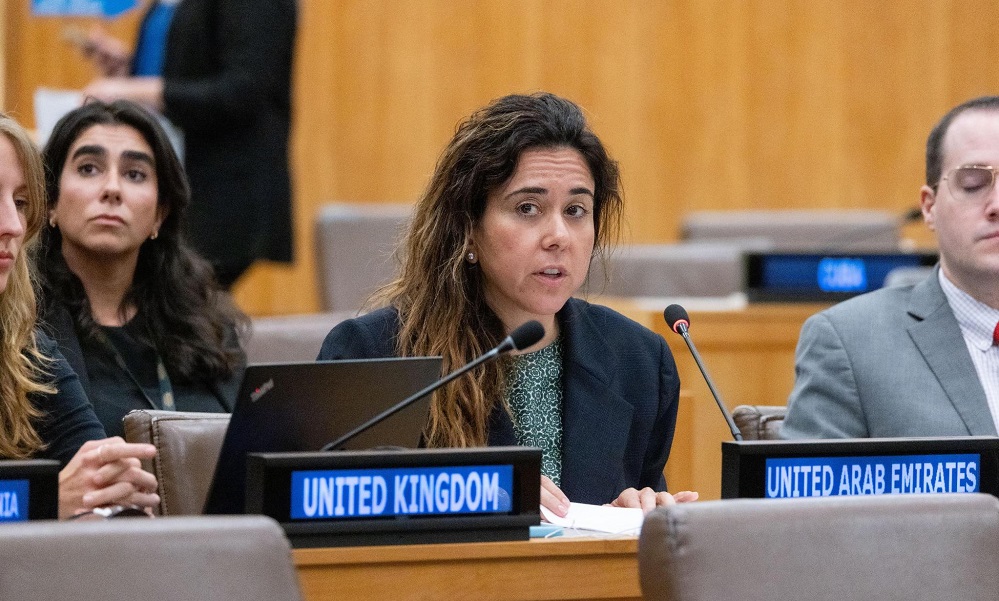
Senior UAE diplomat Lana Nusseibeh entered the race to become the next United Nations secretary-general on Wednesday, injecting a prominent Middle Eastern candidate into a contest that has struggled to produce a consensus choice among the Security Council’s most powerful members.
Nusseibeh, a former UAE ambassador to the UN for more than a decade, told Reuters she would seek to restore the world body’s role as a diplomatic problem-solver at a time of mounting global crises.
“It’s clear that today we need a secretary-general that can recommit to the future of multilateralism and the future of the United Nations as a problem-solver rather than as a spectator to the world’s crises,” she said shortly before going public with her candidacy.
Nusseibeh, the UAE minister of state for foreign affairs, is a late entrant to the race. An informal Security Council poll had placed former Costa Rican Vice President Rebeca Grynspan as the narrow frontrunner, sources have said.
Although Grynspan has led the informal “straw polls,” last week she and all other candidates received two or more opposing votes from the ultimately decisive five permanent members of the council — Britain, China, France, Russia and the US.
Council members are negotiating over whether to hold another poll this Friday or at a later stage.
ENTREPRENEURIAL DIPLOMACY
Nusseibeh, 48, said she was approached by multiple countries during the last UN General Assembly to put herself forward. She previously led the UAE’s successful campaign for election to the Security Council. Diplomats in New York say she is respected as a competent manager.
“It’s recognized today that we need someone who offers generational change for the organization,” she said.
Her UN tenure overlapped with the outbreak of the Gaza war in 2023 when she secured the adoption of Resolution 2720 paving the way for the delivery of humanitarian aid.
Nusseibeh said she secured support for the resolution by arranging a visit by council members to the Rafah border crossing to see for themselves the situation on the ground, describing the move as part of her “creative entrepreneurial diplomacy” that characterizes her approach.
RELENTLESS DIPLOMACY
As a top UAE diplomat, Nusseibeh has championed Abu Dhabi’s assertive foreign policy and heavy focus on countering political Islam.
The UAE has faced criticism over Sudan after UN sanctions monitors described allegations that it provided military support to the paramilitary Rapid Support Forces as credible. The UAE denies the allegations.
Asked how the allegations might affect her candidacy, Nusseibeh said she had taken leave from her UAE post and would focus on Sudan’s humanitarian crisis.
A Nusseibeh victory would make her the second UN chief from the Middle East, after Egypt’s Boutros Boutros-Ghali.
“I come from a country that is younger than the United Nations but our region is one that has been facing severe challenges,” she said.
She would also become the first woman to lead the UN, though Nusseibeh said she was not running on her gender.
“I think it would be great if the next secretary-general was a woman but I’m not running because I’m a woman; I’m running because I am stubbornly optimistic about the future of the United Nations and I believe we need someone who is relentless in the pursuit of diplomacy to open doors.”
World
Governments warn citizens over security risks in France after riots
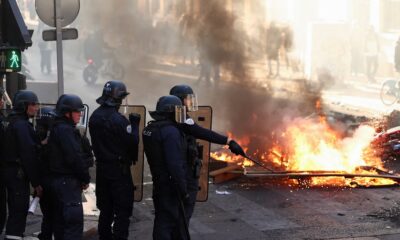
The unrest on Saturday saw clashes between protesters and police, looting at shops and a town hall set on fire, prompting several countries to update their travel advisories.
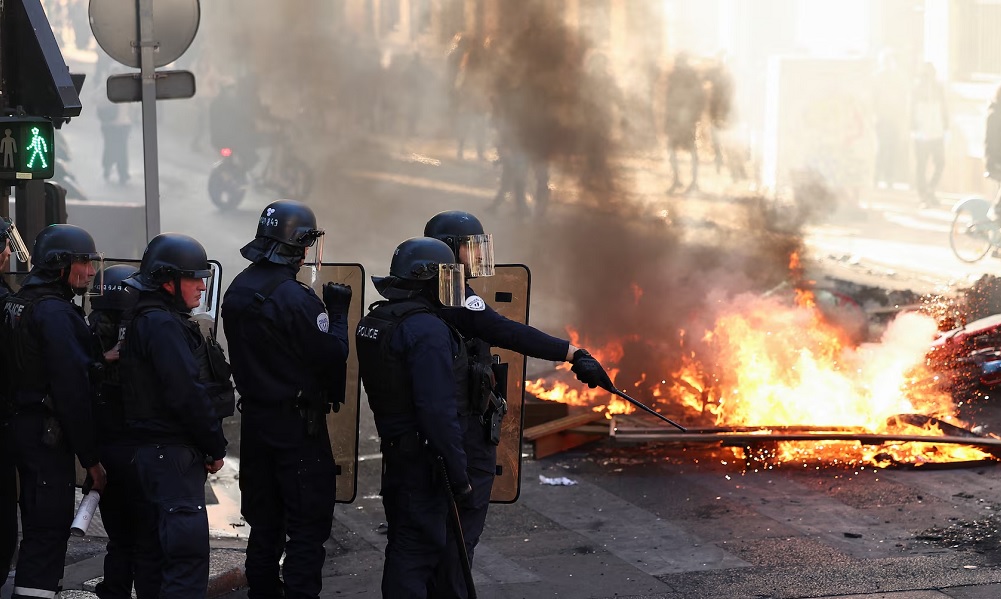
Governments across Europe and Asia have warned their citizens to exercise caution in France following violent protests over the rising cost of living and declining public services that erupted into riots over the weekend.
The unrest on Saturday saw clashes between protesters and police, looting at shops and a town hall set on fire, prompting several countries to update their travel advisories.
Italy urged its citizens in France to avoid large crowds and exercise extreme caution. Its foreign ministry also advised travellers to register their presence through an official website or mobile application to help authorities locate them if necessary.
Germany warned that further riots could occur in the coming days and urged its nationals to follow instructions from local police. It also cautioned that people could face fines or claims for damages if they failed to leave unauthorised demonstrations when ordered to do so.
The Czech Republic advised its citizens to stay away from demonstrations, marches and public gatherings, citing a deterioration in the security situation, the Czech news agency CTK reported.
Poland similarly urged visitors to avoid areas where demonstrations were taking place, although it made no changes to its overall assessment of France as a travel destination.
The Netherlands has also advised travellers to avoid protests, according to its travel guidance, last updated on October 7.
Denmark, Sweden, Finland and Norway issued similar warnings, urging their citizens in France to avoid demonstrations and follow instructions from local authorities.
Outside Europe, Malaysia’s Foreign Ministry said it was monitoring the demonstrations. While travel to France remained unrestricted, it advised Malaysians to consider postponing non-essential trips until the situation improved.
Malaysia’s embassy in Paris also urged citizens in France to remain vigilant and exercise caution.
The warnings reflect growing concern among foreign governments over the potential for further violence as France faces public anger over living costs and pressure on public services. Authorities have urged visitors and residents to monitor local developments and follow police instructions.
World
Violent protests spread across Europe as Albanian PM blames ‘foreign hand’
Hundreds of thousands of people took to the streets in separate demonstrations over the weekend, with some rallies escalating into looting, arson and confrontations with security forces.
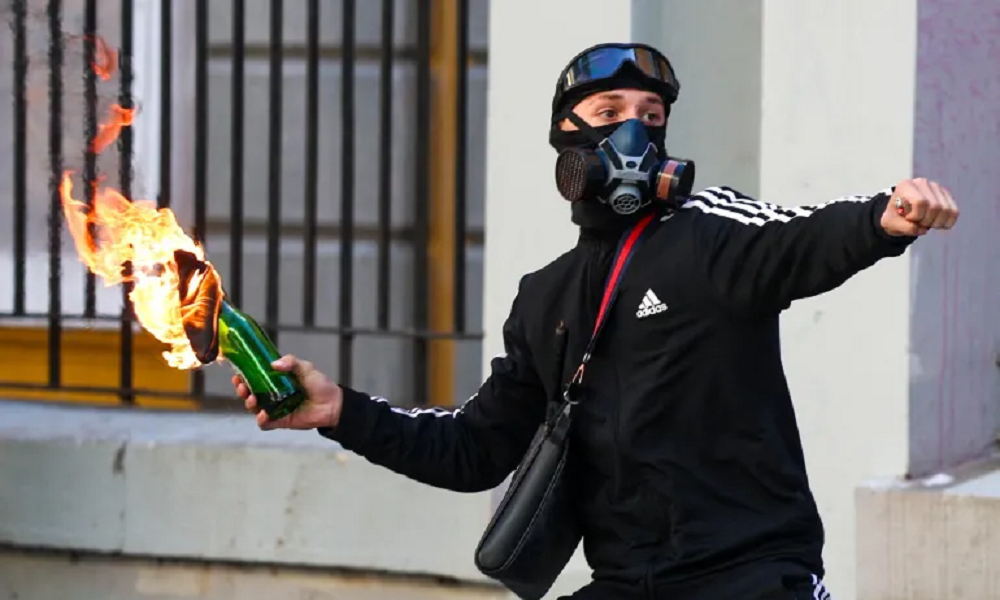
Demonstrations over living costs, housing, education and alleged corruption have triggered clashes with police in several countries across Europe, putting governments under mounting pressure.
Protests and violent clashes have spread this month, with demonstrations in France, Belgium, Italy, Portugal and Albania exposing growing public frustration over economic pressures, education and government accountability.
Hundreds of thousands of people took to the streets in separate demonstrations over the weekend, with some rallies escalating into looting, arson and confrontations with security forces.
In Albania, Prime Minister Edi Rama accused unnamed foreign forces of fuelling the unrest, describing the violence as the work of an “outside hand” seeking to destabilise the country and undermine its ambitions to join the European Union.
The accusation comes as thousands of demonstrators in the capital, Tirana, demand Rama’s resignation, while protests have also spread to other Albanian cities.
Albania protests escalate
Albania has experienced several days of increasingly violent anti-government demonstrations, with students joining a broader movement against Rama’s government.
Protesters have raised concerns about alleged corruption, university conditions, education costs and unemployment. Opposition to a controversial luxury tourism development along Albania’s southern coastline has also contributed to the wider discontent. The project has been linked to Jared Kushner, the son-in-law of US President Donald Trump.
Clashes in Tirana have seen demonstrators throw stones, fireworks and petrol bombs at police, while government buildings and other property have been damaged by fires and vandalism.
Police have responded with tear gas, water cannons and rubber bullets. Authorities have also reported numerous detentions and injuries among protesters and officers.
Rama has rejected calls to resign, arguing that the violence threatens Albania’s European integration ambitions. He has said the government is prepared to address legitimate student concerns but will not yield to demands made through violence.
His claims of foreign interference have not however been independently established.
France sees widespread unrest
France experienced some of the largest demonstrations, with more than 550,000 people taking part in rallies over the weekend.
What began as demonstrations involving students broadened into protests over the cost of living and wider social grievances. Violence erupted in several cities on Saturday, with masked groups targeting shops, supermarkets and public buildings.
French Prime Minister Sébastien Lecornu said more than 1,200 people had been arrested and 150 police officers injured. In Limoges, a fire largely destroyed the historic town hall, while other municipal buildings and businesses were vandalised or looted.
President Emmanuel Macron vowed that those responsible for the violence would face prosecution.
Clashes in Belgium and Italy
In Brussels, Belgian police used tear gas and water cannons to disperse demonstrators after accusing some protesters of throwing objects at officers and starting fires. Similar tactics were used in Liège.
The unrest followed weeks of student protests over university registration fees and reflected wider concerns about the affordability of education and everyday expenses.
In Milan, Italy, a march against war and rising living costs descended into clashes as masked protesters threw stones and paving blocks at riot police, looted shops and set fire to barricades.
Police used tear gas and water cannons to clear crowds from the city centre. At least two officers were injured and about 50 demonstrators were detained, according to Italian news agency LaPresse.
Prime Minister Giorgia Meloni condemned the violence, while Milan Mayor Giuseppe Sala said protesters’ concerns were understandable but that attacks on police and damage to public property were unacceptable.
Clashes were also reported in Bologna.
Housing and wages drive protests in Portugal
In Lisbon, tens of thousands of people marched on Saturday against rising living costs, low wages and the difficulty of finding affordable housing.
House prices in Portugal have more than doubled since 2017, while rents for new leases have risen sharply, intensifying pressure on households in major cities.
Demonstrators called for higher wages and pensions and action to address housing and fuel costs. Some erected tents in central Lisbon to highlight the housing crisis.
The Portuguese government has faced criticism from protesters who accuse political leaders of being disconnected from the financial pressures experienced by ordinary citizens.
Spain housing protests turn violent
Spain also faced its own protests earlier this month when violence erupted during housing protests in Spain on October 3, with clashes reported in Valencia and Barcelona.
Demonstrators protested soaring rents, evictions and the growing difficulty of accessing affordable housing.
Police made arrests as unrest escalated, with officers injured during confrontations. The demonstrations reflect mounting public anger over Spain’s housing crisis and growing pressure on Prime Minister Pedro Sánchez’s government to introduce lasting solutions.
Wider warning for European governments
Although the demonstrations are believed to not be part of a single coordinated movement, analysts say they reflect overlapping concerns about living standards, education, housing and the prospects facing younger generations.
Alberto Alemanno, a professor of European Union law and policy at HEC Paris Business School, told Al Jazeera however that France appeared to be at the centre of a wider wave of unrest, with signs of mobilisation emerging elsewhere in Europe.
He suggested that further demonstrations could take place in the coming weeks, including in Germany, Greece and Austria.
Reinout Van Zandycke, a communications expert in Belgium, warned last week that foreign interference could be involved in TikTok calls encouraging people to protest in France and Belgium on October 17. His concern focused on the online mobilisation and the possibility of manipulation, rather than proof that the protests were centrally organised.
The unrest presents a challenge for governments already facing public pressure over economic conditions and political accountability. In Albania, the dispute has also become entangled with the country’s ambition to join the European Union.
Whether the demonstrations lead to policy changes or further confrontation remains uncertain. However, the spread of unrest underlines the pressure facing European governments as protesters demand action on living costs, education, housing and corruption.

Tahawol: UN’s role in tackling global crises discsused

ACL: Arman FC rally late but fall 3–2 to Sorkh Poshan Khafi
Saar: Pakistan’s blame on Kabul for its own failures discussed

Toofan Herat secure narrow win over Ariana Khost in ACL season six
Switzerland cooperated with IEA to deport Afghan refugees: Report

Cricket Bonanza: Afghanistan set for packed international schedule

Afghanistan says 28 killed, 32 captured in Nuristan operation

Afghanistan on climate front line as Kabul faces groundwater warning

ACB announces Afghanistan squads for Bangladesh, Zimbabwe series

Trump rejects Iranian proposal to open Hormuz and end fighting
Tahawol: UN’s role in tackling global crises discsused
Saar: Pakistan’s blame on Kabul for its own failures discussed
Tawsia: New opportunities in Afghanistan’s energy, trade and agriculture sectors discussed

Exclusive interview with Ali Bilal, runner-up in Mr. Olympia Men’s Physique category

Tahawol: Doha meeting and Afghanistan’s political and economic future discussed
-
 Latest News3 days ago
Afghanistan’s new Wakhan road to China faces major hurdles
-
 Latest News4 days ago
Russian troops arrive in Uzbekistan for joint military exercises
-
 Latest News4 days ago
Qatar calls for shift from humanitarian aid to economic recovery in Afghanistan
-

 Latest News5 days ago
Trump blames migrants for violence in France as US midterms loom
-
 World4 days ago
Governments warn citizens over security risks in France after riots
-

 Science & Technology3 days ago
Governments take websites offline as critical cyber flaws trigger global alert
-

 Sport5 days ago
Atal’s century and Rashid’s four wickets seal Afghanistan’s 158-run win over Zimbabwe
-
 Business4 days ago
Transit of Afghan goods through Sheikh Abu Nasr Farahi border crossing doubles