
Latest News
Afghan refugees returning from Pakistan report widespread abuse, property seizures, and forced deportations
Many returnees claim that Pakistani government institutions have confiscated their homes, land, and all personal belongings.

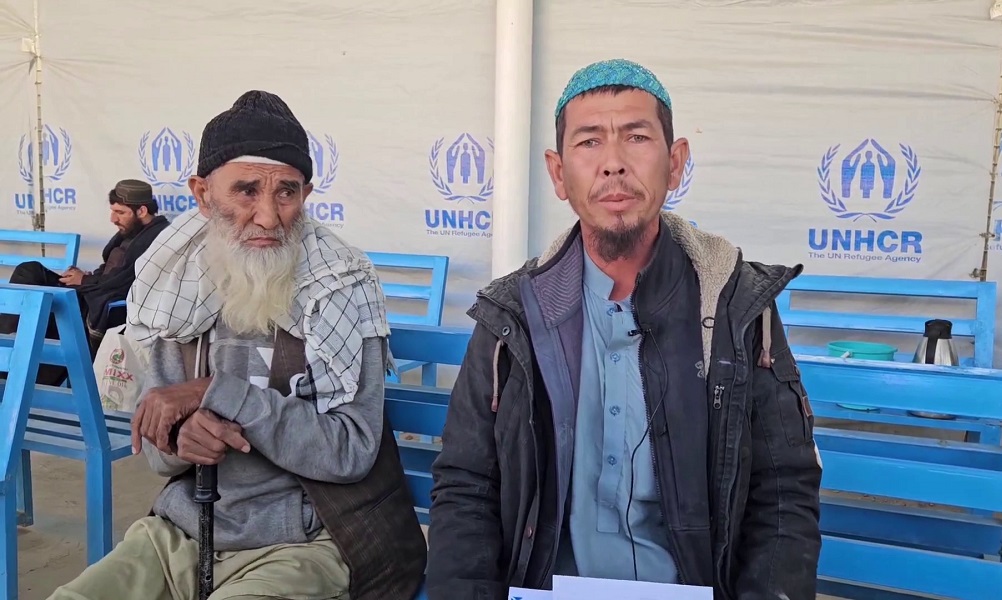
Afghan migrants returning from Pakistan say mistreatment by Pakistani police and authorities has intensified in recent months.
Many of those who recently crossed back into Afghanistan through Spin Boldak in Kandahar are reporting widespread abuse, the seizure of their homes and property, and the forced deportation of unaccompanied children.
An ATN journalist visited Spin Boldak and documented the experiences of returning refugees.
Many returnees claim that Pakistani government institutions have confiscated their homes, land, and all personal belongings.
Shamsullah, a returnee, said: “I lived in Karachi for forty years. Our forefathers had moved there. I thought I would live there forever. I had even bought land, but I had to leave everything behind and return.”
Islamuddin, another returnee, shared a similar experience: “I left behind a house worth 1.5 to 2 million afghanis. Everyone was trying to seize our property. We barely managed to escape with our lives. Our Afghan brothers still living in Pakistan face terrible hardships.”
For many, the loss goes beyond property—entire futures have been disrupted.
Mohammad Shaheen, a final-year medical student, said he and his Pakistani wife have lost everything: “My wife is Pakistani and has a national ID card. They told me, ‘Because you are Afghan, you must take her with you.’ They said I can only return on a visa.”
Detention and Deportation of Children
Returnees report that Pakistani police have been detaining children aged 10 to 17, holding them for days or weeks without notifying their families, and then deporting them alone to Afghanistan.
Najibullah, an unaccompanied minor, said: “They arrested children, kept them in prison for a month, mistreated them, forced them to work, and later sent them to Afghanistan without their families.”
Allah Mohammad, another migrant child, added: “The abuse was unbearable. Many of our friends were arrested. Their families were devastated. They were expelled without any notice.”
Officials in Spin Boldak confirm that a large number of unaccompanied children have been deported by Pakistan.
Mohammad Ali Haqmal, spokesman for Spin Boldak district governor’s office, said: “Dozens of children have been expelled. They have no contact with their families. They were arrested and deported without their parents knowing. They face serious challenges, but the Islamic Emirate is assisting them.”
Extortion Along the Chaman–Spin Boldak Route
Migrants also allege that Pakistani police extort money at multiple checkpoints, allowing passage only after payments ranging from 20,000 to 80,000 Afghanis.
Yusuf Khan, a returnee, said: “We spent three months in prison. Even then, we had to pay 80,000 Afghanis to be released. We spent eight days traveling back.”
Local officials in Spin Boldak report that 1,200 to 1,500 migrant families—equivalent to 6,000 to 8,000 individuals—enter Afghanistan daily through the Chaman–Spin Boldak crossing.

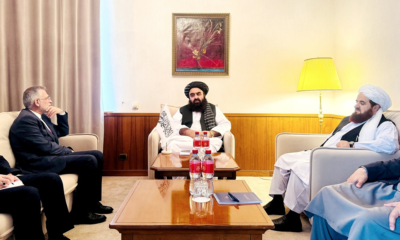


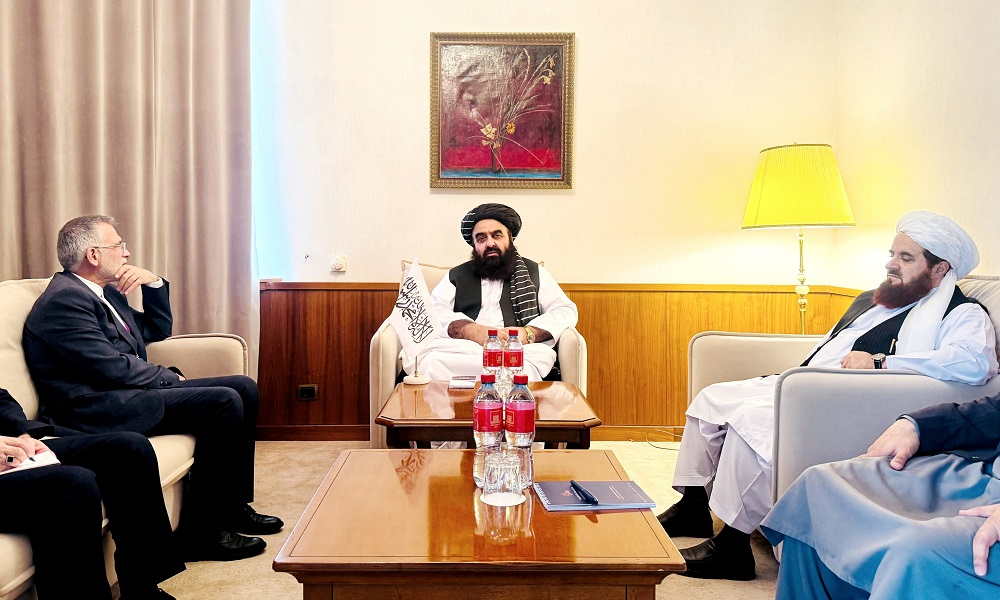
Amir Khan Muttaqi, Minister of Foreign Affairs, met on Wednesday with Mohammad Reza Bahrami, a representative of Iran’s Ministry of Foreign Affairs, on the sidelines of the eighth meeting of the Moscow Format and discussed ways to expand bilateral relations.
The Ministry of Foreign Affairs said the two sides exchanged views on Afghanistan-Iran relations, regional developments, and ways to strengthen mutual cooperation between the two countries.
Muttaqi expressed appreciation for Iran’s engagement with Afghanistan and its constructive participation in regional meetings, emphasizing the need to further expand relations between Kabul and Tehran.
Meanwhile, Mohammad Reza Bahrami stressed the importance of relations between the two countries and shared Iran’s views on regional cooperation, stability, and expanding economic engagement between Afghanistan and Iran.
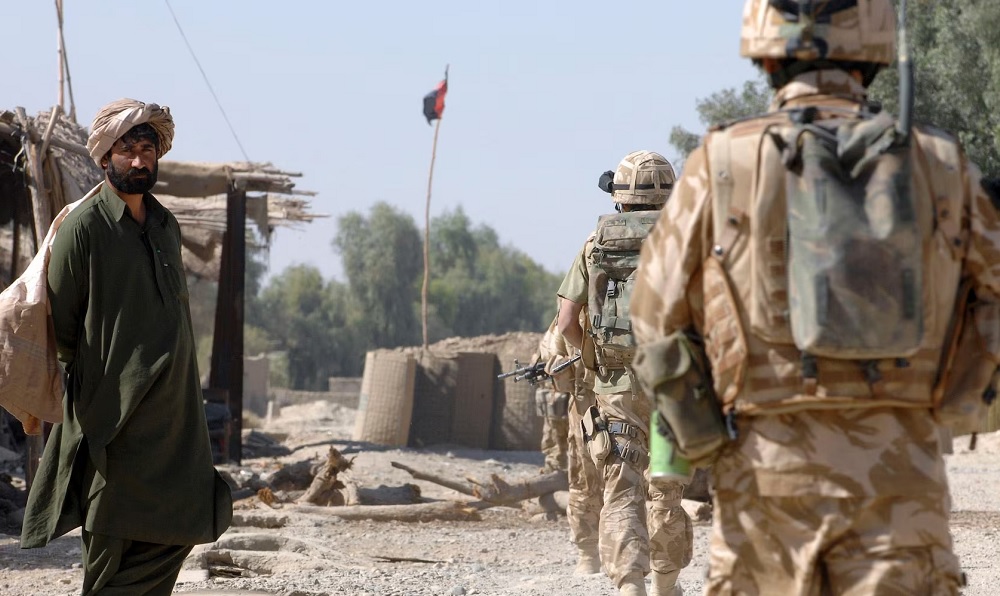
The UK Ministry of Defence identified material suggesting that British service personnel may have committed “serious offences” in Afghanistan, including possible murder, manslaughter and grievous bodily harm, a High Court hearing in London was told.
The information was referred by UK Special Forces (UKSF) to the Defence Serious Crime Command earlier this year, The Independent reported.
According to the court, any criminal investigation into the allegations has been paused pending the outcome of the Afghanistan Inquiry.
The inquiry, chaired by Lord Justice Haddon-Cave, is examining allegations that UK special forces unlawfully killed people during operations in Afghanistan between 2010 and 2013, as well as claims of a subsequent cover-up.
It is also investigating allegations of inadequate investigations by the Royal Military Police.
The latest court proceedings relate to a senior British soldier, identified only as Witness IIA126, who is challenging the inquiry’s decision to restrict his and his lawyers’ access to certain evidence.
His lawyer, Kate Grange KC, argued that the restrictions had prevented the soldier from reviewing evidence concerning an allegation that a person was shot in the head while possibly asleep during a “deliberate detention operation.”
The inquiry is opposing the legal challenge, arguing that the restrictions were necessary to protect the identities of witnesses whose evidence was considered highly sensitive.
Jonathan Glasson KC, representing the inquiry, told the court that the discovery of material potentially indicating serious offences did not mean that any particular individual would necessarily face criminal charges.
The inquiry is expected to continue its examination of the allegations, with a written judgment on the latest legal challenge due at a later date.
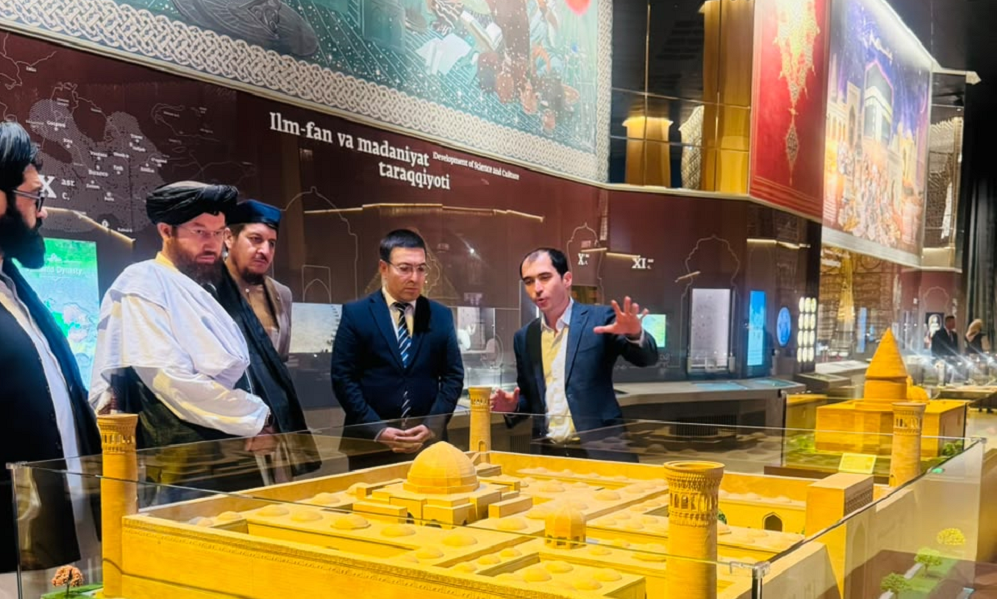
Afghanistan’s Minister of Agriculture, Irrigation and Livestock, Attaullah Omari, has arrived in Uzbekistan’s capital, Tashkent, to attend an international forum on food security and sustainable development.
Omari is visiting Tashkent at the invitation of Uzbekistan’s Ministry of Agriculture and is scheduled to participate in the Global Technical Forum for Landlocked Countries on Food Security and Sustainable Development Goals, being held from October 7 to 8.
Afghanistan’s Ministry of Agriculture said the visit will provide an opportunity to discuss expanding bilateral and regional cooperation with Uzbekistan in agriculture, irrigation, livestock, trade and investment.
The Afghan delegation is also expected to meet officials and representatives from participating countries to discuss agricultural exports, trade, investment opportunities, and the exchange of technical knowledge and expertise.


Muttaqi and Iranian representative discuss expansion of bilateral relations

Baradar opens Fifth Imam Abu Hanifa International Exhibition in Kabul

Lionel Messi bids tearful farewell to Argentina after 3-0 win over Benin

British special forces could face prosecution over alleged Afghanistan crimes

Afghan agriculture minister in Tashkent for international forum

UAE firm eyes investment in Salang’s second tunnel and pharmaceutical factories

US Treasury ratchets up pressure on Iran with sweeping new aviation sanctions

AI could pose ‘existential’ risk to humanity, UN rights chief warns

EU and FAO launch €5m programme to strengthen Afghanistan’s agrifood sector

Omar Zawak, Toofan Herat secure victories in Afghanistan Champions League

Tahawol: Discussion on outcome of Moscow Format meeting

Saar: Expansion of relations between Kabul and Moscow discussed

Tahawol: Afghanistan-Iran: shared opportunities and challenges discussed

Saar: Pakistan’s hostile policy toward Afghanistan discussed

Tahawol: Doha process seeks new cooperation opportunities
-

 Sport2 days ago
Cricket Bonanza: Afghanistan set for packed international schedule
-
 Latest News4 days ago
Kazakhstan, Uzbekistan and UAE sign MoU on CASA railway project via Afghanistan
-
 Regional4 days ago
Pakistan says Mecca pact members to hold emergency talks on engaging Houthis
-
 Regional3 days ago
India, Pakistan summon top diplomats over border incident
-
 Sport4 days ago
Rashid Khan plans to build cricket academy and stadium in Nangarhar
-
 Latest News3 days ago
Afghanistan inaugurates 121 km Wakhan road to China border
-
 Sport5 days ago
Abu Muslim cruise to 4-0 win over Aino Mina as Panahi hits hat-trick
-

 Sport3 days ago
ACL: Sorkh Poshan extend perfect run with 1-0 win over Khurasan