
Latest News
Afghan woman putting her life at risk to rid her home of mines

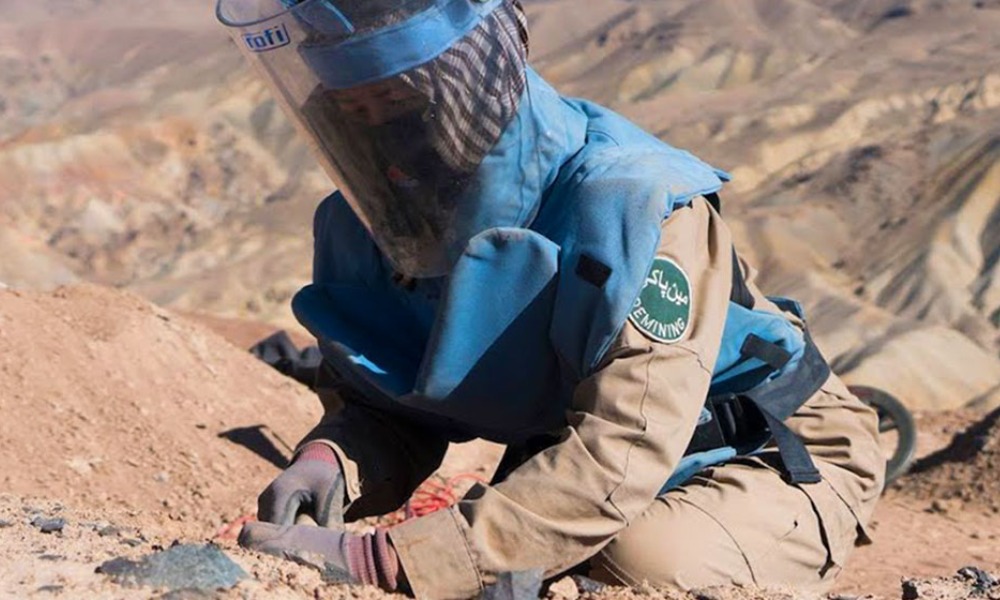
The UK Embassy in Kabul says that over 1.6 million Afghans have received mine risk education and more than 30 km2 of productive land have been also cleared of mines and unexploded ordnance (UXOs) in the last three years to save lives and promote agriculture.
Marking the Mine Awareness Day, the British Embassy stated with the UK has been providing support to United Nations Mine Action Service (UNMAS) in the last three years, aimed at helping the war-torn country manage mine clearance operations.
Fezeh Rezaye, a 26-year-old mother of two, is a member of a 19-strong, all-female demining team, honored for their efforts by the Arms Control Association, which awarded them the Arms Control Person International Award in 2019.
Rezaye explains that how a tragic incident led her to put aside her ambition to be a teacher, and take up a risky demining job instead.
“I had known several people from my village who have been injured or killed by mines in Bamyan. Even our landlord lost his leg in a landmine accident. But it was the death of seven children, all from the same family in our village that really affected me. They had been together in the mountains when they were all killed by a mine explosion. I thought about my own children, that this could have happened to them,” said Rezaye.
Before joining demining team Rezaye was teaching literacy to rural women in Bamyan province. She says that everyone including his family disagreed with her decision to become a deminer.
“My friends and family, including my children, disagreed with my decision to become a deminer. I would tell them that, for the sake of my future and for my children, I wanted Bamyan to be free from mines so that everyone can study and enjoy life,” Rezaye said.
Most families in Afghanistan look at this job as dangerous and risky work and are not welling their daughter’s life.
Rezaye also speaks about threats and challenges against her job in the country.
“I am concerned about my job security because, once these are cleared, I may not be able to work in other provinces, many of which are dominated by the Taliban,” said Rezaye.
Rezaye says that she is also interested in completing a master’s in sociology or archaeology.
Rezaye and her female demining team were the first female deminers team in Afghanistan.
“Winning the Arms Control Award made a big difference for me and the team. After we won, we were recognized by Afghan society and became idols for many women. We were the first female demining team in Afghanistan, and we proved that women can work as hard as men, that we are equal to them, she added.
More than three decades of armed conflict in Afghanistan has left a sorry legacy, with mines, and other explosive remnants of war, contaminating the country. Since 1989, the Mine Action Programme of Afghanistan (MAPA) has been working to clear this dangerous material but, with the conflict still ongoing, some 120 civilian mine-related casualties are recorded every month, and it is considered unlikely that the target of declaring the country free from mines will be reached.
Although explosive remnants of war remain on some firing ranges, Bamyan was declared mine-free since 2019, making it the first mine-free province in Afghanistan, following years of demining work that saw explosive devices removed from some 27,012,116 square meters of contaminated land with explosive devices.
But, in general, Bamyan society is more open than other parts of the country: this is a poor province, with high unemployment, and demining is one of the few opportunities for women to earn money.
As of 2020, Afghanistan is one of the countries most affected by landmines and explosive remnants of war (ERW) in the world. Around 32,000 hazardous areas have been cleared or otherwise canceled since 1989, yet some 1,495 communities remain affected by explosive ordnance (EO) to this day.
Over 38,000 explosive ordnance casualties have been recorded since 1979 (2,090 women, 2,322 girls, 14,646 boys, 19,590 men) of which almost 10,000 resulted in death and more than 29,000 in injuries.
In recent years, improvised explosive devices (IEDs) have become one of the leading causes of civilian casualties in the country.
In 2019 alone, explosive ordnance contamination resulted in 1,692 casualties (143 girls, 122 women, 716 boys, 711 men), resulting in 650 deaths and 1,042 injured victims. The accidents were almost entirely caused by ERW and improvised mines (IM).
Men and boys tend to be killed and injured at a far higher rate than women and girls. Numbers for all groups at least doubled in 2014-2019 compared to 2008-2013, largely due to a sharp increase in IM casualties.








Latest News
Afghan defense forces stand ready to protect national sovereignty: MoD
Sediqullah Nasrat, deputy spokesperson for the Ministry, released a video message stressing that Afghan forces stationed in the eastern zone are steadfast in their positions, remaining vigilant to defend the nation’s sovereignty against any external threats.
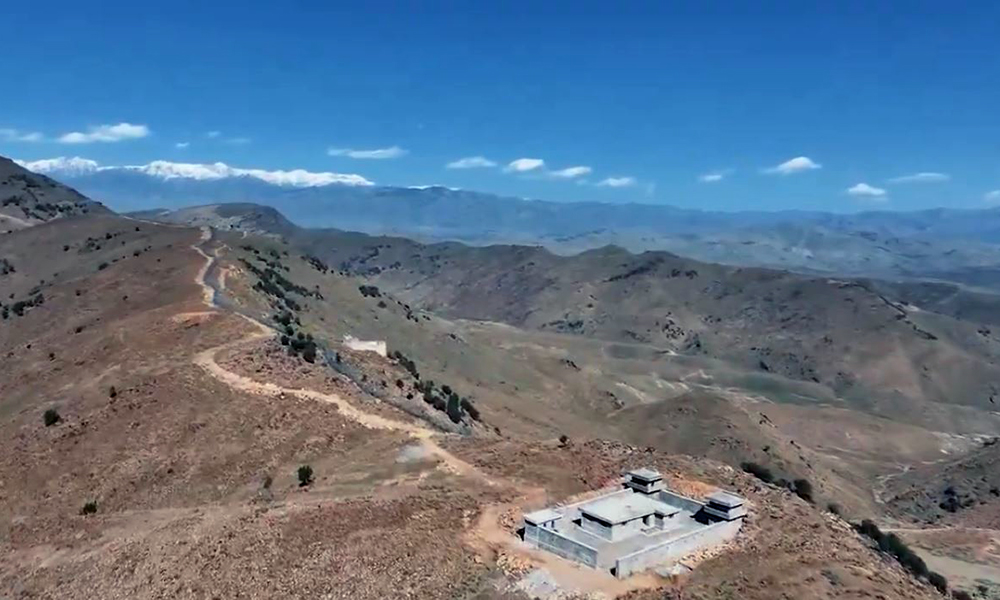
The Ministry of Defense of Afghanistan has reassured the nation that its defense forces are fully prepared to address any security threats along the country’s borders.
Enayatullah Khwarizmi, spokesperson for the Ministry of National Defense of the Islamic Emirate of Afghanistan, made a firm statement asserting that the protection of Afghanistan’s independence and national security is a fundamental responsibility for all members of the Afghan armed forces. He emphasized that this commitment is both a religious and patriotic duty.
In addition, Sediqullah Nasrat, deputy spokesperson for the Ministry, released a video message stressing that Afghan forces stationed in the eastern zone are steadfast in their positions, remaining vigilant to defend the nation’s sovereignty against any external threats. Nasrat further highlighted that the defense forces are leveraging all available resources to ensure the safety, security, and stability of Afghanistan, underscoring their unwavering dedication to serving the Afghan people.
The statements come at a time of heightened regional tensions, as Afghanistan continues to focus on safeguarding its borders and strengthening its defense capabilities.
Latest News
Amnesty International urges IEA to end education ban for girls
In a statement, the human rights organization called on the Islamic Emirate of Afghanistan to ensure that girls can safely return to schools and universities.

Amnesty International has raised serious concerns over the ongoing exclusion of Afghan girls from education, noting that with the start of the new academic year, girls above the sixth grade, including university students, remain barred from schools and higher education.
The South Asia office of Amnesty International highlighted that Afghan girls have been denied access to formal education for over four years, depriving a generation of young women of critical learning opportunities.
In a statement, the human rights organization called on the Islamic Emirate of Afghanistan to ensure that girls can safely return to schools and universities.
Amnesty International warned that continuing restrictions on girls’ education will have severe long-term consequences on the development of the country and the future of its youth.
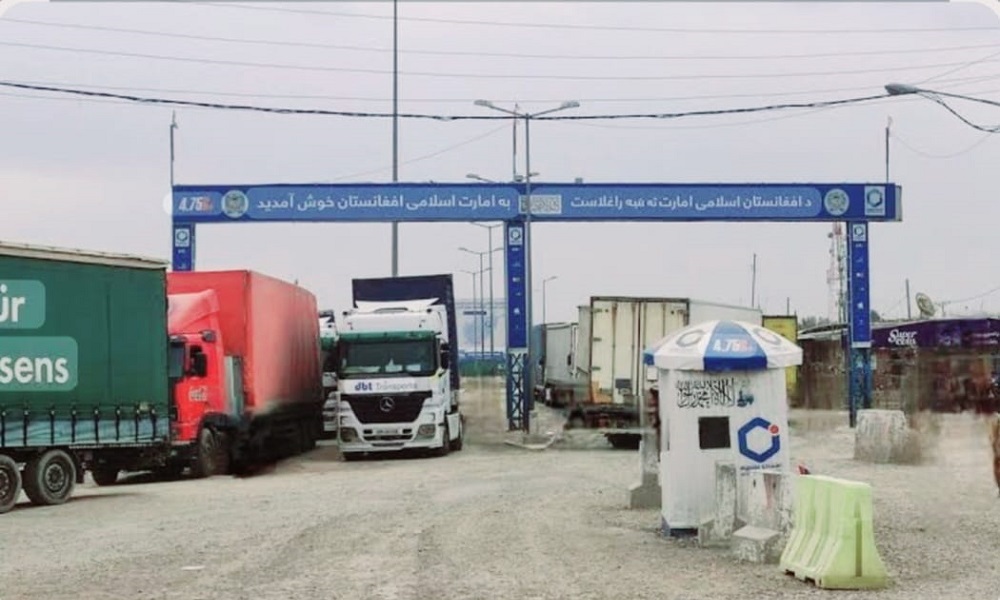
Mohammad Yousuf Saeedi, spokesperson for the governor of Herat, announced on Friday that Iranian cargo truck drivers will no longer need visas to enter Afghanistan.
Saeedi said that, by order of the leader of the Islamic Emirate, starting Saturday, Iranian transit vehicles will be allowed to enter Afghanistan without a visa or a “road pass.”
According to him, the implementation of this decision will reduce transportation costs and, as a result, lower the prices of goods.
Noor Ahmad Islamjar, the governor of Herat, visited the Islam Qala border crossing on Friday to review the implementation of this order. During the visit, he discussed the details of executing the plan with officials from relevant departments, including representatives from the Ministry of Foreign Affairs, Public Works, Customs, and Transport.
Starting Saturday (March 28), foreign cargo vehicles are expected to enter the Islam Qala border without the need for a visa or road pass, unload their goods, and then return to their destinations.
The statement added that implementing this plan could reduce transportation fares on one hand and, by lowering transport costs, help decrease the prices of goods on the other.
This process will create daily job opportunities for more than 1,000 people.


Afghan defense forces stand ready to protect national sovereignty: MoD

G7 foreign ministers demand an end to attacks on civilians in Iran war

Amnesty International urges IEA to end education ban for girls

Twelve US troops wounded in Iran strike on base in Saudi Arabia, US official says

Exclusive interview with Indrika Ratwatte, Deputy UN Special Representative for Afghanistan

Pakistani military jet downed in Afghanistan’s Jalalabad, pilot captured alive

Afghan Air Force conducts airstrikes in Islamabad, other cities

Prominent Muslim scholar issues fatwa calling for Afghanistan-Pakistan ceasefire

Afghan air force strikes key Pakistani military installations in retaliatory operation

IEA: Special circle in Pakistan has launched mission to destabilize region
Exclusive interview with Indrika Ratwatte, Deputy UN Special Representative for Afghanistan

Tawsia: Efforts to boost Afghanistan’s domestic production and economic diplomacy

Tahawol: Discussion on day 27 of Iran–US war

Saar: Islamic Emirate confident of Durand Line control

Tahawol: Efforts to release Mohammad Rahim from Guantanamo Bay Detention Camp
-
 Latest News2 days ago
Tajikistan shifts stance on Afghanistan amid rising border tensions
-
 Latest News4 days ago
Around 2.3 million tourists visited Afghanistan’s recreational areas during Eid: Ghufran
-

 Sport4 days ago
Afghanistan squad hit by withdrawals ahead of AFC Asian Cup Qualifiers
-
 Latest News4 days ago
Islamic Emirate releases American prisoner Dennis Coyle
-
 Latest News3 days ago
Two civilians killed, eight injured in fresh shelling by Pakistan in Kunar
-
 Regional4 days ago
US allies in Middle East ‘edging closer’ to joining conflict
-
 Latest News5 days ago
Airstrike on Kabul drug rehabilitation centre sparks legal concerns
-

 Regional4 days ago
Tehran rejects Trump’s claims of talks, accuses US of spreading ‘fake news’