
Latest News
Afghanistan: Humanitarians await guidelines on women’s role in aid operations

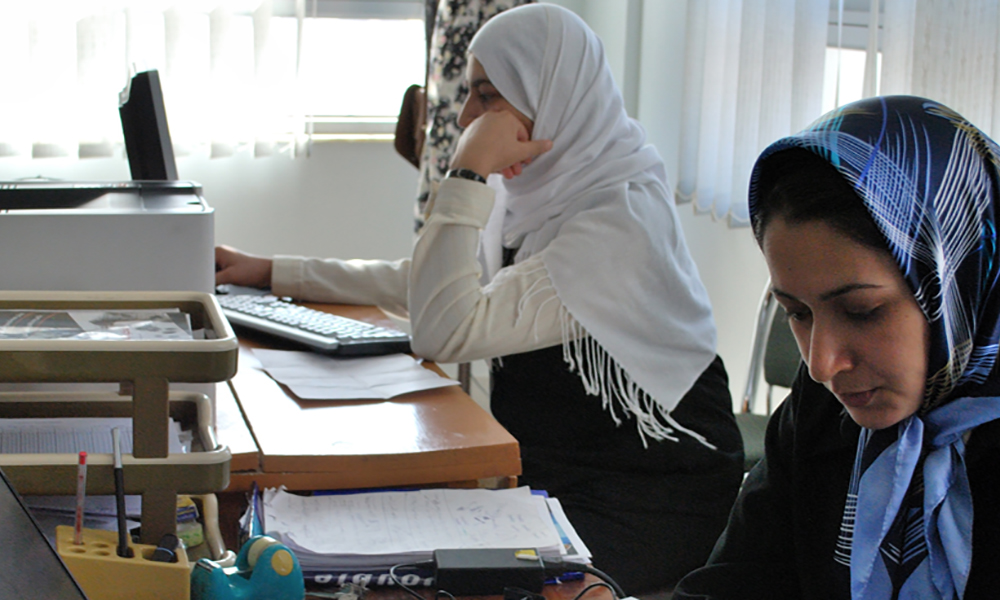
A UN-led group of humanitarians are hoping that the Islamic Emirate of Afghanistan (IEA) will allow Afghan women to again work with non-governmental organizations (NGOs) on the ground following last month’s ban, four senior aid officials told journalists in New York on Monday.
In a statement issued by the UN, the group, representing the Inter-Agency Standing Committee (IASC), stressed that the world’s largest humanitarian operation – supporting some 28 million people in Afghanistan – simply cannot function without women staff.
The officials reported on their mission to the country last week, in the wake of the edict prohibiting Afghan women from working with local and international aid agencies, announced on 24 December.
Days later, the IEA authorized women to continue working in healthcare.
A similar exception was made in education, though focused on the primary level as Afghan girls and women have been barred from attending high school and university.
In their meetings with the IEA, the IASC mission expressed opposition to the ban, which they hoped would be rescinded, and advocated for exemptions in all aspects of humanitarian action.
They were told that guidelines are being developed, and were asked to be patient, said Martin Griffiths, UN relief chief and the IASC chair, speaking during a press conference at UN Headquarters.
“I’m somebody who doesn’t like to speculate too much, because it is a matter of speculation. Let’s see if these guidelines do come through. Let’s see if they are beneficial. Let’s see what space there is for the essential and central role of women in our humanitarian operations,” he said.
“Everybody has opinions as to whether it’s going to work or not. Our view is that the message has clearly been delivered: that women are central, essential workers in the humanitarian sector, in addition to having rights, and we need to see them back to work.”
The UN says humanitarians will require $4.6 billion to fund their activities in Afghanistan this year.
Three years of drought-like conditions, economic decline, and the impacts of four decades of conflict, have left roughly two-thirds of the population, 28 million people, dependent on aid, with six million on the brink of starvation.
Women comprise 30 percent of the 55,000 Afghan nationals working for NGOs in the country, according to Janti Soeripto, President and Chief Executive Officer of Save the Children.
“Without women on our teams, we cannot provide humanitarian services to millions of children and women,” she said.
“We won’t be able to identify their needs; communicate to female heads of households, of which there are many in Afghanistan after years and years of conflict, and to do so in a safe and culturally appropriate way.”
The UN stated that furthermore, many women aid workers are themselves the sole breadwinners for their families, which means many more households will go wanting.
“We’ve made it very clear that humanitarian aid must never be conditional, and it cannot discriminate,” said Soeripto. “We were not there to politicize aid. We cannot do this work without women in all aspects of our value chains.”
The loss of these valuable workers also comes as Afghanistan is facing its coldest winter in 15 years, with temperatures falling to nearly -30 degrees Celsius, resulting in numerous deaths.
The IASC mission visited a clinic on the outskirts of the capital, Kabul, run by the UN Children’s Fund (UNICEF) and a local partner.
Critical health and nutrition services there are up and running again now that women staff are back on board, said Sofía Sprechmann Sineiro, Secretary General of CARE International.
The clinic’s staff also shared a horrific statistic, as 15 percent of the children who seek help suffer from severe acute malnutrition, the UN stated.
“So, let there be no ambiguity. Tying the hands of NGOs by barring women from giving life-saving support to other women will cost lives,” Sineiro said, speaking from Kabul.
According to the statement, during their meetings with the IEA, the humanitarian chiefs also pushed for the full inclusion of girls and women in public life.
More than one million Afghan girls have lost out on learning due to the order banning them from secondary school, which has added to losses sustained during the COVID-19 pandemic.
The university ban, announced last month, has further crushed their hopes, said Omar Abdi, UNICEF Deputy Executive Director for Programmes.
“We are very concerned about girls’ and women’s development and particularly their mental health. In 2023, if secondary school education remains closed, an estimated 215,000 girls who attended grade six last year will once again be denied the right to learn,” he said.
Despite the bleak outlook, Abdi pointed to a few positive signs.
Since the ban, some 200,000 girls continue to attend secondary schools in 12 provinces, and women secondary school teachers continue to receive their salaries.
“The officials we met in Kabul…reaffirmed that they are not against girls learning in secondary schools, and again promised to re-open once the guidelines are approved by their leader,” he said.
Meanwhile, the number of community-based education classes in private homes and other locations has doubled to 20,000 over the past year, serving some 600,000 children, more than half of them girls.
“These positive signs are the results of both the commitment from the de facto authorities (IEA) and pressure from local communities to keep schools and community schools open,” said Abdi.
“As long as communities continue to demand education, we must continue to support both public and other forms of education, community-based classrooms, catch-up classes and vocational training.”


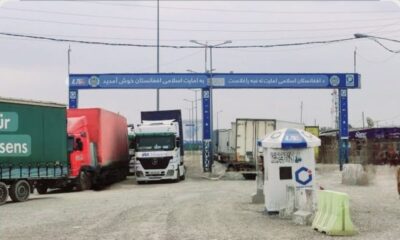


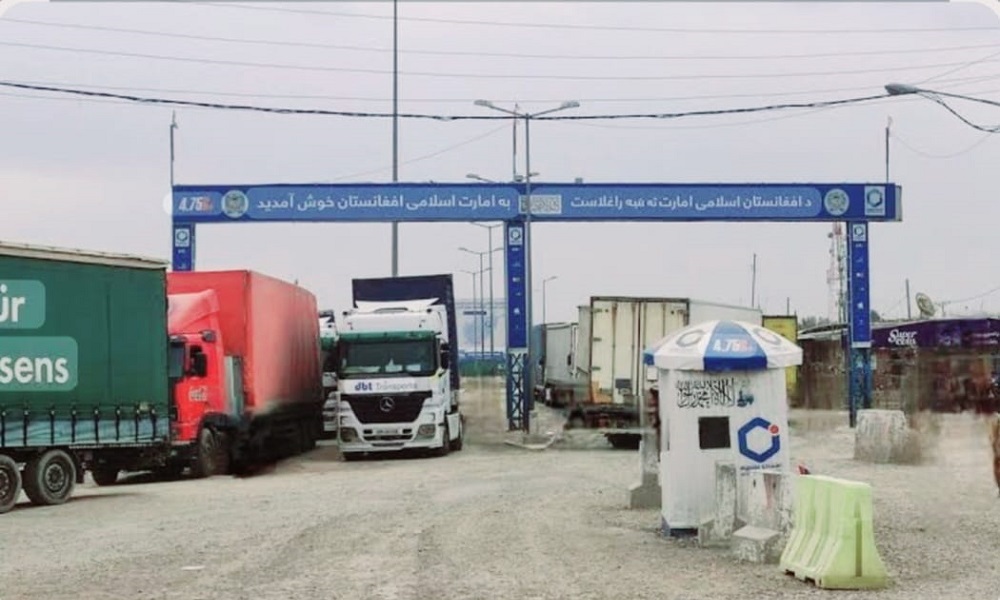
Mohammad Yousuf Saeedi, spokesperson for the governor of Herat, announced on Friday that Iranian cargo truck drivers will no longer need visas to enter Afghanistan.
Saeedi said that, by order of the leader of the Islamic Emirate, starting Saturday, Iranian transit vehicles will be allowed to enter Afghanistan without a visa or a “road pass.”
According to him, the implementation of this decision will reduce transportation costs and, as a result, lower the prices of goods.
Noor Ahmad Islamjar, the governor of Herat, visited the Islam Qala border crossing on Friday to review the implementation of this order. During the visit, he discussed the details of executing the plan with officials from relevant departments, including representatives from the Ministry of Foreign Affairs, Public Works, Customs, and Transport.
Starting Saturday (March 28), foreign cargo vehicles are expected to enter the Islam Qala border without the need for a visa or road pass, unload their goods, and then return to their destinations.
The statement added that implementing this plan could reduce transportation fares on one hand and, by lowering transport costs, help decrease the prices of goods on the other.
This process will create daily job opportunities for more than 1,000 people.
Latest News
Afghans in Iran face growing uncertainty as war enters second month
The organization said that since the start of the war, more than 35,000 Afghans have returned to Afghanistan.
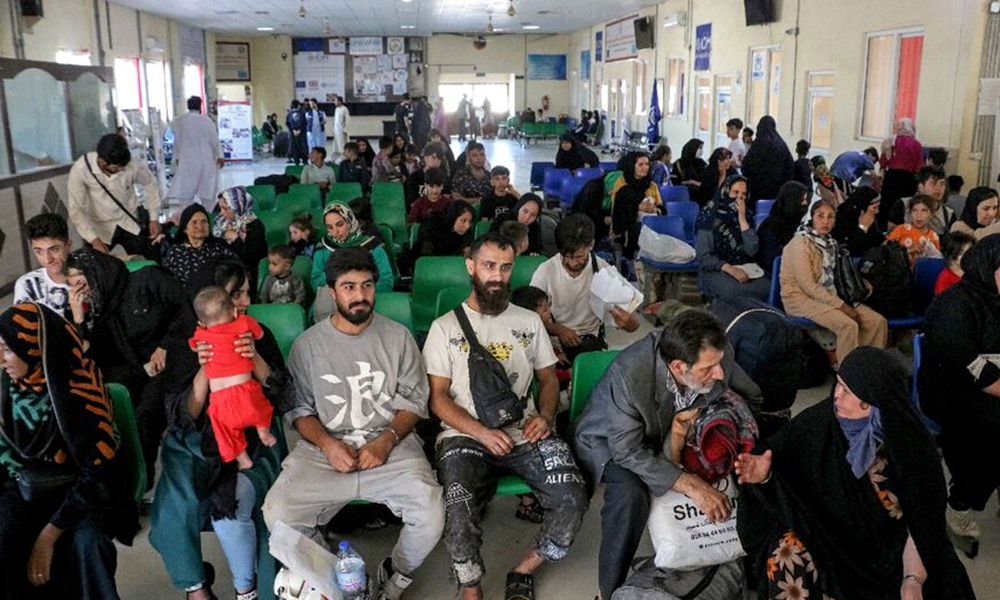
Millions of Afghans living in Iran are facing increasing uncertainty and hardship as the war in the country enters its second month, according to the Norwegian Refugee Council (NRC).
In a statement, NRC Secretary General Jan Egeland warned that more than four million Afghans residing in Iran are among the most vulnerable groups affected by the ongoing conflict. Many Afghan families have lost their only sources of income as informal work has collapsed amid continuous airstrikes and economic disruption.
According to the NRC, a large number of Afghans live in major cities that have come under heavy attacks. Many are unable to flee to safer areas because they have nowhere to go or lack legal permission to travel.
The organization said that since the start of the war, more than 35,000 Afghans have returned to Afghanistan, while over one million Afghan migrants in Iran remain at risk of deportation to a country already struggling with humanitarian challenges.
Egeland noted that after a month of sustained Israeli and U.S. bombardment across Iran, the civilian population is exhausted and deeply traumatized. Millions of people have already fled their homes in search of safety, while others remain trapped in dangerous conditions.
Reports indicate that thousands of homes, hospitals, and schools have been damaged or destroyed across Iran. NRC staff in Tehran say many neighborhoods have suffered significant destruction, while families are taping their windows to prevent injuries from shattered glass caused by nearby explosions.
The war has also severely disrupted daily life, with internet outages and major disruptions to banking services making it increasingly difficult for residents to access basic needs.
According to available data, about 2,700 people have been killed across the Middle East in attacks involving the United States, Israel, and Iran, with more than half of the casualties reported inside Iran. Iran’s Health Ministry says that between February 28 and March 25, at least 1,500 people were killed and over 18,000 injured in the country.
Humanitarian organizations warn that funding for life-saving assistance in both Iran and Afghanistan remains critically low. Aid agencies say they lack sufficient resources to prevent hunger and provide emergency shelter for displaced families.
Egeland warned that if the war continues, the region could face a far larger humanitarian crisis, with millions potentially forced to flee across borders and placing further pressure on already fragile neighboring countries.
He called on all parties involved in the conflict to respect international humanitarian law, stop attacks on civilians and civilian infrastructure, and work toward a diplomatic solution to end the crisis.
Latest News
Russia deems US military presence in Afghanistan unacceptable
Kabulov’s remarks came in response to growing concerns regarding the U.S. military’s presence in the Middle East, particularly amid rising tensions with Iran.
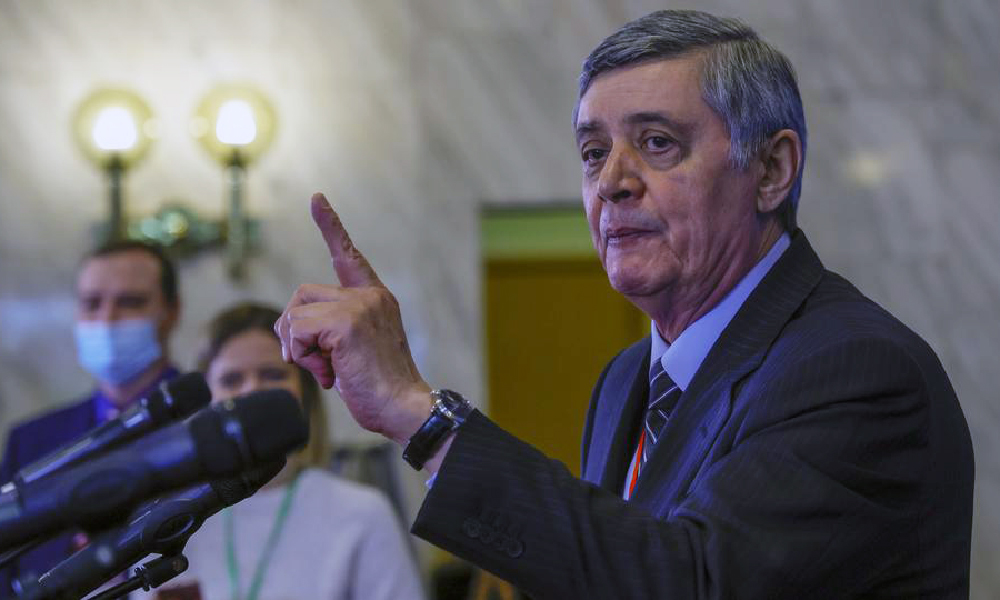
Russia has strongly condemned any potential return of U.S. military forces to Afghanistan, specifically the possibility of reopening Bagram Air Base, calling such moves “categorically unacceptable.” The statement was made by Zamir Kabulov, the Russian President’s special representative for Afghanistan and senior adviser to the Russian Foreign Ministry, in an interview with RIA Novosti.
Kabulov emphasized that Moscow opposes the establishment of any U.S. or NATO military infrastructure on Afghan soil or in neighboring regions, under any pretext. He also expressed hope that the Taliban-led government in Afghanistan, known as the Islamic Emirate of Afghanistan, would share Russia’s stance on the issue.
Kabulov’s remarks came in response to growing concerns regarding the U.S. military’s presence in the Middle East, particularly amid rising tensions with Iran. There have been reports suggesting that the U.S. might seek access to Bagram Air Base again as part of a strategic pivot in the region.
Recalling the previous administration under former U.S. President Donald Trump, Kabulov noted that the U.S. had persistently sought to regain control of Bagram Air Base following its chaotic withdrawal from Afghanistan in August 2021. “There is nothing new in these demands,” Kabulov stated, referring to the ongoing push by the U.S. to re-establish a military foothold in the region.
Russia’s firm stance reflects its broader geopolitical concerns regarding the influence of the U.S. and NATO near its borders, particularly in Central Asia and Afghanistan.


Tawsia: Efforts to boost Afghanistan’s domestic production and economic diplomacy

Trump extends deadline for striking Iranian energy plants to April 7

IEA says Iranian drivers no longer need visas to enter Afghanistan

Afghans in Iran face growing uncertainty as war enters second month

Russia deems US military presence in Afghanistan unacceptable

Pakistani military jet downed in Afghanistan’s Jalalabad, pilot captured alive

Afghan Air Force conducts airstrikes in Islamabad, other cities

Prominent Muslim scholar issues fatwa calling for Afghanistan-Pakistan ceasefire

Afghan air force strikes key Pakistani military installations in retaliatory operation

IEA: Special circle in Pakistan has launched mission to destabilize region
Tawsia: Efforts to boost Afghanistan’s domestic production and economic diplomacy

Tahawol: Discussion on day 27 of Iran–US war

Saar: Islamic Emirate confident of Durand Line control

Tahawol: Efforts to release Mohammad Rahim from Guantanamo Bay Detention Camp

Saar: End of ceasefire between Afghanistan-Pakistan reviewed
-

 Latest News4 days ago
Pakistan seeks Russian mediation to resolve Afghanistan tensions
-
 Latest News4 days ago
World must re-engage to prevent all-out Afghanistan-Pakistan war: Financial Times
-
 Latest News3 days ago
Around 2.3 million tourists visited Afghanistan’s recreational areas during Eid: Ghufran
-

 Sport3 days ago
Afghanistan squad hit by withdrawals ahead of AFC Asian Cup Qualifiers
-
 Latest News3 days ago
Islamic Emirate releases American prisoner Dennis Coyle
-
 Latest News1 day ago
Tajikistan shifts stance on Afghanistan amid rising border tensions
-
 Latest News4 days ago
Airstrike on Kabul drug rehabilitation centre sparks legal concerns
-
 Latest News5 days ago
Water crisis deepens in Afghanistan as families struggle for access