
Latest News
Afghanistan worst place in the world for women and children: UN

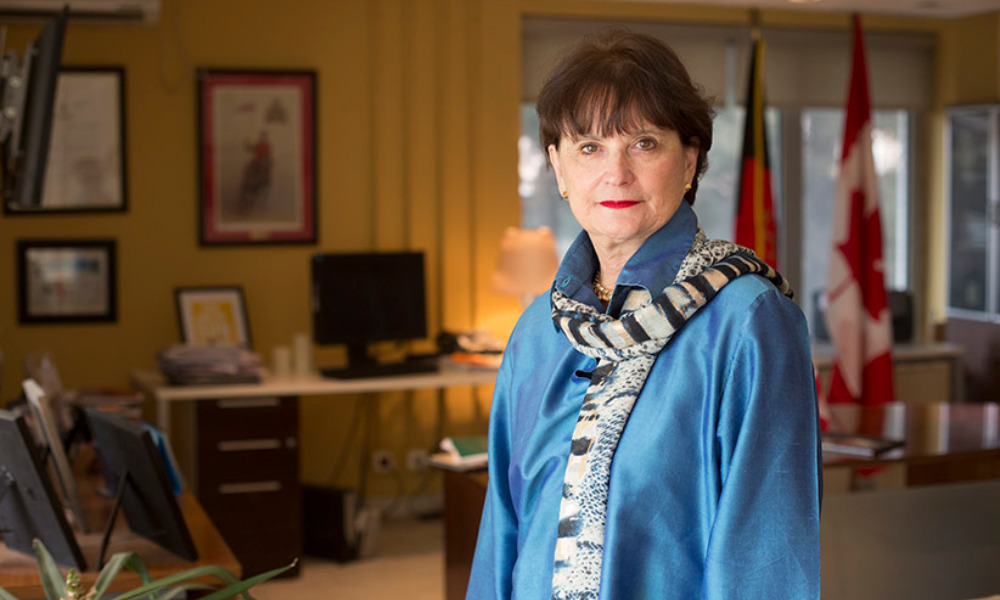
The Secretary-General’s Special Representative for Afghanistan, and Head of the UN Assistance Mission in Afghanistan (UNAMA), Deborah Lyons, said Thursday Afghanistan remains the worst country for women and children.
“Despite significant progress in the last two decades, Afghanistan remains one of the worst places in the world to be a woman, and one of the worst to be a child,” she briefed the Security Council on the situation in Afghanistan.
She said that the level of violence on the battlefield remains deeply worrying.
“The last few weeks have seen near-record numbers of security incidents, including egregious attacks by spoilers targeting civilians involved in the peace process.”
Deborah calls on all warring parties to reduce the level of violence.
It comes as the main obstacle, the prisoner swap process between the Afghan government and the Taliban, ahead of the intra-Afghan talks has been removed.
National Security Council spokesman Javid Faisal said Thursday the prisoner release process has almost ended and peace talks can now start.
He said: “It is imperative that intra-Afghan peace talks begin as soon as possible.
“The Islamic Republic of Afghanistan has received our commandos held hostage by the Taliban, after which the government released the remaining 400 convicts, except the few for which our partners have reservations. Diplomatic efforts are ongoing. We expect direct talks to start promptly,” he said.
Meanwhile, Deborah Lyons urged the two sides to consider a humanitarian ceasefire as one of the first items on the agenda of Intra- Afghan negotiations.
“For Afghanistan’s most vulnerable people, the stakes could not be higher. I urge all member states to amplify this call as the negotiations begin. And the negotiations will begin,” she noted.
“After four decades of war, the people of Afghanistan have more reason than ever to hope that this devastating conflict may come to an end,” UN envoy said.
“After four decades of war, the people of #Afghanistan have more reason than ever to hope that this devastating conflict may come to an end,” UN envoy @DeborahLyonsUN tells Security Council. More: https://t.co/N3lhm8supy pic.twitter.com/0JTnVDPaLu
— UNAMA News (@UNAMAnews) September 3, 2020
Deborah Lyons also emphasized the need for women’s participation in the coming Intra-Afghan negotiations that could pave the way to end the long-term war in the war-weary country.
“We all know that talking will not be enough. Women’s rights are already emerging as one of the most difficult issues confronting the conflict parties as they enter negotiations, and one where any compromises could pose, will pose, a difficult dilemma for member states,” she said.
“The issue will be more central, this issue of women’s rights will be more central in the Afghan peace process than we have ever seen in any other peace negotiation in recent memory.”
She noted that it is women’s representation at the peace table that offers the best opportunity to ensure that their own rights are upheld and that their vision for elements of a peaceful Afghanistan is reflected in all aspects of the talks.
“I commend the women members of the Islamic Republic negotiating team and other peace structures for their energetic outreach and substantive preparations for intra-Afghan talks.”
“As of this moment, we are not yet aware of any women’s representation on the Taliban side, but we remain hopeful that they, too, will find a way of meaningfully including women, the other 50 percent of the population, in their negotiation team,” Lyons added.

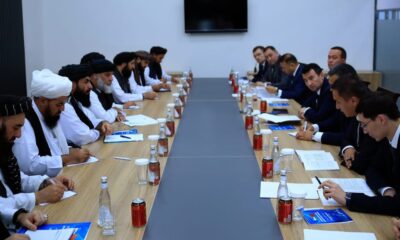


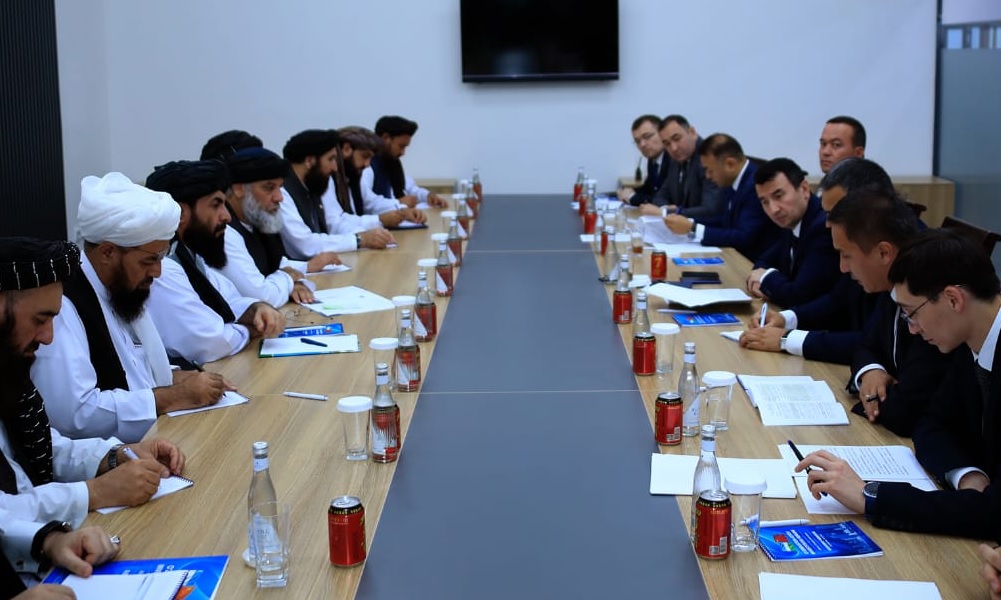
Afghanistan’s Minister of Industry and Commerce, Nooruddin Azizi, met with Uzbekistan’s Deputy Prime Minister Jamshed Khojaev in the city of Termez to discuss expanding economic cooperation and joint investment.
The meeting, held on Saturday at the Termez Trade Center, focused on cooperation in the electricity, mining and agriculture sectors, Afghanistan’s Ministry of Industry and Commerce said in a statement.
Uzbek officials expressed interest in investing in various sectors in Afghanistan. The Afghan delegation welcomed the interest and emphasized its readiness to create the necessary conditions for expanding economic cooperation and joint investment.
Mohammad Yousuf Wafa, governor of Balkh, and Abdul Ghaffar Bahr, Afghanistan’s ambassador to Tashkent, also attended the meeting.
Latest News
UN deputy chief: Afghan women and girls must not be abandoned
Its spokesman, Zabihullah Mujahid, has said the government remains committed to ensuring women’s rights in accordance with Sharia and that there is no cause for concern.
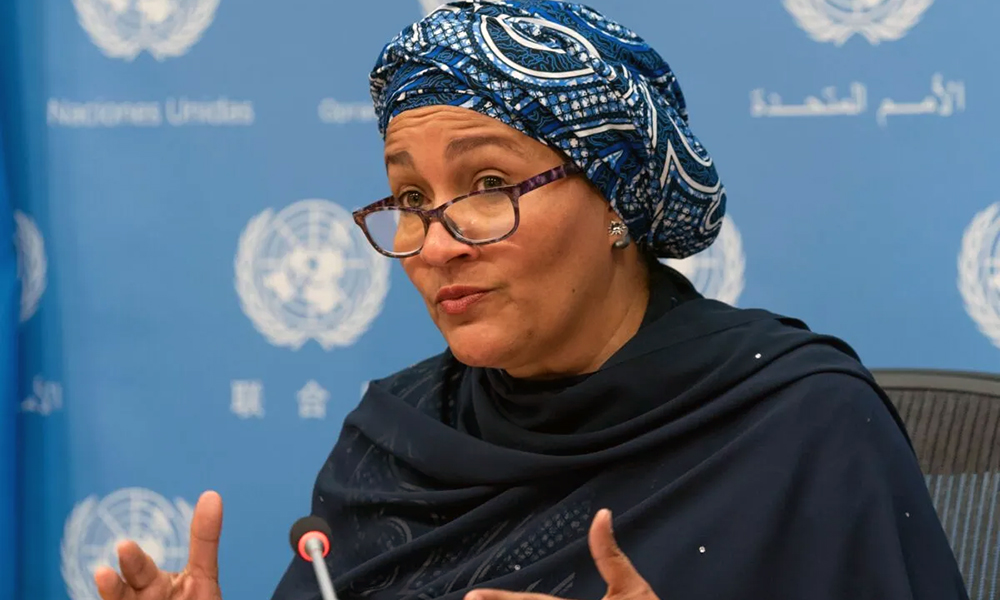
UN Deputy Secretary-General Amina Mohammed has called on the international community to continue supporting Afghan women and girls, saying they must not be abandoned as restrictions on their rights persist.
In a message marking the fifth anniversary of the Islamic Emirate’s return to power, Mohammed said Afghan women and girls continue to bear the burden of restrictions while their hopes and aspirations for the future remain on hold.
“Afghan women must not be left behind,” she said, stressing the importance of supporting their efforts to build a better future.
The Islamic Emirate, however, maintains that women’s rights are protected within the framework of Islamic Sharia.
Its spokesman, Zabihullah Mujahid, has said the government remains committed to ensuring women’s rights in accordance with Sharia and that there is no cause for concern.
Afghan analysts and activists say disagreements between Kabul and the international community over women’s and girls’ rights remain a major obstacle to improving Afghanistan’s relations with the outside world.
The comments come as the United Nations and other international organizations continue to cite restrictions on women and girls as a major challenge facing Afghanistan, while urging countries to maintain support for programs benefiting Afghan women and girls.
Latest News
IEA’s leader: We will not accept ‘un-Islamic’ demands
The supreme leader made the remarks on Saturday evening during a gathering at Kandahar’s military airfield.
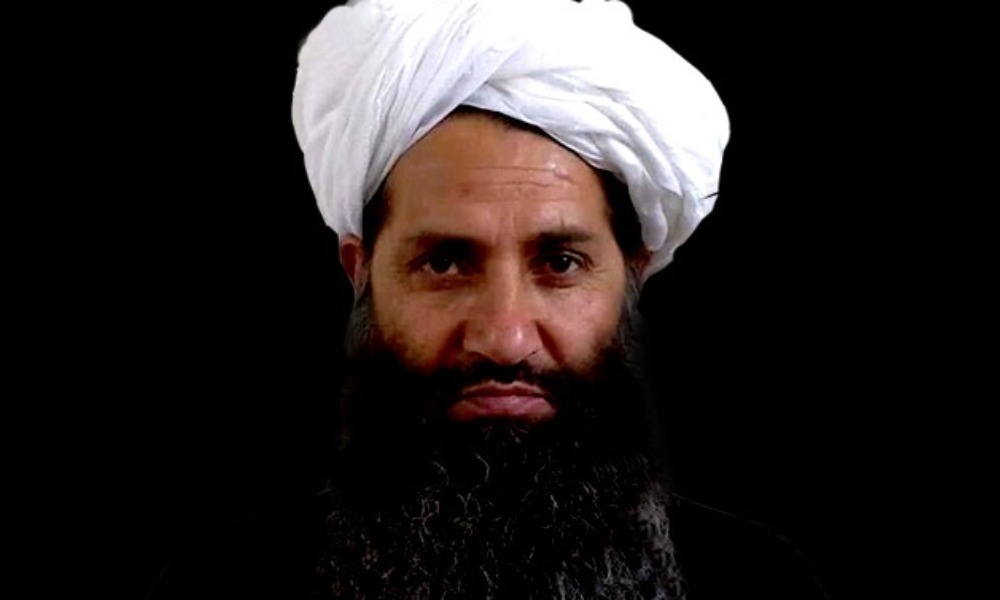
Islamic Emirate leader Sheikh Hibatullah Akhundzada says he will not accept what he described as “un-Islamic” demands, stressing his commitment to what he called the religious and divine rights of the Afghan people.
According to a statement from the Kandahar Information and Culture Directorate, the supreme leader made the remarks on Saturday evening during a gathering at Kandahar’s military airfield.
He again called for unity and obedience, urging Afghans not to be influenced by what he described as “malicious propaganda” by the country’s enemies.
A number of senior civilian and military officials from Kandahar also attended the gathering.


Afghan commerce minister meets Uzbek deputy prime minister in Termez

UN deputy chief: Afghan women and girls must not be abandoned

IEA’s leader: We will not accept ‘un-Islamic’ demands

Iran eyes Afghanistan as key economic opportunity amid sanctions

US Midwest reels from deadly storms and historic floods

Pakistan’s governance system has ‘collapsed’: Mohsin Naqvi

Spain sweep FIFA World Cup player awards after historic triumph

First Chinese transit shipment arrives in Herat via Iran’s railway corridor

Afghanistan, India discuss ways to boost trade and investment ties

Afghanistan exports first stone shipment to US in $100,000 trade milestone

Debate with Nooruddin Azizi, Minister of Industry and Commerce

Saar: Marking IEA’s fifth anniversary in Afghanistan discussed

Tawsia: $420M investment in TAPI gas distribution network in Herat discussed

Tahawol: Trade cooperation between Afghanistan and Iran discussed

Saar: Discussion on Islamic Emirate’s five-year journey
-
 Latest News3 days ago
HesabPay unveils new visa card and digital payment app in Kabul
-

 International Sports3 days ago
AFC Champions League Elite draw nears as Al-Nassr seeded above Al-Hilal
-

 Sport4 days ago
Afghanistan to host India for three-match T20I series in Delhi
-
 Latest News3 days ago
Afghan envoy invites Fazlur Rehman to embassy event marking IEA’s return to power
-
 Sport4 days ago
Afghanistan face Ireland with series win in sight
-
 World4 days ago
US military operations killed 153 civilians in 2025, Pentagon assessment shows
-
 Sport4 days ago
Kabul Premier League: Abasin Defenders thrash Band-e Amir Stars by 163 runs
-
 Regional3 days ago
Iran says no progress on reviving interim peace deal with US