
Latest News
Afghanistan’s commerce minister keen to attend BRICS Summit
Nooruddin Azizi said that Afghanistan is interested in participating as an observer nation

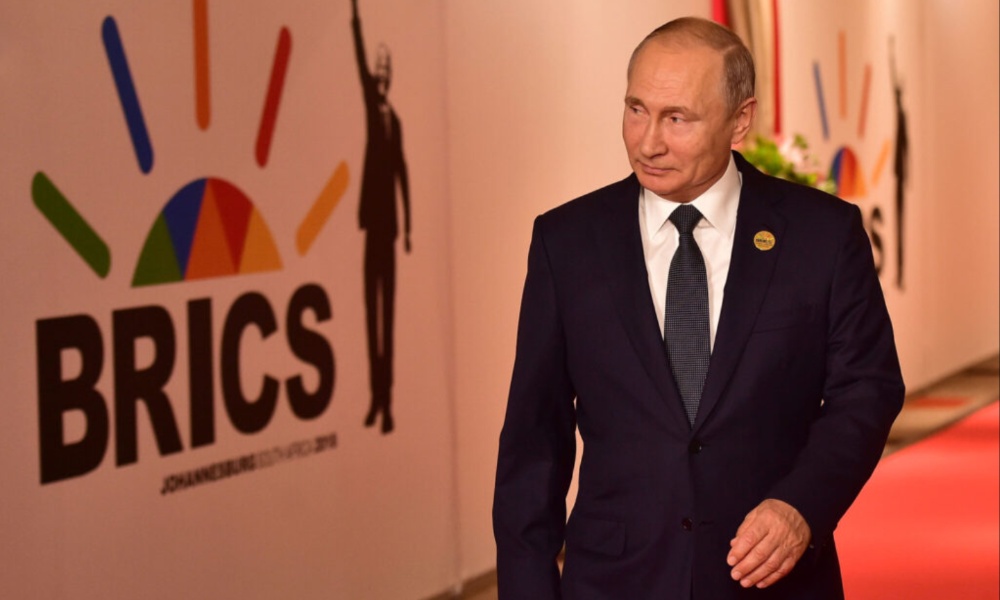
Afghanistan’s Acting Minister of Industry and Commerce Nooruddin Azizi says a delegation from Afghanistan may participate in this year’s BRICS Summit in Kazan, Russia or attend the next event.
Speaking to Russia’s TASS news agency, Azizi said: “We have actually composed a letter [requesting participation in the BRICS Summit in Kazan] and sent it, now it is under consideration by BRICS officials.
“Respectively, when we get a reply from BRICS, when it makes a certain decision, we will make our certain decision as well. Perhaps we will participate [in the BRICS Summit] this time or next time,” he said.
He went on to state that Afghanistan is interested in “participating as an observer”.
Earlier this month the Russian Deputy Foreign Minister Andrey Rudenko said the invitation of guests to the summit is decided by consensus of the BRICS members.
He told reporters that the unrecognized status of the Islamic Emirate is a problem that needs to be taken into account when deciding on its participation.
In September, the Islamic Emirate formally asked to attend the BRICS summit in Kazan.
BRICS Summit Underway
This year’s summit officially opened on Tuesday and will run from October 22 to 24.
Russian President Vladimir Putin is hosting the event in Russia’s southwestern city of Kazan.
The three-day conclave will be the largest gathering of world leaders in Russia in decades and will be held at a time when the Kremlin is locked in a war on Western-backed Ukraine.
BRICS stands for Brazil, Russia, India, China and South Africa.
The group started in 2006, and Brazil, Russia, India and China convened for the first BRIC summit in 2009. South Africa joined a year later.
The aim of the alliance is to challenge the economic and political monopoly of the West. The group sets priorities and has discussions once every year during the summit, which members take turns hosting.
Last year, BRICS extended invitations to include Egypt, Ethiopia, Iran, Saudi Arabia and the United Arab Emirates. Saudi Arabia has yet to formally join, but the others have.
Leaders of BRICS member countries – including Indian Prime Minister Narendra Modi, Chinese President Xi Jinping and South African President Cyril Ramaphosa – are attending the summit.
UAE President Mohamed bin Zayed Al Nahyan, Iranian President Masoud Pezeshkian, Egyptian President Abdel Fattah el-Sisi and Ethiopian Prime Minister Abiy Ahmed have also all arrived.
Leaders of several other countries that have shown an interest in deepening ties with BRICS are also participating, including Turkish President Recep Tayyip Erdogan and Vietnamese Prime Minister Pham Minh Chinh.
Brazilian President Luiz Inacio Lula da Silva canceled his trip to Russia after suffering a head injury in a fall at home on October 19. Minister of Foreign Affairs Mauro Vieira will now represent the country at the summit.
United Nations Secretary-General Antonio Guterres is also attending – and is expected to meet Putin on Thursday.

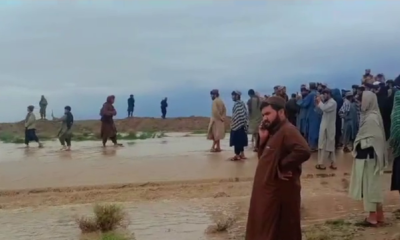


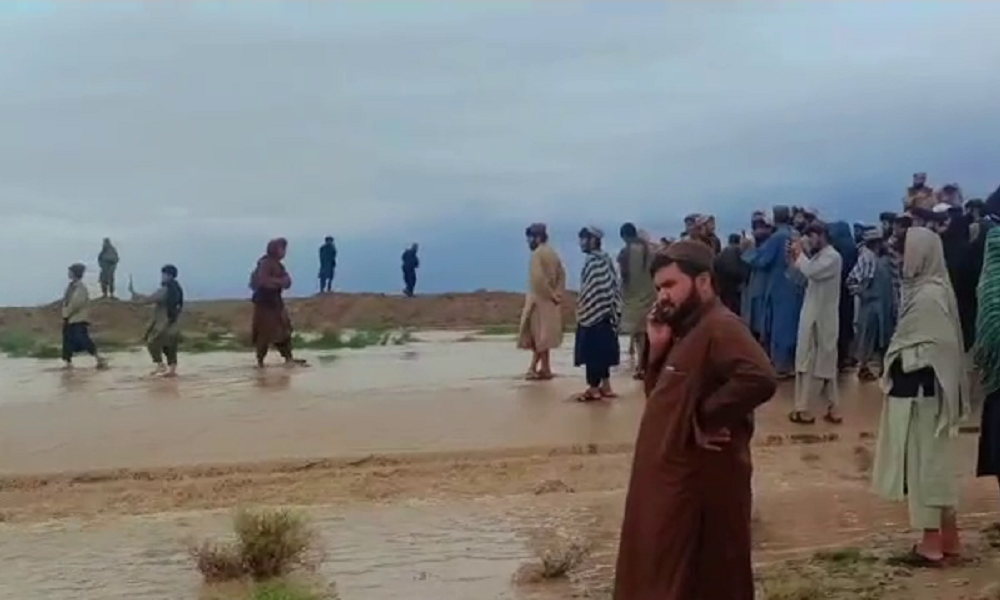
Local officials in Badghis have reported that heavy rainfall from midnight until Saturday morning claimed the lives of five people in the province.
According to officials, three people died in Qadis district, while two others, including a three-year-old child, lost their lives in Dara-e-Bum district.
The Badghis Department for Disaster Management stated that the floods not only caused fatalities but also inflicted significant financial losses on local residents and destroyed agricultural land.
However, complete information on the extent of damage and casualties is not yet available. Staff from various government departments have been dispatched to affected areas to conduct preliminary surveys.
Meanwhile, heavy rains and floods in western Afghanistan temporarily blocked the Herat–Kandahar Highway.
According to Mohammad Israil Sayar, head of the Disaster Management Department in Farah province, recent rainfall has caused the Farah River to swell significantly. He added that the situation has now returned to normal, and traffic along the highway has resumed.
Latest News
Fazlur Rehman urges policy review on Afghanistan, warns of Pakistan’s regional isolation
Rehman further warned that Pakistan’s relations with India, Iran, and Afghanistan are under strain, while several regional states are strengthening partnerships with India.
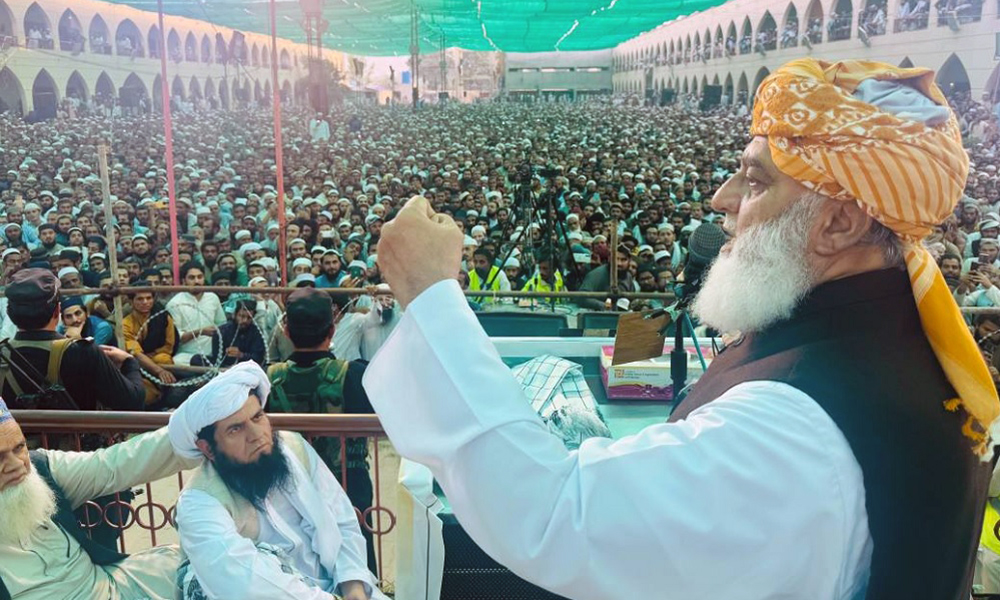
Maulana Fazlur Rehman, the leader of Pakistan’s Jamiat Ulema-e-Islam (JUI-F), has called on the Pakistani government to reassess its Afghanistan policy, warning that the country risks increasing diplomatic isolation across the region.
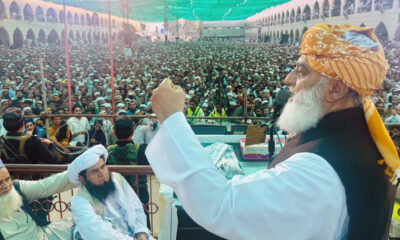
Addressing a ceremony organized by JUI-F leader Kafeel Nizami, Rehman criticized what he described as contradictory state narratives toward Afghanistan. He questioned why bilateral relations have failed to improve despite more than seven decades of engagement.
“We must reflect on whether all the mistakes lie on Afghanistan’s side,” he said, urging policymakers to abandon efforts aimed at maintaining influence over Kabul. He emphasized that a stable and sovereign Afghanistan would better serve regional peace and long-term strategic interests.
The JUI-F chief also cautioned against repeated attempts at regime change, arguing that such approaches have historically deepened instability. He linked past conflicts and interventionist policies to ongoing regional tensions.
Criticizing United States foreign policy, Rehman described Washington’s approach as inconsistent, saying it shifts positions depending on circumstances. He urged Pakistan to avoid entanglement in great-power rivalries and instead pursue an independent, sovereignty-driven diplomatic strategy.
Rehman further warned that Pakistan’s relations with India, Iran, and Afghanistan are under strain, while several regional states are strengthening partnerships with India.
He concluded by calling for a unified national foreign policy, stressing the need for collective decision-making among political stakeholders rather than reliance on a single party’s approach.
Latest News
US regime change efforts in Afghanistan ended in failure, says Merz
The Chancellor pointed out that, in his view, the only successful regime change in recent decades occurred in Panama.

German Chancellor Friedrich Merz has criticized the United States’ efforts at regime change in countries like Afghanistan, describing them as largely unsuccessful.
Speaking at a forum in Frankfurt on Friday, organized by the FAZ newspaper, Merz questioned the effectiveness of regime change as a strategy. “Is regime change really the goal?” he asked, adding that such efforts have “mostly gone wrong” in past conflicts, particularly the war in Afghanistan.
Merz expressed significant doubts about the existence of a coherent and successful strategy for regime change, remarking, “I have serious doubts as to whether there is a strategy and whether that strategy is being successfully implemented.” He warned that without a clear plan, such efforts could take even longer to achieve, if at all.
The Chancellor pointed out that, in his view, the only successful regime change in recent decades occurred in Panama. In contrast, Merz stated that most other attempts, including in Afghanistan, have failed to deliver the intended outcomes.
His comments come amid widespread domestic and international criticism of the U.S. military presence and withdrawal from Afghanistan, following nearly two decades of conflict that culminated in the Islamic Emirate’s return to power.


Severe floods in Badghis leave five dead

13 mountaineers in Balkh summit Alborz at 1,650 meters

Fazlur Rehman urges policy review on Afghanistan, warns of Pakistan’s regional isolation

US regime change efforts in Afghanistan ended in failure, says Merz

Afghan defense forces stand ready to protect national sovereignty: MoD

Pakistani military jet downed in Afghanistan’s Jalalabad, pilot captured alive

Afghan Air Force conducts airstrikes in Islamabad, other cities

Prominent Muslim scholar issues fatwa calling for Afghanistan-Pakistan ceasefire

Afghan air force strikes key Pakistani military installations in retaliatory operation

IEA: Special circle in Pakistan has launched mission to destabilize region

Exclusive interview with Indrika Ratwatte, Deputy UN Special Representative for Afghanistan

Tawsia: Efforts to boost Afghanistan’s domestic production and economic diplomacy

Tahawol: Discussion on day 27 of Iran–US war

Saar: Islamic Emirate confident of Durand Line control

Tahawol: Efforts to release Mohammad Rahim from Guantanamo Bay Detention Camp
-
 Latest News2 days ago
Tajikistan shifts stance on Afghanistan amid rising border tensions
-
 Latest News4 days ago
Around 2.3 million tourists visited Afghanistan’s recreational areas during Eid: Ghufran
-

 Sport4 days ago
Afghanistan squad hit by withdrawals ahead of AFC Asian Cup Qualifiers
-
 Latest News4 days ago
Islamic Emirate releases American prisoner Dennis Coyle
-
 Latest News3 days ago
Two civilians killed, eight injured in fresh shelling by Pakistan in Kunar
-
 Regional4 days ago
US allies in Middle East ‘edging closer’ to joining conflict
-
 Latest News5 days ago
Airstrike on Kabul drug rehabilitation centre sparks legal concerns
-
 Regional4 days ago
Tehran rejects Trump’s claims of talks, accuses US of spreading ‘fake news’