
Latest News
Afghans call for Taliban forces to wear uniforms

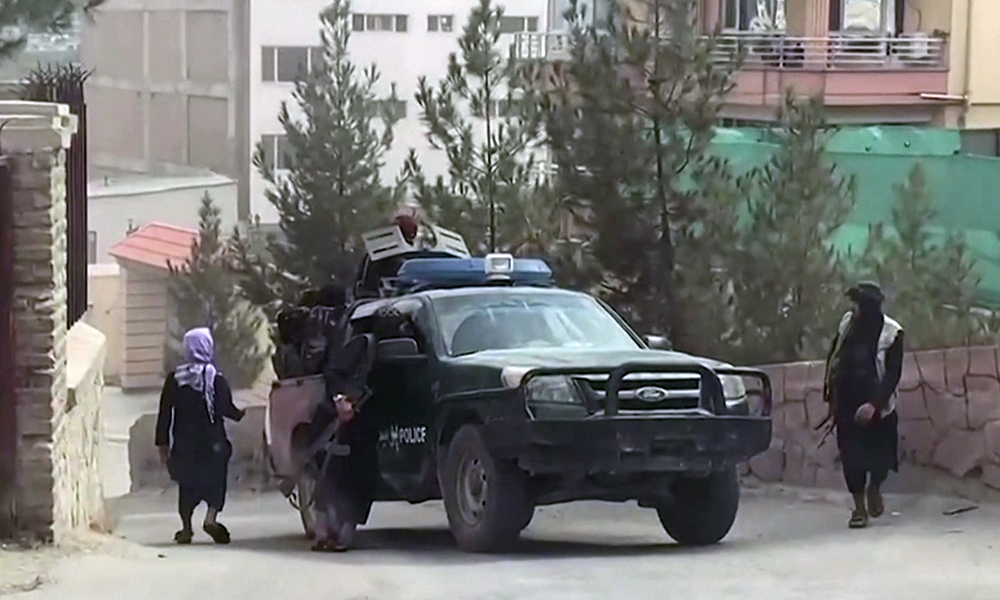
Afghans from around the country have called for Taliban forces to wear uniforms in order to make them easily identifiable and to stop opportunists from committing crimes.
Members of the public have said by wearing uniforms, criminals will not be able to take advantage of the situation and that the necessary coordination will be established between the people and the Taliban.
A Taliban spokesman, meanwhile, said the responsibility of providing security has been given to those with uniforms and that other Taliban forces without uniforms are not allowed to interfere in security matters.
Although the Taliban is said to be effective in securing cities, a number of residents in the capital say it is difficult to distinguish between these forces and criminals, especially armed robbers, and that Taliban responsible for maintaining order must wear uniforms in order to reassure the people.
“There are many armed people in the city and we do not know who is a Taliban and who is not a Taliban and it should be determined for us with special clothes,” a Kabul resident said.
The residents of Kabul emphasize that some thieves pretend to be Taliban to harm the people and rob them.
“The Taliban who are for security must wear military uniforms and the people must know them and not be deceived,” said another resident.
A Taliban spokesman Zabihullah Mujahid, meanwhile, said more security was currently being provided by special forces in military uniforms, and that efforts were being made to remove non-security forces from Kabul and to prevent them from being involved in security.
“Special units are activated and have special uniforms. These forces can either operate and stop or try to stop the criminals, and those who do not have a uniform will soon either leave Kabul or will not be allowed to interfere in people’s lives and intervene in the security sector,” said Mujahid.
The Taliban say that in the past few days, nearly 50 people have been arrested on charges of theft and harassment and that efforts are being made to ensure security so that members of the public do not feel threatened.








Latest News
Amnesty International urges IEA to end education ban for girls
In a statement, the human rights organization called on the Islamic Emirate of Afghanistan to ensure that girls can safely return to schools and universities.

Amnesty International has raised serious concerns over the ongoing exclusion of Afghan girls from education, noting that with the start of the new academic year, girls above the sixth grade, including university students, remain barred from schools and higher education.
The South Asia office of Amnesty International highlighted that Afghan girls have been denied access to formal education for over four years, depriving a generation of young women of critical learning opportunities.
In a statement, the human rights organization called on the Islamic Emirate of Afghanistan to ensure that girls can safely return to schools and universities.
Amnesty International warned that continuing restrictions on girls’ education will have severe long-term consequences on the development of the country and the future of its youth.
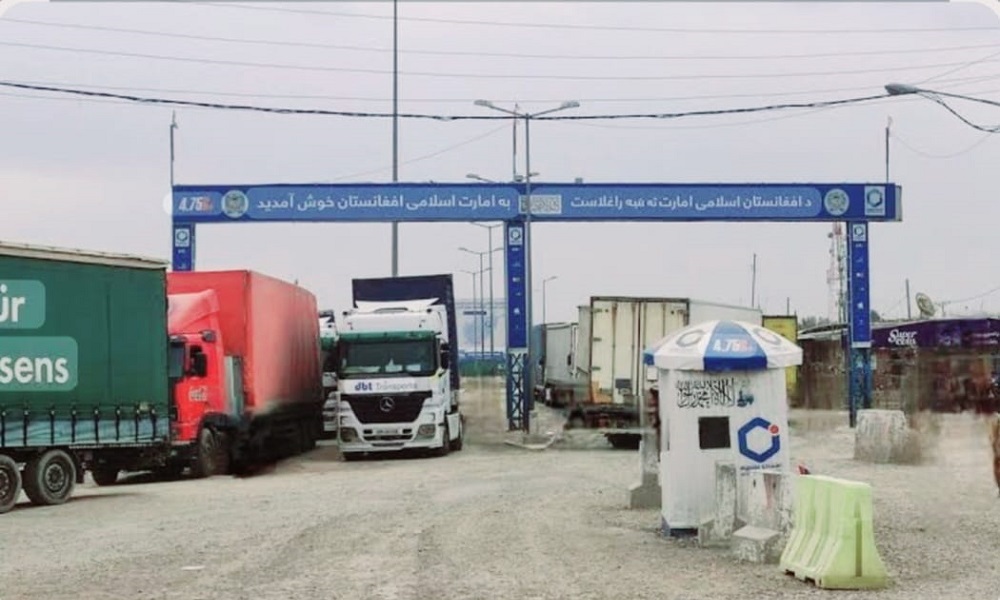
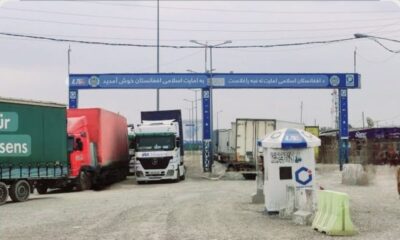
Mohammad Yousuf Saeedi, spokesperson for the governor of Herat, announced on Friday that Iranian cargo truck drivers will no longer need visas to enter Afghanistan.
Saeedi said that, by order of the leader of the Islamic Emirate, starting Saturday, Iranian transit vehicles will be allowed to enter Afghanistan without a visa or a “road pass.”
According to him, the implementation of this decision will reduce transportation costs and, as a result, lower the prices of goods.
Noor Ahmad Islamjar, the governor of Herat, visited the Islam Qala border crossing on Friday to review the implementation of this order. During the visit, he discussed the details of executing the plan with officials from relevant departments, including representatives from the Ministry of Foreign Affairs, Public Works, Customs, and Transport.
Starting Saturday (March 28), foreign cargo vehicles are expected to enter the Islam Qala border without the need for a visa or road pass, unload their goods, and then return to their destinations.
The statement added that implementing this plan could reduce transportation fares on one hand and, by lowering transport costs, help decrease the prices of goods on the other.
This process will create daily job opportunities for more than 1,000 people.
Latest News
Afghans in Iran face growing uncertainty as war enters second month
The organization said that since the start of the war, more than 35,000 Afghans have returned to Afghanistan.
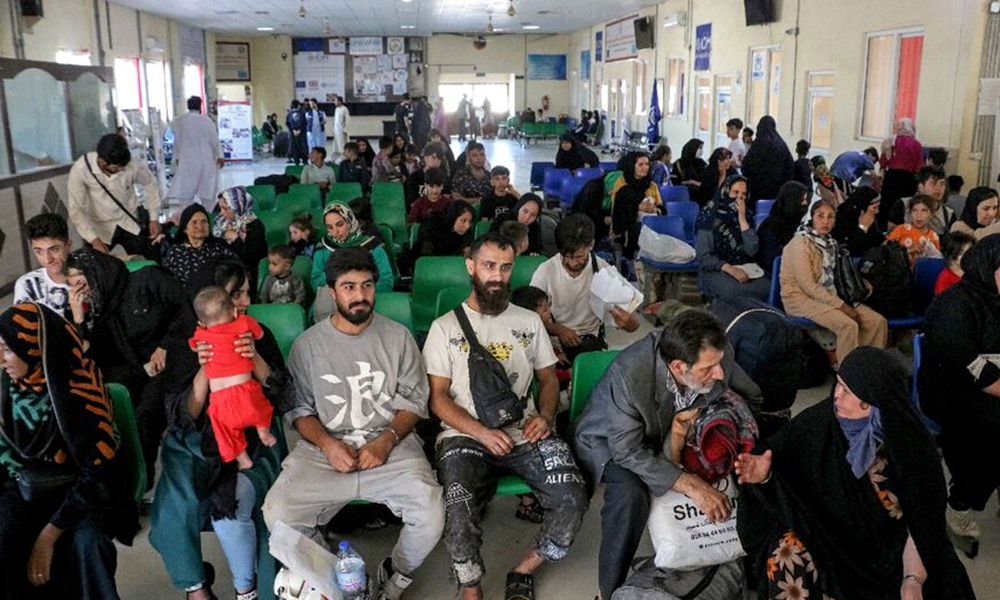
Millions of Afghans living in Iran are facing increasing uncertainty and hardship as the war in the country enters its second month, according to the Norwegian Refugee Council (NRC).
In a statement, NRC Secretary General Jan Egeland warned that more than four million Afghans residing in Iran are among the most vulnerable groups affected by the ongoing conflict. Many Afghan families have lost their only sources of income as informal work has collapsed amid continuous airstrikes and economic disruption.
According to the NRC, a large number of Afghans live in major cities that have come under heavy attacks. Many are unable to flee to safer areas because they have nowhere to go or lack legal permission to travel.
The organization said that since the start of the war, more than 35,000 Afghans have returned to Afghanistan, while over one million Afghan migrants in Iran remain at risk of deportation to a country already struggling with humanitarian challenges.
Egeland noted that after a month of sustained Israeli and U.S. bombardment across Iran, the civilian population is exhausted and deeply traumatized. Millions of people have already fled their homes in search of safety, while others remain trapped in dangerous conditions.
Reports indicate that thousands of homes, hospitals, and schools have been damaged or destroyed across Iran. NRC staff in Tehran say many neighborhoods have suffered significant destruction, while families are taping their windows to prevent injuries from shattered glass caused by nearby explosions.
The war has also severely disrupted daily life, with internet outages and major disruptions to banking services making it increasingly difficult for residents to access basic needs.
According to available data, about 2,700 people have been killed across the Middle East in attacks involving the United States, Israel, and Iran, with more than half of the casualties reported inside Iran. Iran’s Health Ministry says that between February 28 and March 25, at least 1,500 people were killed and over 18,000 injured in the country.
Humanitarian organizations warn that funding for life-saving assistance in both Iran and Afghanistan remains critically low. Aid agencies say they lack sufficient resources to prevent hunger and provide emergency shelter for displaced families.
Egeland warned that if the war continues, the region could face a far larger humanitarian crisis, with millions potentially forced to flee across borders and placing further pressure on already fragile neighboring countries.
He called on all parties involved in the conflict to respect international humanitarian law, stop attacks on civilians and civilian infrastructure, and work toward a diplomatic solution to end the crisis.


G7 foreign ministers demand an end to attacks on civilians in Iran war

Amnesty International urges IEA to end education ban for girls

Twelve US troops wounded in Iran strike on base in Saudi Arabia, US official says

Exclusive interview with Indrika Ratwatte, Deputy UN Special Representative for Afghanistan

US Vice President Vance emerges as key figure in Iran peace efforts: Report

Pakistani military jet downed in Afghanistan’s Jalalabad, pilot captured alive

Afghan Air Force conducts airstrikes in Islamabad, other cities

Prominent Muslim scholar issues fatwa calling for Afghanistan-Pakistan ceasefire

Afghan air force strikes key Pakistani military installations in retaliatory operation

IEA: Special circle in Pakistan has launched mission to destabilize region
Exclusive interview with Indrika Ratwatte, Deputy UN Special Representative for Afghanistan

Tawsia: Efforts to boost Afghanistan’s domestic production and economic diplomacy

Tahawol: Discussion on day 27 of Iran–US war

Saar: Islamic Emirate confident of Durand Line control

Tahawol: Efforts to release Mohammad Rahim from Guantanamo Bay Detention Camp
-

 Latest News5 days ago
Pakistan seeks Russian mediation to resolve Afghanistan tensions
-
 Latest News2 days ago
Tajikistan shifts stance on Afghanistan amid rising border tensions
-
 Latest News4 days ago
Around 2.3 million tourists visited Afghanistan’s recreational areas during Eid: Ghufran
-

 Sport4 days ago
Afghanistan squad hit by withdrawals ahead of AFC Asian Cup Qualifiers
-
 Latest News4 days ago
Islamic Emirate releases American prisoner Dennis Coyle
-
 Latest News3 days ago
Two civilians killed, eight injured in fresh shelling by Pakistan in Kunar
-
 Regional4 days ago
US allies in Middle East ‘edging closer’ to joining conflict
-
 Latest News5 days ago
Airstrike on Kabul drug rehabilitation centre sparks legal concerns