
Latest News
AFJC calls on UN Security Council to step up efforts to protect Afghan journalists

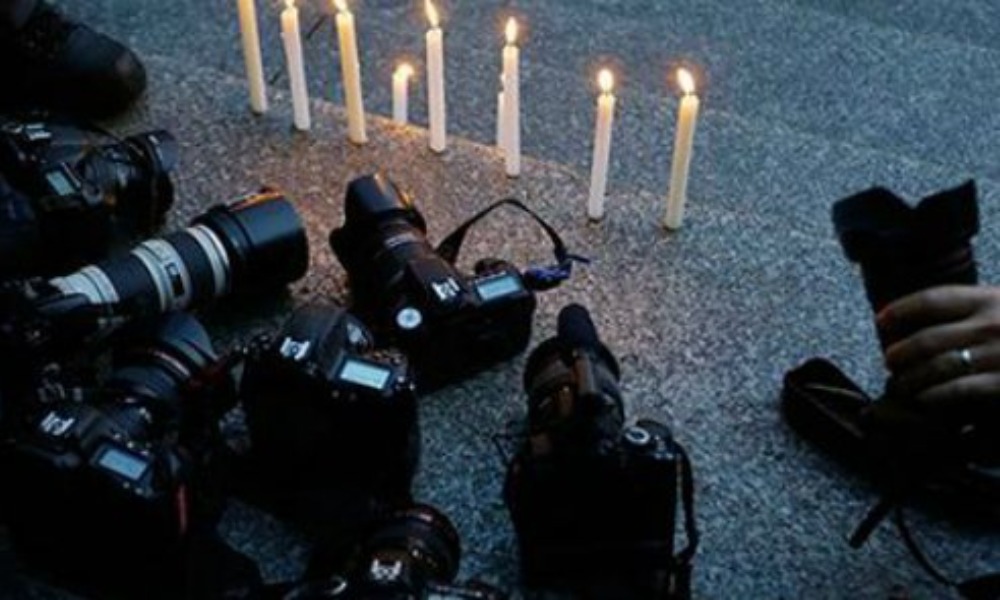
The Afghanistan Journalists Center (AFJC) and 40 other civil society organizations from around the world have called on the UN Security Council and UNAMA to support the media community by calling on all parties to stop violence against journalists in accordance with United Nations Security Council Resolution 2222 (2015).
This comes amid a wave of targeted killings against media workers in the country.
The AFJC said in a letter to the UN, and to the United Nations Assistance Mission in Afghanistan (UNAMA) head Deborah Lyons, that the council and all parties to the letter “are deeply concerned by the torrent of targeted killings of journalists in Afghanistan since early 2020.
“These attacks have had a devastating impact on Afghanistan’s vulnerable civic space, press freedom, and related democratic rights, and we write to urge you to take immediate action.”
According to AFJC’s press freedom tracker, 11 journalists and media workers have been killed in Afghanistan since the February 2020 signing of the US-Taliban agreement in Doha.
“Most of these journalists were deliberately targeted for their work, which underscores the lack of effective human rights protections in the country.
“Among the eleven journalists are TV presenter Malala Maiwand, who was killed on Human Rights Day on December 10, 2020 with her driver, freelance photojournalist Rahmatullah Nikzad, who was killed in Ghazni province on December 21, 2020, and Besmillah Adel Aimaq, a radio journalist who was killed in Central Ghor province on January 1, 2021.”
Media freedom and freedom of expression are human rights recognized under international legal conventions that Afghanistan is a party to, as well as domestic law, the letter read adding that the enforcement of Afghan Media Laws – ensuring the security of journalists and media outlets – is a fundamental responsibility of the Afghan government.
“Although some efforts have been made by the government to protect and uphold these rights, they have not been sufficient to prevent violations, and prosecute the perpetrators of violence against journalists,” the letter stated.
“The Afghan government has made repeated pledges to ensure the security of Afghan civilians, yet there remains a culture of impunity for those responsible for carrying out targeted killings of journalists.”
The AFJC stated: “We believe that strong and concerted political action from the United Nations Security Council and increased support from the UN Assistance Mission in Afghanistan are now essential, given their interest in a peaceful transition and the role that a free press plays in this endeavour.
“Targeting journalists creates a societal ripple effect of fear and censorship and deprives the public of crucial information about the peace process. Therefore, we request that the UN Security Council stand against the ongoing impunity for attacks against journalists in Afghanistan.”
The AFJC called on the UN to use all diplomatic powers at their disposal to ensure the protection of press freedom and the safety of journalists and media workers in Afghanistan, especially in the event of a peace deal resulting in a new political settlement.
They also urged the UN to intensify efforts to protect journalists in Afghanistan by working with the government to take serious action to end impunity; to scrutinize and reconsider international financial support to the Afghan government, so as to ensure meaningful commitments to protect media freedom and the rule of law’ and to encourage the international community to offer and strengthen practical and accessible support to threatened journalists and media workers, such as safe passage, refuge, and medical assistance where necessary.
Among the organizations to endorse the letter was the Committee to Protect Journalists (CPJ) and journalist and human rights associations from the US through to Asia and Africa.






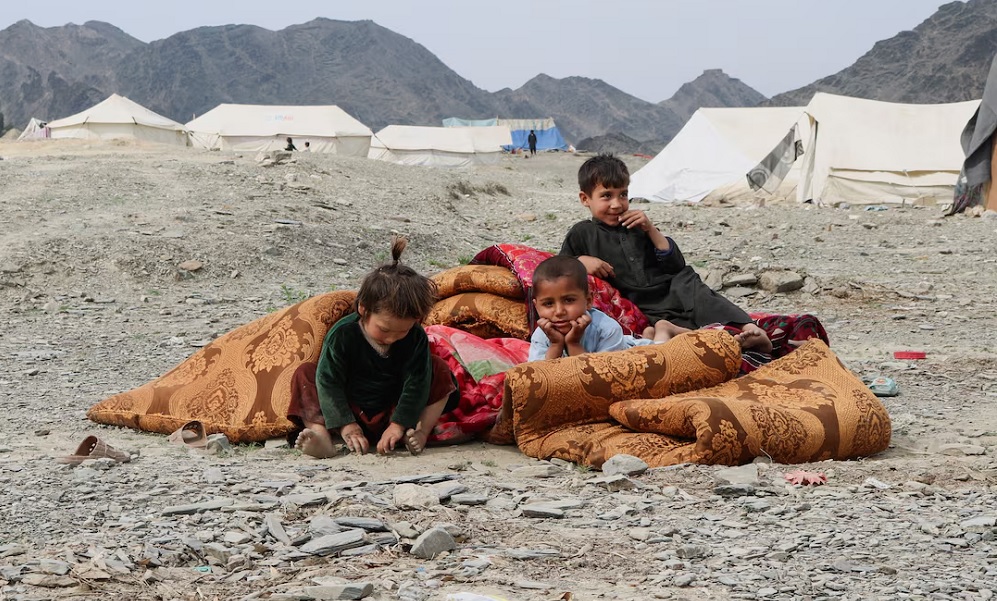
A group of religious scholars from Afghanistan and Pakistan have called on authorities in both countries to extend the pause in hostilities, initially announced for Eid ul-Fitr, until Eid ul-Adha.
The appeal comes after Attaullah Tarar, Pakistan’s Information Minister, announced a temporary ceasefire from March 18–19 midnight until March 23–24 midnight.
In a joint statement signed by 11 Pakistani clerics and as many Afghan clerics, the scholars emphasized that their initiative aims to promote a sustainable and dignified resolution to tensions between Islamabad and Kabul, Dawn newspaper reported.
The clerics urged both Pakistani authorities and the Afghan side to extend the ceasefire to allow pilgrims to perform Hajj in a peaceful environment. They added that this “peace movement” goes beyond the ceasefire appeal and includes broader diplomatic and social efforts to resolve longstanding issues between the two countries.
The scholars expressed hope that their efforts would lead to a mutually acceptable solution and help lay the foundation for lasting stability and regional harmony.
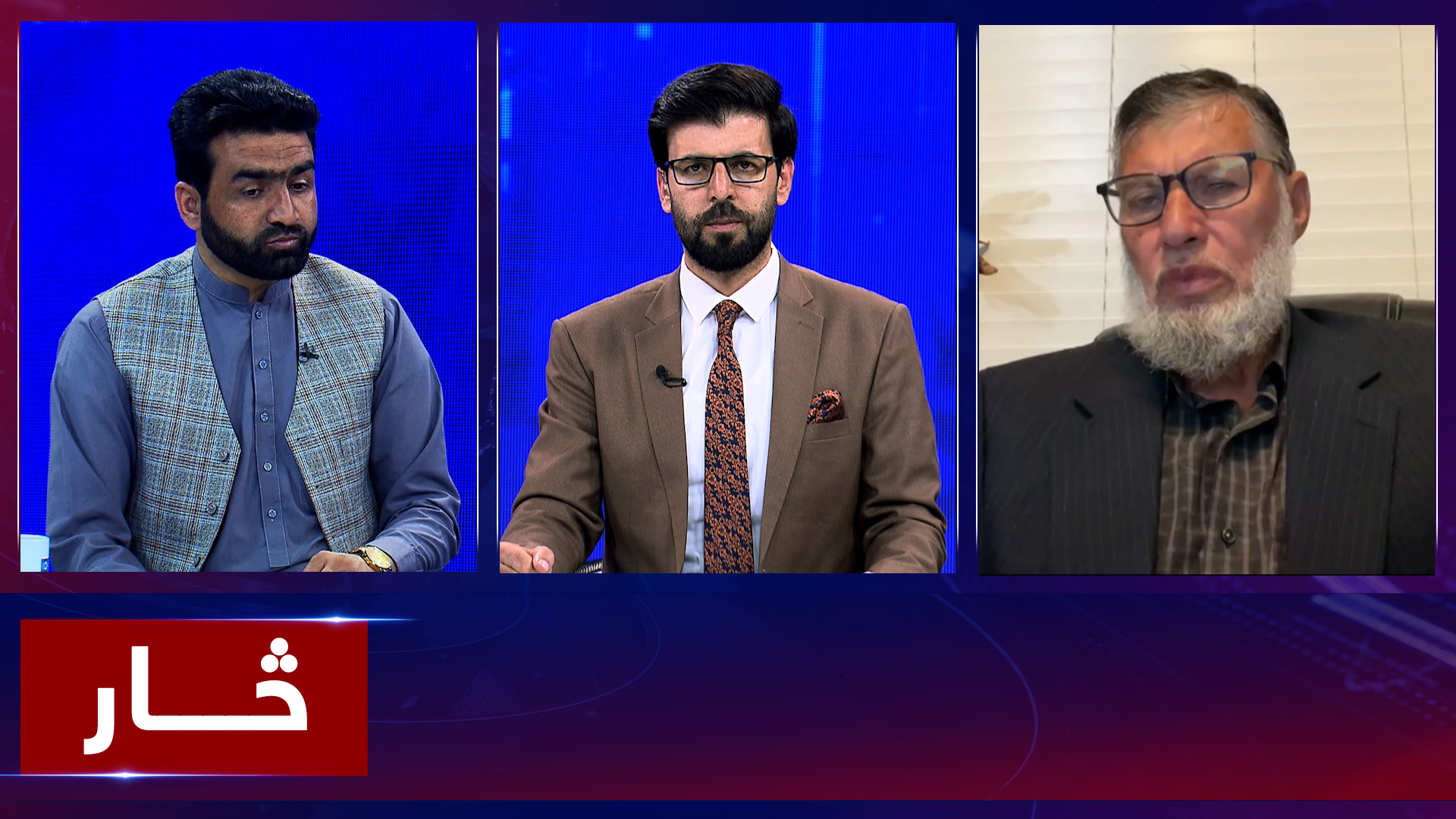
The Ministry of Foreign Affairs of the Islamic Emirate of Afghanistan announced on Tuesday the release of American citizen Dennis Coyle from prison.
According to the ministry, Coyle’s mother had written to the leader of the Islamic Emirate demanding amnesty and the release of her son on the occasion of Eid. The Supreme Court considered time served sufficient and decided to release him.
The Ministry of Foreign Affairs stated that this action was carried out on the basis of humanitarianism and good faith, and it believes that such measures can strengthen trust between countries. The ministry also expressed hope that both countries, in the future, can find solutions to remaining issues through mutual understanding and constructive dialogue.
The Islamic Emirate also expressed appreciation for the cooperation of the United Arab Emirates in this matter.
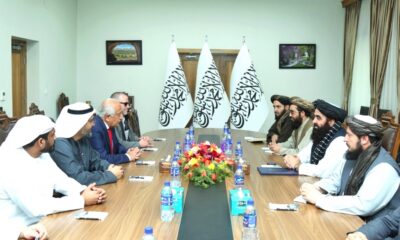
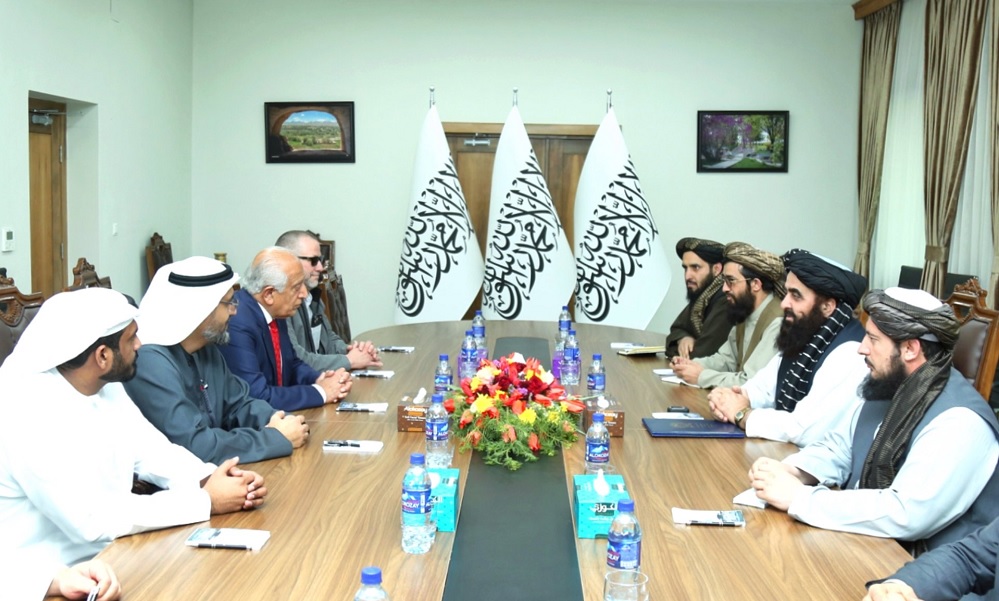
Separately, for Coyle’s release, an American delegation, including Zalmay Khalilzad, former U.S. Special Representative for Afghanistan, met on Tuesday with Amir Khan Muttaqi, the Foreign Minister of the Islamic Emirate.
The meeting was also attended by Saif Mohammed Al-Ketbi, Ambassador of the UAE in Kabul, and a member of the prisoner’s family.
According to the Ministry of Foreign Affairs, Muttaqi stated that the Islamic Emirate has not detained any citizen of any country to achieve political objectives; rather, detentions were the result of legal violations, and individuals were released after completing judicial procedures.
At the meeting, Khalilzad praised the action of the Islamic Emirate and emphasized the importance of continuing discussions on all issues between the two countries, expressing hope for further progress in the future.
Muttaqi also stressed that Kabul and the UAE should provide standard consular services to their citizens, and that the Afghan government is fully prepared in this regard.
He thanked Sheikh Mohamed bin Zayed Al Nahyan, President of the UAE, for their constructive role in facilitating the release of the prisoner and referred to the UAE as a close friend of Afghanistan.
Earlier, Muttaqi had also praised the role of the State of Qatar in facilitating information exchange between the Islamic Emirate and the prisoner’s family.
Additionally, the UAE ambassador expressed his country’s readiness to play a role in humanitarian institutions and called such developments beneficial for everyone.


IPL 2026: RCB sold for $1.78 billion in landmark deal

‘Made in Afghanistan’ expo opens in Tashkent

Afghan, Pakistani clerics urge extension of ceasefire until Eid ul-Adha

Israel strikes Tehran as Trump says US negotiating to end war

Tahawol: Escalating threats between Iran-US discussed

Pakistani military jet downed in Afghanistan’s Jalalabad, pilot captured alive

Afghan Air Force conducts airstrikes in Islamabad, other cities

Prominent Muslim scholar issues fatwa calling for Afghanistan-Pakistan ceasefire

Afghan air force strikes key Pakistani military installations in retaliatory operation

IEA: Special circle in Pakistan has launched mission to destabilize region
Tahawol: Escalating threats between Iran-US discussed

Tahawol: Possibility of US ground forces entering Iran war discussed

Saar: Using US prisoners as political pressure

Tahawol: Pakistan’s efforts to destabilise Afghanistan

Saar: Decline in international assistance to Afghanistan
-

 Sport5 days ago
Afghanistan national buzkashi falls short in Kokpar World Championship semifinals
-

 Latest News3 days ago
Deadly violence likely without dialogue between Afghanistan and Pakistan: ICG
-

 Sport4 days ago
Ireland to host Afghanistan for ODI series in August
-
 Latest News4 days ago
Mojtaba Khamenei calls for improved Afghanistan–Pakistan relations, offers help
-
 Latest News4 days ago
Malaysian PM welcomes temporary Afghanistan–Pakistan truce, urges lasting peace
-

 Latest News2 days ago
Pakistan seeks Russian mediation to resolve Afghanistan tensions
-

 International Sports3 days ago
FIFA World Cup 2026: Play-Off Tournament takes centre stage
-
 Business3 days ago
Afghani strengthens nearly 10% against US dollar amid banking sector reforms