
World
AI impersonator posed as US Secretary of State Rubio, contacted Foreign Ministers


A person using artificial intelligence to mimic the voice of U.S. Secretary of State Marco Rubio reportedly contacted multiple foreign ministers and American officials last month, posing as the nation’s top diplomat.
According to a confidential diplomatic cable reviewed by Reuters, the individual used AI-generated voice cloning technology to impersonate Rubio and reached out via the encrypted messaging app Signal.
At least three foreign ministers, one U.S. governor, and one member of Congress were targeted in the scheme.
In several cases, the impersonator left voicemails that sounded convincingly like Rubio and attempted to initiate follow-up communication. One target received a message encouraging them to move the conversation to Signal, a tactic often used in social engineering campaigns to avoid detection.
A State Department spokesperson confirmed that the agency is investigating the incident and has begun alerting foreign governments through diplomatic channels. While no official comment was given on the identity of the impersonator or their motives, officials familiar with the matter said the incident has raised fresh concerns about AI-enabled disinformation, especially targeting diplomatic and political figures.
“We are aware of the impersonation attempts and are actively working to determine the source and intent behind them,” a senior State Department official said on condition of anonymity.
There is no indication that classified information was accessed, but the incident has renewed calls within the department and Congress for tighter authentication protocols in sensitive communications.
Not the first incident
This is not the first time high-profile political figures have been impersonated using AI-enhanced techniques.
In 2023, a deep fake video of President Joe Biden surfaced online during the early stages of the presidential primary season. In the video, Biden appeared to discourage voters from participating in a key state’s primary election.
The clip, later exposed as a Russian-linked disinformation operation, was widely shared before being removed. U.S. intelligence agencies concluded it was part of an attempt to undermine democratic trust and influence political discourse.
Similarly, in late 2022, a deep fake audio recording surfaced purporting to capture Ukrainian President Volodymyr Zelensky urging his forces to surrender to Russia. That recording was broadcast briefly on hacked regional television channels before it was debunked by Kyiv and NATO officials.
In 2024, impersonators used a cloned voice of French President Emmanuel Macron to contact European officials ahead of a major EU security summit, though no major security breach was reported. That episode prompted several European governments to review their secure
communication procedures, particularly for ministers and heads of state.
Experts warn that the growing accessibility of voice-cloning and deep fake video tools poses a significant threat to diplomatic integrity, national security, and public trust.
“With just a few minutes of audio, a bad actor can create a convincing replica of a government official,” said Dr. Elise Warren, a cybersecurity and AI researcher at Georgetown University.
“These impersonation attempts are no longer crude. They’re increasingly indistinguishable from real communication unless verified through multi-factor authentication.”
The incident involving Rubio comes amid growing pressure on the U.S. government to implement standards for authenticating official communications, especially across messaging apps commonly used by diplomats and lawmakers. Some agencies have already begun deploying digital watermarking tools and blockchain-based identity verification systems to prevent manipulation.
As of Tuesday evening, Rubio’s office had not issued a public comment on the impersonation attempt.
Rubio, a former senator from Florida, was appointed Secretary of State in early 2025 by President Donald Trump during his second administration. He has been at the center of high-stakes negotiations in recent months, including talks with NATO allies and Pacific partners.





World
Supreme Court lets Trump resume deporting migrants to countries not their own
More than 25,000 migrants have been deported to 29 countries under the policy implemented last year, according to a tally by human rights groups, with the vast majority going to Mexico.
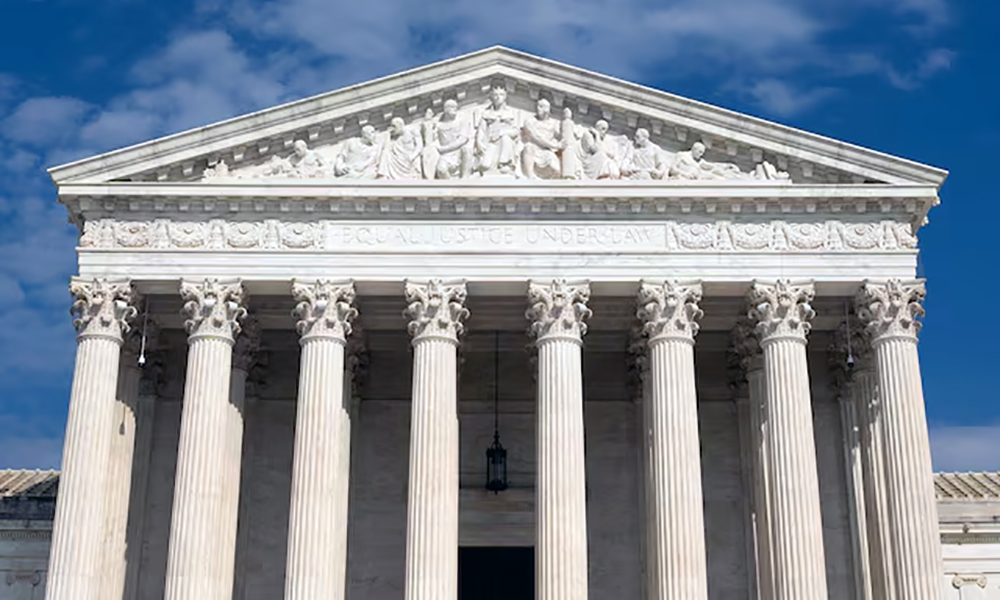
The US Supreme Court on Tuesday let President Donald Trump’s administration resume deporting migrants to countries other than their own without offering them the chance to show the harms they may face, bolstering a tool his administration has used for rapid expulsions as part of his immigration crackdown, Reuters reported.
The court granted the Justice Department’s emergency request to put on hold Boston-based US District Judge Brian Murphy’s ruling that the Department of Homeland Security’s policy to remove migrants to so-called third countries is unlawful. The court also agreed to hear arguments in the dispute in December, with a formal ruling on the policy to follow.
The court has a 6-3 conservative majority. Its three liberal justices dissented from the decision to let the deportations immediately resume pending the final outcome of the litigation.
Murphy’s ruling came in a class-action lawsuit filed by immigrant rights groups on behalf of migrants seeking to prevent the US government from sending them to third countries without notice and a chance to assert the harms they could face.
More than 25,000 migrants have been deported to 29 countries under the policy implemented last year, according to a tally by human rights groups, with the vast majority going to Mexico.
The policy is one of a number of measures the administration has taken in its pursuit of Trump’s goal of mass deportation. The Republican president has enforced a sweeping crackdown on immigration — among his top priorities — since returning to office last year.
The administration has carried out third-country deportations to politically unstable South Sudan, which the US State Department urges Americans to avoid due to the risks of crime, kidnapping and armed conflict, as well as Uganda, Equatorial Guinea, Liberia, the Central African Republic, and other nations.
Department of Homeland Security General Counsel James Percival welcomed the court’s decision.
“A bad day for criminal illegals and open-borders activists alike,” Percival wrote on social media.
Trina Realmuto, a lawyer for the plaintiffs at the National Immigration Litigation Alliance, said the court has “allowed the administration to resume sending people to third countries where they face persecution or torture. That is a devastating result for people who may be put on a plane before they ever have notice or an opportunity to raise a fear claim.”
In February, Murphy ruled that the policy violates immigration law procedures and due process protections under the US Constitution’s Fifth Amendment. Due process generally requires the government to provide notice and an opportunity for a hearing before taking certain adverse actions.
The Supreme Court, which has allowed a number of Trump’s hardline immigration policies, previously sided with the administration in the legal challenge, suspending a preliminary order that Murphy issued earlier in the case halting the removals. In another win for the administration, the Supreme Court subsequently lifted limits the judge had imposed to protect a group of men from being sent to South Sudan, read the report.
The case began in 2025 after the Department of Homeland Security moved to step up deportations of migrants who cannot be returned to any country listed on their deportation orders.
The policy provided that migrants could be swiftly removed without notice to third countries that have provided credible diplomatic assurance that they will not persecute or torture the individuals. For countries that have not provided such assurance, deportees would be notified of their destination and US authorities would assess the likelihood of persecution or torture only if the individual raises such fear on their own.
In its emergency filing to the Supreme Court, the Justice Department said third-country deportations are “an essential tool to remove certain aliens, including some of the worst criminal aliens.”
But both Murphy and critics of the administration said the policy is also targeting migrants who had been granted legal protection from being sent back to their home countries.
The policy has resulted in deportees being unlawfully transferred by third countries back to their home countries from which the US had already granted them protection, while others have been beaten, sexually assaulted, detained or have disappeared, the plaintiffs said in a court filing.
The administration is ignoring “the significant harm resulting from deporting thousands of longtime US residents, many with no criminal history, to third countries without regard to the persecution or torture they face there,” the plaintiffs said.
The Boston-based 1st US Circuit Court of Appeals upheld most of the judge’s ruling on September 18.
The case has been hotly contested since it began, and included findings by Murphy that the administration “repeatedly violated, or attempted to violate” his orders. Murphy in 2025 found that the administration had violated another order he issued requiring additional steps before attempting to send a group of migrants to South Sudan.
World
Trump says men arrested at UK air base used by US planned ‘big damage’
WATCH: Trump praises UK authorities for arrests Sunday near RAF airbase used by US forces in England.
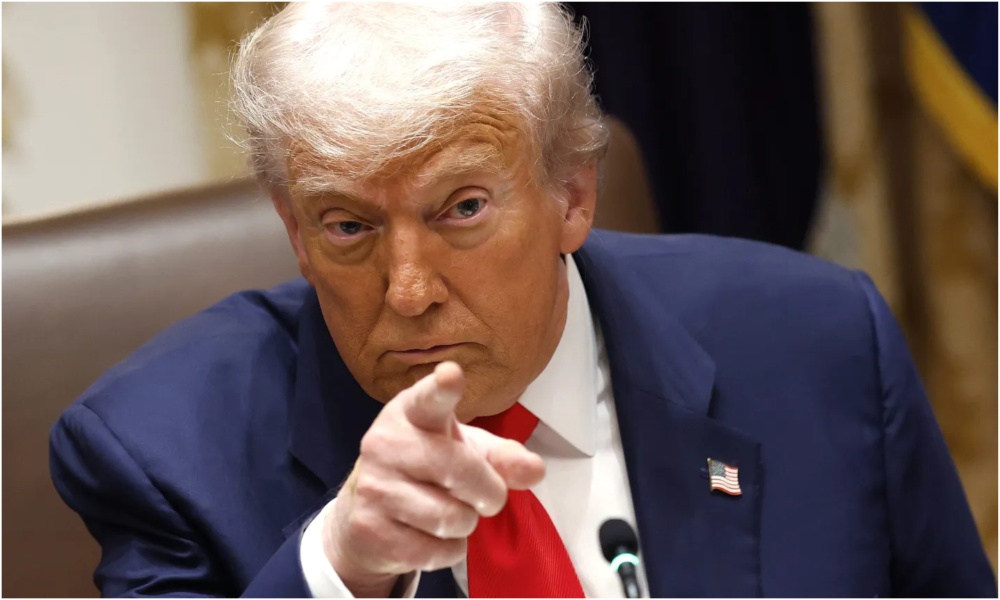
British police have arrested five men on suspicion of explosives offences and preparing a terrorist act near RAF Fairford, a UK air base used by the United States military, authorities said.
The arrests were made early Sunday after police received a report of three suspicious vans travelling towards the airfield in Gloucestershire, western England.
US President Donald Trump said the suspects had been under investigation by British and US authorities and were looking to cause “big damage” to the base.
“The arrest in the UK was fantastic,” Trump told reporters, praising cooperation between US and British authorities.
Counter Terrorism Policing said five men remained in custody and that officers were working with partner agencies to establish the circumstances surrounding the incident.
Police placed a 400-metre cordon around the area while bomb disposal experts examined the vehicles. About 85 homes in a nearby village were evacuated, while armed officers patrolled the area.
RAF Fairford has been used by US forces for military operations against Iran. Security was also increased at other UK bases used by the US, including RAF Lakenheath and RAF Mildenhall.
A source familiar with the investigation told Reuters an Iranian-linked motive was considered the most likely, while possible Russian involvement or an Islamist plot were also being examined.
No motive has been publicly confirmed by police.
The arrests come amid heightened security concerns in Britain following Iranian warnings over the use of UK bases by US forces. Russia has also been accused by Western governments of supporting sabotage operations in Europe, allegations Moscow has denied.
World
Serbia’s President Vucic resigns ahead of October parliamentary elections
He had said in late June that he planned to resign and that Serbia would hold early parliamentary and presidential elections.
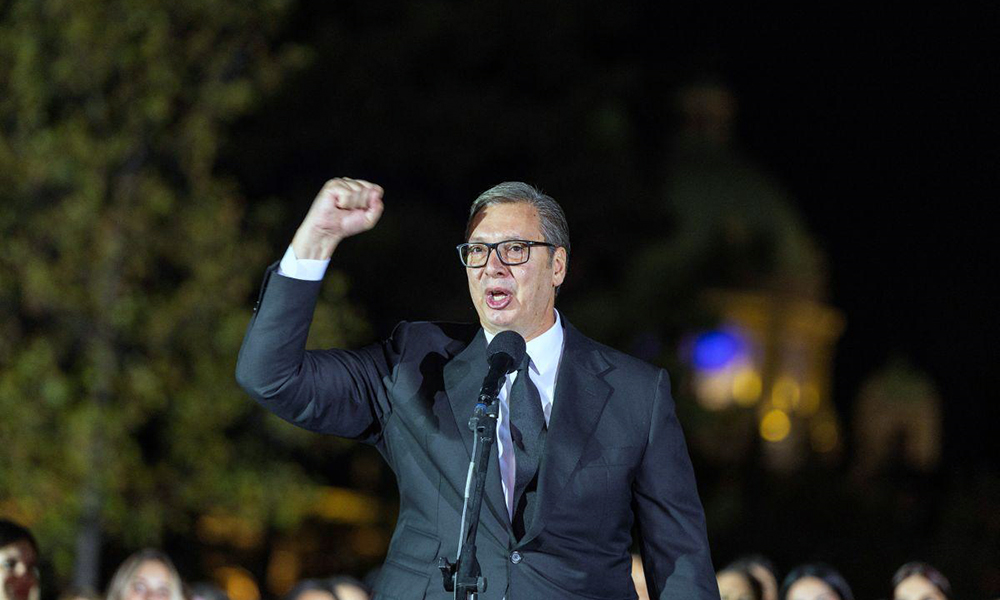
Serbia’s populist President Aleksandar Vucic announced his resignation on Sunday, ending his second and final five-year term and paving the way for early presidential elections, Reuters reported.
Vucic’s resignation, seven months before his term ends, comes amid campaigning for Serbia’s October 25 snap parliamentary vote and allows him to be appointed prime minister if his Serbian Progressive Party (SNS) forms the new government.
He had said in late June that he planned to resign and that Serbia would hold early parliamentary and presidential elections.
Rights groups have accused Vucic and his allies of increasingly authoritarian rule, with anti-government protesters saying they have been beaten by police and unfairly detained. Authorities have denied those allegations.
On Sunday, hundreds of Vucic’s supporters cheered him in front of the Presidency building in Belgrade’s city centre.
“This is the last evening for me in this building,” he told the flag-waving crowd minutes before resigning.
“I have faithfully served you and my fatherland, Serbia, … I am proud of what we have done together,” he said.
Under Serbia’s constitution, outgoing Parliament Speaker Ana Brnabic will serve as interim president until a new one is elected. The presidential election must be completed within 90 days, with the campaign lasting between 30 and 60 days.
“By the end of December … we will have the first round of presidential elections,” Vucic said.
Next month’s snap parliamentary election will pit Vucic’s SNS and its allies against Students Win, a student-led anti-corruption movement, and European Serbia, an alliance of pro-Western opposition parties.
Students Win, European Serbia and other parties have yet to nominate their presidential candidates.
Vucic, 56, has dominated Serbian politics for more than a decade, read the report.
He was a hardline nationalist and information minister during the era of the late Slobodan Milosevic and the wars of the 1990s, and later served as deputy prime minister from 2012-14 and prime minister from 2014-17.
He moved to the largely ceremonial position of president in 2017, but kept tight control over his party and the government.
In foreign policy, Vucic has pursued a balancing act that seeks closer ties with China, a major investor, and Russia, Serbia’s principal supplier of natural gas, while maintaining a long-term goal of joining the EU. He also has sought to bolster ties with the United States and Israel.
Vucic’s term in office suffered a major blow in November 2024 when an awning of a newly reconstructed railway station in the northern city of Novi Sad collapsed, killing 16 people.
The disaster sparked nationwide protests by students and the opposition, who demanded accountability for those responsible, transparency in public procurement, an end to systemic corruption, and an early parliamentary vote.
The government repeatedly denied accusations by the protesters, although several officials, including two ministers, were arrested or resigned after the incident.
On Sunday, Vucic said he has granted amnesty and a pardon to 49 people, including 12 activists and 11 of his own supporters, who were arrested or tried in connection with the protests.


Tahawol: Improvement in Afghanistan-China relations discussed

Saar: Expanding ties with regional and global countries discussed

Abu Muslim Farah beat Omar Zawak Herat 4-0 in Afghanistan Champions League

ACB launches nationwide fast-bowling talent hunt

US extends Qatar camp stay for more than 1,000 Afghans

Saudi energy group signs major Afghanistan deals covering gas exploration and pipeline plans

Iranian clubs to face Gulf opponents at neutral venues in Asian Champions League Elite

Khalilzad: Afghanistan ready to attract major investment

Ariana Television Network secures exclusive rights to Afghanistan’s 2026/27 cricket series

Pakistan, Saudi Arabia and Türkiye strengthen new Mecca Defence Alliance
Tahawol: Improvement in Afghanistan-China relations discussed
Saar: Expanding ties with regional and global countries discussed

Tahawol: Absence of Afghanistan’s envoy at UNGA discussed

Saar: Assessment of war between Afghanistan and US discussed

Saar: Afghanistan’s image at UNGA
-

 Sport4 days ago
Afghan bodybuilder Ali Bilal finishes runner-up at Mr Olympia for third straight year
-

 Latest News4 days ago
Afghanistan says 28 killed, 32 captured in Nuristan operation
-
 World4 days ago
Trump rejects Iranian proposal to open Hormuz and end fighting
-

 Sport5 days ago
Afghanistan to face India in Asian Games cricket quarter-final
-

 Sport5 days ago
Afghanistan Champions League: Omar Zawak Herat beat Toofan Herat 1-0
-

 World5 days ago
Iran awaits US move after WSJ report says Trump rejects peace plan
-

 Latest News5 days ago
Khalilzad questions Pakistan’s commitment to Afghan welfare
-
 Latest News4 days ago
UNDP, UN Women launch financing initiative for Afghan women entrepreneurs