
Latest News
Analysing the unthinkable; a year after the maternity ward attack


One year ago today – on May 12 – the maternity ward of the Dasht-e-Barchi hospital in Kabul was attacked. An attack that shocked the world.
Twenty-four people were killed according to official sources, many of them new mothers.
The maternity ward was run at the time by Médecins Sans Frontières (MSF), who went on to conduct their own fact-finding mission into the devastating incident.
In a statement issued by Médecins Sans Frontières, Dr Isabelle Defourny, MSF director of operations, explains what they found and some of the lessons learned.
“I recall the first days, our progressive understanding of how this massacre had been perpetrated: attackers had deliberately, and methodically, killed mothers and pregnant women, in their beds, one after the other. Such a horrible attack on a maternity ward has no precedent, either in Afghanistan or in MSF’s 50-year history. Never would we have thought that violence could be unleashed on women at the moment when they are the most vulnerable: when giving birth. There is an unbearable symbolic meaning in this act of violence.
“Then followed days and weeks of intense activity, in which we tried our best to provide support – including mental healthcare – to the wounded, to the families of the victims and to our staff.
“Some weeks later, we had to make the difficult choice to withdraw from Dasht-e-Barchi. We knew we would leave behind huge needs. For many women in the neighbourhood, our maternity ward was a much-needed resource; 16,000 deliveries had taken place there in 2019 alone. But we couldn’t continue our activity after what happened,” Defourny said.
Why did MSF run a fact-finding exercise?
“On the one hand, it’s part of our standard practices following such severe security events, to describe as precisely as we can the chronology and description of the attack, but also to analyse the elements which allowed such an event to take place and what could have been done to avoid it. It allowed us to re-evaluate the environment and our positioning in a given context, how security risks were assessed and managed. This exercise didn’t aim to review our decision to leave Dasht-e-Barchi, but was intended to be useful for the other existing MSF activities in Afghanistan.
“On the other hand, we feel it’s important, and a sort of duty towards the victims, but also the survivors and our staff in Afghanistan and beyond, to try and understand what we can of what happened.
“This is why, even though we knew beforehand that we couldn’t obtain all the answers to our questions, it was important and necessary to perform this exercise,” she said.
What did the fact-finding exercise consist of?
“Interviews were done with MSF staff and other witnesses present on site or in areas surrounding the maternity ward, as well as with relevant external stakeholders involved at the national and international level. In total, 38 witnesses and 45 external stakeholders and experts were interviewed by MSF.
“We also reviewed material and factual elements, as well as publicly available elements such as statements in the media and on social media.”
What did this fact-finding exercise allow you to establish?
“First, it allowed us to gather and check some elements, which proved complicated during the first weeks following the attack, and to confirm some information: a total of 24 people were killed according to official sources, including one of our midwives, Maryam, 16 mothers, and two children aged 7 and 8.
“Six MSF staff, one newborn and one caretaker were also wounded in the attack. This inquiry also confirmed that existing security protocols limited the number of casualties among MSF staff and patients. For instance, more than 90 people were able to take refuge in the maternity ward’s safe rooms.
“However, for some of the key questions – notably the identity of the perpetrators of this massacre, and their motivations – no solid conclusion or certainty came out of this exercise.
“Our fact-finding process didn’t allow us to determine with certainty the identity of the perpetrators of the attack and their motives,” she said.
Do you know more about the perpetrators and their motivations?
“No one has claimed responsibility for this attack. Immediately after it, Afghan authorities publicly blamed the Taliban – or Islamic Emirate of Afghanistan – who refuted and condemned the accusation, while in the media representatives of foreign governments accused Islamic State Khorasan Province (IS-KP/Daesh). However, no evidence was made public to support those claims. Since then, we have only received oral information that an Afghan investigation on the attack is ongoing.
“Our fact-finding process didn’t allow us to determine with certainty the identity of the perpetrators of the attack and their motives.
“However, the most likely hypothesis is that the attack was committed by at least two members of the IS-KP armed group. Some sources mentioned the support from other armed groups which our inquiry couldn’t confirm or deny.
“Even if we don’t know who was responsible, the exercise suggested that reasons for this attack might relate to a form of retaliation regarding Afghan authorities. In this hypothesis, pregnant women would have been targeted because one week before this attack, three women, including two pregnant women, had been killed during a military operation run by Afghan military forces against IS-KP; or because of the situation of women and children allegedly supporting IS-KP and being held under arrest by Afghan authorities.
“However, this doesn’t exclude the possibility that women and pregnant women were targeted as members of the Hazara community – this attack is one of a long series of attacks in recent years against this minority, particularly in the Dasht-e-Barchi neighbourhood,” Defourny said.
Was MSF targeted?
“Our fact-finding exercise gave no indication that MSF, as an institution, was directly targeted. However, we can’t exclude that the presence of MSF in this maternity ward may have played a role in the choice of this target.
“In any case, the first targets of this attack were pregnant women and women in labour in a maternity ward which we ran. We know that the attackers directly headed to the maternity ward and killed the pregnant women and women in labour who were present there. Two children who had come for routine vaccination and another caretaker were also shot dead in the attack. Healthcare staff were also killed and injured,” she said.
If MSF was not directly targeted, why wouldn’t you resume activities in Dasht-e-Barchi?
“We can’t work in an environment where patients and medical staff are targeted, and where we can’t prevent such a massacre from happening again.
“This attack clearly targeted pregnant women in a maternity ward run by MSF. And the fact-finding exercise confirmed that none of the different parties with whom we have relations in Afghanistan gave us specific alerts on it.
“Our will to continue working in Afghanistan is motivated by the dire medical needs of the Afghan people… but can only continue if minimum conditions of safety are ensured…,” she said.
What does this mean for MSF’s presence in Afghanistan?
“Our will to continue working in Afghanistan is motivated by the dire medical needs of the Afghan people. This is particularly true in the context of the COVID-19 pandemic, and at a time when the 20-year-long international military presence comes to an end and internal political dynamics are shifting. But our work can only continue if minimum conditions of safety are ensured for our patients and staff.
“When MSF returned to Afghanistan 12 years ago – after we had withdrawn in 2004 following the killing of five of our colleagues – we knew it was one of the most dangerous countries to work in. At that time, our analysis was that it was possible to craft a safe working space for us, by renewing our engagement with all the different parties involved.
“Since then, after the attack on our hospital in Kunduz, and the one on the Dasht-e-Barchi maternity ward, we have to admit that this wasn’t enough. In these two attacks, 66 people were killed – by far the highest number of deaths in our programmes around the world over the last six years. Our organisation can’t accept the idea of integrating the loss of our staff or of the patients we treat as part of our work. We maintain our freedom to withdraw and stop our activities when we think that the risk of such severe attacks repeating themselves is too great.
“Although security and political dynamics are different from one area to another, globally our presence in the country today remains constrained and limited. We continue our work by intervening only in areas where we feel that we can build a solid base, by constantly reviewing the context and security incidents, by reducing the exposure of our staff, particularly in Kabul, and by reinforcing our engagement with all local parties who will speak with us,” she concluded.

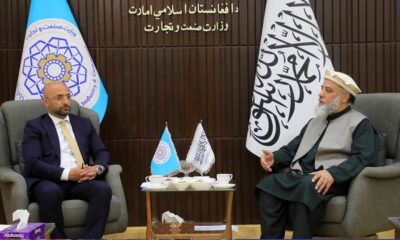



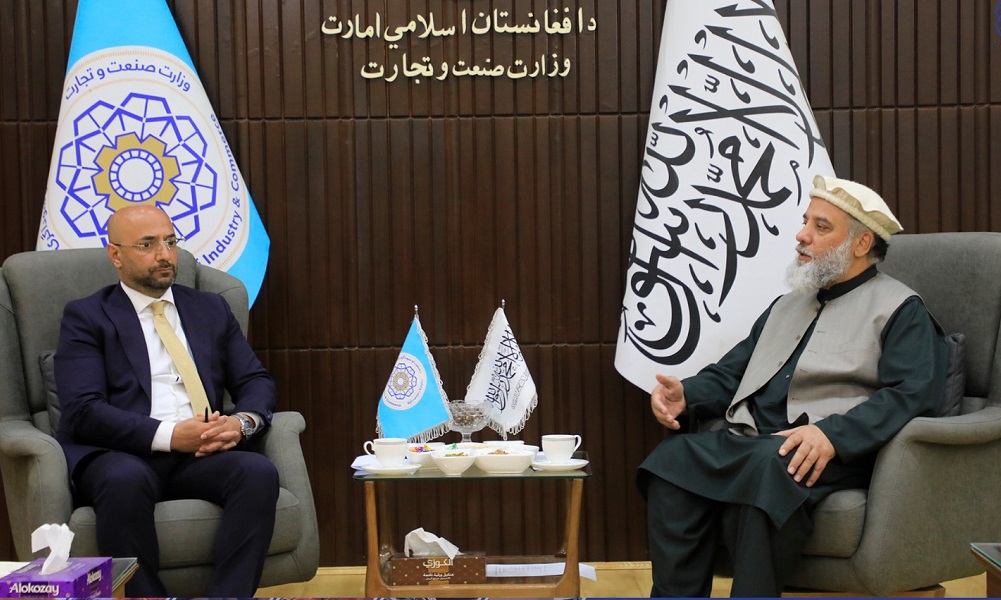
Nooruddin Azizi, Minister of Industry and Commerce of the Islamic Emirate of Afghanistan, met on Thursday with Sadin Ayyıldız, Chargé d’Affaires of the Turkish Embassy in Kabul. During the meeting, Ayyıldız invited the Minister of Industry and Commerce to participate in Turkey’s Antalya Diplomacy Forum.
According to a statement from the Ministry of Industry, the meeting also emphasized the economic, trade, and historical relations between Kabul and Ankara, as well as the export of Afghan goods to Turkey.
The two sides discussed increasing trade volume between the two countries, strengthening economic relations, facilitating and enhancing commercial activities, cooperation in road transport along various routes, activating the Lapis Lazuli Corridor, and regional cooperation.
Azizi, while thanking Turkey for inviting the Islamic Emirate to the Antalya Diplomacy Forum, introduced the Ministry’s technical team to ensure better coordination and planning.
The Antalya Diplomacy Forum is an international conference held annually in Turkey, aimed at examining global challenges and finding joint solutions through dialogue and diplomacy. It hosts representatives from more than 100 countries, including presidents, leaders, high-ranking officials, international organizations, analysts, and media from various countries.
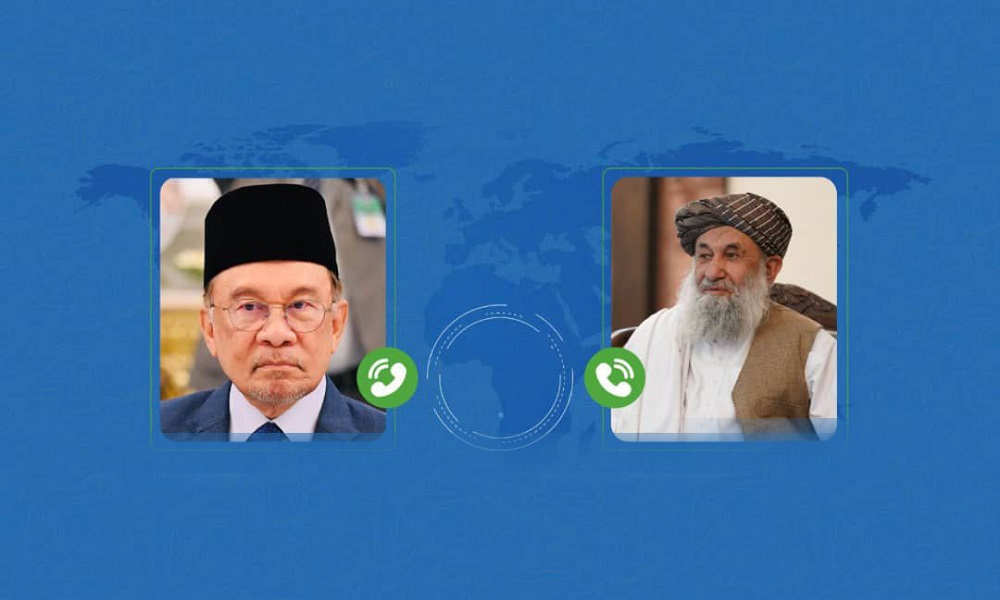
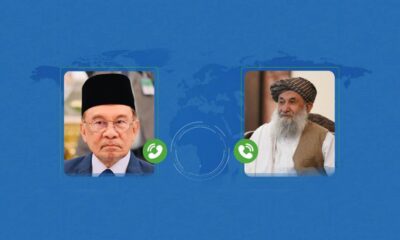
Mullah Mohammad Hassan Akhund, Prime Minister of the Islamic Emirate, in a telephone conversation initiated by Mohammad Anwar Ibrahim, Prime Minister of Malaysia, discussed regional developments, particularly the recent situation between Pakistan and Afghanistan.
Zabihullah Mujahid, spokesperson for the Islamic Emirate, said in a statement that Hassan Akhund stated during the call that the Islamic Emirate of Afghanistan’s principled position is clear and that it believes in resolving issues through mutual understanding and cooperation.
Hassan Akhund added that during Eid al-Fitr, at the request of Saudi Arabia, Turkey, and Qatar, the Islamic Emirate demonstrated its goodwill by respecting a pause in defensive operations.
He stated that violence benefits no party and that actions that increase tensions should be avoided, emphasizing that wisdom and rationality must guide efforts to resolve problems.
He also expressed concern over rising regional tensions following the US and Israeli attacks on Iran.
The Malaysian Prime Minister also expressed concern about the regional situation and hoped that the temporary halt in hostilities between Afghanistan and Pakistan would continue, and that existing problems could be resolved through sincere negotiations and understanding.
He added that Malaysia aims to play a positive role in facilitating understanding between both parties.
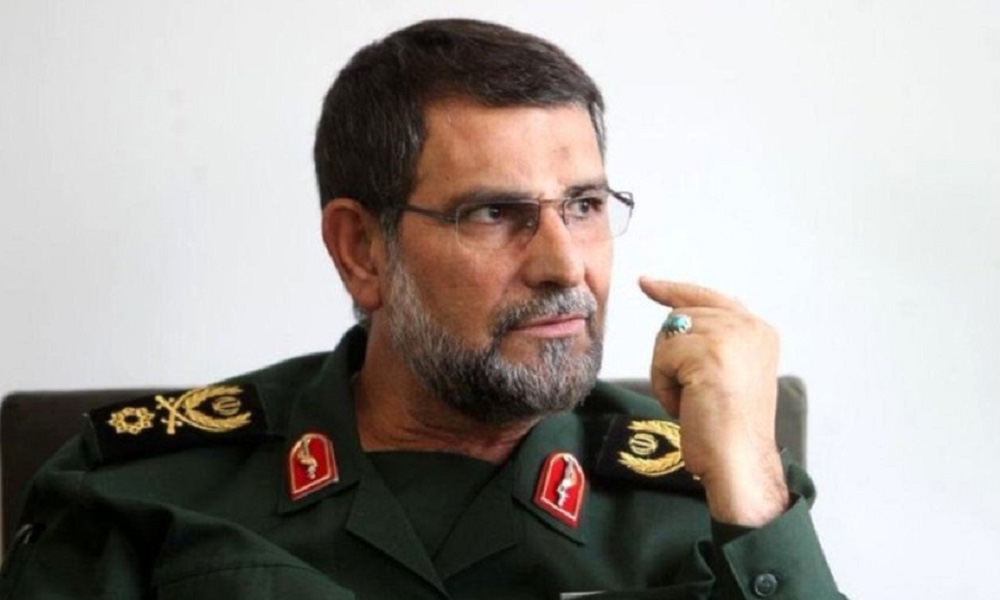
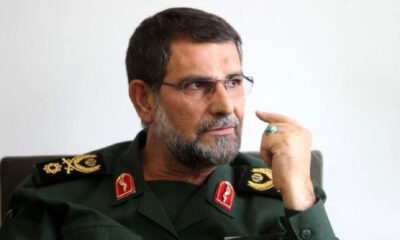
Israel’s defence minister says that an Israeli air strike has killed Alireza Tangsiri, commander of the Iranian Revolutionary Guards’ navy.
The killing was carried out “last night, in a precise and lethal operation” and targeted other “senior officers of the naval command”, said Israel Katz, in a video statement.
“The man who was directly responsible for the terrorist operation of mining and blocking the Strait of Hormuz to shipping was blown up and eliminated,” he claimed.
Since the start of the joint US-Israeli war on Iran on February 28, Israel has announced the assassination of several top Iranian officials, including Supreme Leader Ali Khamenei and the Islamic Republic ‘s powerful security chief, Ali Larijani.
Al Jazeera’s Tohid Asadi, reporting from Tehran, said there was no official Iranian confirmation yet of Tangsiri’s killing.
“But if it’s true it’s going to be another major blow for a country that has already experienced a lot of military commanders being killed” since the war began, he said.
The head of the Basij paramilitary forces, Brigadier General Gholamreza Soleimani, and Intelligence Minister Esmail Khatib were also assassinated in Israeli attacks.
Moreover, in recent days, Israeli forces have carried out several strikes targeting the naval assets of Iran.
Last week, Israeli airstrikes hit several Iranian naval ships in the Caspian Sea, including ones equipped with missile systems, support vessels, and patrol craft.


Tahawol: Discussion on day 27 of Iran–US war

Turkey invites IEA’s commerce minister to Antalya Diplomacy Forum

Saar: Islamic Emirate confident of Durand Line control

Afghan, Malaysian PMs discuss situation between Kabul and Islamabad

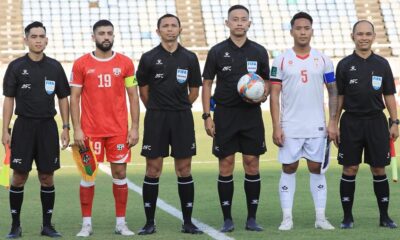
Myanmar trump Afghanistan 2-1 in Asian Cup Qualifier

Pakistani military jet downed in Afghanistan’s Jalalabad, pilot captured alive

Afghan Air Force conducts airstrikes in Islamabad, other cities

Prominent Muslim scholar issues fatwa calling for Afghanistan-Pakistan ceasefire

Afghan air force strikes key Pakistani military installations in retaliatory operation

IEA: Special circle in Pakistan has launched mission to destabilize region
Tahawol: Discussion on day 27 of Iran–US war
Saar: Islamic Emirate confident of Durand Line control

Tahawol: Efforts to release Mohammad Rahim from Guantanamo Bay Detention Camp

Saar: End of ceasefire between Afghanistan-Pakistan reviewed

Tahawol: Escalating threats between Iran-US discussed
-
 Latest News5 days ago
Deadly violence likely without dialogue between Afghanistan and Pakistan: ICG
-

 Latest News4 days ago
Pakistan seeks Russian mediation to resolve Afghanistan tensions
-
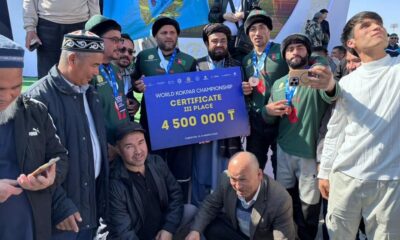
 Sport5 days ago
Afghanistan secures third place at 2026 World Kokpar Championship
-
 International Sports5 days ago
FIFA World Cup 2026: Play-Off Tournament takes centre stage
-
 Business4 days ago
Afghani strengthens nearly 10% against US dollar amid banking sector reforms
-
 Latest News4 days ago
World must re-engage to prevent all-out Afghanistan-Pakistan war: Financial Times
-

 Sport3 days ago
Afghanistan squad hit by withdrawals ahead of AFC Asian Cup Qualifiers
-
 Latest News3 days ago
Around 2.3 million tourists visited Afghanistan’s recreational areas during Eid: Ghufran