
Regional
Arab and Muslim leaders demand immediate end to Gaza war

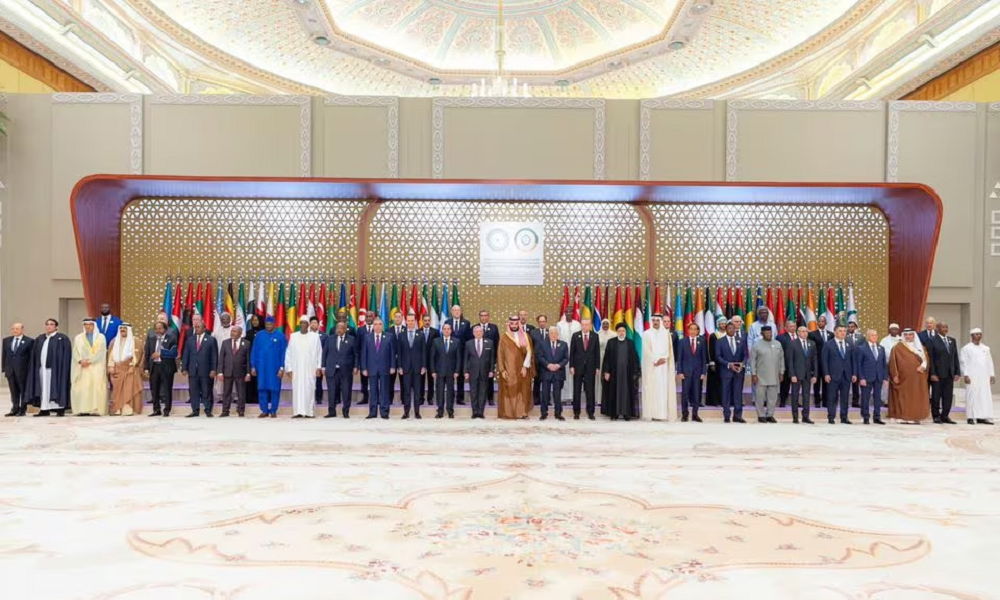
Saudi Arabia and other Muslim countries called on Saturday for an immediate end to military operations in Gaza, rejecting Israel’s justification of its actions against Palestinians as self-defense.
The extraordinary joint Islamic-Arab summit in Riyadh urged the International Criminal Court to investigate “war crimes and crimes against humanity that Israel is committing” in the Palestinian territories, according to a final communique.
Saudi Arabia has sought to press the United States and Israel for an end to hostilities in Gaza, and Crown Prince Mohammed bin Salman, the kingdom’s de facto ruler, gathered Arab and Muslim leaders to reinforce that message.
Dozens of leaders including Iranian President Ebrahim Raisi, Turkish President Tayyip Erdogan, Qatar’s Emir Sheikh Tamim bin Hamad Al Thani and Syrian President Bashar al-Assad, who was welcomed back into the Arab League this year, attended.
Prince Mohammed affirmed the kingdom’s “condemnation and categorical rejection of this barbaric war against our brothers in Palestine”.
“We are facing a humanitarian catastrophe that proves the failure of the Security Council and the international community to put an end to the flagrant Israeli violations of international laws,” he said in an address to the summit.
Palestinian President Mahmoud Abbas said Palestinians were facing a “genocidal war” and urged the United States to end Israeli “aggression”.
Raisi hailed the Palestinian Islamist militant group Hamas for fighting against Israel and urged Islamic countries to impose oil and goods sanctions on Israel.
“There is no other way but to resist Israel. We kiss the hands of Hamas for its resistance against Israel,” Raisi said in his address.
The Middle East has been on edge since Hamas fighters rampaged into Israel on Oct. 7, killing 1,200 people.
Since then, Israel has escalated its assault on Gaza, where 11,078 people had been killed as of Friday, 40% of them children, according to Palestinian officials.
Fighting intensified overnight into Saturday near Gaza City’s overcrowded hospitals, Palestinian officials said.
A baby died in an incubator at Gaza’s largest hospital after it lost power, and a patient in intensive care was killed by an Israeli shell, the Palestinian health ministry said.
The war has upended traditional Middle East alliances as Riyadh has engaged more closely with Iran, pushed back against U.S. pressure to condemn Hamas, and put on hold its plans to normalize ties with Israel, Reuters reported.
Raisi’s trip to Saudi Arabia is the first by an Iranian head of state in more than a decade. Tehran and Riyadh formally ended years of hostility under a Chinese-brokered deal in March.
Erdogan called for an international peace conference to find a permanent solution to the conflict between Israel and Palestinians.
“What we need in Gaza is not pauses for a couple of hours, rather we need a permanent ceasefire,” Erdogan told the summit.
Qatar’s emir said his country, where several Hamas leaders are based, was seeking to mediate the release of Israeli hostages and hoped a humanitarian truce would be reached soon.
“For how long will the international community treat Israel as if it is above international laws?” he asked.
President Joko Widodo of Indonesia, the country with the world’s largest Muslim population, said the “Indonesia Hospital in North Gaza continues to be the target of Israeli attacks and has run out of fuel.”
He said a way must be found to make Israel cease fire immediately, before adding: “The OIC must use all fronts to hold Israel accountable for the humanitarian atrocities it has committed.”
Saudi Foreign Minister Prince Faisal bin Farhan told reporters there could be no talks about the future of Gaza except “talks about an immediate ceasefire”.
The summit also demanded an end to the siege of Gaza, access for humanitarian aid, and a halt to the sale of arms to Israel.
The kingdom had been scheduled to host two extraordinary summits, of the Organization of Islamic Cooperation and the Arab League, on Saturday and Sunday, but opted for a joint summit because of the “extraordinary” Gaza situation, the Saudi foreign ministry said.
Hamas had urged the summit to take “a historic and decisive decision and move to stop the Zionist aggression immediately”.
Some Arab countries, led by Algeria, called for a complete cut in diplomatic ties with Israel, two delegates told Reuters.
Other Arab countries that have established diplomatic relations with Israel pushed back, stressing the need to keep channels open with Netanyahu’s government, they said.
At a press conference in Tel Aviv, Israeli Prime Minister Benjamin Netanyahu urged Arab leadership to “stand up against Hamas.”
“It only brought two things to the Gaza Strip – poverty and blood,” Netanyahu said. “Hamas is an integral part of the terror axis that Iran leads and that axis of terror and hatred endangers the whole world and the whole Arab world.”






Regional
Twelve US troops wounded in Iran strike on base in Saudi Arabia, US official says
Earlier on Friday, the U.S. military said 273 of them had already returned to duty. Thirteen U.S. troops have been killed in the conflict.

Twelve U.S. troops were wounded, two of them seriously, in an Iranian military strike on Prince Sultan Air Base in Saudi Arabia, a U.S. official told Reuters on Friday.
The latest casualties add to the more than 300 U.S. military service members who have been wounded since the war against Iran started on February 28.
Earlier on Friday, the U.S. military said 273 of them had already returned to duty. Thirteen U.S. troops have been killed in the conflict.
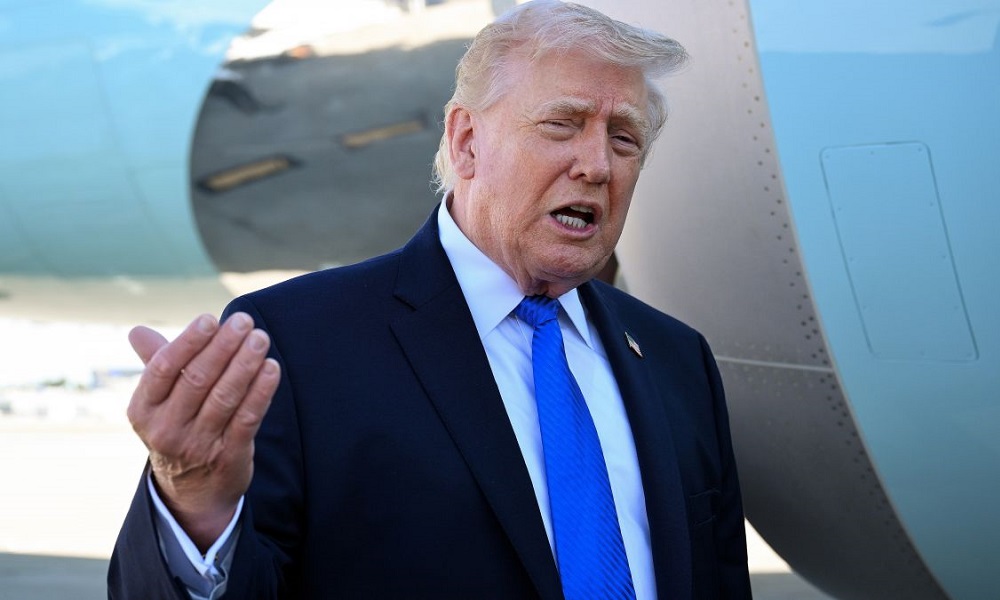
U.S. President Donald Trump announced a new extension of his deadline for Iran to reopen the Strait of Hormuz or face the destruction of its energy plants, after Iran rejected his 15-point proposal to end the war he launched with Israel.
Iran gave no direct indication that it was ready for negotiation or compromise. The Islamic Revolutionary Guard Corps issued a statement reaffirming that all shipping “to and from ports of allies and supporters of the Israeli-American enemies” to any destination was prohibited.
The war has spread across the Middle East, killing thousands of people and causing the biggest disruption in history to energy supplies, hitting the global economy with soaring oil, gas and fertiliser prices that have fuelled inflation fears.
The U.S. and Israel launched strikes on Iran on February 28 during talks with Tehran about its nuclear programme that had not yet yielded a deal. Attacks on Israel by Iran’s Lebanese ally Hezbollah then triggered an Israeli onslaught there that has displaced a fifth of Lebanon’s population.
On Thursday, Trump threatened during a cabinet meeting to increase pressure on Iran if it did not make a deal. He later posted on social media that he would pause threatened attacks on Iranian energy plants for 10 days until April 6 at 8 p.m. Eastern daylight time (0000 GMT on April 7).
“Talks are ongoing and, despite erroneous statements to the contrary by the Fake News Media, and others, they are going very well,” he added in his Truth Social post.
Regional
Russia sought to blackmail US using intelligence to Iran, Zelenskiy says
Zelenskiy, who said on Monday that Ukraine’s military intelligence has “irrefutable” evidence that Russia is continuing to provide intelligence to Iran.
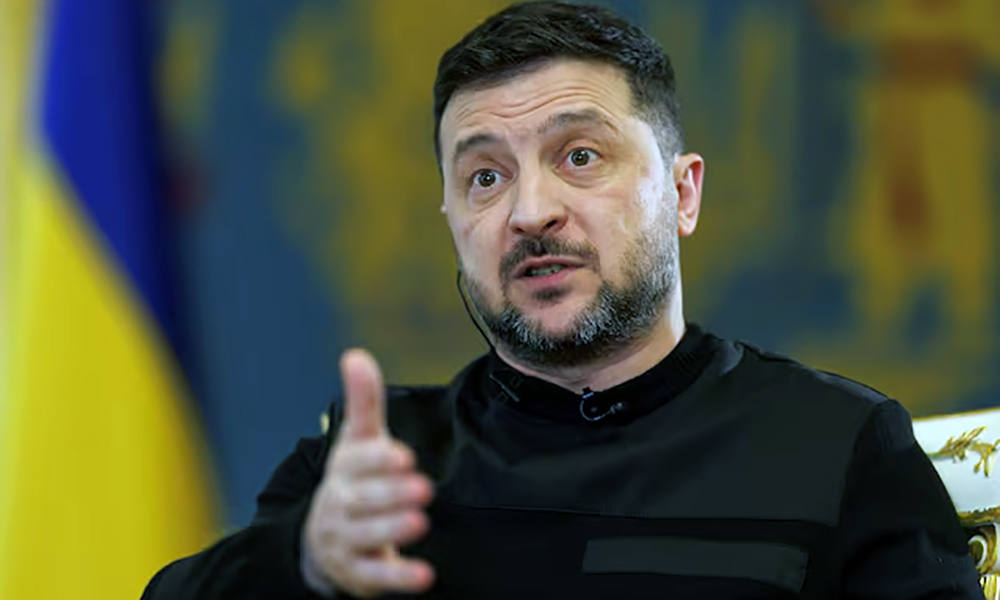
Russia sought to blackmail the United States by offering to stop sharing military intelligence with Iran if, in return, Washington would cut off Ukraine from its intelligence data, President Volodymyr Zelenskiy said on Wednesday.
Zelenskiy, who said on Monday that Ukraine’s military intelligence has “irrefutable” evidence that Russia is continuing to provide intelligence to Iran, told Reuters he had seen the data but provided no further details, Reuters reported.
Speaking in his presidential compound in Kyiv, Zelenskiy said that some Iranian drones, used to attack U.S. military assets and its allies during the war in the Middle East, contained Russian components.
“I have reports from our intelligence services showing that Russia is doing this and saying: ‘I will not pass on intelligence to Iran if America stops passing intelligence to Ukraine.’ Isn’t that blackmail? Absolutely,” Zelenskiy said.
He did not say who, according to the reports, Russia was addressing the comments to. Russia has denied assisting Iran in its month-old conflict with the United States and Israel – a denial that Washington said earlier this month that it had also received directly from Moscow when the issue was discussed.
Ukraine, which has faced sustained attacks by Iranian-designed Shahed drones since Russia launched its invasion in 2022, is helping several Gulf states – including Saudi Arabia, the United Arab Emirates, and Qatar – to counter drone attacks on their territory, the president said.
Zelenskiy said he hoped that Ukraine would be able to reach long-term deals with some Gulf countries that would raise funds for the production of Ukrainian drone interceptors or receiving much-needed air-defence missiles, read the report.


Afghan defense forces stand ready to protect national sovereignty: MoD

G7 foreign ministers demand an end to attacks on civilians in Iran war

Amnesty International urges IEA to end education ban for girls

Twelve US troops wounded in Iran strike on base in Saudi Arabia, US official says

Exclusive interview with Indrika Ratwatte, Deputy UN Special Representative for Afghanistan

Pakistani military jet downed in Afghanistan’s Jalalabad, pilot captured alive

Afghan Air Force conducts airstrikes in Islamabad, other cities

Prominent Muslim scholar issues fatwa calling for Afghanistan-Pakistan ceasefire

Afghan air force strikes key Pakistani military installations in retaliatory operation

IEA: Special circle in Pakistan has launched mission to destabilize region
Exclusive interview with Indrika Ratwatte, Deputy UN Special Representative for Afghanistan

Tawsia: Efforts to boost Afghanistan’s domestic production and economic diplomacy

Tahawol: Discussion on day 27 of Iran–US war

Saar: Islamic Emirate confident of Durand Line control

Tahawol: Efforts to release Mohammad Rahim from Guantanamo Bay Detention Camp
-
 Latest News2 days ago
Tajikistan shifts stance on Afghanistan amid rising border tensions
-
 Latest News4 days ago
Around 2.3 million tourists visited Afghanistan’s recreational areas during Eid: Ghufran
-

 Sport4 days ago
Afghanistan squad hit by withdrawals ahead of AFC Asian Cup Qualifiers
-
 Latest News4 days ago
Islamic Emirate releases American prisoner Dennis Coyle
-
 Latest News3 days ago
Two civilians killed, eight injured in fresh shelling by Pakistan in Kunar
-
 Regional4 days ago
US allies in Middle East ‘edging closer’ to joining conflict
-
 Latest News5 days ago
Airstrike on Kabul drug rehabilitation centre sparks legal concerns
-
 Regional4 days ago
Tehran rejects Trump’s claims of talks, accuses US of spreading ‘fake news’