
Latest News
AWCC launches 3G services in a remote area of Kunar province

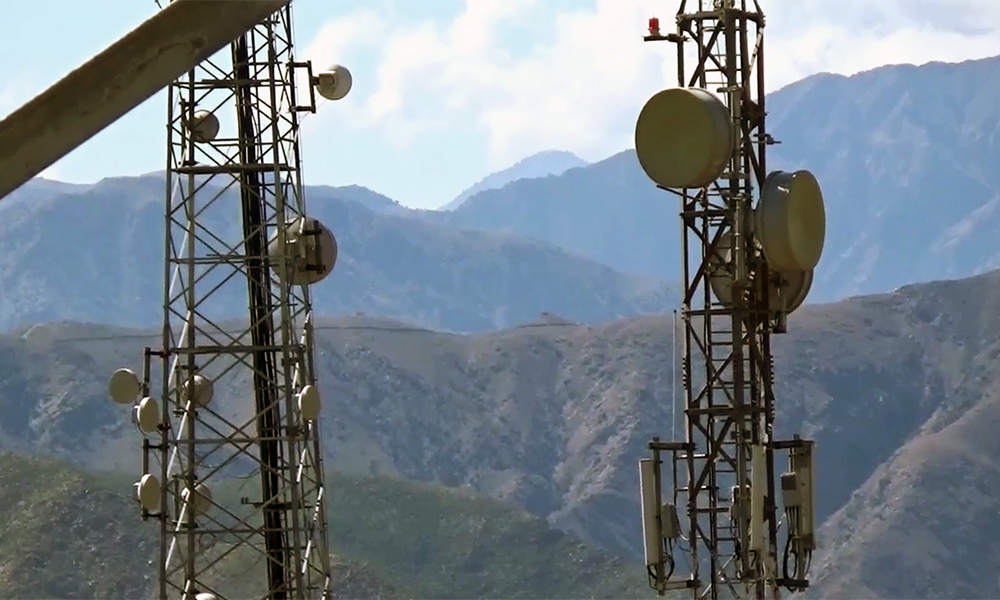
Afghan Wireless Communication Company (AWCC) has rolled out 3G services to the remote Chaghan district in the northeastern province of Kunar.
Being so remote, Chaghan residents have struggled with limited telecommunications in the past but this week they welcomed AWCC’s initiative.
Officials in the area also welcomed the move and said the new infrastructure installed in Chaghan also helps cover surrounding areas.
“An AWCC site was opened in a dominant location. This is a very good place. It is connected to the [provincial] center and covers some areas of Marawar district and Watepur district. We are grateful to AWCC,” said Sajjad, provincial director of communications.
Ejazul Haq Yousufzai, head of Afghanistan Telecom Regulatory Authority (ATRA) in Kunar, said efforts are ongoing for the development of telecommunication services so as to reach all districts in the province.
Local authorities in Kunar expressed their appreciation for the provision of telecommunication and internet services by AWCC and acknowledged that the services provided by the company are of a good quality.
“First of all, we are very grateful to the employees of AWCC for providing these services to the people of Kunar. We ask all companies and institutions to provide such services to the mountainous province of Kunar,” provincial governor, Ahmad Taha, said.
Abdullah Haqqani, deputy governor of Kunar, said: “Kunar is a mountainous province. The number of [cellphone] towers is not enough. We demand that problems faced by the people get solved.”
Local residents also expressed their satisfaction with the recent move of AWCC.
“The opening of this site is a great achievement for these two valleys. With this, these two valleys were connected to the center. The problems that people were facing before have now been solved,” Hayatullah, a resident of Kunar province, said.
Meanwhile, AWCC officials in the eastern zone assured the people of Kunar that the company will provide telecommunication services to all remote areas of the province.
“This site plays a key role for these two valleys, Dangam, Ghazi Abad, Nari, Watepur and up to Nuristan. Without the site, other sites cannot provide these services,” said Attaullah Sahil, head of AWCC in the eastern zone.
With the improvement of the security situation, AWCC has not only expanded its telecommunication services in the eastern zone, but it has covered many remote areas of the zone with 3G and 4G internet services.
Kunar province lies in the northeastern section of the country and borders northern Pakistan. The vast majority of the province is mountainous and extremely rugged.
The province is dominated by the lower Hindu Kush mountains which are cut by the Kunar River to form the forested Kunar Valley. The mountains, narrow valleys with steep walls, and rivers present formidable natural obstacles and have historically constrained all movement through the province.
Even in the early 21st century, movement on foot, with pack animals, or with motorized vehicles is extremely limited and channeled due to the significant geographic restrictions.












Kazakhstan’s Foreign Minister Mukhtar Tileuberdi has called for pragmatic and coordinated international engagement with Afghanistan, saying the country’s long-term stability is closely linked to the security and sustainable development of Central Asia.
Speaking during the general debate of the 81st session of the United Nations General Assembly in New York on Friday, Tileuberdi said humanitarian assistance to Afghanistan remains essential but alone cannot break the cycle of poverty, displacement and dependency.
He said Kazakhstan supports a “pragmatic, coordinated and step-by-step” approach to international engagement with Afghanistan, with the United Nations playing a central role.
Tileuberdi also said Kazakhstan is working with the UN to operationalize the United Nations Regional Centre for the Sustainable Development Goals for Central Asia and Afghanistan in Almaty.
He said the success of the centre should be measured by the results and assistance it delivers to the region.


Abu Muslim Farah defeat Khurasan Faryab 2-0 in ACL season six

Saar: Concerns over Pakistan’s political crisis discussed

Afghanistan Champions League: Omar Zawak Herat beat Toofan Herat 1-0

Blast in Pakistan’s Dera Ismail Khan kills 11, injures 30

Ariana Afghan Airlines increases Kabul-Delhi cargo flights

Saudi energy group signs major Afghanistan deals covering gas exploration and pipeline plans

Trump floats idea of renaming Atlantic or Pacific Ocean

US hits Egyptian bank branches with Iran sanctions as war marks six months

Nepal flood rescue mission enters critical phase as thousands remain missing

Iranian clubs to face Gulf opponents at neutral venues in Asian Champions League Elite
Saar: Concerns over Pakistan’s political crisis discussed

Exclusive interview with Abdul Latif Mansoor, Minister of MRRD

Tawsia: Overview of Afghanistan’s iron mines

Tahawol: Discussion on fresh Pakistani airstrikes on Afghanistan

Saar: Calls for international support for Afghanistan discussed
-

 World5 days ago
CNN, MS NOW and Politico sue Trump, challenging White House ban
-

 Latest News3 days ago
Ariana Afghan Airlines ranks seventh among 45 Central Asian airlines
-

 Latest News4 days ago
UN reiterates call for respect for international law after Kunar airstrikes
-

 Regional3 days ago
US and Iran hold first talks since June after Trump’s ‘annihilation’ threat
-

 Latest News3 days ago
Silk Road highway in Wakhan corridor now reaches the China border
-

 Latest News5 days ago
Afghan Official: Pakistan’s airstrikes will not go unanswered
-

 Sport4 days ago
Afghan boxing referee heads to China for international festival
-

 Regional5 days ago
G7 foreign ministers call on Iran to stop arming Houthis